
1 1895--1927: FROM BIRTH TO REBIRTH

5 You've all seen moving pictures run backwards,
6 where people un-dive out of
7 the swimming pool back onto the board.
8 I'm going to
9 run a moving picture of you backwards.
10 You've just had breakfast;
11 now, I'm going to run the picture backwards, and all the food comes out of your mouth onto the plate;
12 and the plates go back
13 up onto the serving tray
14 and things go back
15 into the stove, back into the icebox;
16 they come out of the icebox
17 and into the cans,
18 and they go back to the store;
19 and then, from the store
20 they go back to the wholesale saler;
21 then they go back to the
22 factories where they've been put together; then they go back to the trucks and ships; and they finally get back to pineapples in Hawaii.
24 Then the pineapples separate out, go back into the air;
25 the raindrops go back into the sky, and so forth.
26 But in the very fast accelerated reversal of a month practically everything has come together that you now have on board you, gradually becoming your hair and your skin and so forth, whereas a month ago,
27 it was some air coming over the mountains.
28 In other words, you get completely deployed.
29 I want you to begin to think of yourselves in an interesting way as each one of these.
31 If we had some way
32 of putting tracers on the pictures, you would see chemical elements gradually getting closer and closer together, and, finally, getting into those various vegetable places and into roasts and, tighter and tighter, into cans, into the store,
33 finally getting to just being you or me—temporarily, becoming my hair, my ear, some part of my skin—
34 and then that breaks up and goes off and gets blown around as dust.
36 Each of us is a very complex pattern integrity with which we were born.
37 I was born cross-eyed, almost blind.
40 My eyes are very misshapen, so I am very farsighted.
41 As a child I didn't know there was anything wrong with me. I assumed everybody else saw as I did. I couldn't see any details; I just saw colors. My mother couldn't understand why I was continually falling in love with a different shade of green or purple.
42 In my early childhood I learned to rely on my sense of smell because I couldn't see details, such as people's eyes, and so I began to know people and their personalities by how they smelled.
43 I knew the smell of everyone in the house. That's how I could tell whether I was going to like someone or not. The people that didn't smell right to me never did work out.
44 At four and a half they took me to an eye doctor who gave me corrective lenses. Imagine my surprise when I got my glasses for the first time and could see human eyes, cat's eyes, and the eyes of snakes!
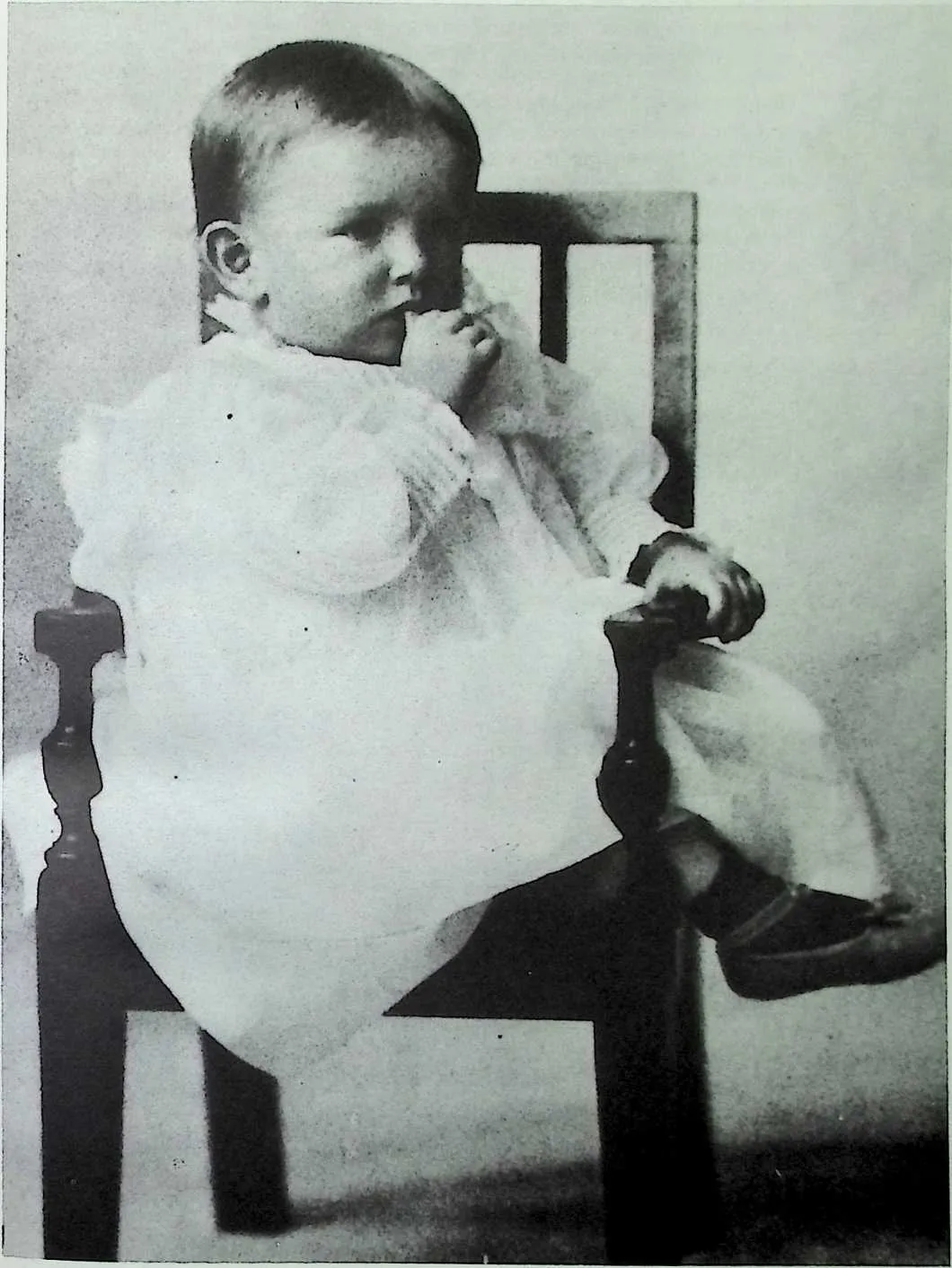
45 Everybody seemed to be communicating through their eyes. I hadn't had that kind of communication before, the communication of feelings of love and warmth that people around me felt.
47 If I had to find one word that would describe the phenomenon of life—the experience of life—it would be the word awareness. The very consequence of awareness is to impose the phenomenon time upon an eternal universe.
48 
 When there is no otherness, there is no awareness. So it was otherness I was first
aware of, and the otherness was the motherliness of hands on me, the source of warmth, and food
coming in.
When there is no otherness, there is no awareness. So it was otherness I was first
aware of, and the otherness was the motherliness of hands on me, the source of warmth, and food
coming in.
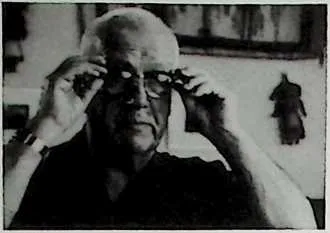
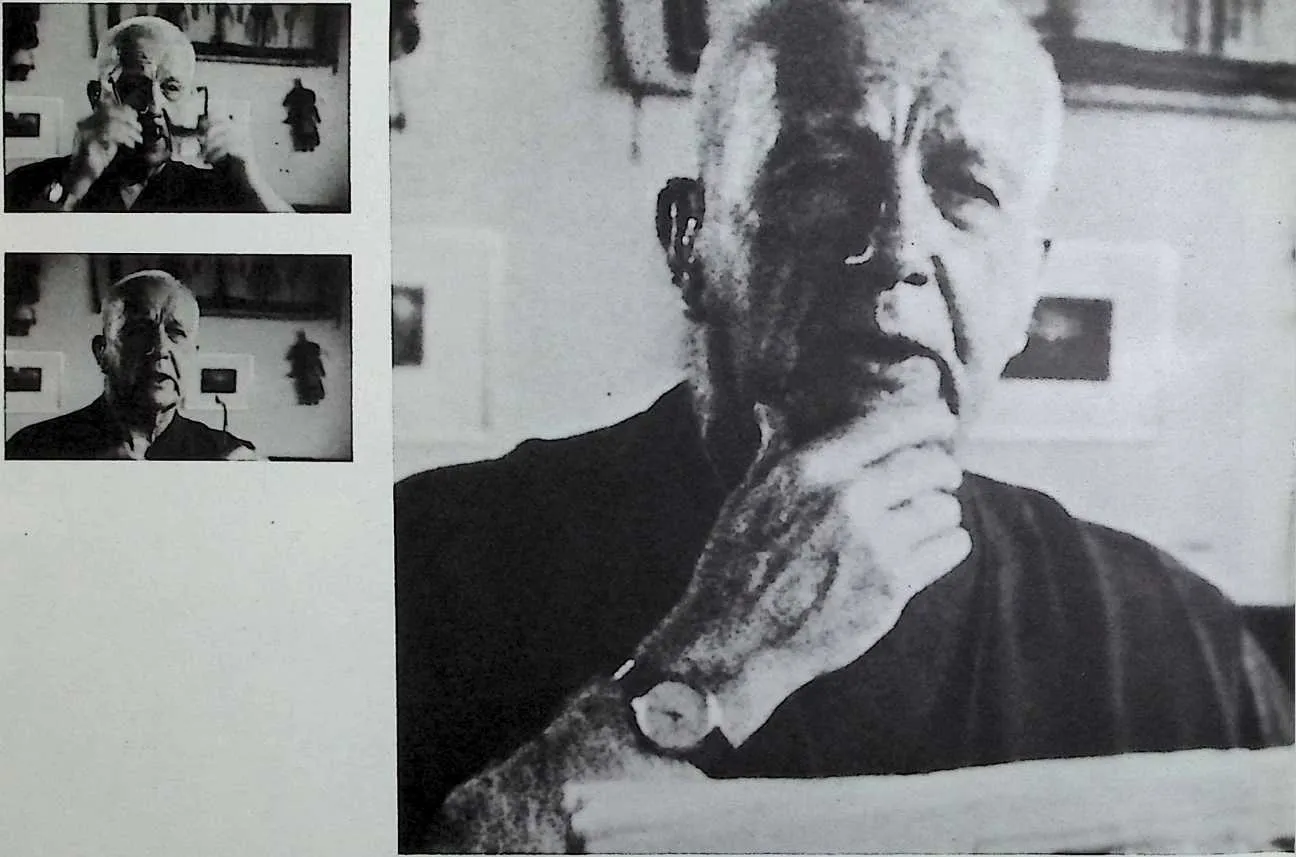
50 One of the most interesting things in my life is that while opticians kept giving me increased magnification as I got older, I still have the same correction, so all I have to do is take off my glasses to see what I saw when I was four and a half.
51 When I take them off I can't see any human eyes.
52 I see shadowy areas on

54 the face and the color of the face and the color of the hair, but no really sharp lines.
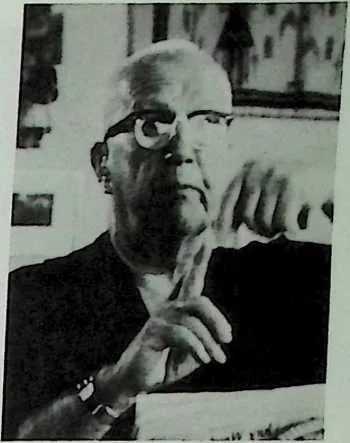
56 One of my first days at kindergarten the teacher brought us some toothpicks and semi-dried peas and told us to make structures.
57 The other children, who had good eyes, were familiar with houses and barns; with my bad sight, I was used to seeing only bulks—I had no feeling at all about structural lines.
58 Because I couldn't see, I naturally had recourse to my other senses which were very sensitive. When the teacher told me to make structures, I tried to make something that would work.
59 Pushing and pulling, I found that a triangle held its shape when nothing else did. The other children made rectangular structures that seemed to stand up because the peas held them in shape. Meanwhile, after pushing and pulling, the triangle I made felt good.
60 The teacher called all the other teachers in the primary school as well as the kindergarten, to look at this triangular structure. I remember being surprised that they were surprised.
61 I began to feel then that all nature's structuring and patterning must be based on triangles.
62 All through my first years, my sister Leslie, who was three years older, had been telling me all the things she could see. Children have tremendous imaginations and I thought she was making it all up like the fairy stories she read me, so that I would be inventive too and tell her all the things I could see.
63 I was always getting a laugh so I thought I was doing great. It made me very happy to have people laugh at my stories. Then when I got my glasses I realized my sister hadn't been telling me stories at all. This really became a dilemma because now people were expecting me to do some imaginative thing to entertain them and kept encouraging me to do it.
64 From this point on I would be a little liar. I found people like a lie, and I could invent any kind of experience I wanted to—which was really too bad. My mother was the most lovely mother, but people kept persuading her that she must be very stern with this little child. So I was continually getting spankings and, nine times out of ten, I didn't know why I was being spanked. I was doing what a child is intended to do—using my imagination. So to avoid what seemed to be leading up to a spanking, I would use my imagination and story-telling ability to misinform my mother. This has built a trait into me which I've had to cope with as the years went on.
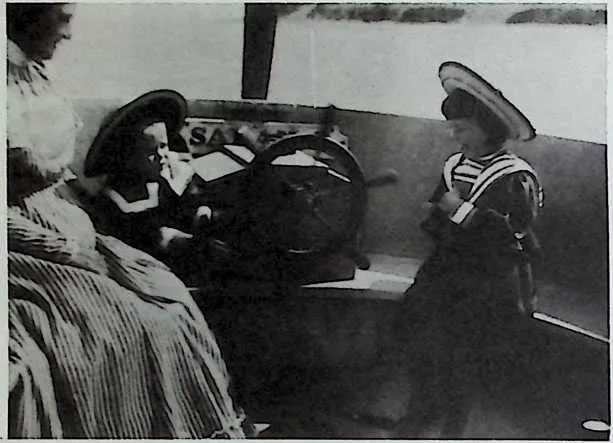
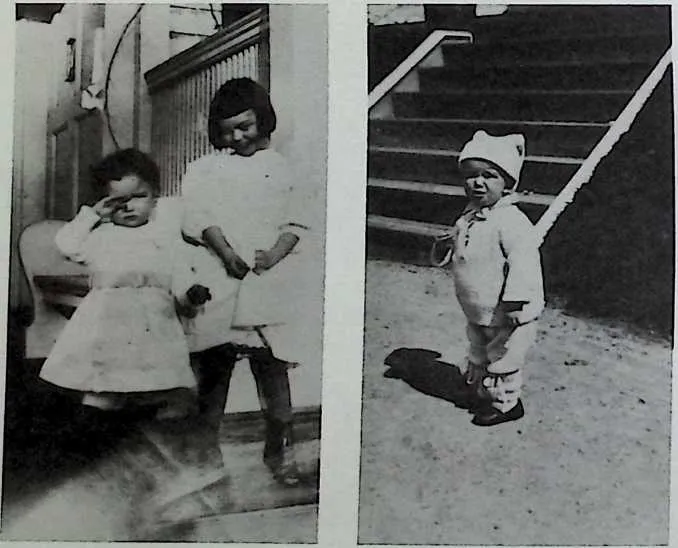
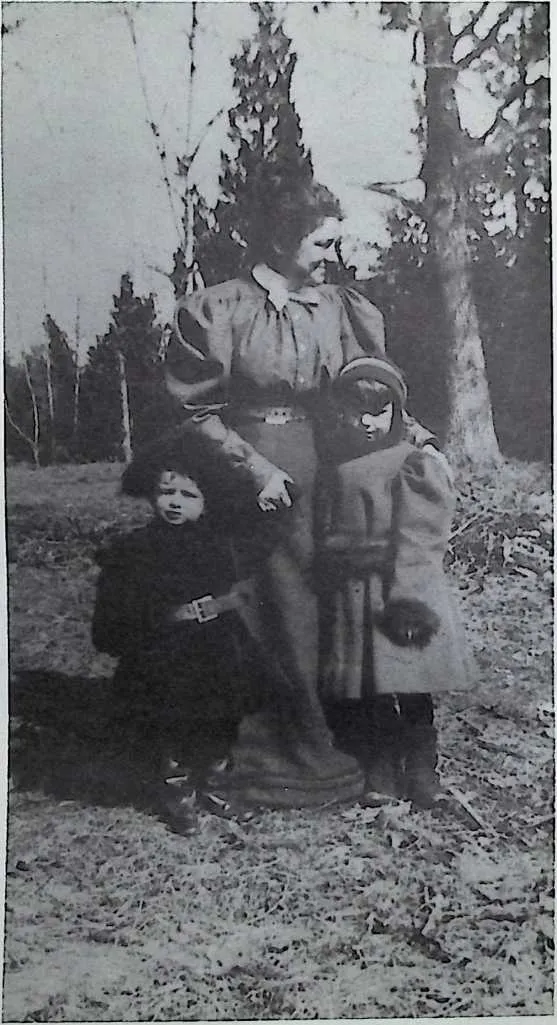
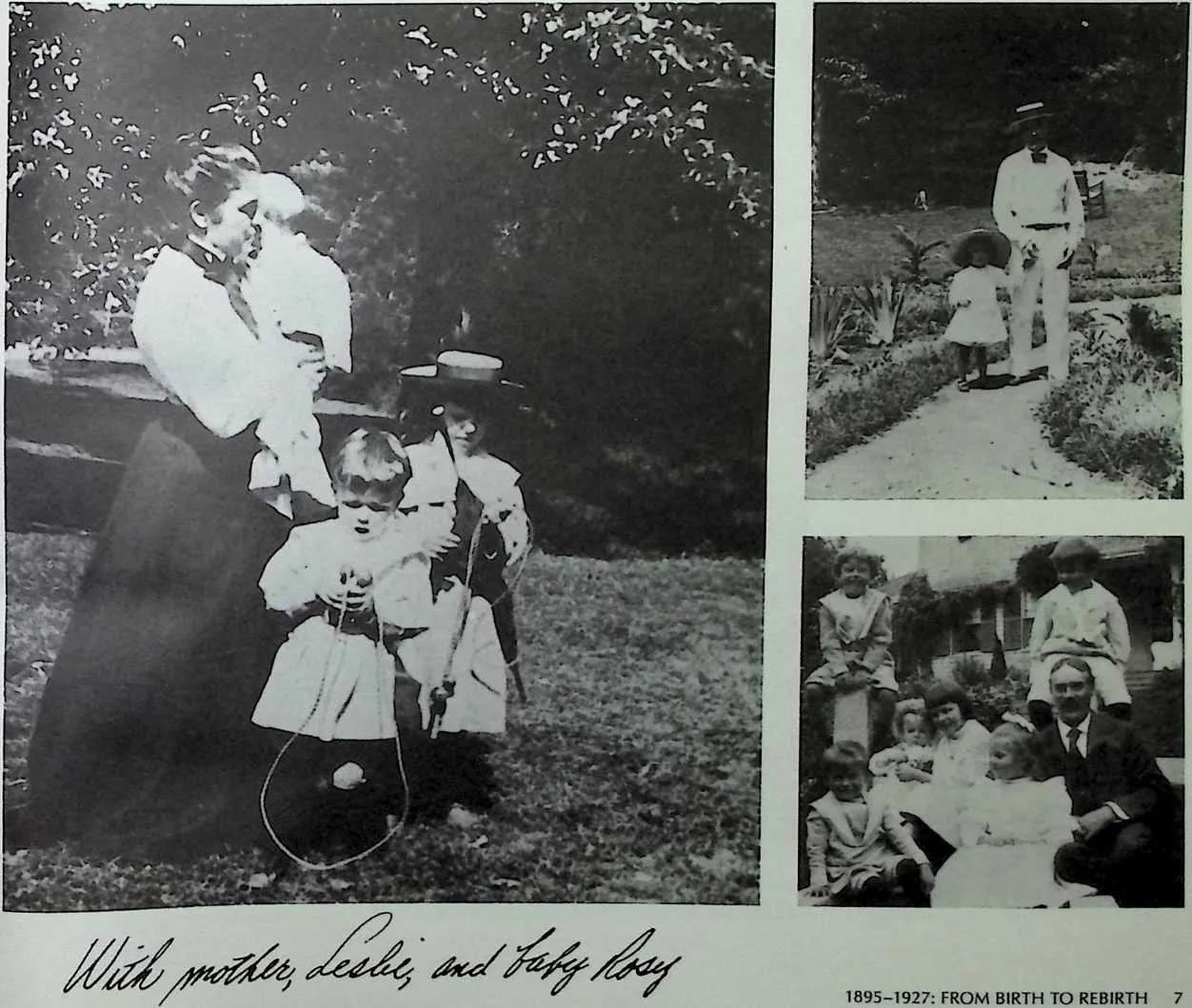
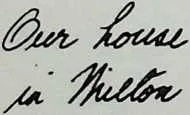
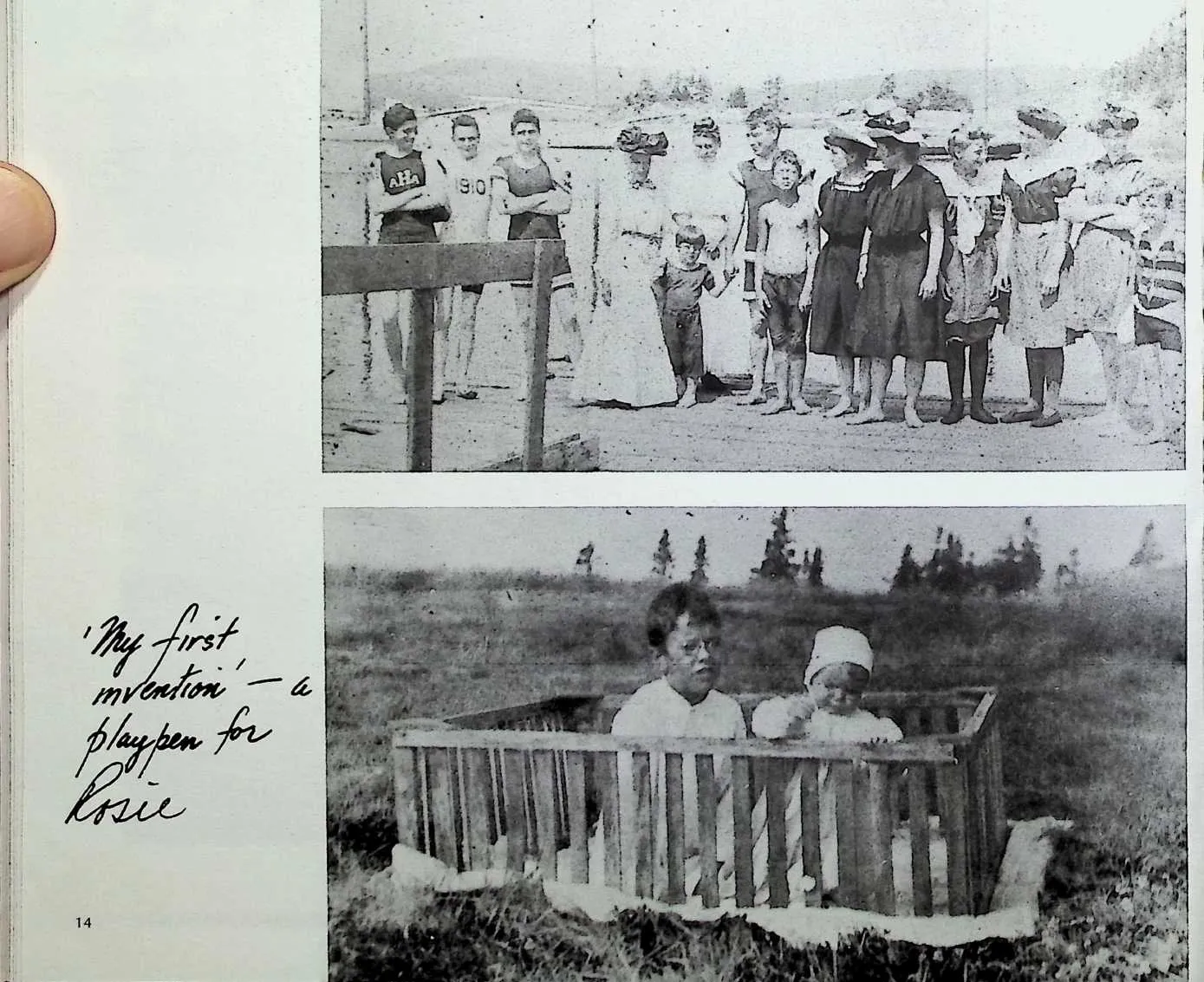
65 There were four of us children—Leslie was the oldest, then I, Wolcott, and Rosie was the baby. We lived in a rather large Gay Nineties Victorian house in Milton, outside of Boston, on about two and a half acres with woods, and when I was young my mother had plenty of help, my sister and I each had a nurse, there was a gardener and a cook. When my father got sick all of them disappearing except the cook, who had an enormous influence on my life.
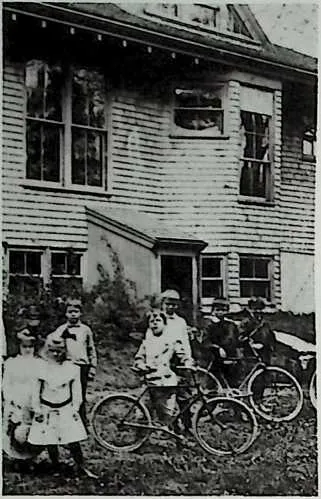
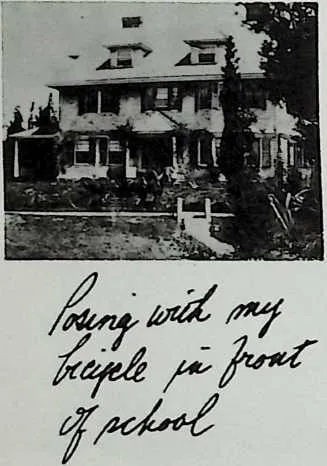
67 I was twelve years old when my father gave me a real tiny bike and I remember the experience of going faster than with my legs, and going through the driveway and through the beautiful apple orchards.
68 How beautiful spring was on a bicycle.
69 My father and mother each had a bicycle and we would go off early in the morning.
70 Those early mornings…
71 I particularly loved coming down to absolute silence in the house; everything seemed so peaceful and nature was waking up.
72 I loved to be there at dawn on a beautiful snowy day after it had been snowing all night,
73 and go out around our place. There were little tracks of birds and wonderful first motions of life all around.
74 I really loved coming home.
75 Whenever I went off skating or going to school—and I enjoyed all those things tremendously—
76 I really loved coming home and my mother would have hot tea waiting.
77 I tend to remember the winters almost more than spring.
78 So I was really shocked at the difference between my life at home and what my grandmother told me about the golden rule—that life is meant to be loving, peaceful, thoughtful to one another—and being faced with the reality when I got out into the world to find things rough.
79 My father became a merchant rather than going into banking or stocks, and being a merchant seemed to agree with him. Boston was a great shoe manufacturing town; the first mass producer of shoes in America. And my father imported leathers from Argentina and India for the shoe trade. He brought us into another social world. Father was an exception in our family.
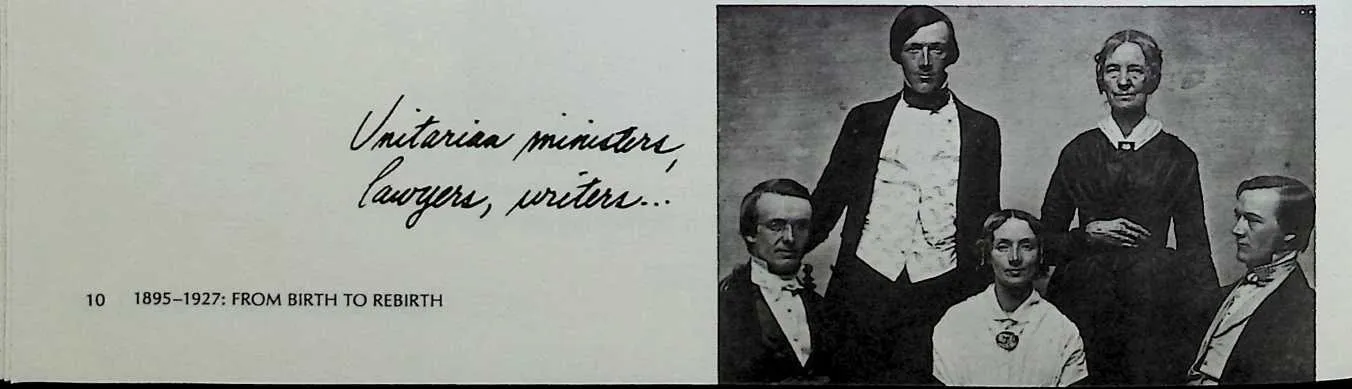
81 The Fuller side of my family was well-known for its long line of intellectuals and rebels—Unitarian ministers, lawyers, writers—from my great-grand father, the Reverend Timothy Fuller, who was a delegate from Massachusetts to the Constituent Assembly but opposed the ratification of the Constitution because it didn't prohibit slavery; and Timothy Jr., who graduated second instead of first in the Harvard class of 1801 because he took part in a student rebellion; to my grandfather, an all-out abolitionist, who was killed leading a successful Union attack at Fredericksburg.
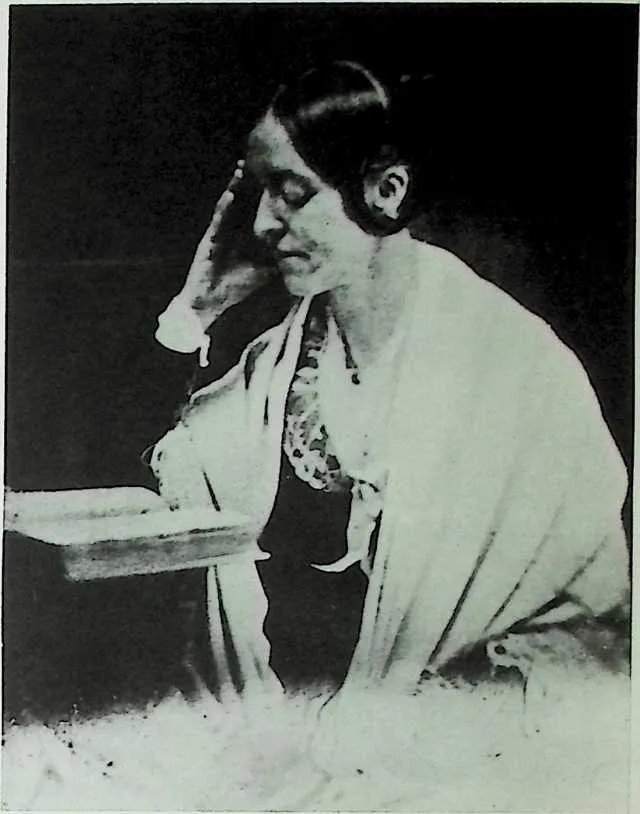
83 I just didn't know anything about my great-aunt, Margaret Fuller, until many years later. Nobody ever played up the Fullers' intellectual side; Aunt Margaret was just somebody in the family to me.
84 Emerson was very much accepted and celebrated as a poet and essayist in my school, so I did know about him. But I didn't know about the extraordinary influence my own Aunt Margaret had had on him.
85  She persuaded him that he ought to be published, and together they founded Dial, the
prototype of the ‘‘little magazine’’ that she edited. Dial became the official magazine of the
Transcendentalist movement, and under her editor ship Thoreau and many others were first
published and became known.
She persuaded him that he ought to be published, and together they founded Dial, the
prototype of the ‘‘little magazine’’ that she edited. Dial became the official magazine of the
Transcendentalist movement, and under her editor ship Thoreau and many others were first
published and became known.
86 Aunt Margaret was a literary critic on the staff of the New York Herald and became the first woman foreign correspondent. Feminist, social reformer, writer—she did everything.
87 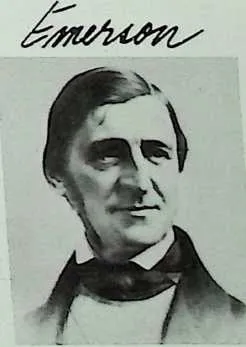 When she was in Italy she married the Marchese Giovanni Angelo Ossoli and they both
took part in the Italian revolution under Mazzini. She was lost with her husband and child in a
shipwreck off Fire Island.
When she was in Italy she married the Marchese Giovanni Angelo Ossoli and they both
took part in the Italian revolution under Mazzini. She was lost with her husband and child in a
shipwreck off Fire Island.
88 I was once reading Goethe and I came across a book in the library called Margaret Fuller and Goethe [Bra10]. I was fascinated to discover my Aunt Margaret And once when I was lecturing at Wesleyan University about ten years ago, a professor from Oxford came up to me and gave me a poem:
8990Fuller is the name, for better or for worse, Of two who grappled with the universe. ‘‘I'll accept it,’’ said Margaret the spinster; ‘‘I'll explain it,’’ said bold Buckminster.
91 Of course, Margaret was married to that Italian marchese, but it wouldn't rhyme that way.
92 I thought her essay, ‘‘Women in the Nineteenth Century,’’ was so important that I published it in my book, Ideas and Tensegrities. [Ful63]
93 When I heard that Aunt Margaret said, ‘‘I must start with the universe and work down to the parts, I must have an understanding of it,’’ that became a great drive for me.
94 
 I saw that in my education I was being pushed to be a specialist—everybody is being
pushed to specialize, to where they can't be synergetic and can only know about the
parts instead of the whole—I switched very vigorously; very deliberately, I became a
comprehensivist.
I saw that in my education I was being pushed to be a specialist—everybody is being
pushed to specialize, to where they can't be synergetic and can only know about the
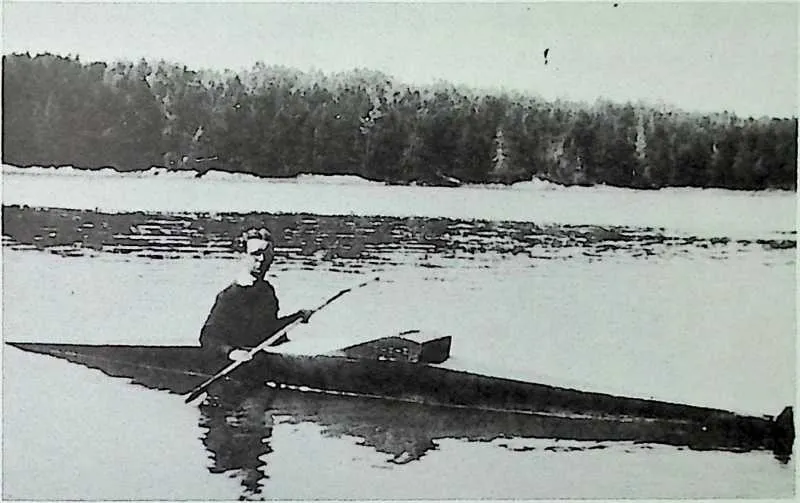
parts instead of the whole—I switched very vigorously; very deliberately, I became a
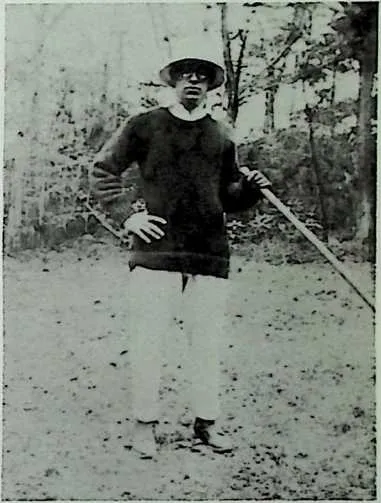
comprehensivist.
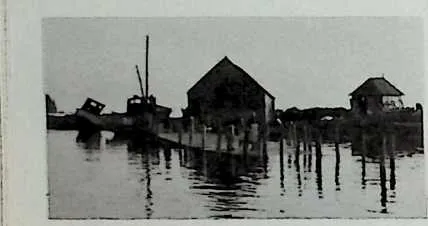
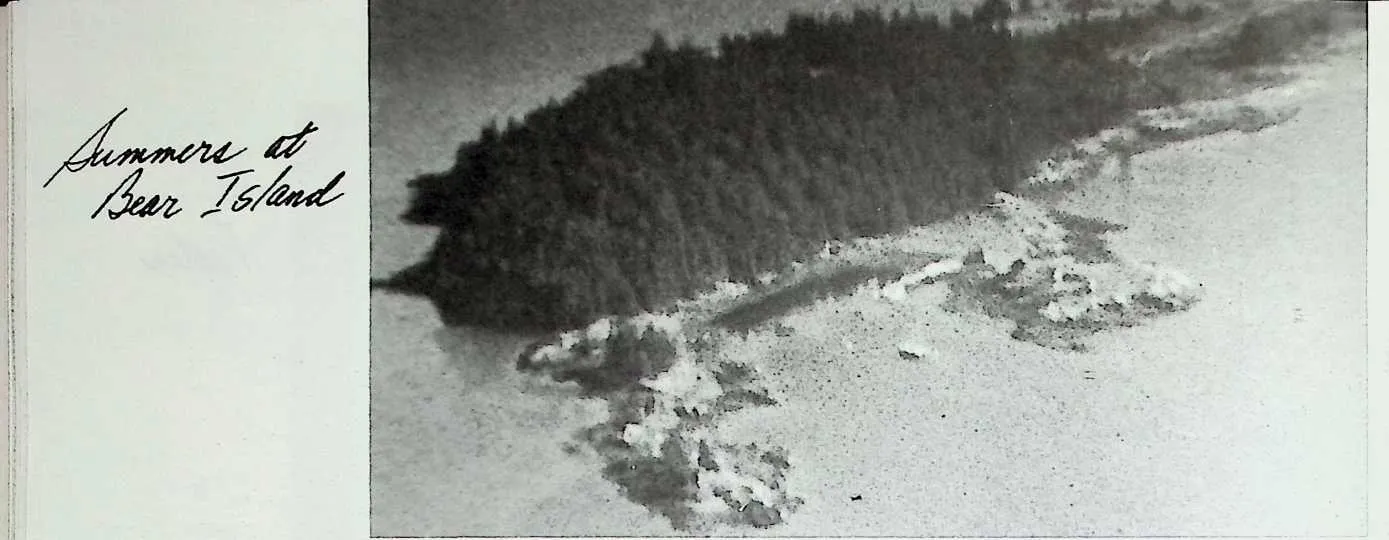
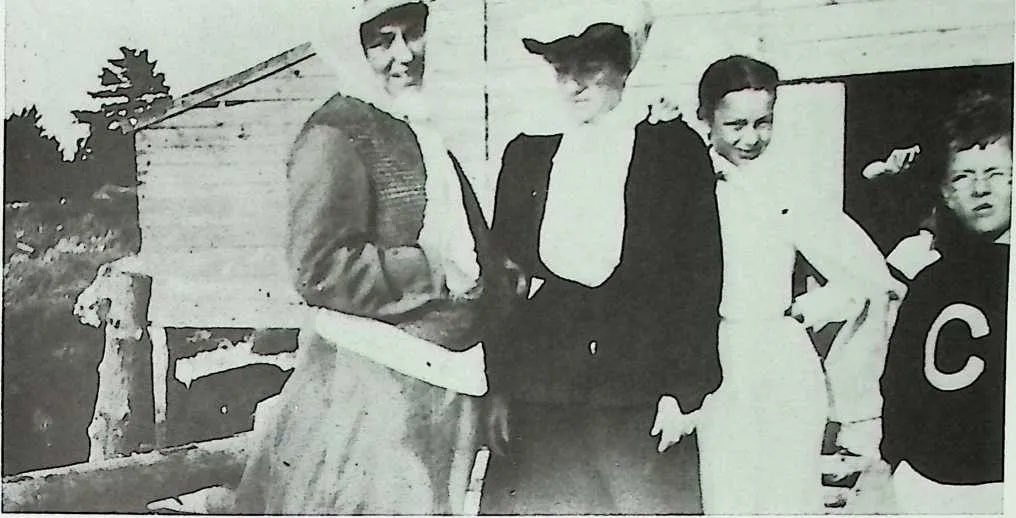
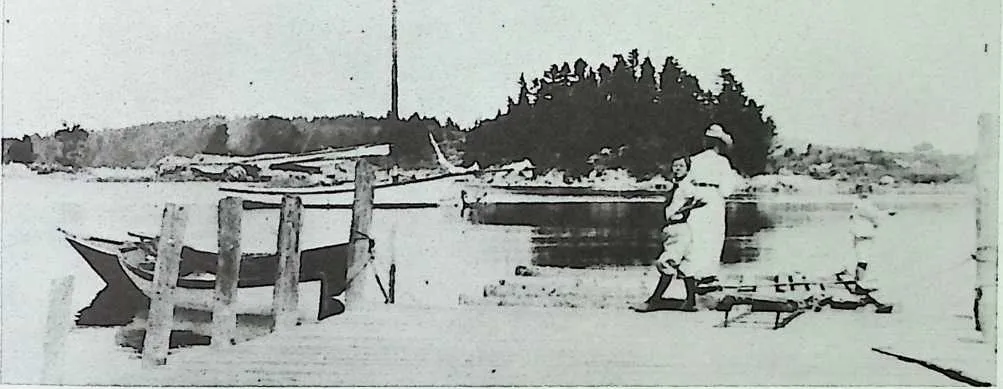
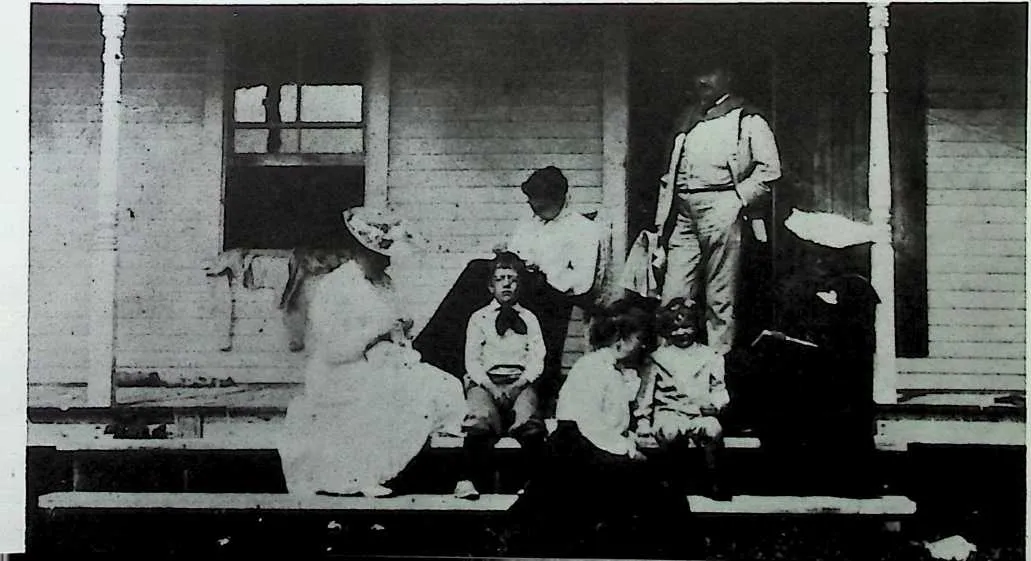
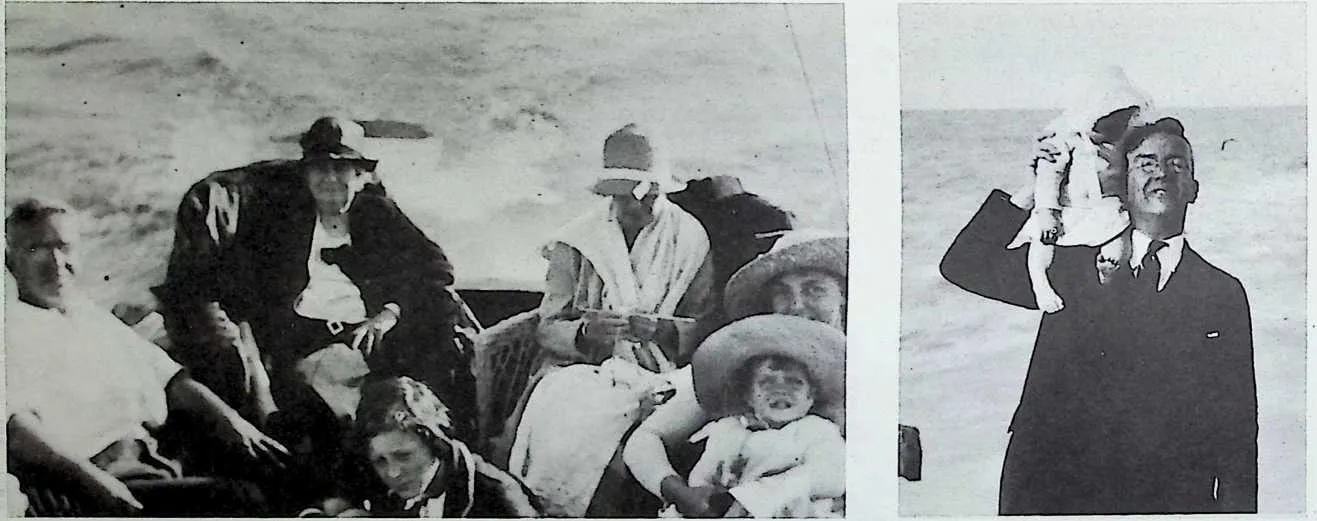
95 Summers we spent on Bear Island in Penobscot Bay where we were one of two families living there. It was very primitive. Bear Island still is very primitive.
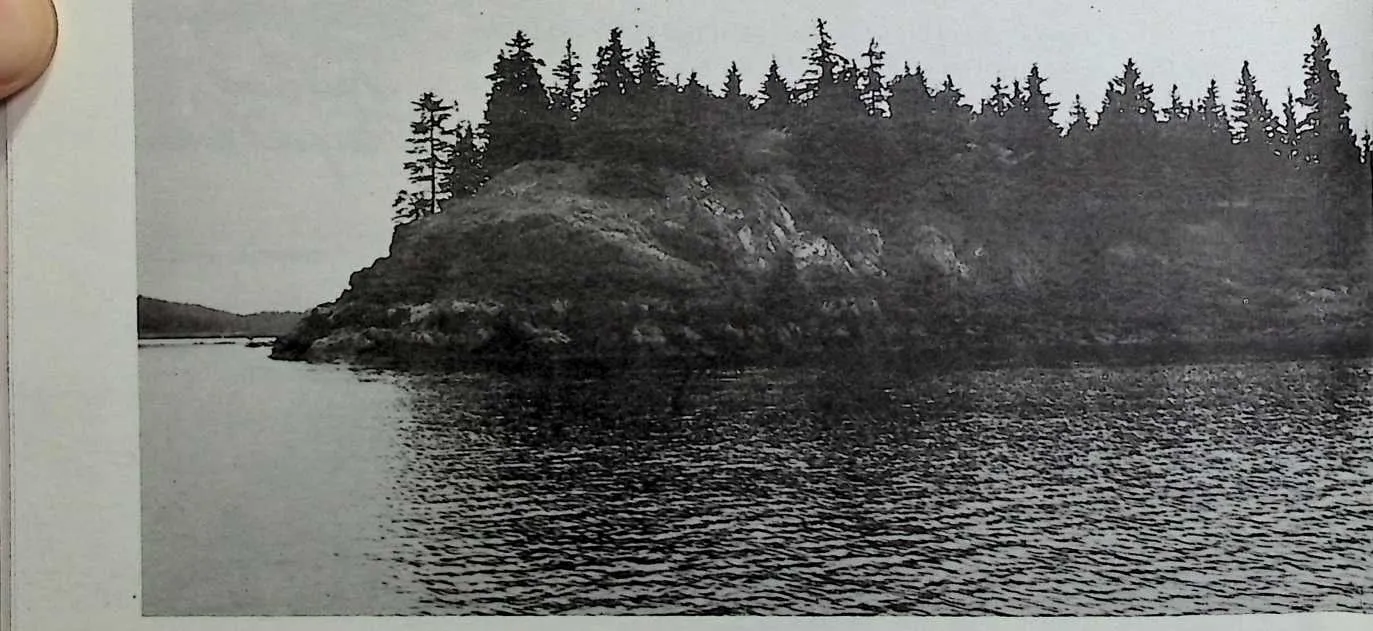
98 I was about nine when my father persuaded Grandma Andrews—my mother's mother—to buy Bear Island, ten miles out from the mainland.
99 Before I had my glasses, and I couldn't see accurately, I really didn't understand the water. I could feel it, but I couldn't see its edge. It was very mystifying to me. I loved the feeling, but it was like being put in a bathtub and not really understanding it.
100 I remember my mother taking me into the water in Marblehead, and I was really, tremendously afraid. She couldn't understand why and she'd try to put me down, but I was afraid because I couldn't see where I was.
101 And when suddenly I could see, it was so exciting. To see things floating was incredible to me, with the light coming from underneath.
102 Our island had plenty of driftwood and timber, and I didn't have to ask anyone's permission to experiment with making boats that floated. I was amazed that such big heavy things as boats could float.
103 Most of the islands were completely uninhabited, and going around in my little boat I got to know all the fishermen-farmers. They were tremendously ingenious at making their own tools and their boats, combining the arts of the sea and the land. Well, I grew up with the idea of cutting my own trees and building my own boats.
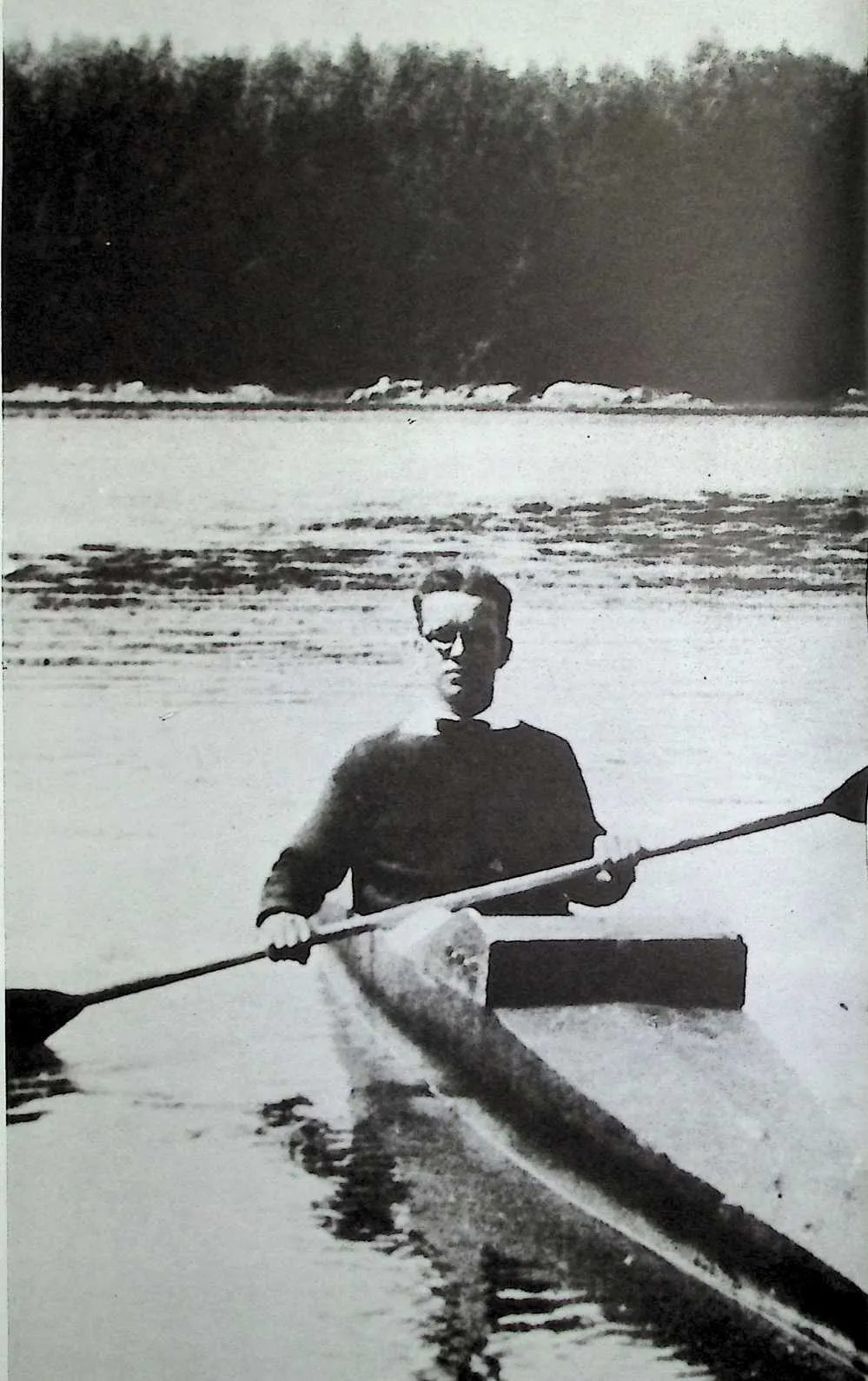
108 My first teleological invention was a mechanical ‘‘jellyfish.’’ It was a tepee like, folding, web-and-sprit cone, mounted like an inside-out umbrella on the submerged end of the pole.
109 The pole could be hand-pulled through a ring over the stern, drawing the self-folding cone through the water with little resistance. When the cone was pushed by the pole, it opened and gave inertial advantage, almost as though touching the bottom.
110 I could push-pull the boat along far more swiftly and easily than by sculling. Since I often used the boat in heavy fog and across strong currents, the push-pole also made it possible for me to maintain a forward watchfulness.
112  The old captain on our island taught me about ropes in our sailing boat,
how you make things up and how you coil up the ropes because if you suddenly get a
gust of wind you're going to have to do something in a hurry; you must never tie
a knot—put a hitch on a cleat—but don't tie anything, it must be free for running,
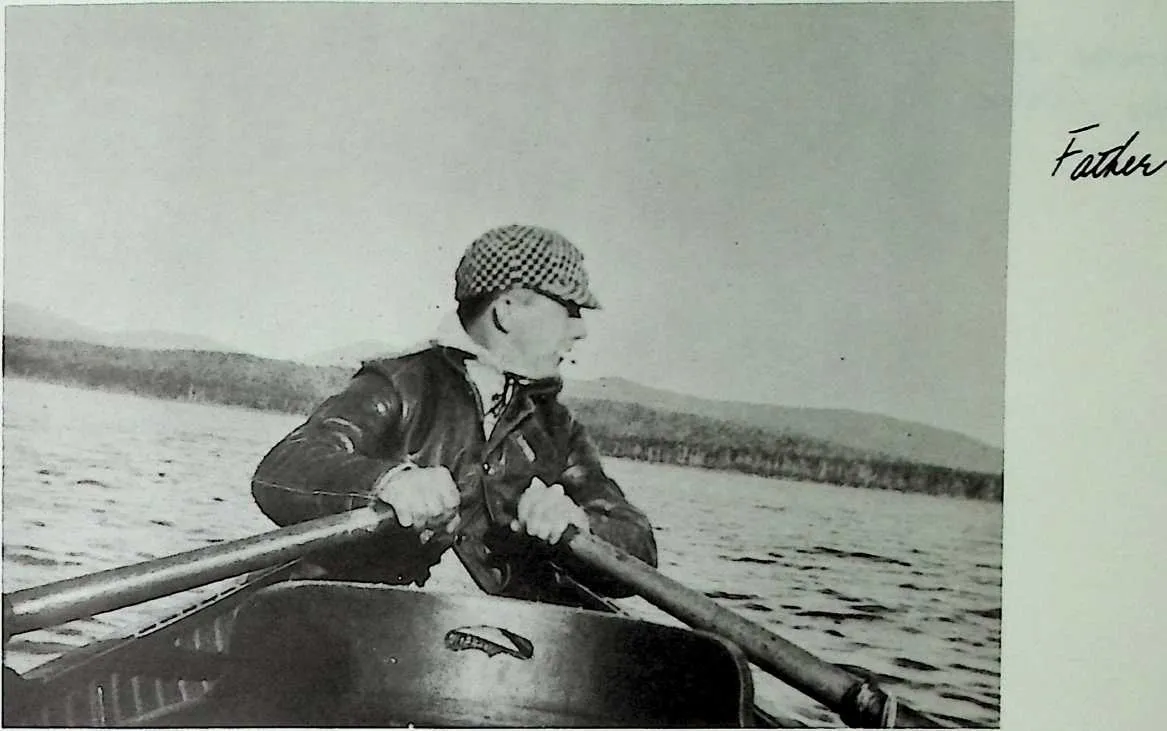
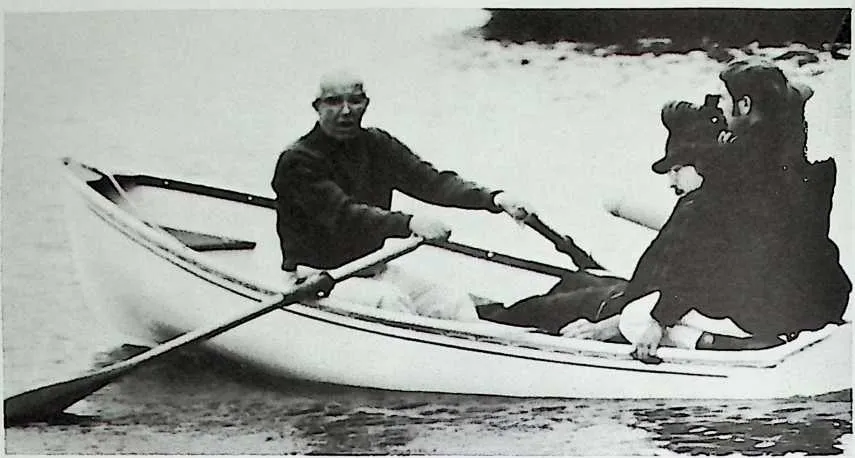
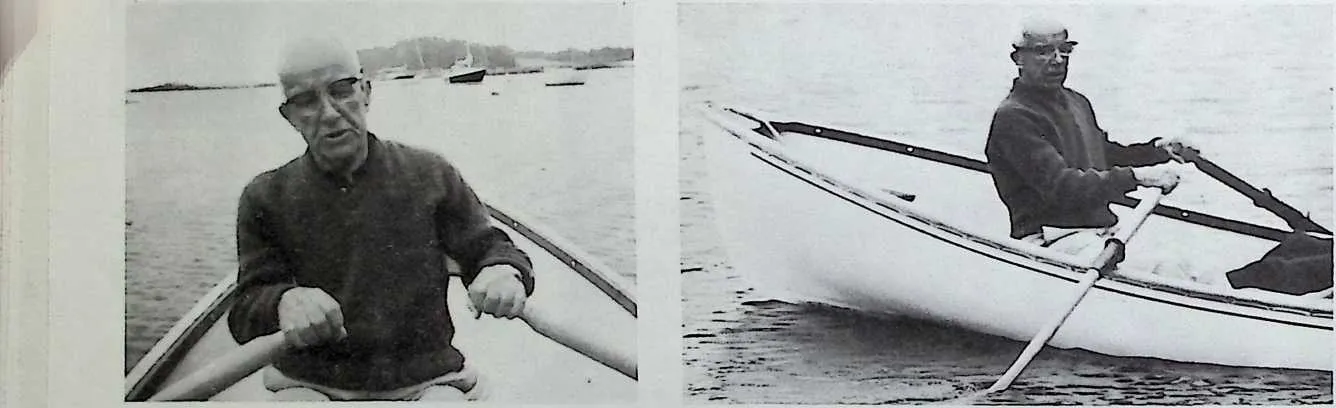
absolutely.
The old captain on our island taught me about ropes in our sailing boat,
how you make things up and how you coil up the ropes because if you suddenly get a
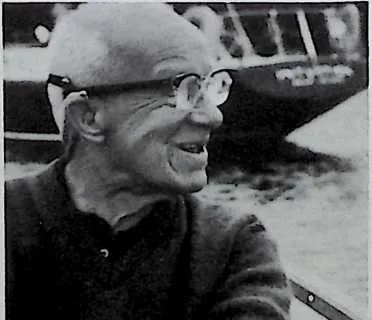
gust of wind you're going to have to do something in a hurry; you must never tie
a knot—put a hitch on a cleat—but don't tie anything, it must be free for running,
absolutely.
113 Because once you're in a blow, the ship goes over, the sea comes in, you won't swamp if you let go one of the sheets to ease the mainsail, but if the ropes are all mixed you're through!
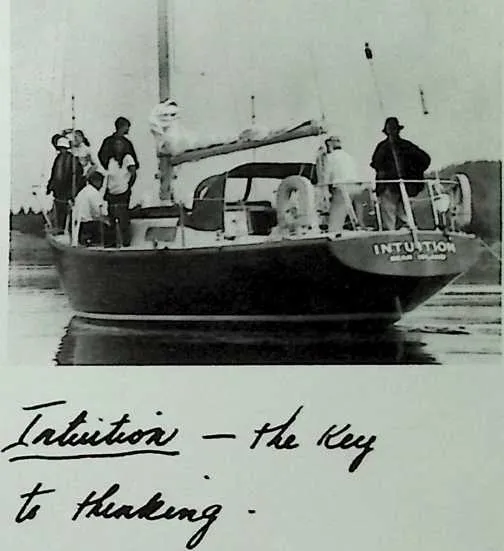
114 Put everything where it belongs. Not because it's pretty, but because it's dangerous not to. Housekeeping, housekeeping, housekeeping!
115 This whole dealing with nature calls for alertness and a constant awareness and consciousness of nature. This is an environment not only for thinking, but for quick thinking. You learn you've got to make decisions quick or it's all over. Nature takes you to the bottom awful fast.
117 One of the single most important things I began to learn in my life on Bear Island was that we had a tide that came in and went out, a ten-foot tide. I'm a little tiny guy, but I could handle big things by virtue of that tide.
118 All the summers of my boyhood were spent here on the Bay. The route we're rowing along now is the same route I took every day to get the mail two miles away—over to Eagle Island and back.
121 I love the sound of oars.
122 It just goes on and on
123 so I can keep on thinking without even realizing that I'm rowing—any more than that I'm breathing.
124 Rowing is just as natural to me as breathing.
125 I bought this boat recently. It may be the last boat I will ever buy, and I hope it's going to be the best boat in the world. I gave it the name Intuition, that really being the key to thinking.
126 We do whatever things come spontaneously to us, then suddenly, we're aware of thought.
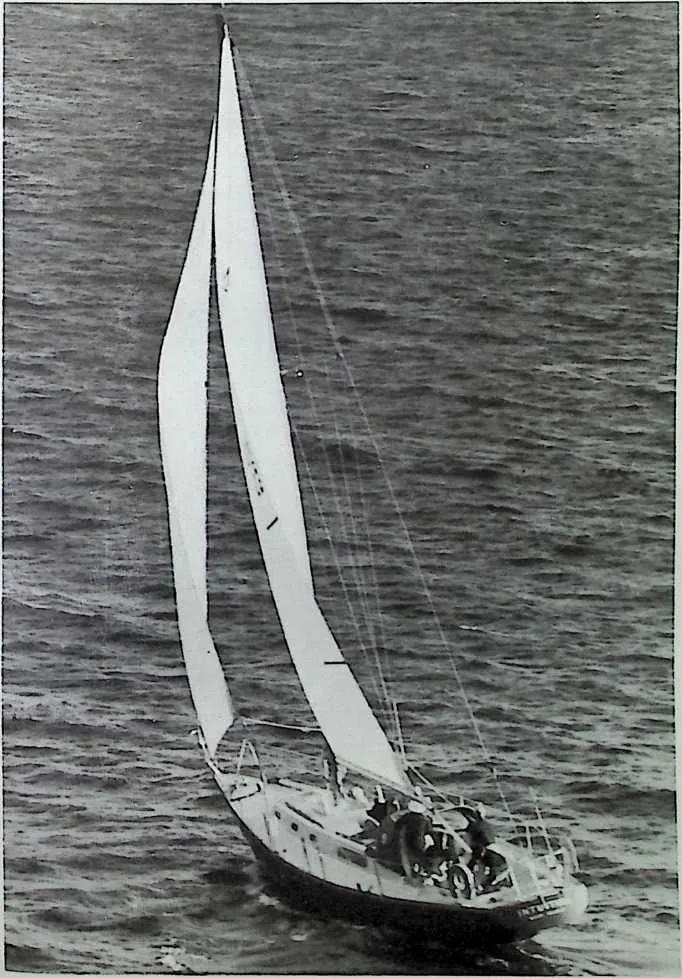
127 We don't really know what made us say, ‘‘What was that?’’
128 ‘‘y' see,’’ or ‘‘I forgot that.’’
129 Intuition is our contact between conscious and subconscious.
130 It's your subconscious that suddenly comes through and lets you know ‘‘this is something important to be thought about.’’
131 It's intuition that is continually opening doors of thought.
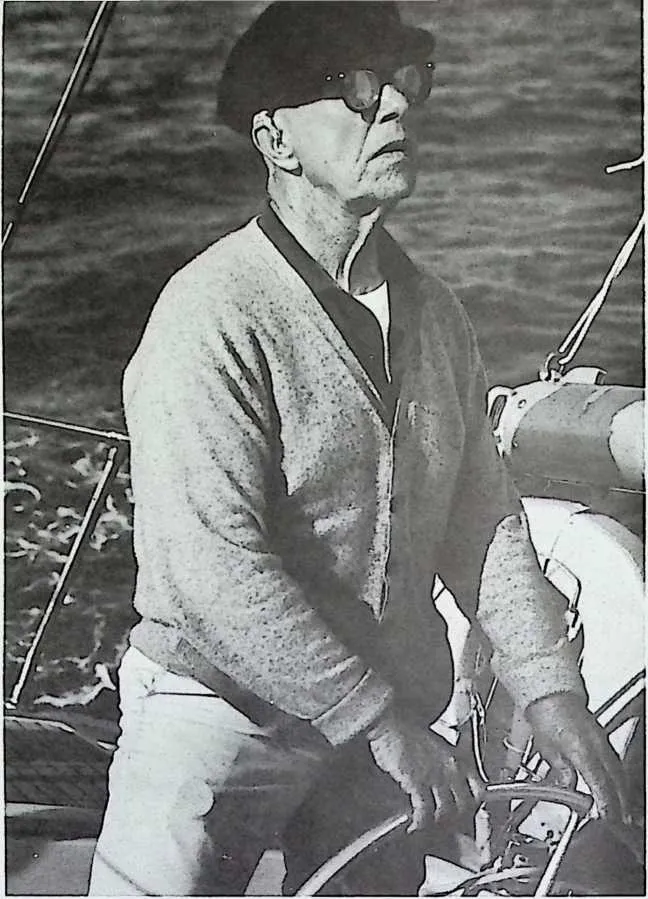
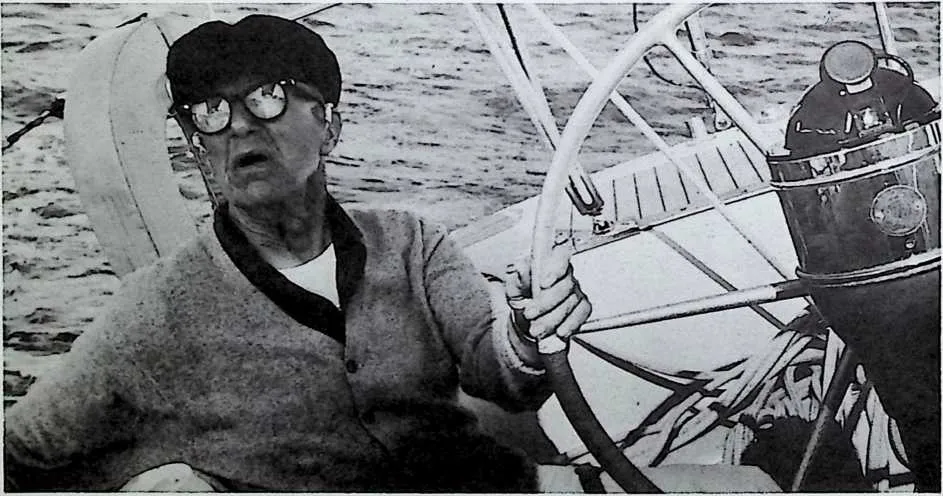
135 Sailing ships are extraordinary. A sailing ship opens up the sea, but unlike a bulldozer it doesn't hurt the sea. The sea closes in again. It gets from here to there without taking anything out of the energy wealth of the universe.
136 Then a very sad thing happened. My father had a series of strokes in three years—and suddenly he couldn't do anything on his own. Here was the father I loved and worshipped, the most incredibly loving man, and I was leading him around by the hand. That was a strange experience for a kid.
137 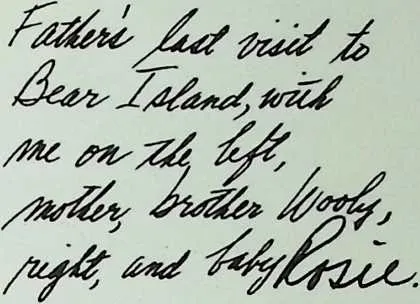
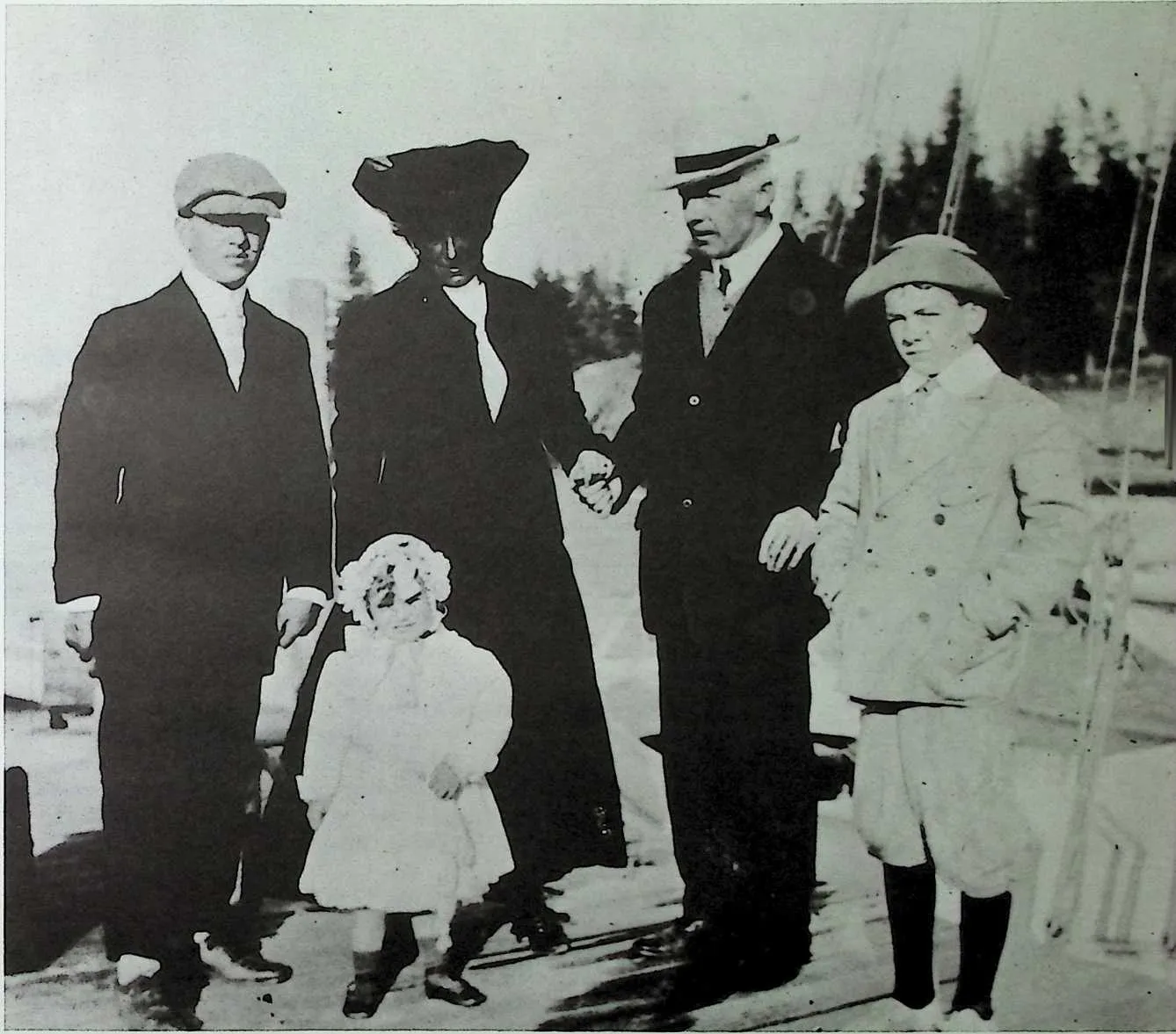 He died when I was quite young, and I missed his warmth. As long as he was alive
we had all those amazing things, but when he died we couldn't have it; but my mother tried to
carry on as if I were still a rich man's son.
He died when I was quite young, and I missed his warmth. As long as he was alive
we had all those amazing things, but when he died we couldn't have it; but my mother tried to
carry on as if I were still a rich man's son.
140 At any rate, I was now the oldest boy and I had to do all kinds of things around the house, like running the furnace and cleaning the rugs. I learned a great deal about housekeeping—don't forget this was before anyone ever heard of carpet sweepers let alone vacuum cleaners.
141 I used to take the rugs out to the clothes-yard and beat them by hand over lines and brush them and groom them. It really gave me a strong sense about the house and what you can be up against in cold rooms.
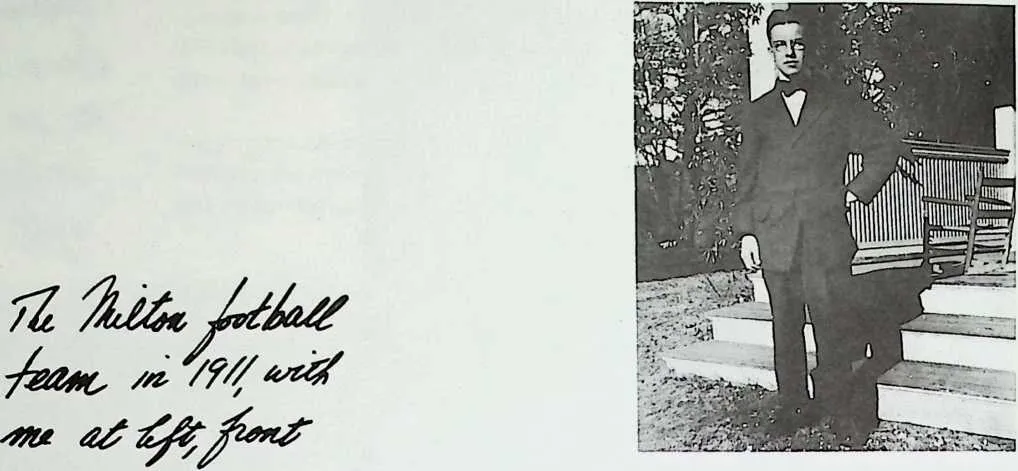
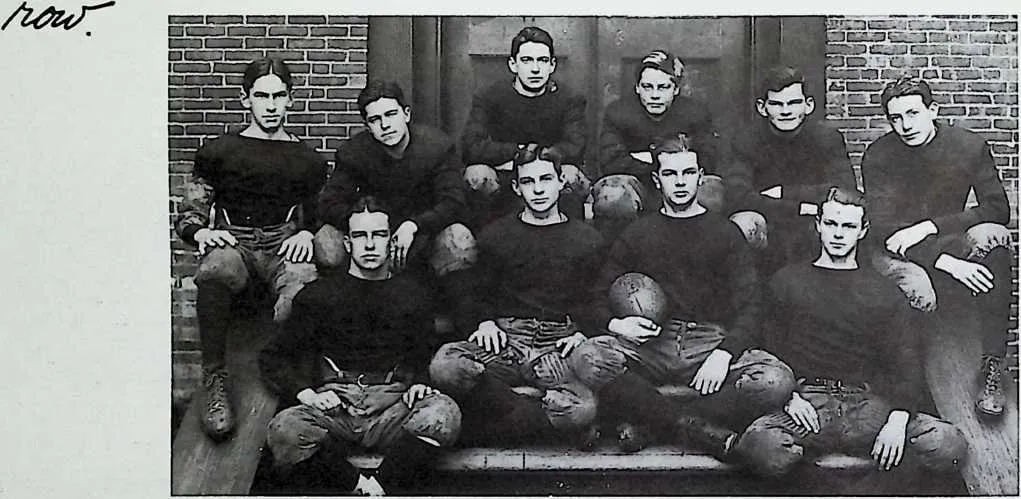
142 I went to Milton Academy where there was a boarding school, but I was a day scholar. There were very few of us day scholars, and you were then a little bit of a second-class kind of character because people realized you didn't have the kind of money needed to buy athletic gear—and I was very athletic, I loved the feeling and wanted to try my body, so I became a good athlete.
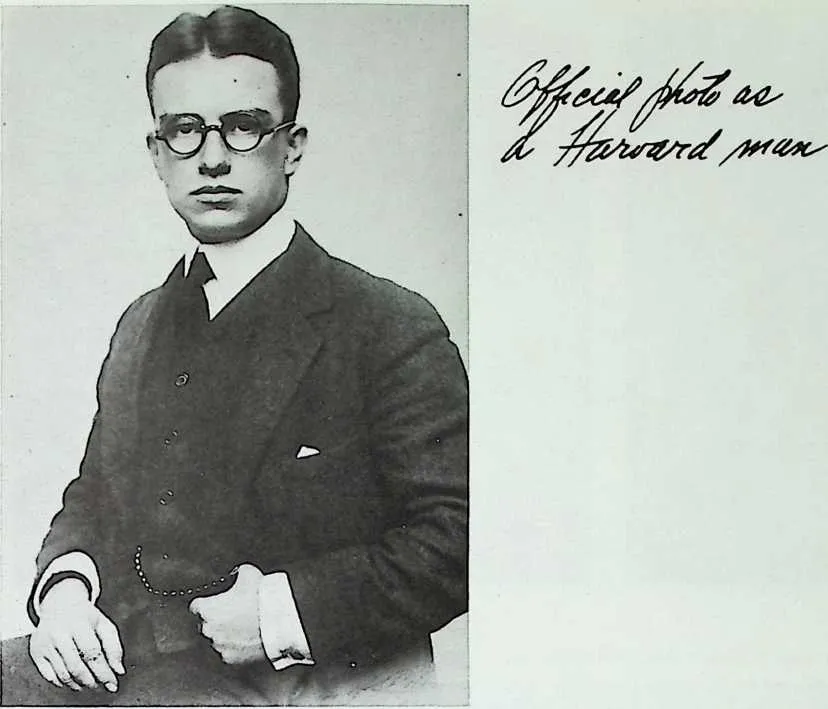
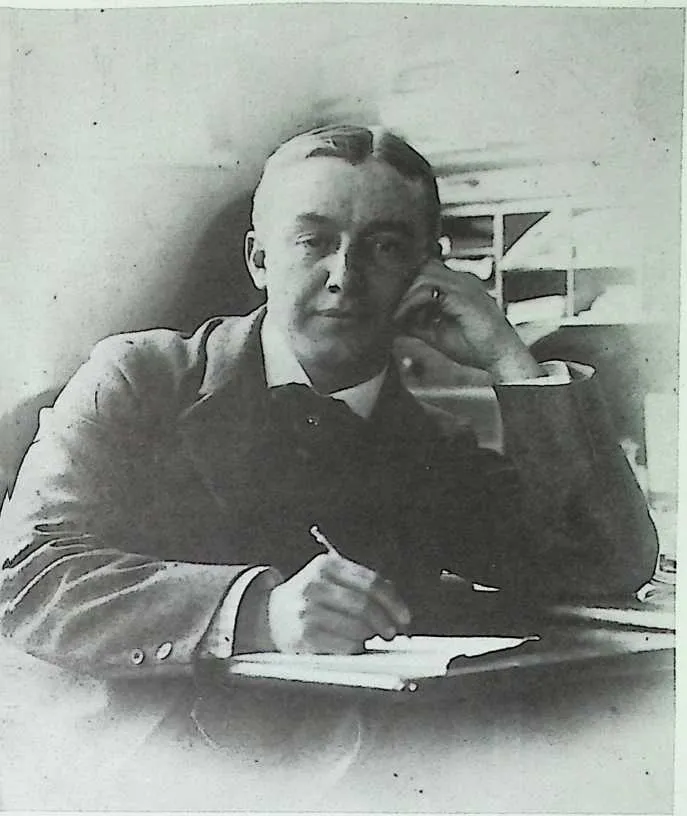
144 In 1912 I became the fifth generation of Fullers to be accepted at Harvard. When I was at Milton Academy I dreamed of Harvard, but it turned out not to be the place where I was going to get an education after all.
145 I found that all my contemporaries from Milton Academy came into all the important Harvard clubs. Brooks Atkinson, who was in my class at Harvard, said he came there from Natick and none of his friends were going to be in any clubs…nor did they even think about it.
146 But my sister Leslie, who was three years older and married to a Porcellian man around the time I was in my freshman year in Harvard, told me, ‘‘Bucky, you're going to be a disgrace to the family. You're not going to get into any of the clubs, and all the Milton boys are.’’
147 But I didn't have an older brother or a father who would arrange things for me so that I would be admitted to one of the clubs on campus and do all the things the others did—they were all arranged.
148 Even my friends would come to me and say, ‘‘Sorry Bucky, my brother says I can't play around with you anymore 'cause you're not going into a club.’’ It was a horrid feeling. It hurt me terribly to find my friends being sorry for me. Then, too, I had my first falling-in-love and was jilted. So I felt hurt in several ways. And—it seems absolutely puerile today—I began showing off. I didn't want to be belittled by them.
149 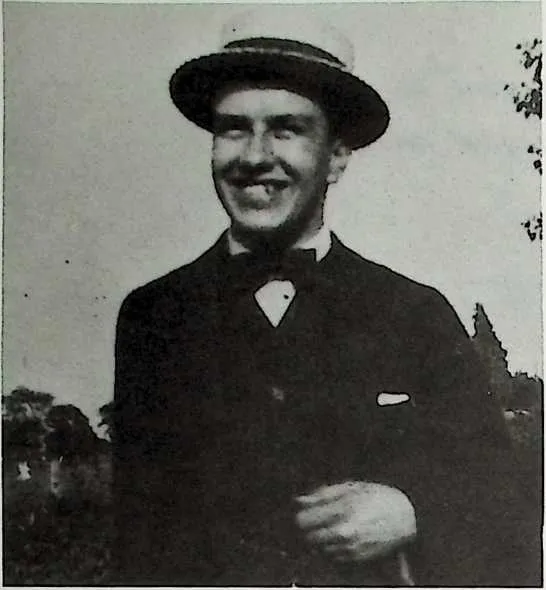
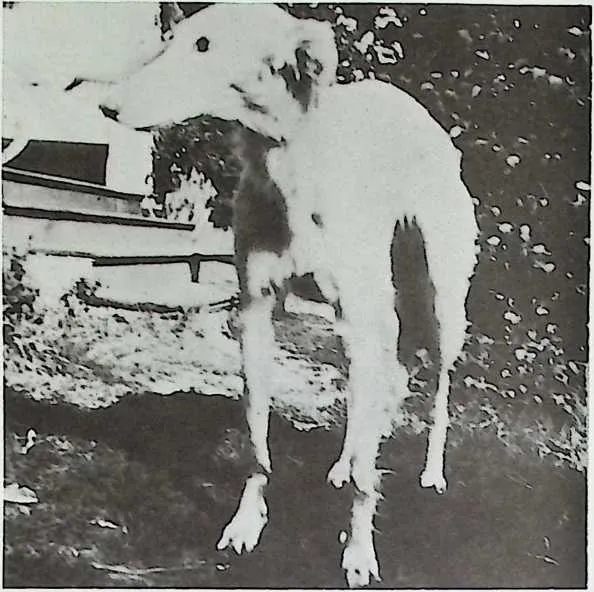
 My sister Leslie had a Russian wolfhound, Mitzi. Leslie went off with her
husband to live in Honolulu and she asked me to take care of her wolf hound in Cambridge
because my mother had sold the Milton house. I dis covered that all I had to do was stop at a
theater stage door with my Russian wolfhound and every girl coming out of the theater would
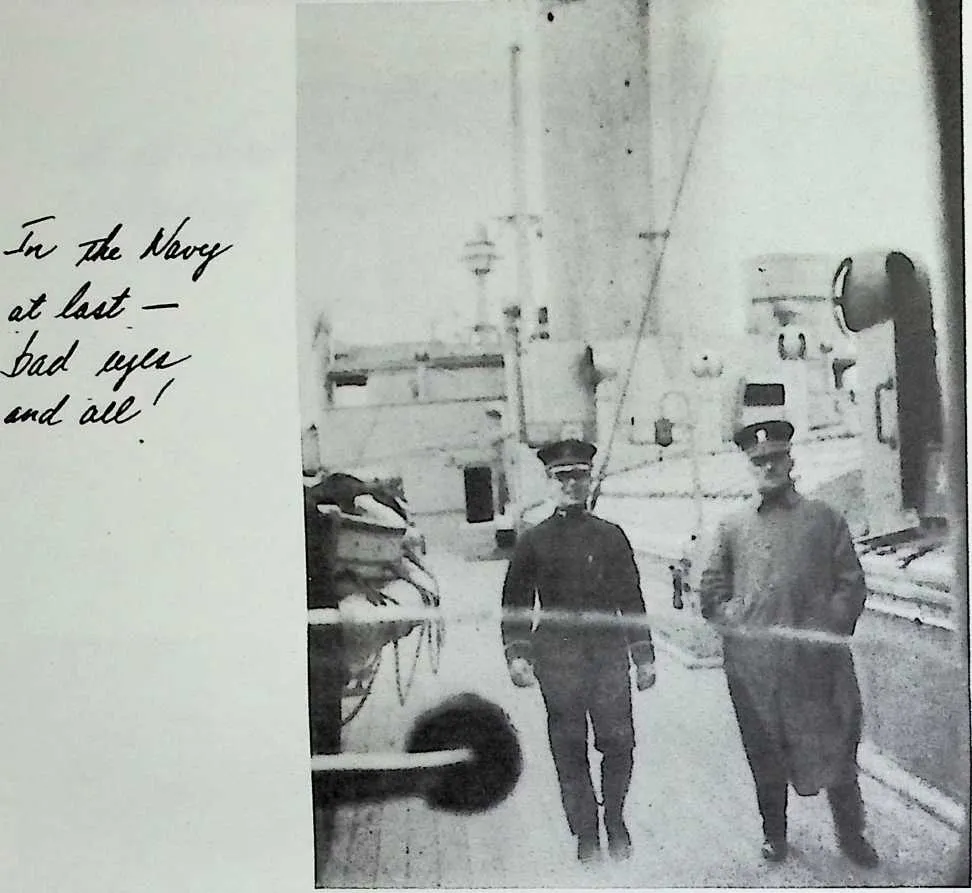
stop to see and pat this beautiful dog. So I could arrange very quickly, if they weren't engaged, to
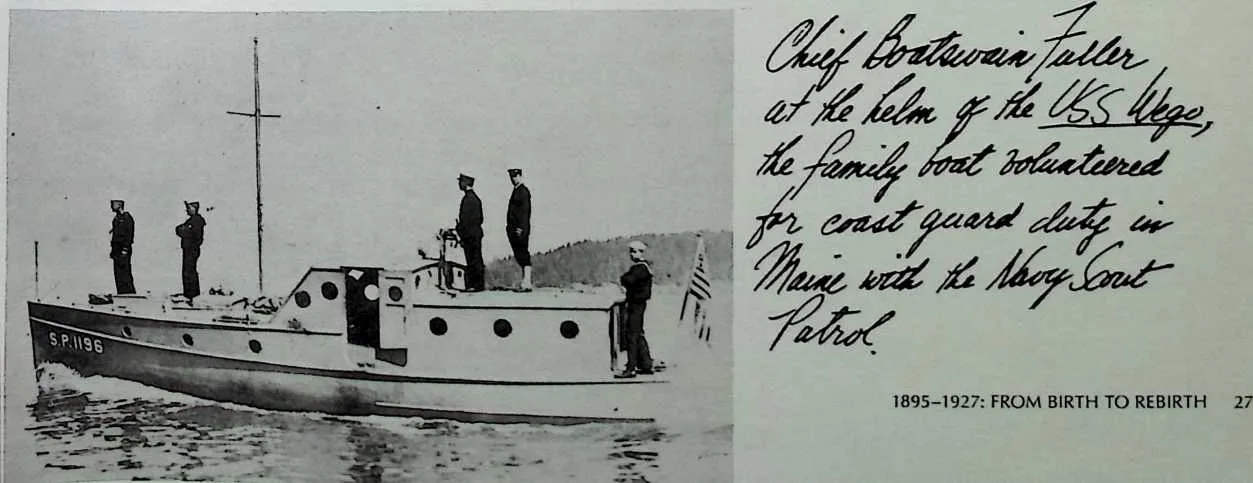
take them out to supper.
My sister Leslie had a Russian wolfhound, Mitzi. Leslie went off with her
husband to live in Honolulu and she asked me to take care of her wolf hound in Cambridge
because my mother had sold the Milton house. I dis covered that all I had to do was stop at a
theater stage door with my Russian wolfhound and every girl coming out of the theater would
stop to see and pat this beautiful dog. So I could arrange very quickly, if they weren't engaged, to
take them out to supper.
150 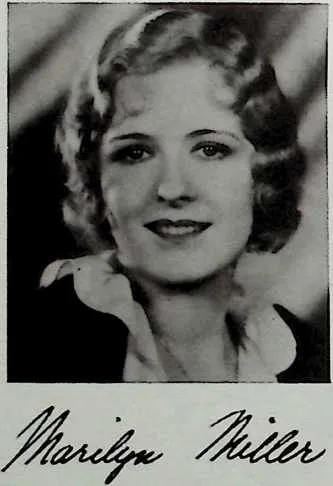 Now I was making all my classmates jealous of my being able to get these girls while
they weren't able to get near them. There was a show then, the Passing Show of 1912—not
Ziegfeld, but a sort of competitor of his called White. He had an actress and premiere danseuse
and her name was Marilyn Miller.
Now I was making all my classmates jealous of my being able to get these girls while
they weren't able to get near them. There was a show then, the Passing Show of 1912—not
Ziegfeld, but a sort of competitor of his called White. He had an actress and premiere danseuse
and her name was Marilyn Miller.
151 She wasn't the chief attraction; she was part of the variety show, but she was really charming and I liked her the most. So she fell for my Mitzi. She had a professional mother who traveled with her and they both agreed to have dinner with me at the Touraine Hotel—one of the fancy restaurants in Boston at that time. And I would show off with her.
152 Then her Passing Show went off to New York. That occurred just at the time of my mid-year exams. So I said I'm going down to New York with the show, and cut all my exams.
153 Marilyn Miller really did like me. I was her first stage-door Johnny. After that she became a great star, and many men fell in love with her. I finally took the whole chorus out to dinner at Churchill's and used up my whole second year's allowance at one shot.
154 Well, Harvard couldn't do anything else but fire me—officially for cutting classes, but in fact for general irresponsibility.
155 That really hurt my mother and she called a family conference with all my uncles to decide what was to be done with the black sheep of the family. They said, ‘‘Never mind what you think. We know the real world, and you'd better shape up!’’
156 They shipped me off to a cousin who had a cotton mill in Sherbrooke, Quebec, where I was an apprentice millwright. I loved the people and the work.
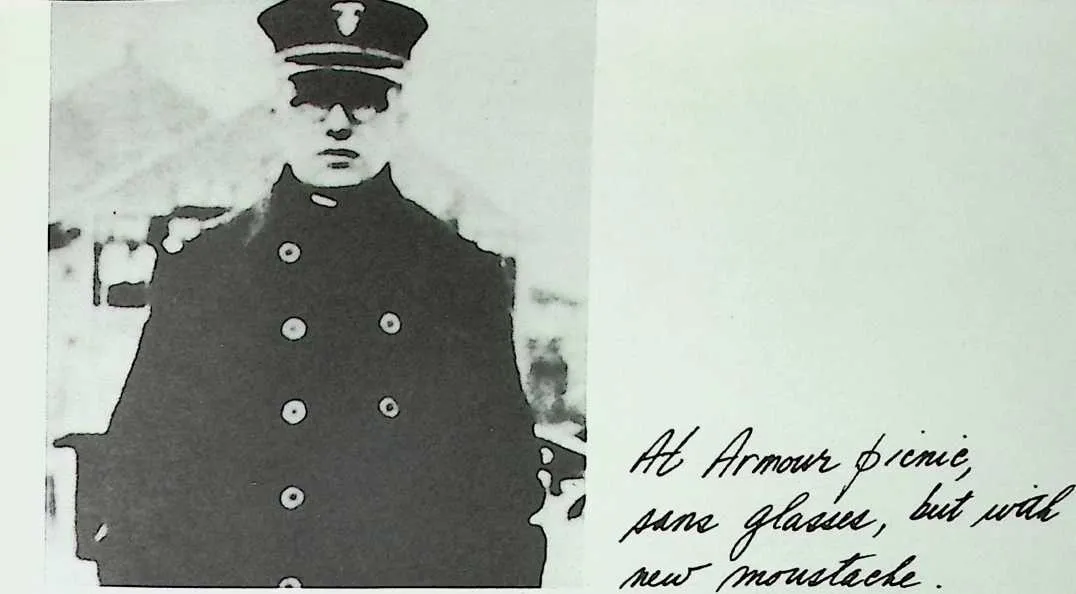
157 I learned to assemble and install every kind of cotton-mill machine—mostly imported in those days. This involved me in a self-tutored course of engineering exploration to rediscover what was behind the original designer's strategy in determining the designs of the various parts. I was even able to improve on some and redesign them.
158 Well, my mother really wanted me to go back to school and I reapplied at Harvard, was readmitted, and just as quickly, redismissed.
159 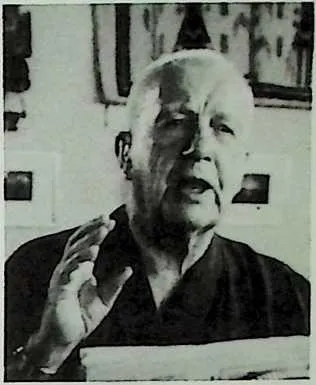 It wasn't that I didn't do well in my studies—I received honors in biology, mathematics,
and physics—but I was bored. I didn't like memorizing things and felt it was a waste of my
capabilities.
It wasn't that I didn't do well in my studies—I received honors in biology, mathematics,
and physics—but I was bored. I didn't like memorizing things and felt it was a waste of my
capabilities.
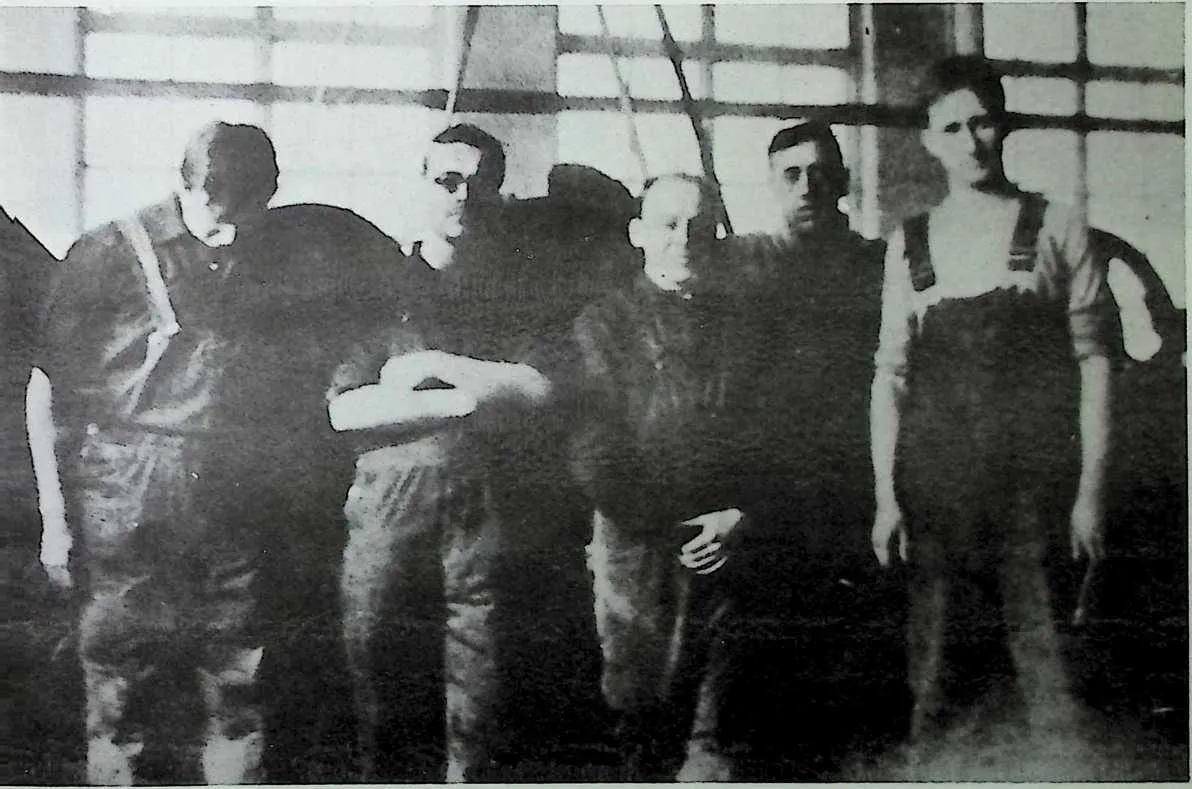

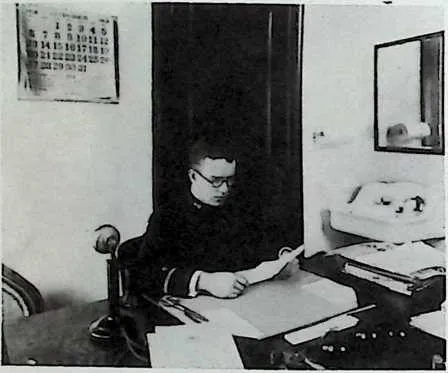
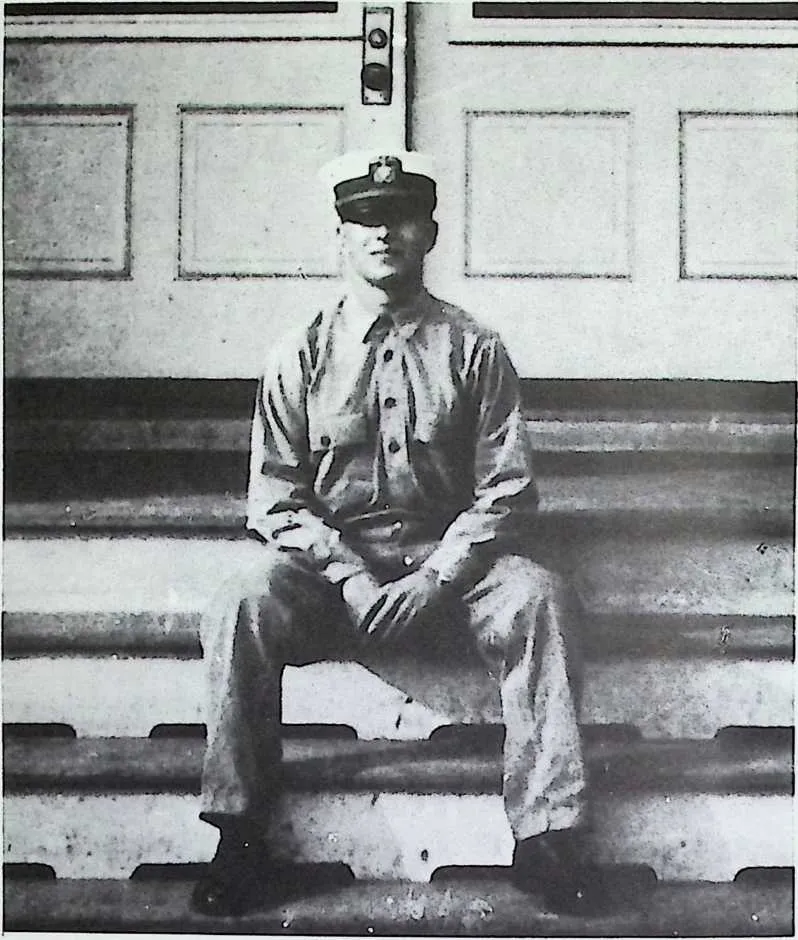
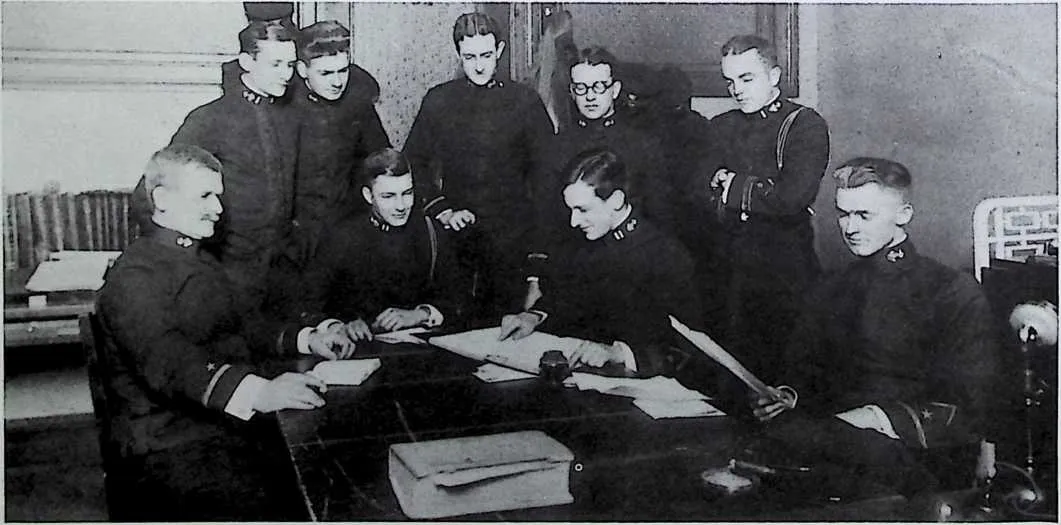
162 Of my class of 700, only 45 were there for graduation. World War I broke out and everybody went off to war. I joined the Navy, and I was really upset with myself, because this was a war and people were getting killed—and here I was having the time of my life. Most of my friends thought serving in the Army and Navy was a chore, but I was absolutely in love with the Navy, because here I had bigger and better ships.
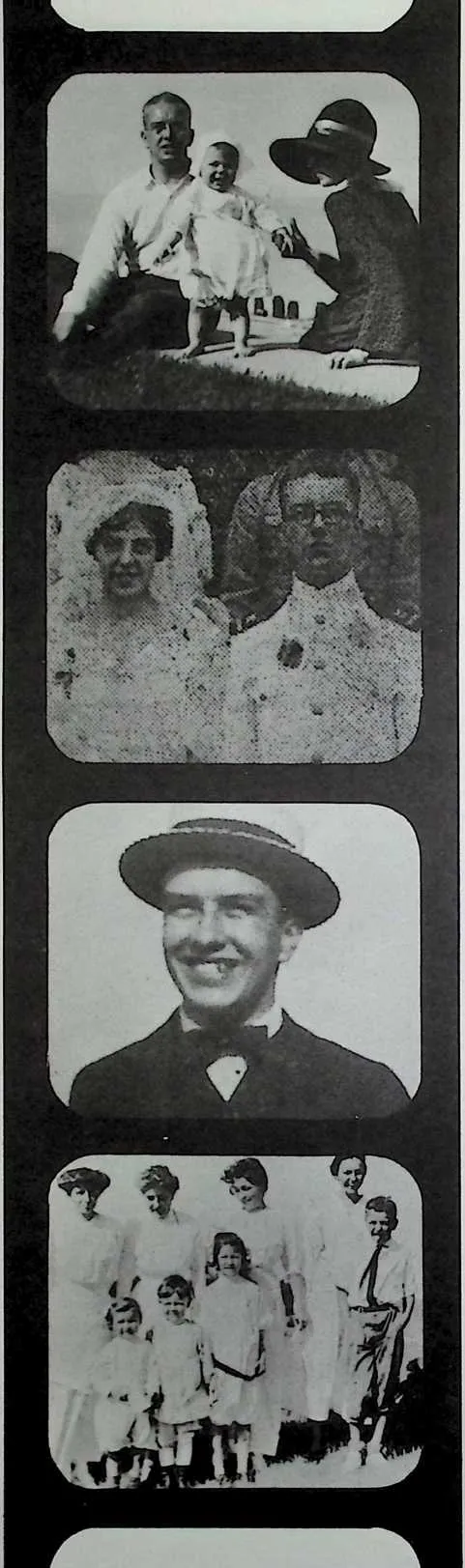
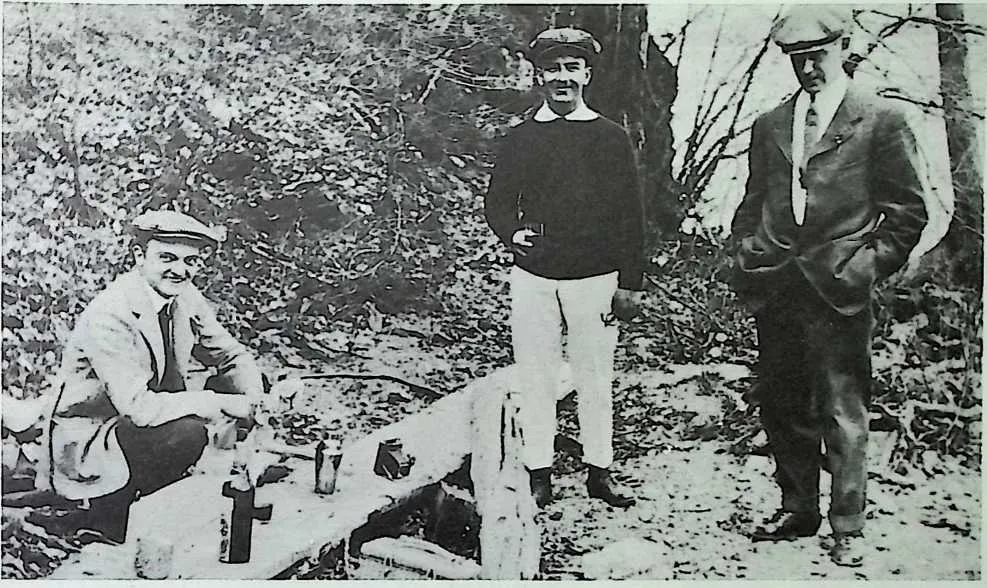
163 At the beginning of my naval service I was in charge of the boats guarding the works where the first naval aviation experimental development took place.
164 Many of our pilots would come in, make a bad landing, and trip and end up in the water, belted in and upside down. If I could get to them in time, our boys would jump overboard and try to cut them loose before they drowned. My boat was quite large, and I invented and had installed a powerful winch to pull the airplanes out of the water in a hurry while the boys pulled the pilot loose.
165 I was then sent to the United States Naval Academy. Then I became involved in the great transport operations that moved millions of people and supplies across the oceans of the world. This got me to thinking very big. I found the Navy was thinking in terms of the total world, of global planning, and that was an extraordinary experience for me.
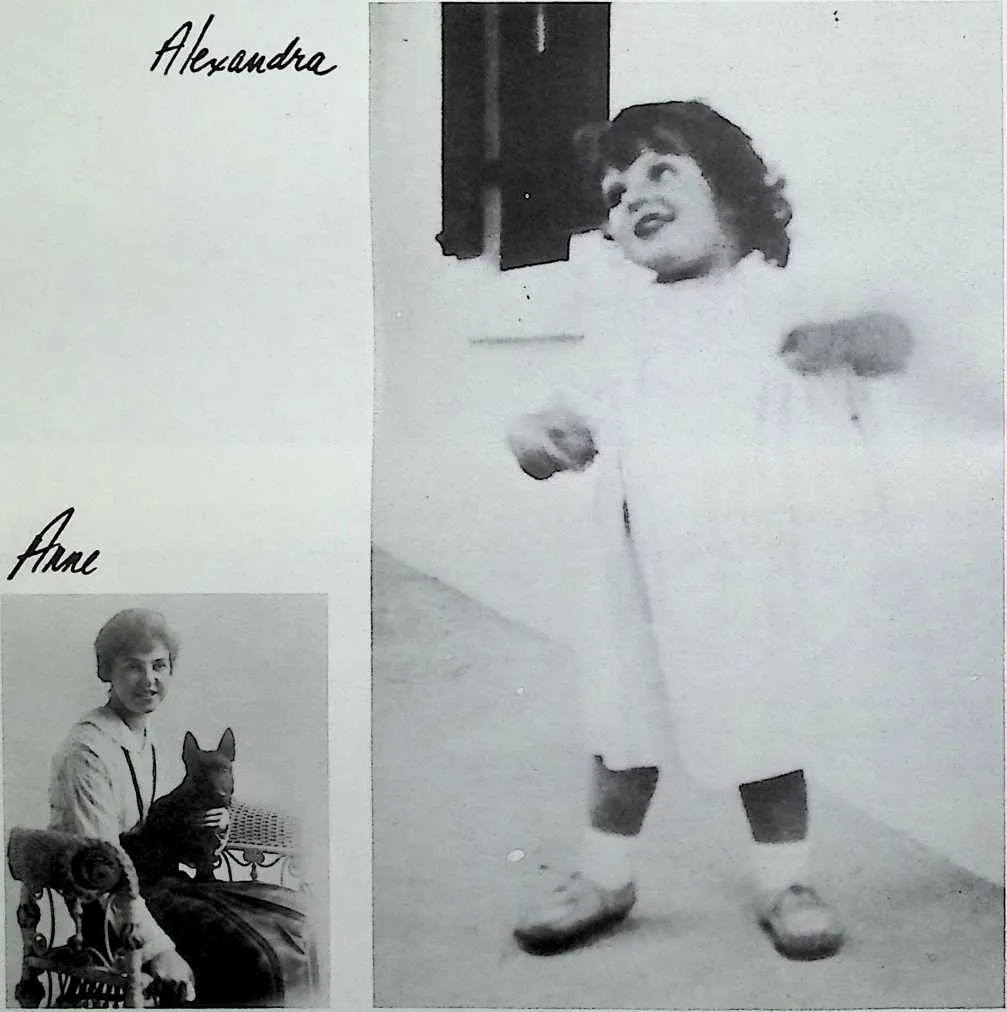
166 In the Navy communications and events were logged chronologically, as they happened; and I began to realize the tremendous value of such records. So I began to think in terms of comprehensivity and continuity. I arranged my own records in chronological order and called it Chronofile.
167 1 said, I'm going to keep a record of things whether they are pleasing or not, and it turned out to be a valuable memory source.
168 Many years later, when I was science and technology consultant for Fortune, researchers from Time would come into my room and say, ‘‘Bucky, you have a way of getting hold of remote things. Have you got anything on this or that? I can't find anything about it.’’ I had my Chronofile bound in volumes, and I'd start working up and down the shelves. Suddenly, I'd find the answer that I listed fifteen years earlier. It's a very good memory mechanism.
171 I remember the first time ever looking back at the wake of my ship and seeing all the whiteness and the foam,
172 and thinking, ‘‘That's white because it all consists of bubbles’’;
173 and I thought, ‘‘How many bubbles am I looking at?
174 I am looking at fantastic numbers of bubbles.’’
175 Here comes this wave.
176 Look at all this whiteness and all those bubbles. I said to myself, ‘‘I've been taught at school that to be able to design a model—because a bubble is a sphere—you have to use tt, and the number, tt, 3.14159265, on and on goes the number.
177 We find it cannot be resolved because it is a transcendental irrational.
178 So I said, ‘‘When nature makes one of those bubbles, how many places did she have to carry out tt
179 before she discovered you can't resolve it? And at what point does nature decide to make a fake bubble?’’
180 I said, ‘‘I don't think nature is turning out any fake bubbles, I think nature's not using -nr.’’
181 This made me start looking for ways in which nature did contrive all mensurations, all her spontaneous associations, without using such numbers.
184 When I came out of the Navy I went into Armour and Co.'s great packing house. They made me assistant export manager. I began thinking about the total foods of humanity around the world.
185 You see how by this comprehensive anticipatory way of looking at things and thinking about the total needs of total man, I came a few years later to invent the words, ‘‘Spaceship Earth.’’ Because I began to think about the total planet as being as beautifully designed and equipped as a ship.
186 How do you run it in such a way as to take care of everybody?
187 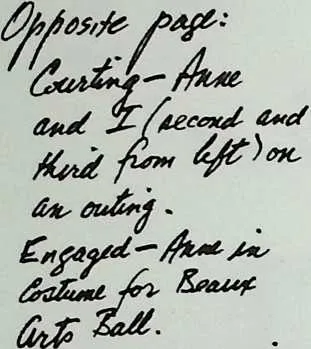
 Nobody was thinking of it in those terms, and I said they should be doing just that.
The Navy meant, not only getting into the air with airplanes and into the ocean with
ships and submarines, but into radio which was really just developing. I was very
excited when one of the boats I was commanding was assigned to Dr. Lee DeForest to
make the first experiment of talking by voice radio from an airplane to a ship at sea. I
felt I was being introduced to a new world. Later, I became an aide to admirals in
charge of the 130 transports and cruisers moving millions of people across the ocean
and back. I kept track of all shipping movements and I became deeply involved in
communications.
Nobody was thinking of it in those terms, and I said they should be doing just that.
The Navy meant, not only getting into the air with airplanes and into the ocean with
ships and submarines, but into radio which was really just developing. I was very
excited when one of the boats I was commanding was assigned to Dr. Lee DeForest to
make the first experiment of talking by voice radio from an airplane to a ship at sea. I
felt I was being introduced to a new world. Later, I became an aide to admirals in
charge of the 130 transports and cruisers moving millions of people across the ocean
and back. I kept track of all shipping movements and I became deeply involved in
communications.
188 When President Wilson went to Paris at the end of the war, for the peace conference, he was the first president in history to use radio. We arranged for him to be able to communicate all the way across the Atlantic. I was there when the first transoceanic telephone call was made by Wilson from the steamship George Washington to Arlington.
189 It was through experiences like this that I was discovering what was going on in technology. This breaking down of great distances on earth and in the sky was something so foreign to anything my father or my grandfather or my great-grandfather ever experienced.
190 I began to realize we were in acceleration in human affairs too, that a new world was coming in.
191 We were going from track to trackless, from wire to wireless…to ephemeralization.
192  I began to realize that while armies fight very local battles, the Navy is inherently
comprehensive, dealing with the total earth.
I began to realize that while armies fight very local battles, the Navy is inherently
comprehensive, dealing with the total earth.
193 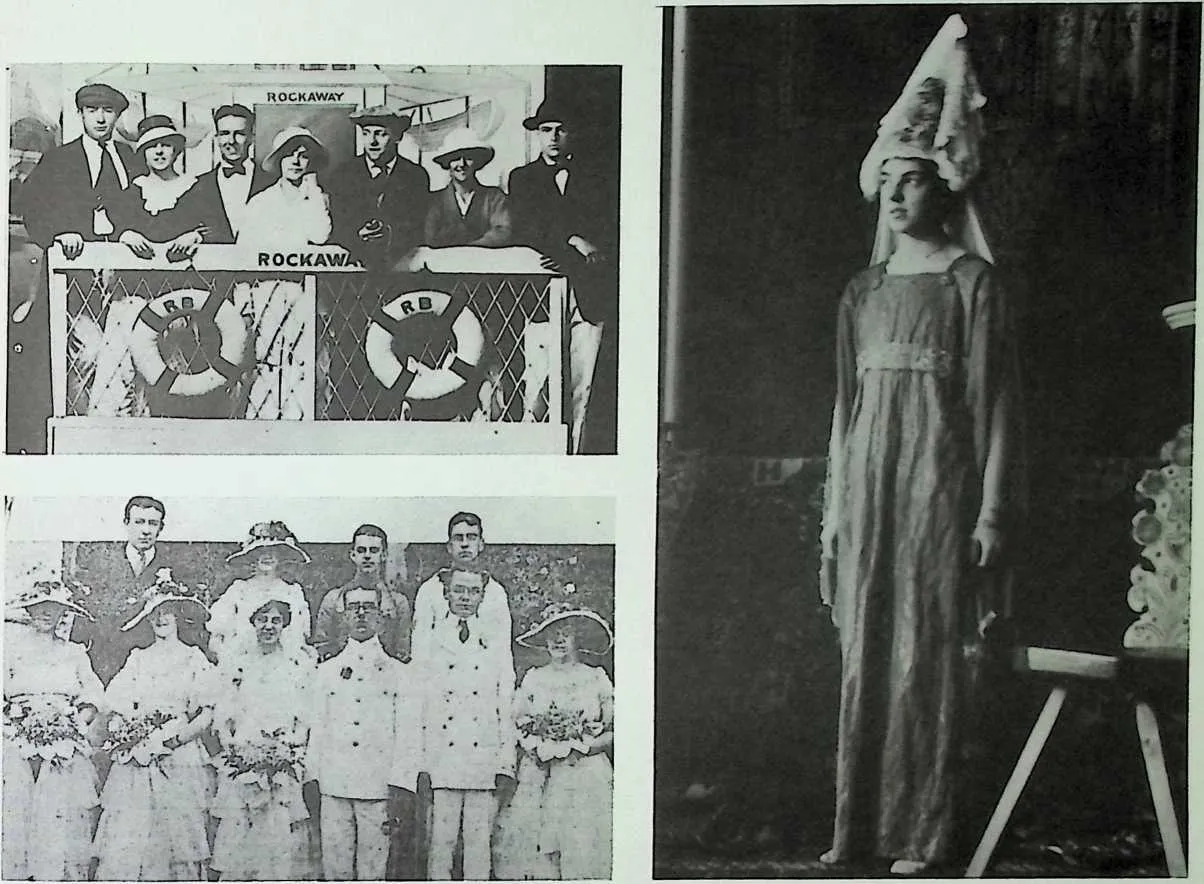 After the second time I was fired from Harvard I went down to New York, where I met
this lovely girl, Anne Hewlett. I courted her through thick and thin for two years and she came to
visit me at the Naval Academy in Annapolis in 1917. We were married July 12 at Rock Hall,
Long Island—with all the trimmings.
After the second time I was fired from Harvard I went down to New York, where I met
this lovely girl, Anne Hewlett. I courted her through thick and thin for two years and she came to
visit me at the Naval Academy in Annapolis in 1917. We were married July 12 at Rock Hall,
Long Island—with all the trimmings.
194 The wedding cake was enormous and I cut the first slice with my sword. In the excitement I replaced the sword in its scabbard, cake-crusted. Some time after that I was embarrassed when I drew my sword to find wedding-cake crumbs still stuck to it.
195 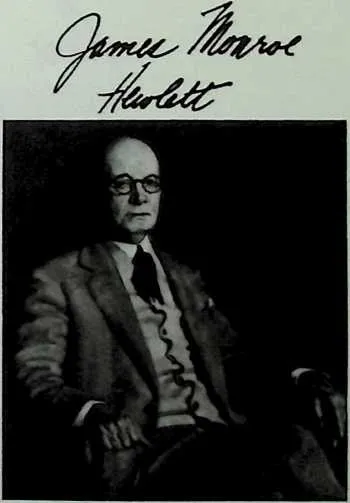 Anne came from a large family; she was the oldest of ten children. Her father, James
Monroe Hewlett, was a prominent architect and he introduced me to the world of
architecture. For the first time I met people who were building on the land. And for the
first time there was a father again, who said to me, ‘‘Don't pay attention to what
people say. What you think is the most important thing. Pay attention to your own
thoughts.’’
Anne came from a large family; she was the oldest of ten children. Her father, James
Monroe Hewlett, was a prominent architect and he introduced me to the world of
architecture. For the first time I met people who were building on the land. And for the
first time there was a father again, who said to me, ‘‘Don't pay attention to what
people say. What you think is the most important thing. Pay attention to your own
thoughts.’’
196 Our first child Alexandra was born at the end of World War I. She caught the flu, then spinal meningitis, and finally infantile paralysis. She had a wonderful mind, as all children do, and wanted information, but she couldn't walk around because of her illness. Every little child wants to stand up and go over and verify what she sees, and touch it and be sure what it really is; continually confirming the information it's getting from its other senses.
197 She was terribly sensitive to what was said, so that we were often astonished by her response. Two of us would be in the room with her, and we would start to say something having no connection with the kind of thing anyone would talk to a child about. For example, I would talk about some responsibility I had outside the house. And just as I was about to speak, I would be absolutely astonished to find my own words coming out of her mouth.
200 I can only say that there is something like telepathy going on around us, which I am convinced will ultimately be identified as ultra-ultra-high-frequency electromagnetic waves. But because we have no proof of its existence, we try to brush it aside.
201 Alexandra died in 1923, and I couldn't help feeling somehow responsible, that if she had had a proper environment she would have lived.
202 I began to drink heavily. I also threw myself into my work.
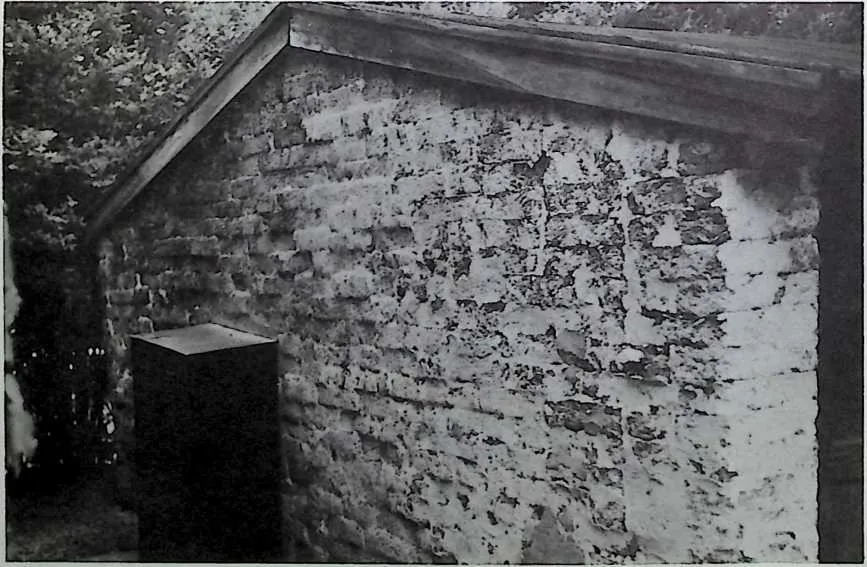
203 In the early 20s, my father-in-law invented a building system of recycled celotex-like blocks mixed with cement, and that brought me directly into the building world. We set up the Stockade Building Company and went into business together. I found it to be a very different game from the one I had learned in the Navy.
204 When I was in the Navy, everything went great because all I had to do was run a good ship, keep it on top of the water, and get done what had to be done. I didn't have to make money with it. Suddenly, with my father-in-law, I had gotten into the building world, and I discovered that what they were doing was trying to make money with building, rather than make good buildings.
205 What hit me very hard was that the building world was thousands of years behind the art of designing ships of the sea and the air. On land, for instance, the thicker and heavier walls were constructed, the more secure people felt —exactly the opposite of doing more with less. At sea and in the sky you had to do more with less.
206 The Stockade Company was based in Joliet, Illinois where they have that great Illinois penitentiary, and I drove there every day from Chicago where we were living.
207 I drove through Cicero to get to work and it was a constant reminder of Al Caponeworld. I was drinking then—it was during Prohibition when even a beer was illegal—but wherever I'd stop for a drink the place'd belong to Capone.
208 It seems we were always coming in on scenes with gangsters. Just getting off a trolley once coming up State Street there was a shooting in the cathedral. Even in the hall of our apartment on Belmont, Anne would meet this guy in the hall with his coat open and guns showing in his holsters.
209 And he was always so polite to her, and so helpful.
210 Then I'd go out at night with some of the company's stockholders, the rich est of all Chicagoans with enormous amounts of money, and the night spot was owned by gangsters—another Capone spot.
211 I got into bad habits of dealing in rich people's places. My salary as head of Stockade Company was $50 a week, so it wasn't easy to carry on.
212 1 was really working very hard, long hours, opening 5 new factories and 240 or so buildings. I thought we were doing well. But my father-in-law sold his stock to raise money he needed and the new people didn't think the company was making a big enough profit. So I was pushed out by the new management. I was a complete failure at business and we were left stranded in Chicago.
213 The death of Alexandra just before her fourth birthday in 1923 and the failure of the building company in 1927 marked a low point in the Fuller fortunes. I had started drinking quite a lot when my daughter died and now everything seemed to be going wrong. I had no idea what I was going to do next. I was absolutely broke. How were we going to eat?
215 All the things that I had been taught worked, were true, but were on a collision course. And all because I wasn't going according to my own thinking but was following everyone else's criteria.
216 I was in a mess. Finally I reached a point where I found myself saying, ‘‘Am I an utter failure? If so I'd better get myself out of the way.’’
217 But I said to myself, ‘‘You do not belong to you, therefore you do not have the right to eliminate yourself. You belong to the universe.’’
218 I used to wander aimlessly in the city, and take long walks around the lake, just drifting about.
219 It was in 1927 that I had this really extraordinary experience, the only one that ever happened to me that was really and utterly mystical.
220 At that time Henry Ford was exhibiting his Model A, down at the Armory, having switched from the Model T, so I walked down from Belmont Avenue.
221 I was on Michigan Avenue, about three or four blocks south of the Chicago River, right across from the Wrigley Building,
222 when suddenly I found myself with my feet not touching the pavement;
223 I found myself in a sort of sparkling kind of sphere….
224 I couldn't believe it.
225 And I heard a voice, such as I had never heard, ever before, saying, ‘‘From now on you need never await temporal attestation to your thought. You think the truth.’’
226 I couldn't believe I was not touching the ground and that I was hearing this extraordinary thing! It was after that that I started writing feverishly.
227 I said, ‘‘I think I must write everything down,
228 because I was thinking the truth.’’
229 There were thoughts about everything.
230 And I said, ‘‘Now who would be interested in this thought?’’ and I'd make an envelope and say, ‘‘I believe Bob Sherwood would be interested,’’ and I sorted out all my thoughts that way.
231 Then, when I had all these envelopes, I said, ‘‘I must write these people a letter incorporating everything in their envelopes.’’ I did this, and then I cut the names off, and later they became the chapters for 4D Timelock.
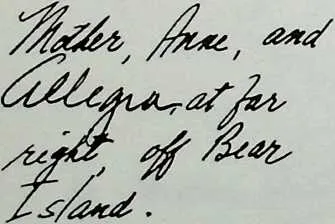
232 And it was also in 1927 that I was inspired by the birth of a new child, Allegra.
233 
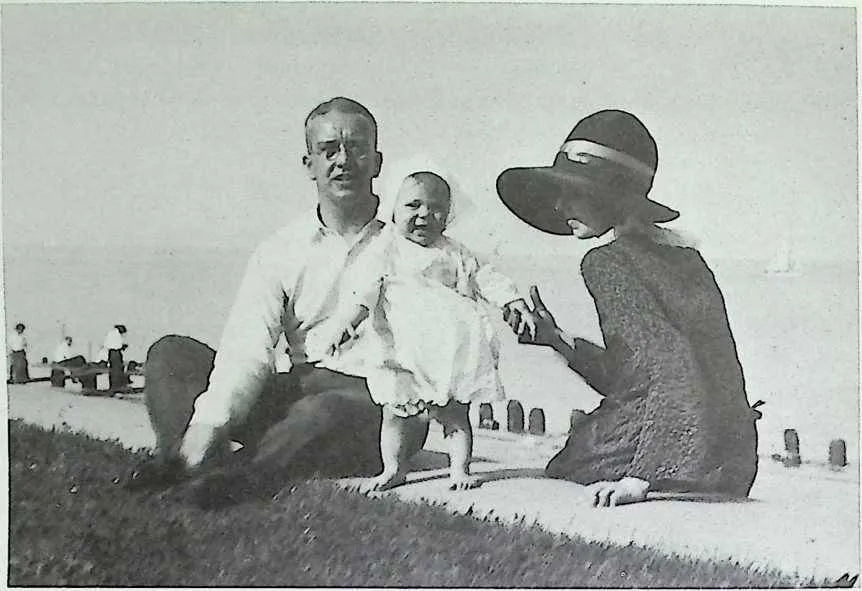
 I had good cause with our first child to feel that children are endowed
with a great deal more than many of us know, that every child may be born a genius but may
simply be de-geniused at an early age because parents and environment lack the ability to
recognize these faculties.
I had good cause with our first child to feel that children are endowed
with a great deal more than many of us know, that every child may be born a genius but may
simply be de-geniused at an early age because parents and environment lack the ability to
recognize these faculties.
234 I said, ‘‘I'm really going to give the rest of my life to the new young life.’’ I pledged, both to the daughter who died and to the daughter now born, that I was committing myself to humanity.