3 1977—:WHY NOT?...
3 Why not print a house on paper?
4 There's no way a man can produce material for enclosures more rapidly than on the great paper-making machines.
5 Add the printing press,
6 and you can put some important mathematical information on the paper.
7 So it's perfectly possible
8 —and we've tried it out—
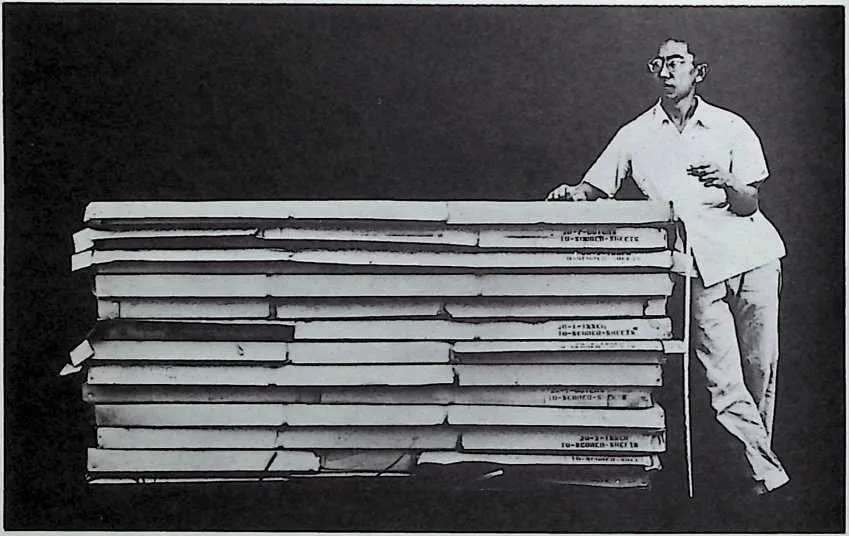
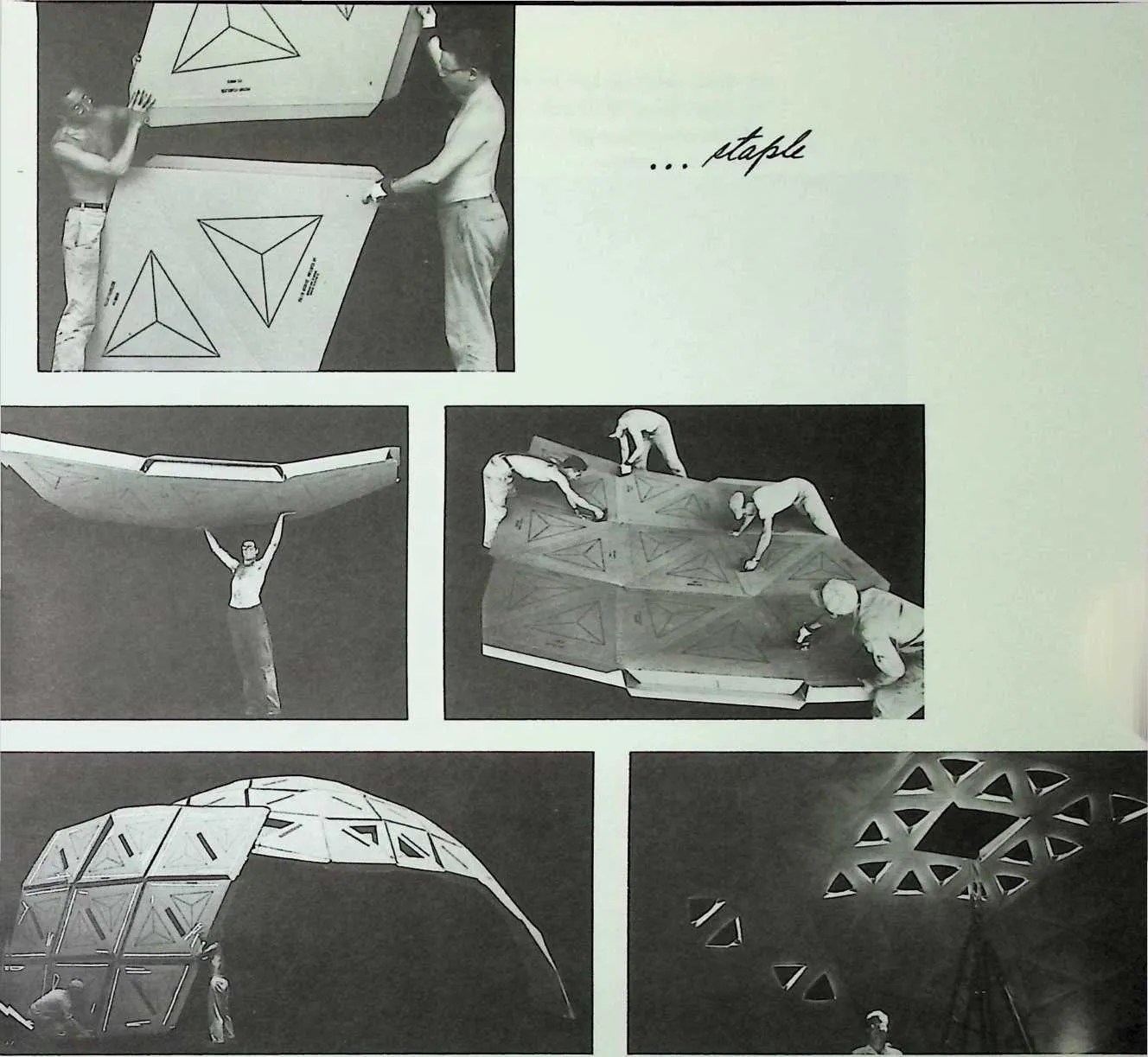
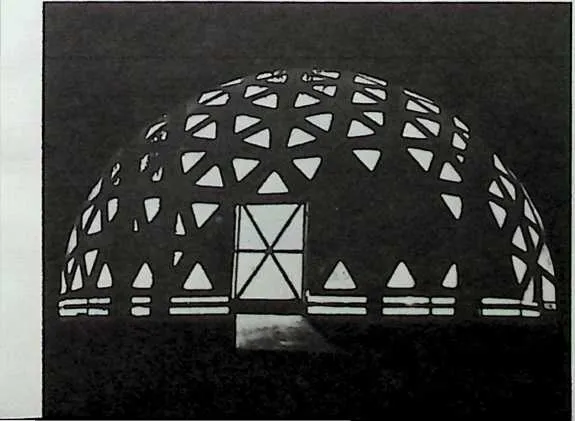
9 to make what we call ‘‘paperboard domes,’’
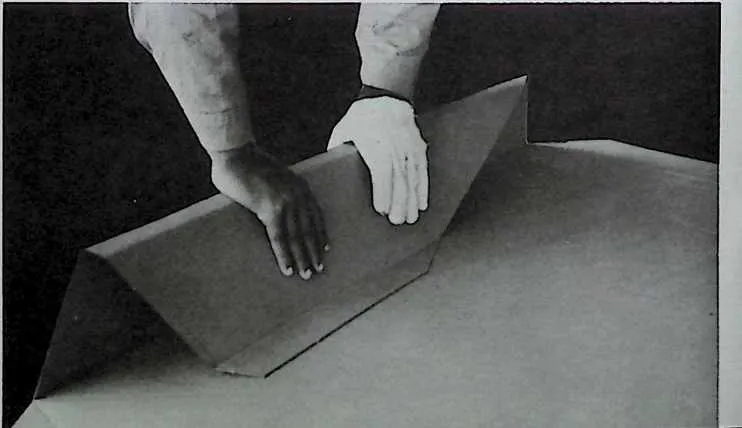
10 where you print beautiful mathematics right onto the material, folding lines, and so forth.
11 Fold and staple; fold, staple…
12 and up she goes.
13 We can now produce, on just one paper-making machine,
14 the materials for 3,000 houses a day;
15 and they would cost about 50 a square foot
16 as against $2 a square foot for our usual kind of enclosure.
17 Made of the best Kraft paper,
18 with very high wet tensile strength and very high wet compressive strength, these enclosures can last as long as any homes we've been familiar with.
21 If, then, you also had an energy package, a ‘‘black box’’ that took care of all your human functions, all the processes which, on earth, are taken care of by the ecological balance of nature
22 —which is just what the astronauts have in order to live in space—man would be a success anywhere in the universe.
23 We figure about 500 pounds is the limit of the black box, not much bigger than a good-sized suitcase.
24 This box, which originally cost some twenty-billion dollars, will be made out of very familiar metals, lightweight, of course; on an aircraft basis, it's worth about $2 a pound, or a thousand dollars total. This $1,000 box, because it will not deteriorate very rapidly, could be amortized in five years;
25 so we'll say it costs $200 a year to buy it.
26 You get your $200 black box and you go off, with a geodesic paper-board dome, anywhere you want, where there's no high pressure of living.
27 Now who's going to pay the high rents one has to pay today?
28 In effect, man with his space umbrella and his briefcase blackbox can go anywhere he wants to in the universe and enjoy the very highest standard of living.
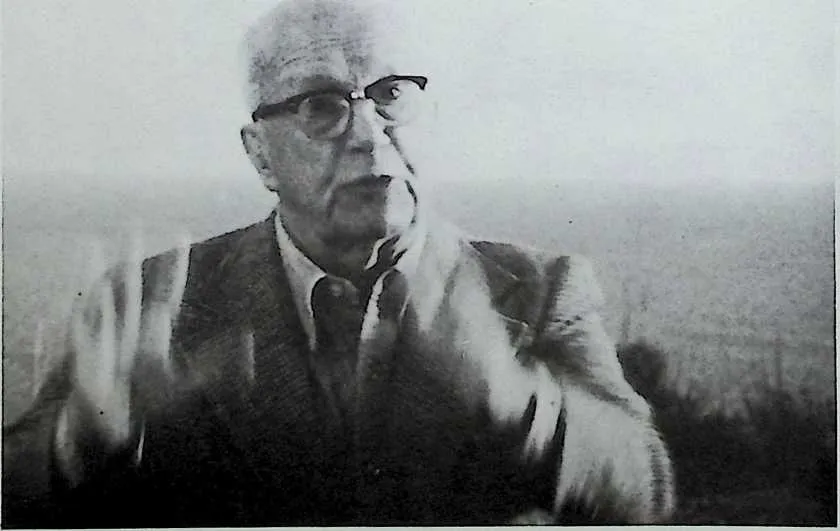
30 I find humanity being incredibly careless and thoughtless in using water. Human beings go to the toilet and get rid of one pint of liquid by using four gallons of water to flush the toilet.
32 Nature's got the sun to atomize the water into the sky so that it can come down on the mountain tops and into the lakes, and come our way. We are using it very carelessly. Nature is very careful. Nature clearly separates the liquids and solids in mammals, and we keep mixing them up again in the toilet bowl.
33 No scientist has ever been commissioned to discover the best way to dispose of beautiful human waste.
34 Cities are obsolete; absolutely.
35  Humanity is always going to be coming together, but not in static cities. The cities
where you grew up were based on trade routes we're no longer using.
Humanity is always going to be coming together, but not in static cities. The cities
where you grew up were based on trade routes we're no longer using.
36 I don't want to talk about urban sprawl; I know human beings did what they did with great earnestness. They were really doing their best within their limits. And I realize they can't improvise and go against their city building codes.
37 But real estate manipulators exploit conditions, saying, ‘‘People have to come in here and the land is scarce so I'm making money.’’ Today you have enormous exploitation.
38 When I was young, 90 percent of Americans were on farms; now it's only 716 percent. The people moved to the city for some kind of manufacture that's no longer there.
39 The minute we get into disarmament—which we will—then all the highest capability of man now going for armaments will be at the disposal of livingry. Then, suddenly, we'll be creating a whole city in one day, and removing it the next—just as you bring a fleet of ships into harbor one day and out the next.
40 The concentrated meeting of humanity will not be given up at all, but we'll get out from under the moneymaking and the exploitation of humanity in the cities.
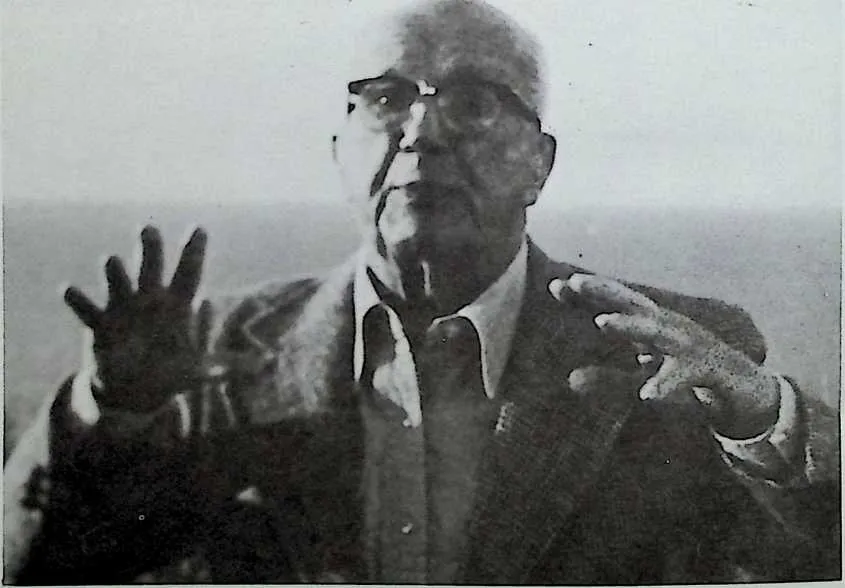
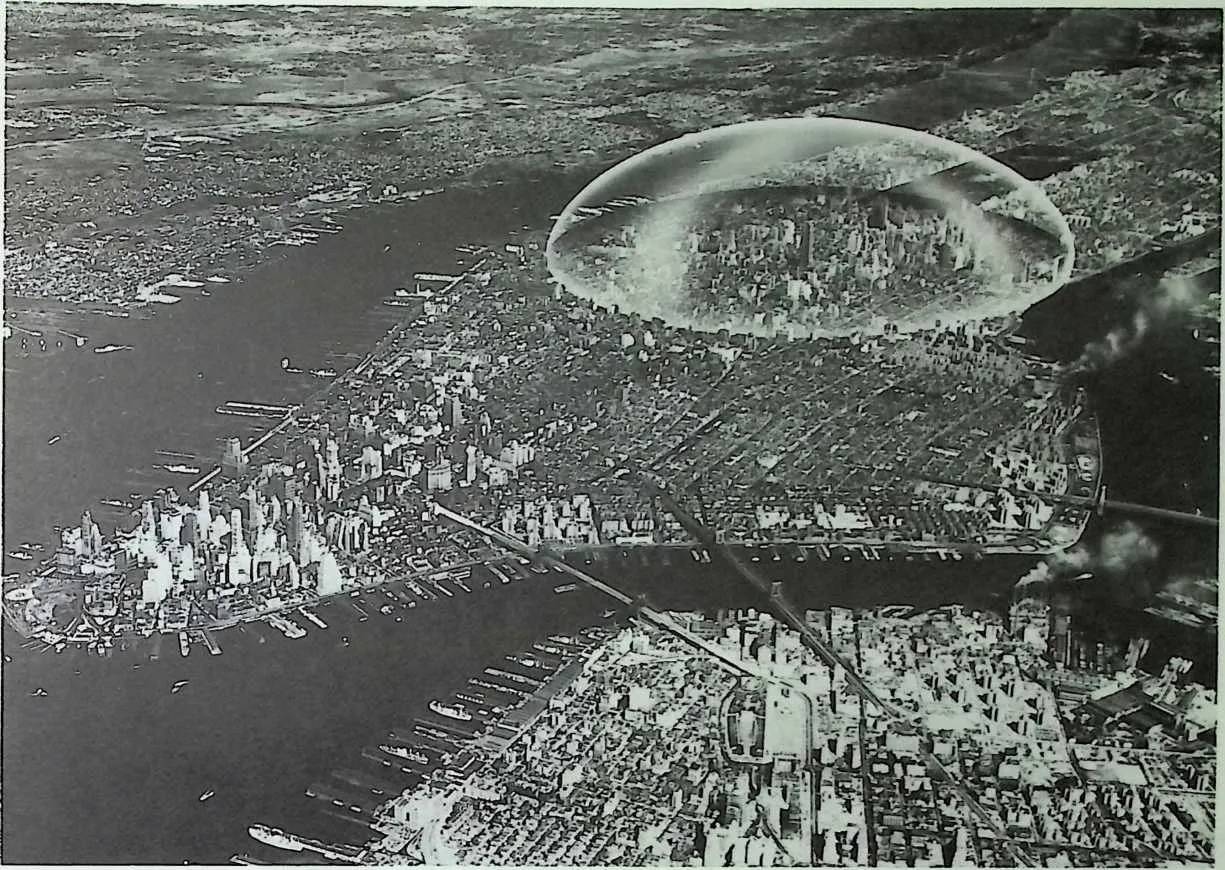
4243A number of people are now talking about roofs over cities; and it's getting to be accepted in bigger plannings; so it's getting into the lingo….
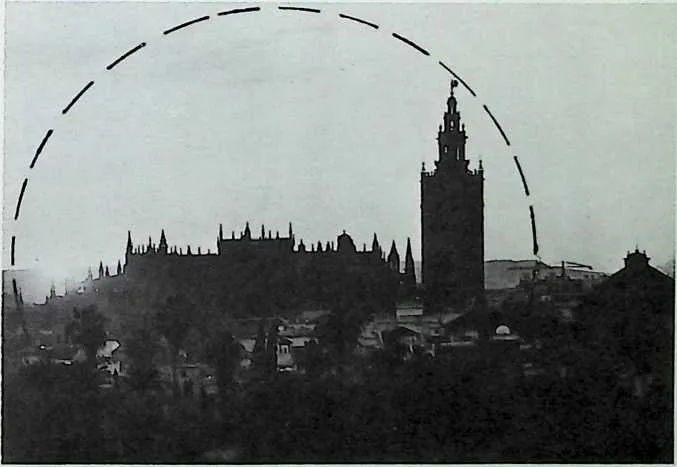
46 The St. Louis Botanical Gardens Climatron is a Garden of Eden; it's very small compared to a roof over a city. But it certainly opens up thoughts about such larger undertakings.
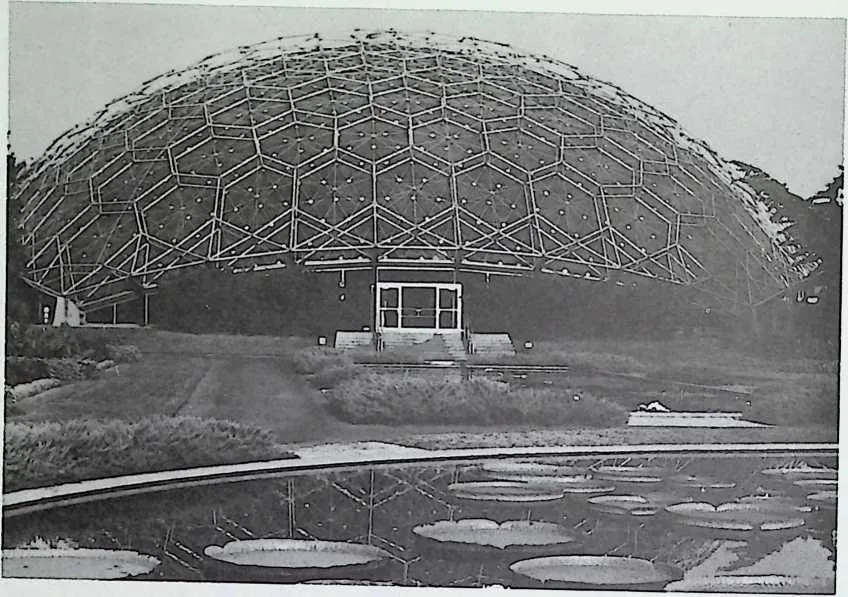
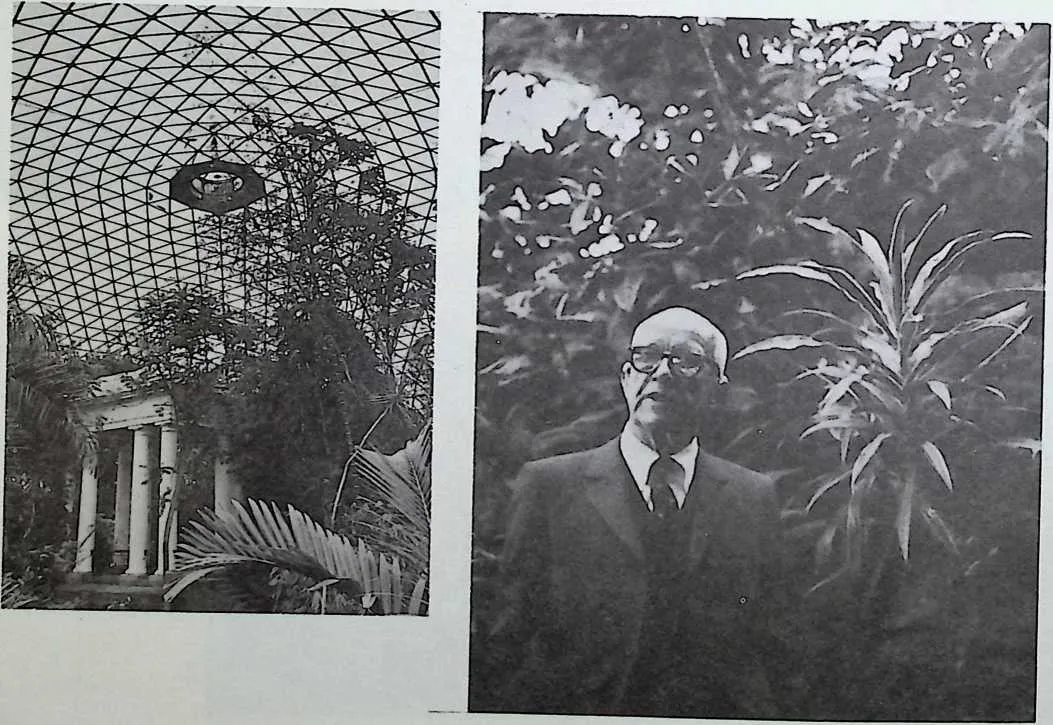
49 Every time you double the size of a dome you get twice as much surface, but eight times as much volume. This means that the volume of molecules gains twice as fast as the surface. So if you double the size of the dome the amount of surface a given molecule inside could gain or lose heat is exactly half, and your energy conservation goes up very rapidly. When we cover something the size of a city, the energy conservation will be such that the great problems we're having about heat control, air conditioning, snow removal and the enormous energy needs involved will be greatly reduced. In a dome of city size, you wouldn't be aware of the grid at all; it just wouldn't be quite as bright as normal.
50 $ Mdb /lM/ufa*
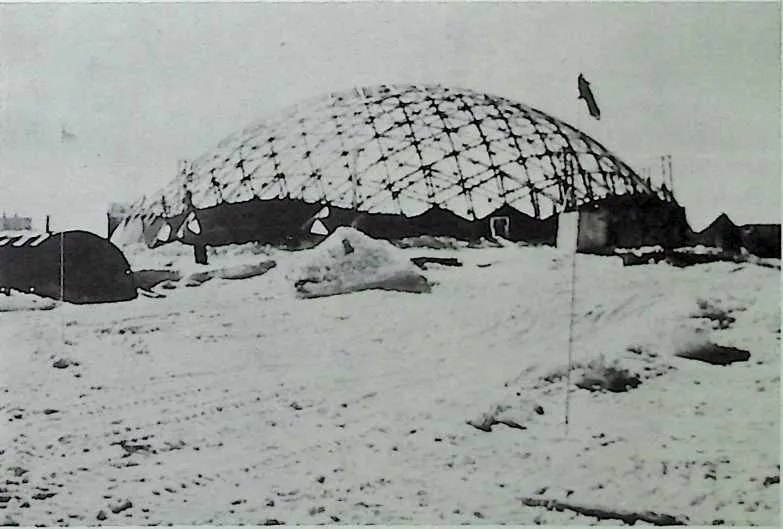
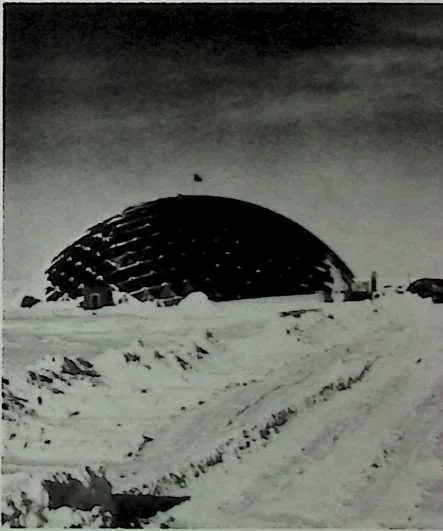
51 A geodesic dome becomes the centerpiece of the new Amundsen-Scott South Pole Station.
52 Fabricated by Don Richter's Temcor, the 54-foot-high, 164-foot-diameter structure serves as a wind and snow screen for a complex of three prefabricated aluminum buildings that huddle beneath it. The dome provides an open-span, pleasant work atmosphere and, even more important, protects the station's people and equipment from Spaceship Earth's harshest elements.
53 Operation Deep Freeze was losing both people and equipment to the elements; so, cap the whole establishment with a dome.
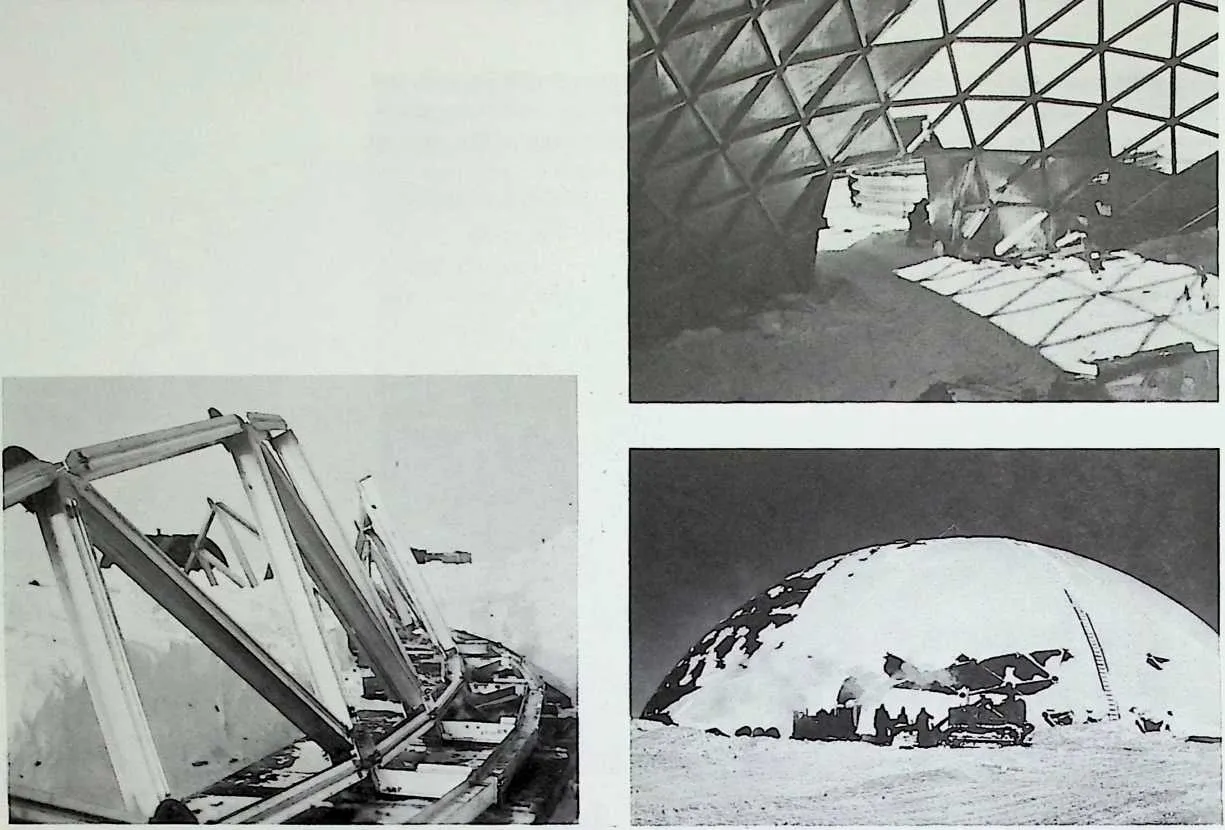
56 Naval Facilities Engineering Command's design parameters were intimidating. The ideal South Pole shelter should:
- be exceptionally lightweight for easy transport by ship and plane;
- break down into components that could
57 easily be sized for air shipment by LC-130s
5859in a limited number of flights on the last leg of the polar journey;
- consist of materials that
6061maintain their strength at extremely low temperatures;
- be large enough to accommo
6263date the three 2-story structures
64to be erected inside it, with room
65to spare both for habitability and for future expansion;
- be comparatively easy to
66 erect under adverse weather con
67 ditions; and
- prevent heat loss from de forming the interior structures.
68 The geodesic dome more than met them.
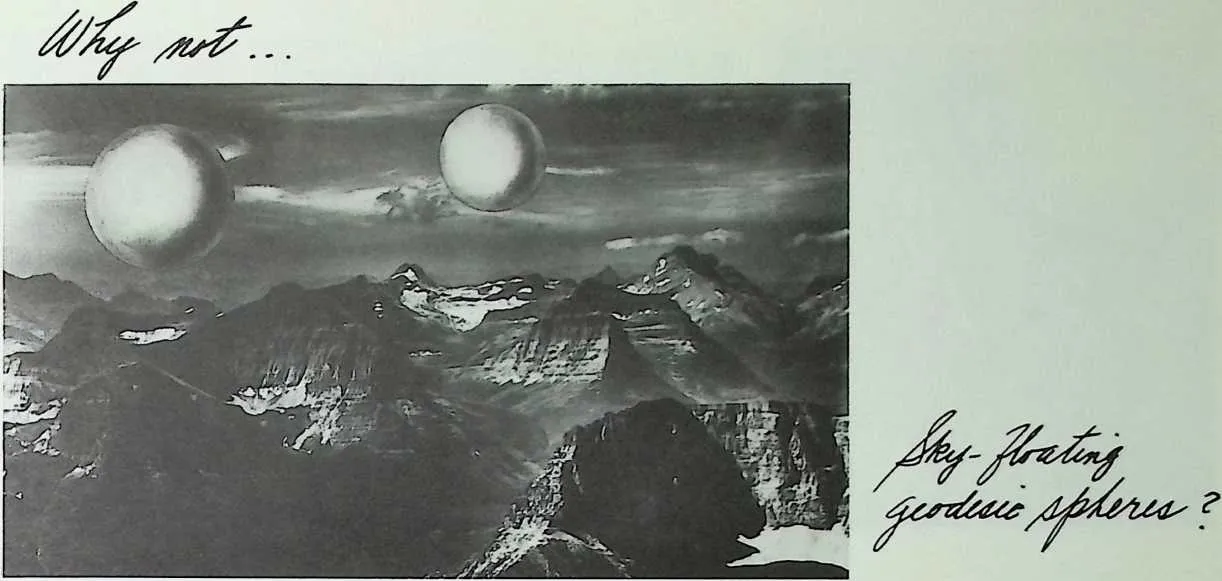
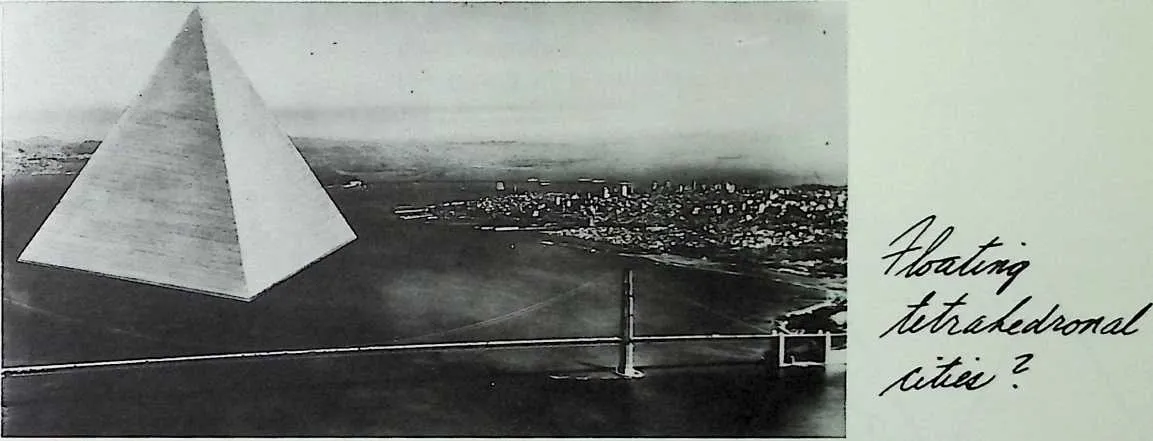
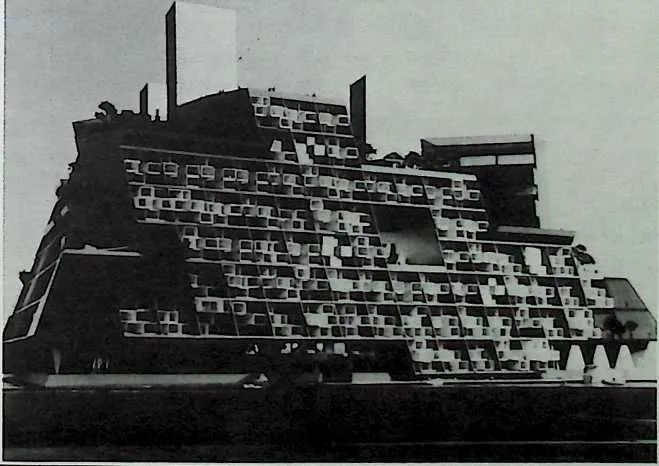
71 What we should be doing is guarding our antiquities from the elements and from vandals by placing a dome over them. Until now, people took their great antiquities apart and carted them off to museums. I've been asked to put domes over the oldest diggings in northeast Thailand where they found the earliest beginnings of the Bronze Age.
72 UNESCO had been asked to do something about the Parthenon which is actually disintegrating. UNESCO recommended taking it apart completely and putting all the parts into museums, replacing the real building with a fake. This infuriated the Athenians and they decided to ask me to put a dome over the Parthenon and have the museum in place.
73 The dome would have to be transparent so everyone would be able to see the Parthenon very nicely while it would be able to guard it from the inclemencies of the weather, pollution, bird droppings, and even from vandals.
74 What I would like to see happen, and what I think is going to happen, is a rebuilding of the Athenses and the Babylonias of history by reclaiming all the antiquities from the museums of the world and bringing them back to where they should be. Then we'll be able to go to them, traveling not only geographically but also in time, as we now go to Pompeii. Archeologists and anthropologists would be able to live there, reconstructing the life of yesterday.
75 People used to say, ‘‘You can't take it with you.’’ Ownership used to be very desirable; now ownership is becoming onerous. Instead of spending enormous amounts of money keeping private museums the owners are not even living in any more, they're all going to want to give the things back to museums and the museums will give them back around the world.
76 The new world that's coming in
77 is an invisible world of doing more with less.
78 We're soon going to have beamed power, and no wires at all.
79 And then, when you begin to have the autonomous dwelling itself, you'll stop having fixed buildings
80 and carrying enormous amounts of power to it.
81 You'll generate your own power locally, as at the airport, instead of as you do. When a great airplane comes in, it's like a small city. Up comes a small truck with the generators and turns the whole thing on —charges it.
82 Up comes another truck with its air conditioners.
83 We don't need to build wires and pipes into concrete buildings; we can move the power around to where it's needed.
84 Thinking about humanity on board our planet, the Spaceship Earth, and playing the World Game, I became fascinated by the question, ‘‘How do we get energy from here to there to help each other?’’
85 If you look at the world map, you could see, not only crossing time zones and reaching Alaska, where the Russians are putting up dams, hydroelectric dams, in all their northerly flowing waters—all the way over there!
86 I suddenly found I could reach the Russian network—1,500 miles. Boy! this would mean something because of all that standby power—that is, at off-peak times when 50 percent of the generating capacity is not being used. I found then that by integrating these networks to produce a global energy grid, we could integrate night and day and double the generating capacity operative around the world—immediately.
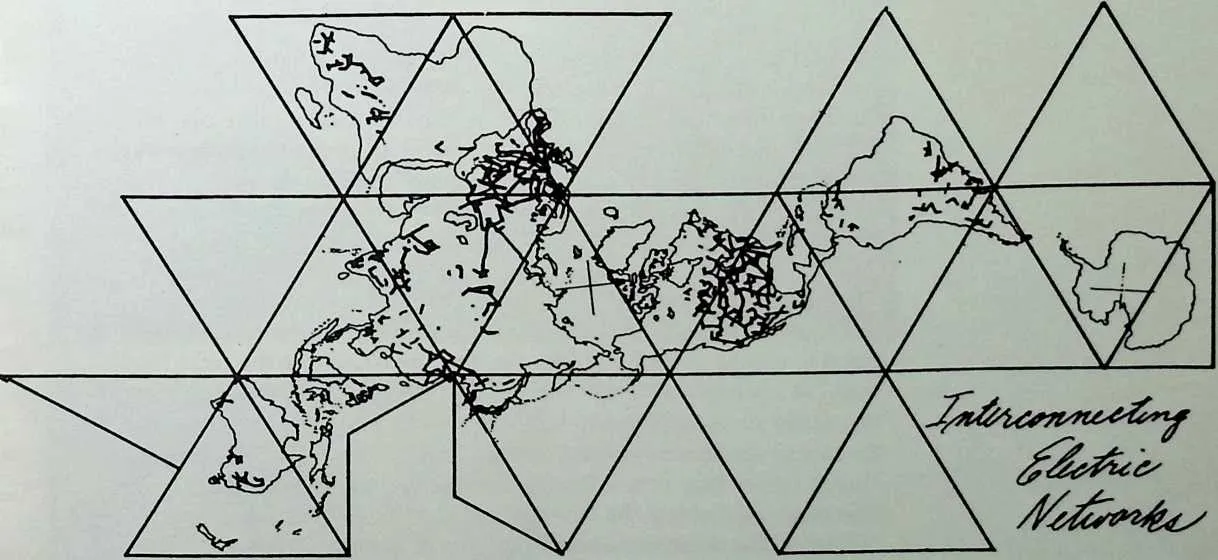
8889INTERCONNECTING ELECTRIC NETWORKS/1968 220 KILOWATTS
90 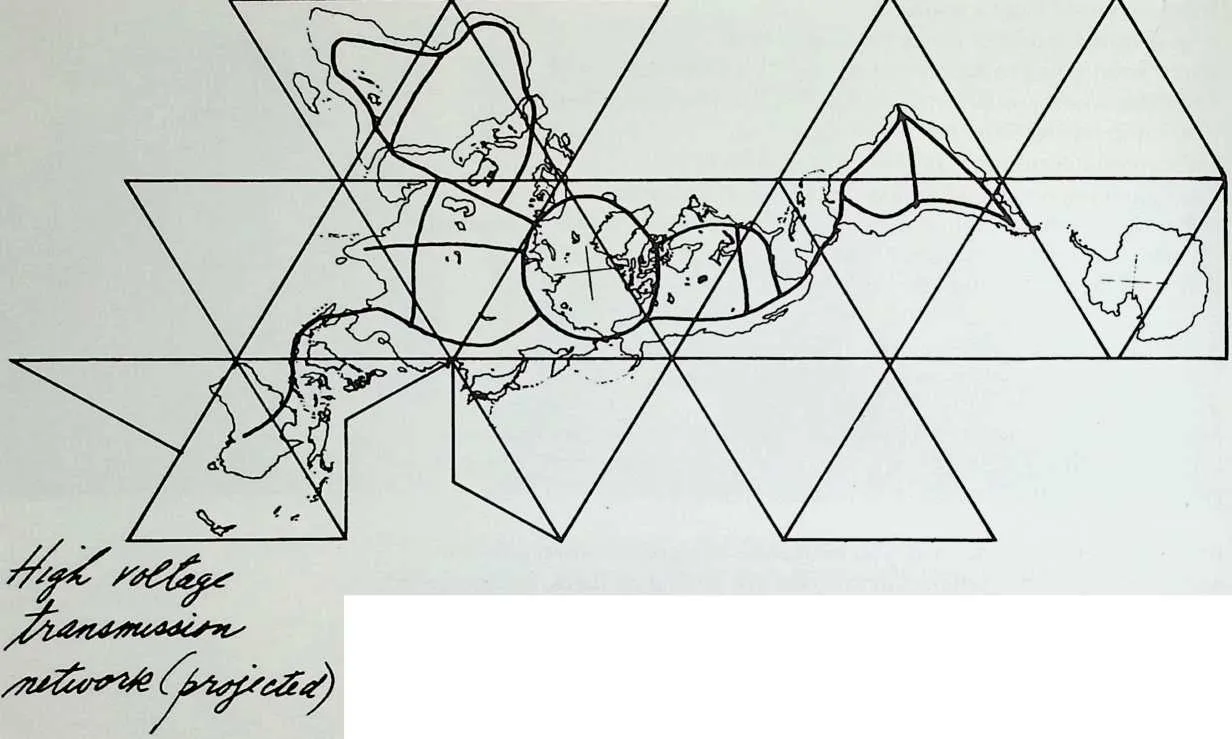 Until recently, there was no way to get energy from here to there in large amounts
except by wire, by electrical conductivity. The further you want to deliver it, the higher and
higher do you have to raise the voltage. The higher the voltage, the more insulating problems will
you get, and so forth. We only got into really large electrical energy distribution at the time of
World War I when we discovered much better insulating devices and got into cryogenics with
really no energy losses at all.
Until recently, there was no way to get energy from here to there in large amounts
except by wire, by electrical conductivity. The further you want to deliver it, the higher and
higher do you have to raise the voltage. The higher the voltage, the more insulating problems will
you get, and so forth. We only got into really large electrical energy distribution at the time of
World War I when we discovered much better insulating devices and got into cryogenics with
really no energy losses at all.
91 We got ultra-high voltage, and it became practical to deliver energy electrically over 1,500 miles, instead of 350.
92 The best customers that power companies have are industries. And they discovered that to hold their industrial customers, public utilities had to anticipate increased uses, for if the industrial customers turned on the juice and didn't get it from the public utility, they'd go and put in their own energy production plants. So the utility company had to study the needs of their customers, and they have the most incredibly accurate charts of when the peak loads come in every day of the year, every minute of the day.
93 The utilities have standby power for peak hours. This excess power is always being generated at a loss—a complete loss. But the company discovered that if it hooked up its wires with the next town's, where the peak loads occur at just a little different time of day or night, what had been a complete loss could go over there and become a profit. With interlinked networks, the loss could be turned to a profit. But within 350 miles, the company couldn't cross time zones. When it reached 1,500 miles it suddenly was able to go right across the time zone to a different peak time; which meant, of course, that there was a much better chance of selling that standby power.
94 When I was doing the World Game in 1969 with students for the first time in New York, I gave them this world network problem. They found it very exciting and developed it so that you could really see what is meant by a design-science revolution—comprehensive anticipatory design science; they really applied it that way. They found you could have a world network and it would double the generating capacity overnight. The heck with the money side—what we really want is to harness that energy and make it work.
95 I took this to Prime Minister Trudeau of Canada who is a good friend. About five years ago he was asked to go to Russia for the first time to meet Brezhnev. I gave my world map with the electrical energy network to Trudeau and he took it to Brezhnev and Brezhnev gave it to his experts. Trudeau came back and said the Russians absolutely loved it—it was great. They could see it extend immediately into China and around the rest of the world, integrating the night and day of humanity.
96 It was my first World Game, and we kept having sessions at different places. We had two at the University of Southern California and we carried on for three years at Southern Illinois University, three years at the University of Pennsylvania and we're doing it again every year.
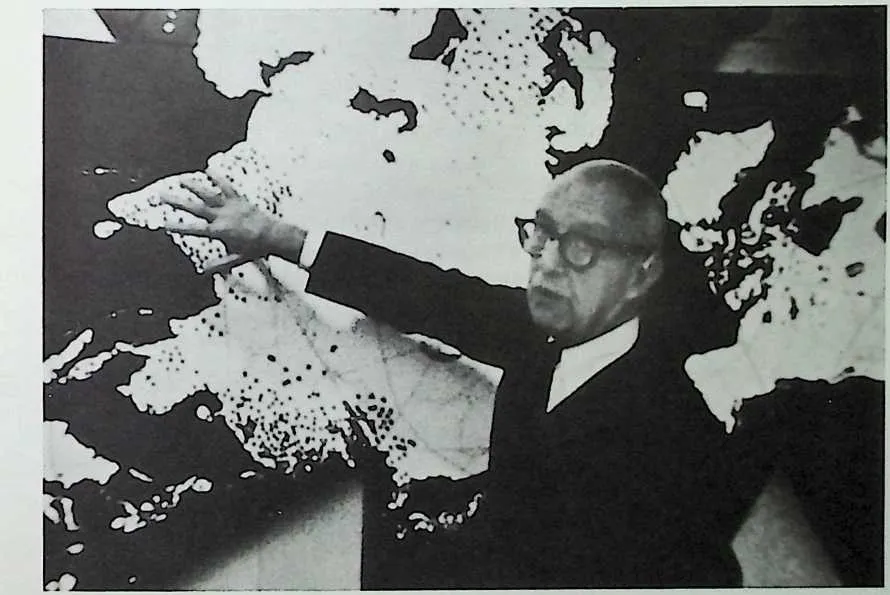
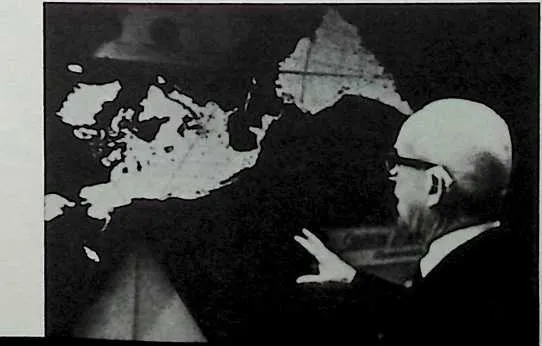
99 At the World Game in Pennsylvania we did a complete study of the energy of our earth, all the different types of resources and so forth, and were able to publish a book. This book was done exactly the way they did the Apollo project: ‘‘What are all the things that have to be done to get human beings to the moon and back, safely?’’ So there's a book on energy now, called Energy, Earth, and Everybody [Gab75], written by Medard Gabel, who led the project. I wrote a little introduction and Stewart Brand wrote an epilogue. In sum, the book shows how using only proven resources, proven technologies, and proven rates at which technologies can be produced and put into place, all of humanity can enjoy as high an energy income as that enjoyed exclusively by North Americans in around 1972 within ten years of starting to do it, while phasing out all the fossil fuels and atomic energy.
100 Looking at our total resources, we realize that the physical universe is all energy—energy associated, which is matter, and energy dissociated, which is radiation—and that one is convertible into the other.
101 Universe is 100 percent efficient; syntropic here, and entropic there, but no energy created, no energy lost.
102 During the time of the New Deal attempts were made at providing electrical power to rural areas like the Tennessee Valley which the private sector was not interested in backing. The government built dams and turned all the energy of what used to be disaster floods into low-cost energy for the poverty stricken area.
103  The government put in enormous networks for that rural electrification. When it came
to the business of integrating across time zones, it was discovered that the government networks
would have to be integrated with existing private networks. It was lucky that we had computers,
because the problem was put to the computer: Which way would the private sector make more
money—by integrating with the government network or not? The answer came back clearly:
they'd make 30 percent more profit integrating. And from a fixed kind of position, they yielded
very rapidly.
The government put in enormous networks for that rural electrification. When it came
to the business of integrating across time zones, it was discovered that the government networks
would have to be integrated with existing private networks. It was lucky that we had computers,
because the problem was put to the computer: Which way would the private sector make more
money—by integrating with the government network or not? The answer came back clearly:
they'd make 30 percent more profit integrating. And from a fixed kind of position, they yielded
very rapidly.
104 Because the power of tides is gravitational power, it could also be the highest order of energy—and it would be pollution-free.
105 Electrical energy—its production and distribution —is one of the world's critical problems;
106 but by constructing a worldwide energy grid, spanning continents and hopping over oceans, the whole thing can be tied to the power of the tides. It's feasible now:
107 an international network that would integrate night and day, spherically cycling, shadow-and-light zones of Planet Earth.
109 We could put to 24-hour use the now only 50-percent-of-the-time-used world-around, standby, generator capacity whose 50 percent unused capacities are now required only for peak-load servicing of local, interconnected energy users.
110 Such intercontinental network integration would overnight double the already installed and in use electric-power generating capacity of our planet.
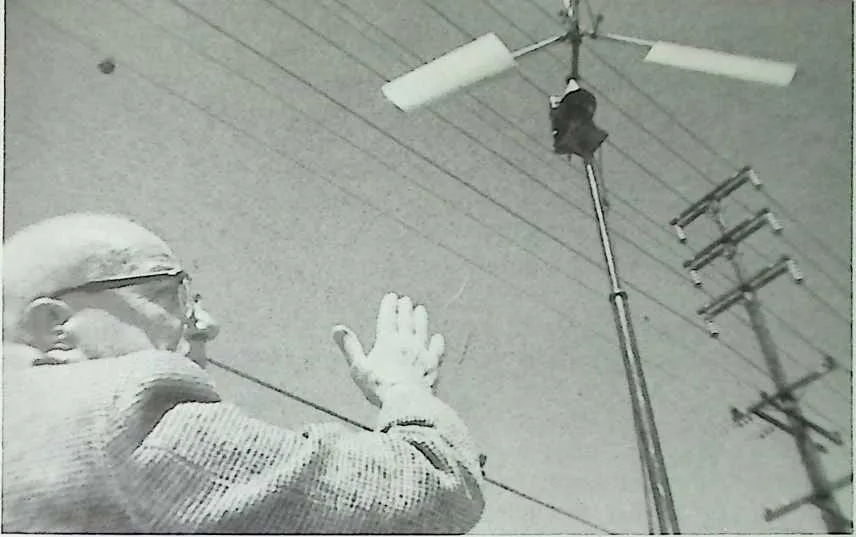
111 Because the wind is sun generated and is easily available locally, it is potentially capable of supplying large amounts of pollution-free energy. In about 1970, growing out of the World Game group, Hans Meyer supervised our wind study in Wisconsin, called Windworks.
112 They developed a windmill with propellers going round that generated direct current—which is more efficient by 50 percent than in and out of storage batteries. But all our electrical networks are on alternating current, so they developed a much better circuitry for converting direct current into alternating current. They also developed much more sensitive meters than had been used up to then and persuaded the public utilities of Wisconsin to allow them to go right into the alternating current and feed it into the power lines.
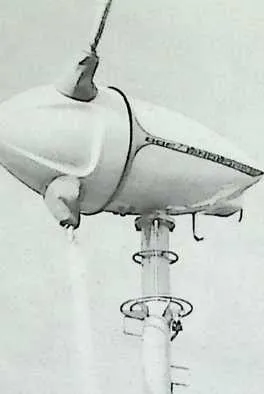
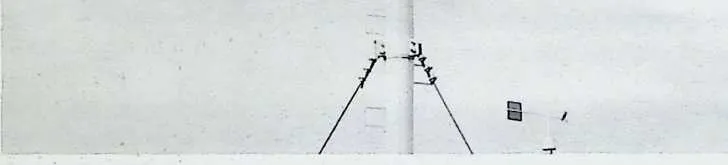
115 The utilities company paid them for putting it in at only wholesale rates, and charged the public at retail rates to take it out. The company made money alright, but so did Windworks. The point was that you didn't have to have that 50 percent loss of going in and out of batteries.
116 A Wisconsin congressman was impressed and he began talking about it in Congress. Within a year and a half, twenty-two utilities companies in twenty-two states were allowing them to hook up their windmills.
117 Since the wind is always blowing within a 100-mile radius, we might get a total pattern of all the windmills we could be producing around the world, making it possible for the individual to begin to break the great power bind without getting any opposition from the money side.
118 Money, and the business of making political hay and profits for huge corporations, is shortsighted. Being interested only in putting a meter between human beings and the wind won't get all the things done that need to be done.
120 The eons of cosmic energy wealth deposited in earth as a future savings account in this little planet is being depleted in one spend-thrift century.
121 The world's free enterprise cartels are determined to establish comprehensive atomic energy power before the world's petroleum is exhausted based on their conviction that humanity cannot possibly conceive of any possible alternative to their atomic energy plans. But options do exist: they exist in nature's gravitationally pulled and precessionally elevated tidal waters of earth; in sun-generated winds; in solar power converters;
122 in the chemical processes that produce methane, hydrogen, alcohol, etc.; in thermal steam generated from the natural subterranean sources around our planet; and in the power to be derived from temperature differential, since heat flows spontaneously from a hot region to a cold.
123 There's great concern about water shortages.
124 The Pacific Ocean out there is very deep. There are places where it's five miles deep, but the average depth is one mile.
125 The total surface area of the earth is about 200 million square miles. Three-quarters is water—about 150 million cubic miles of water. That may seem like a lot of water to you and me.
126 The earth is 8,000 miles in diameter,
127 and remembering that the average ocean depth is one mile, and one mile is 1/8,000th, let's take this 48-inch steel ball.
128 Try to imagine 1/8,000. If you breathe on the steel ball, the mist from your breath is deeper than 1/8,000th.
129 This tiny little film is the oceans. And we realize how incredibly small they are.
130 Now, besides conservation, my principal thought about water is desalinization. Using the sun to evaporate all the water we need. That's what the rain in our sky is. There's nothing new about it. We have the whole Pacific Ocean here along California, and there's a water shortage!
131 We've been desalinating since we had steamers. You couldn't have an ocean-going steamship without desalinization, you can't have salt in your boilers.
132 The man who's doing long-distance thinking says, ‘‘Well, this desalinization equipment, it'll take ten years to get it going so it'll really mean something here. What's that going to cost us? Say, 2 billion dollars.’’ Then the mayor or the governor says, ‘‘We'd like to do some of these long-term projects, but they mean higher taxes. The people won't reelect me if I put out $2 billion for something that's going to happen ten years from now. I'm going to leave that to the next governor.’’
133 When you come to the economists, they say, ‘‘Well, it costs four cents more a thousand gallons to desalinate than to put pipes up here in the mountains.’’
134 But that's the wrong way to look at it. We have a cosmic accounting, and it's a long-distance one: What is it going to cost you when you don't have the water? So everyone must push, push, push for the long-distance design revolution.
135 This is what the World Game is about—a design revolution. How can we use principles and mind to really get things going?
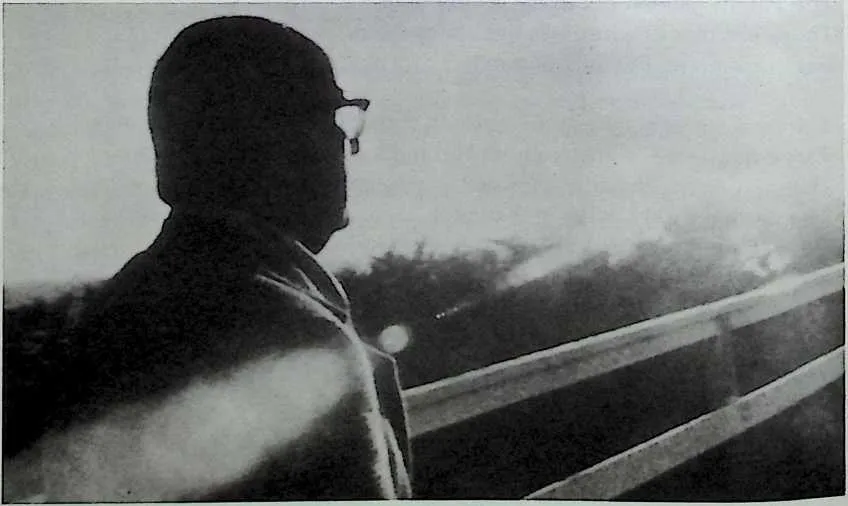

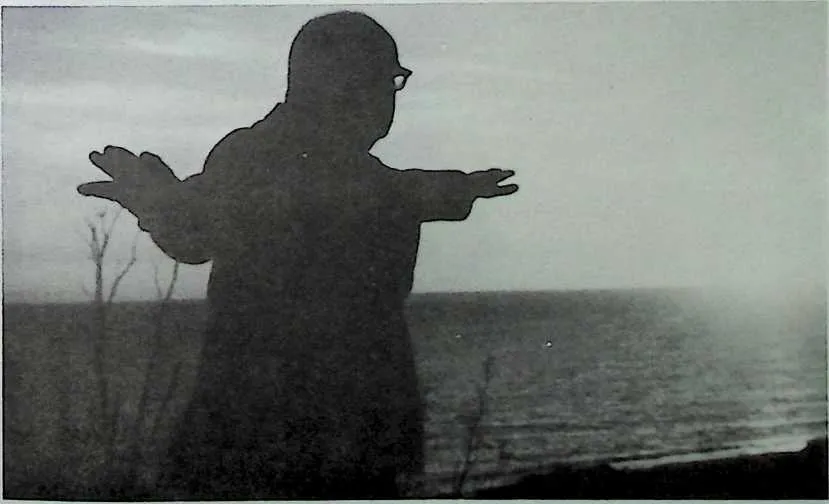
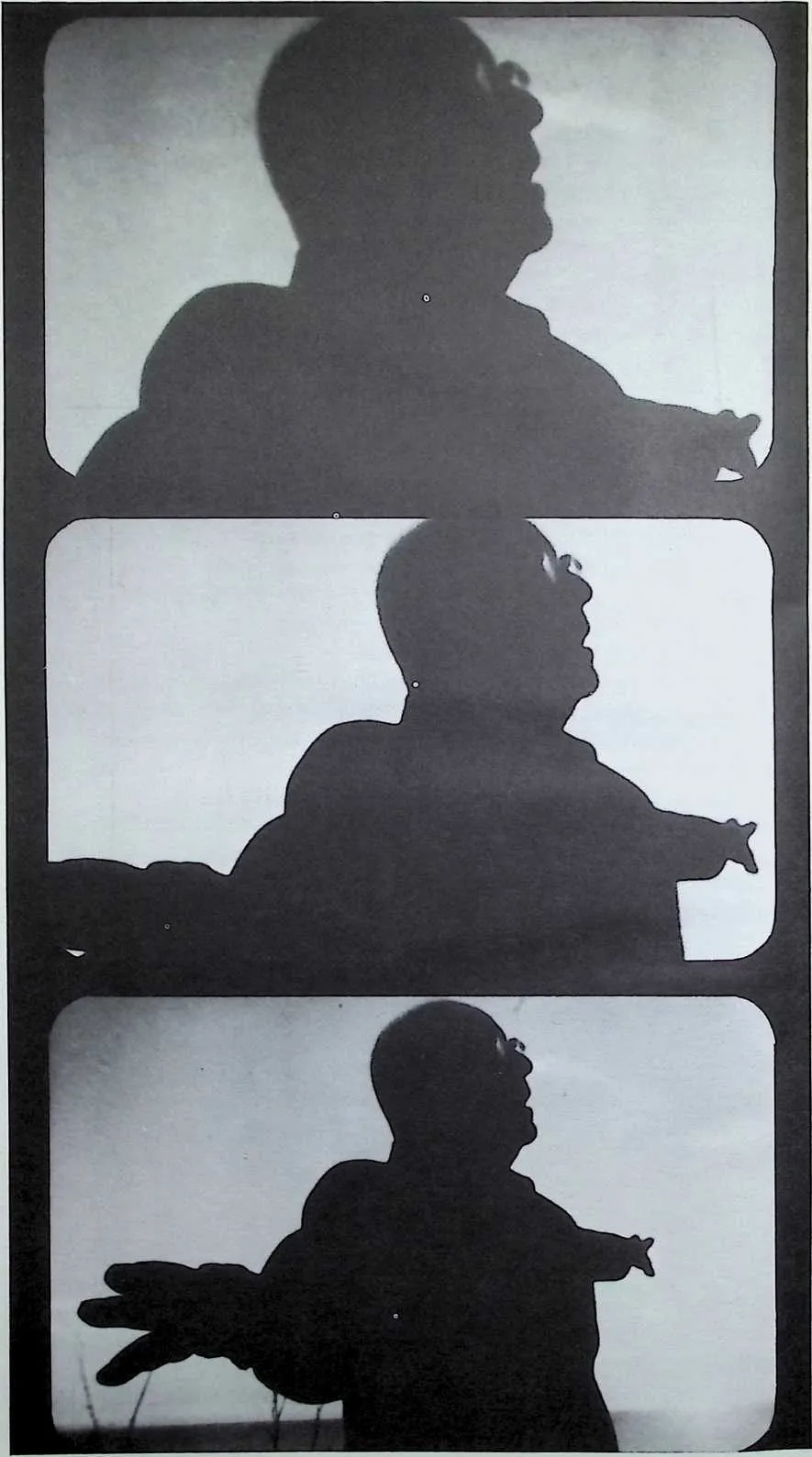
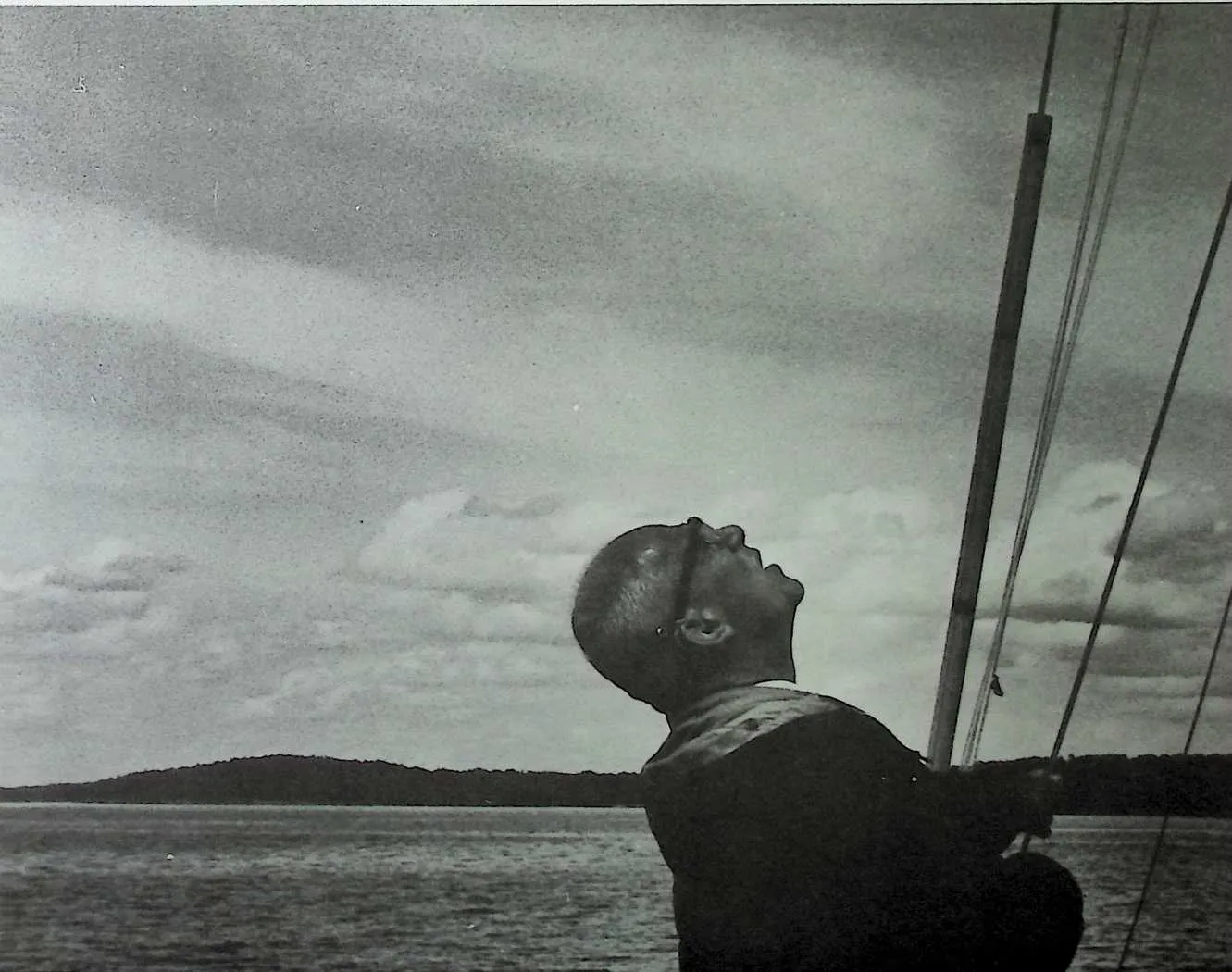
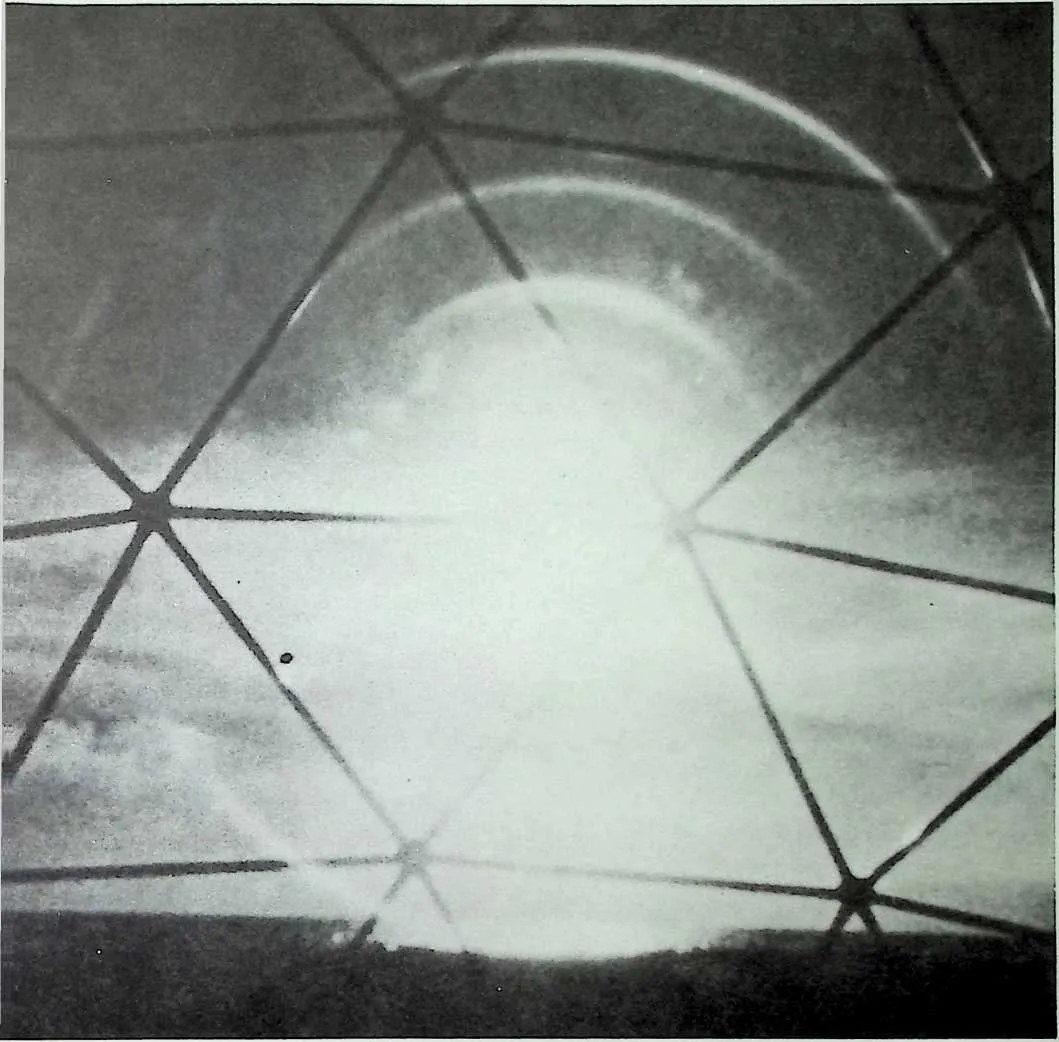
138 The earth is revolving to obscure the sun.
139 The sun is not going down.
140 I want you to really feel this with me.
141 We're rolling around to obscure the sun.
142 We're about to have a sunclipse: the earth is revolving around very rapidly to obscure the sun.
143 It's perfectly easy to feel that, particularly if you face north and look over your left shoulder. Just watch! and you suddenly begin to feel this enormous earth revolving on its axis.
144 Incredible speed. And it's beautiful quiet motion.
145 And we're rolling, we're rolling around here.
146 You have to have your feet quite wide apart, facing to the north and just getting the sun in the corner of your eye.
147 Then you feel this enormous earth revolving here on the polar axis.
148 I want all of you to look at it with me now.
149 Look at that thing and feel this great horizon.
150 The sun is not doing a thing, we are really rolling you see.
151 This is absolute reality.
152 Boy, she's really moving quite rapidly now, you really feel it.
153 The wider apart your legs, the more you feel it.
154 Now we're really going around. Boy! it's wonderful to really feel this enormous big sphere we're on.
155 I've traveled around enough so I really feel it very powerfully.