
4 Highlights of ‘‘An Average Man’s’’ Life
2Chronology of the Life of
3 R. Buckminster Fuller
4  1895—Richard Buckminster Fuller is born in Milton, Massachusetts.
5 1899—Enters kindergarten where he builds the first octet truss using dried peas and toothpicks.
6 Is diagnosed as nearsighted, gets his first glasses and sees objects clearly for the first time in his life.
7 1904—Enters Milton Academy, Lower School.
8 1910—Bucky’s father, Richard Buckminster Fuller Sr. dies.
- 1913.
- Graduates from Milton Academy and enters Harvard University (Class of 1917).
- 1914.
- Expelled from Harvard and sent to be an apprentice millwright in remote Canadian mill.
- 1915.
- Reinstated at Harvard and expelled for a second time.
9 Takes a job with Armour & Co in New York.
- 1917.
- Enlists in Navy Reserve.
10 Marries Anne Hewlett.
- 1918.
- Promoted to lieutenant and assigned as aide to admiral commanding all transports in the Atlantic during World War I. First child, Alexandra, born.
- 1919.
- Appointed Communications Officer on the USS George Washington and supervises President Woodrow Wilson having the first ever transatlantic radiotelephone conversation (from France to the United States).
11 1922—Alexandra dies in his arms just prior to her fourth birthday. Bucky feels responsible for her not having better housing and he begins his lifelong quest to provide excellent shelter for all people.
12 Begins working as an entrepreneur, founding Stockade Building Corporation, manufacturing buildings with a revolutionary new technology.
- 1926.
- Is fired as president of Stockade Systems when the company is consistently unprofitable because Bucky has chosen to build good buildings rather than make a profit.
- 1927.
- Second child, Allegra, born.
13 Considers himself a failure and contemplates suicide. Has mystical experience in which he is told that he does not have the right to kill himself and that he will only speak the truth from then on. Dedicates himself to the service of all humanity. Writes and privately publishes first book, 4D Timelock.
14 1929—Displays model of 4D round house at Marshall Field Department Store. Coins and copyrights the word "Dymaxion’’ to describe house and other inventions.
15 1933—Establishes Dymaxion Corporation to successfully design and build first prototype Dymaxion Vehicle.
- 1935.
- Prototype Dymaxion Vehicles #2 and #3 are completed and displayed at the Chicago World’s Fair.
16 Writes Nine Chains to the Moon.
- 1936.
- Meets with Albert Einstein who is amazed that Fuller could conceive of a practical application for Einstein’s theories. 1938—Nine Chains to the Moon published.
17 Joins Fortune magazine as science and technology consultant.
- 1940.
- Works on development of Dymaxion Deployment Units at Butler Manufacturing in Kansas City.
- 1941.
- Quits drinking and smoking as an anniversary gift for Anne and to further his mission without his behavior as a hindrance.
- 1942.
- Joins US Board of Economic Warfare as Director of Mechanical Engineering.
- 1943.
- Full-color, punch-out rendition of Dymaxion Sky-Ocean World Map is published in Life magazine resulting in the largest printing of the magazine.
- 1944.
- Begins design and production of prototype Dymaxion House in conjunction with Beech Aircraft of Wichita, Kansas.
- 1946.
- Is awarded the first cartographic project patent since 1900 for Dymaxion Map.
- 1947.
- Invents Geodesic Dome.
18 First teaches at Black Mountain College.
- 1948.
- Teaches at MIT.
- 1949.
- Begins extensive travels responding to speaking invitations worldwide.
19 1952—Begins work on Ford Motor Dome in Detroit. Constructs first Geoscope with students at Cornell University. Receives Award of Merit, American Institute of Architects.
- 1954.
- Receives patent for Geodesic Dome.
20 Receives first of his eventual forty-seven honorary degrees, Doctor of Design from North Carolina State University.
21 Asked to design a geodesic dome to cover Dodger Stadium.
- 1955.
- First Distant Early Warning (DEW) Line Radomes are installed in Northern Canada.
- 1956.
- Becomes visiting lecturer at Southern Illinois University.
- 1957.
- Union Tank Car Dome in Louisiana and Kaiser Hawaii Symphony Dome are erected.
- 1958.
- Makes the first of many annual circuits traveling around the world speaking (primarily at universities).
- 1959.
- Appointed professor and awarded honorary doctor of arts degree at SIU, Carbondale IL. Sets up global headquarters at SIU.
22 He and Anne move into a Carbondale geodesic dome home.
- 1961.
- Granted patent for octet truss he first built in 1899 at the age of four.
- 1962.
- Appointed as Charles Eliot Norton Professor of Poetry, Harvard University.
23 Establishes ‘‘Inventory of World Resources, Human Trends and Needs’’ (World Game) at SIU.
24 Granted patent for tensegrity structure.
- 1963.
- Publishes the books No More Secondhand God, Ideas and Integrities, and Education Automation.
25 Appointed to NASA’s Advanced Structures Research Team, which adopts his octet truss and geodesic dome as primary space structures.
- 1964.
- Subject of Time magazine cover story.
26 Publishes Design Science Decade: World Inventory, Human Trends and Needs.
- 1966.
- Completes design for USA Pavilion at ‘67 Montreal World’s Fair.
27 Inaugurates World Game at SIU.
- 1967.
- Featured in Saturday Review cover story.
28 Montreal Expo Dome draws record attendance of 5.3 million people in six months.
29 Elected to honorary membership in Phi Beta Kappa (Harvard) on the occasion of the fifty-year reunion of the Class of 1917 (from which he was expelled in his first year).
30 Granted patent for star tensegrity.
- 1968.
- Elected to National Academy of Design and World Academy of Arts & Sciences.
31 Appointed Distinguished University Professor at SIU 196_Sk-L-eads first public World Game workshop.
32 Delivers Jawaharlal Nehru Memorial Lecture.
33 Publishes Operating Manual for Spaceship Earth and Utopia or Oblivion.
- 1970.
- Publishes I Seem to Be a Verb.
34 Installed as Master Architect for Life by Alpha Ro Chi Architectural Fraternity.
- 1971.
- Presents proposal for ‘‘Old Man River City’’ in East St.
35 Louis, and it is accepted.
36 NBC broadcasts documentary Buckminster Fuller on Spaceship Earth.
- 1972.
- Appointed ‘‘World Fellow in Residence’’ by a consortium of Philadelphia institutions.
37 Publishes Intuition and Buckminster Fuller to the Children of Earth.
38 Delivers over one hundred twenty ‘‘thinking out loud’’ lectures around the world.
39 Is featured as interview in Playboy magazine.
- 1973.
- Establishes publication and research office in Philadelphia.
40 Granted patents for floating breakwater and tensegrity dome.
41 Moves to Philadelphia.
- 1974.
- Delivers over one hundred fifty ‘‘thinking out loud’’ lectures around the world.
42 Granted a New York State architect’s license.
- 1975.
- Publishes Synergetics, The Geometry of Thinking.
43 Is elected International President of the World Society for Ekistics.
44 Granted patent for non-symmetrical tension-integrity structures.
45 Inducted as a fellow in the American Institute of Architects.
- 1976.
- Participates in drafting ‘‘Declaration of Principles and
46 Rights for American Children.’’
47 Publishes And It Came To Pass—Not To Stay.
48 Completes work on world’s first tetrahedronal book, Tetrascroll, which is published in limited edition.
- 1977.
- Designs and develops two new prototype geodesic domes, ‘‘Pinecone Dome’’ and ‘‘Fly’s Eye Dome.’’
49 Travels on lecture of Far East sponsored by US government.
- 1978.
- Appears in ad for Honda Civic.
50 Becomes Senior Partner in NY architectural firm Fuller & Sadao.
- 1979.
- Publishes Synergetics 2, expanding on Synergetics and Buckminster Fuller on Education.
51 Becomes Chairman of the Board of R. Buckminster Fuller, Sadao & Zung Architects of Ohio.
52 Becomes Senior Partner of Buckminster Fuller Associates, London, England.
- 1980.
- Granted patent for tensegrity truss.
53 Delivers over ninety ‘‘thinking out loud’’ lectures around the world.
54 Moves to Pacific Palisades, CA, near his daughter Allegra and her family.
- 1981.
- Publishes Critical Path.
55 Inducted into the ‘‘Housing Hall of Fame.’’
- 1982.
- Publishes three books: Crunch of Giants, Inventions, and Humans in Universe.
56 Designs and supervises Dymaxion ‘‘Big Map’’ the size of a basketball court and displays it to members of the US Congress.
57 Delivers over seventy ‘‘thinking out loud’’ lectures around the world.
58 Inducted into the Engineering and Science Hall of Fame.
59 Granted patent for hanging storage shelf unit.
- 1983.
- Honored in daylong ‘‘Integrity Day’’ presentations in several US cities.
60 Dies July 1 in Los Angeles, CA.
6263Logistics & Structure of This Book
64  "We have to be comprehensive in our thinking, to be infinitely tolerant, to understand rates
of change, to understand the inertia, to understand the fear. We
"We have to be comprehensive in our thinking, to be infinitely tolerant, to understand rates
of change, to understand the inertia, to understand the fear. We
6566must avoid doing things that will excite the fear and do everything that will eliminate it. I don't mean then to eliminate challenge—for challenge we must have. We will continue to have challenge because Universe is continually changing, and we are going to continue to be confronted with the new.’’ — Buckminster Fuller
67This somewhat succinct and easy-to-understand (for Buckminster Fuller) quote expresses the context of this book. A Fuller View is designed to support us all (including me, the author) in eliminating fear and handling the challenges that face us both individually and as a global society. The quotes selected in this book are both profound and easy to digest quickly. Although they are some of Bucky’s best, they in no way come close to the complex intensity that pervades the majority of his writing and speaking. The following is a more typical Bucky sentence / paragraph selected from Chapter 2 of Fuller’s diminutive book Grunch of Giants:
68"In contradistinction to brains, which are constructed of physical matter, the weightless, matterless, metaphysical mind has the unique capability, from time to time, to discover eternal interrelationships existing invisibly between special-case experiences, which interrelationships cannot he discovered by any or all of the hrain’s physical sense systems—for instance, the mathematical law governing gravity’s invisibly cohering not only the Sun and its multi-millions-of-miles-apart planets as discovered hy the weightless invisible conceptual thought-relaying from the mind of Kepler to Galileo to Newton and as also cohering the never-anywhere-intertouching parts of local Universe systems of galaxies, and electrons remote from their nuclei."
69 If you spend as much time as I have with Bucky and material such as this sentence, it will eventually morph into something very clear and extremely relevant. In today’s world, however, most of us don’t have the time, much less the interest, to interpret massive sentences like the one above, which describes the distinction between brain and mind while providing a historic scientific example of human mind in action. Accordingly, the quotes chosen will most likely not cause your head to spin and will provide insights into the mind and experiences of a great genius.
70 For most people, the pages that follow will offer new ideas, perspectives and challenges. I have endeavored to make your journey through the comprehensive, anticipatory design science Universe of Buckminster Fuller as valuable and efficient as possible with this Roadmap to Universe explanation of the logistics and quirks presented in these pages.
71 A Fuller View is not a normal book, and I did my best to make your journey within it as smooth and useful as possible. Because of the comprehensive nature of Bucky’s life and vision, the creation of a 270-page book that includes all the key points of his philosophy is daunting if not impossible. Reading it may be similarly intimidating, so here are some tips for your journey.
- 1.
- A Fuller View was not written to be read cover to cover from beginning to end. It was designed as an inspirational resource that could be opened anywhere and understood. Or opening to a random page might pose ideas to contemplate. Once I began adding the guest commentaries, A Fuller View became even more complex and less linear. I did my best to create a flow from quote to quote and chapter to chapter, but I chose the best content even if it did not create the best flow.
- 2.
- Although I have endeavored to organize the quotes and commentaries in a standard chapter arrangement, most of them could have been placed in several of the chapter categories. The arrangement is therefore simply another tool to support readers in navigating their way through and around Buckminster Fuller’s wisdom and reality.
- 3.
- Guest commentators were asked to pick their favorite Bucky Fuller quote. That resulted in adding some amazing insights that would otherwise never have been included. It also created a more interesting melding of ideas, some of which had not crossed my mind in a long time.
- 4.
- Many of the ideas and insights appear several times throughout this book. They may be written in a different way or you may find the exact same words. I have not counted the number of times ‘‘a world that works for everyone’’ or ‘‘Call me Trimtab’’ appear, but I know that these and other critical elements of Bucky’s grand vision appear numerous times.
72 Rather than ignore them as ‘‘something I already know about,’’ when they come up a second or third or tenth time for you, I suggest that you consider them a reminder of things that we ‘‘know we don’t know.’’ Or you could think of them as gifts from Universe returning to support you in waking up.
73 They appear because of their significance. Trimtab, more with less, ephemeralization, a you and me society, a world that works for everyone, shifting from weaponry to livingry are keys to Bucky’s work and wisdom as well as to the survival and success of humankind. Thus, it’s appropriate that these ideas appear several times.
- 5.
- In creating some type of effective efficient structure for the wisdom of Buckminster Fuller, which on the surface appears to be vast and unstructured, I found it best to ‘‘go with the flow’’ and realize that ‘‘change is inevitable.’’ Still, I did follow Bucky’s sense of respectful New England politeness, so Guest Commentaries always appear before my writing on a quote. When more than one Guest wrote on a particular Commentary, the order of the Guests is random. I did put the father John Robbins before his son Ocean as the two commentaries seemed to flow in that way, but the order of others was randomly chosen—if there is such a thing as random in Universe.
- 6.
- All the Guest Commentator’s essays are prefaced with a byline and highlighted by a gray stripe down the side. To help you distinguish where they stop and my writing starts, my writing always begins with A.
- 7.
- Bucky’s ‘‘56 Year Experiment’’ is referenced numerous times throughout this book because it is so important to his work and wisdom. In 1927, Bucky contemplated suicide but was ‘‘instructed’’ by a voice (inner wisdom, epiphany, guide or whatever label you choose) that he did not have the right to kill himself He then did what so many master teachers do by going into a period of voluntary silence and considering what to do next.
74 That ‘‘next step’’ for him was an experiment using himself as ‘‘Guinea Pig B.’’ Bucky describes it on page 124 of Critical Path when he writes:
7576In 1927, at the age of thirty-two, finding myself a 'throwaway' in the business world, I sought to use myself as my scientific 'guinea pig’ (my most objectively considered research 'subject') in a lifelong experiment designed to discover what—if anything—a healthy young male human of
77average size, experience, and capability with an economically dependent wife and newborn child, strong without capital or any kind of wealth, cash savings, account monies, credit, or university degree, could effectively do that could not be done by great nations or great private enterprise to lastingly improve the physical protection and support of all human lives, at the same time removing undesirable restraints and improving individual initiatives of any and all humans aboard our planet Earth."
78 My less detailed description of the ‘‘56 Year Experiment’’ is that Bucky made a lifelong commitment to determine and document what one average individual could achieve that could not be accomplished by any government, corporation, religion or other institution, no matter how rich or powerful. For me the critical aspect of his commitment was the documentation. Bucky left us an enormous archive—a genuine legacy of one man’s quest on behalf of all humankind.
79 In my experience, that experiment has been largely ignored for the past twenty plus years. As with any experiment, it needs to be examined to see what worked and what did not so that we can employ the insights in our lives and as a society. That is a primary aspect of A Fuller View. It’s one small step toward examining the ‘‘56 Year Experiment’’ and providing another doorway into applying its wisdom.
- 8.
- The previous quotation and the one about brain / mind on page xxxvi demonstrate a primary motivation for the creation of this book as well as my earlier Bucky book, Buckminster Fullers Universe (Basic Book 2000). Sentences that are paragraphs represent Bucky’s style of writing and speaking. Thus, when people ask me, ‘‘What would you recommend I read to learn more about Bucky?’’ my reply is always the same.
80 ‘‘You don't read Buckminster Fuller, you study him, and L recommend that people study his writing in a group.’’ This is lheSnaterial that makes for a deep book club. I spent every day for three months on a California beach doing just that, and I now realize that my experience would have been much more productive with the support of others. I did have the spiritual support of Bucky himself during those months in Laguna Beach, but it was not an easy process.
81 As the saying goes, ‘‘How do you eat an elephant? One bite at a time.’’ A Fuller View will help you bite off and digest small pieces of the ‘‘elephant’’ known as Dr. R. Buckminster Fuller’s wisdom, experience and insights. I am hopeful that it will support you and all readers to enjoy the treats rather than choking on the enormity of the gifts Bucky provides.
- 9.
- All words spoken or written by Bucky (except the 55 quotes that make up the body of the book) are italicized for clarity. Hopefully, this unusual formatting will not be confusing as I also had to use standard formatting and italicize things like book titles and foreign words. Many of the Guest Commentators used italics for emphasis, and I did my best to change them to bold or some other form for clarity. That, however, was not always possible.
- 10.
- ‘‘Universe’’ is almost always capitalized and without the article ‘‘the’’ because that is the format Bucky used, and I follow in his path. His rationale is simple, and I agree. There is but a single Universe that includes everyone and everything. By capitalizing the word ‘‘Universe,’’ we elevate Universe to the level of humans, planets and corporations—all of which have capitalized names. By eliminating the article ‘‘the,’’ we no longer relegate Universe to being one of many universes in existence.
- 11.
- ‘‘Earth’’ is also capitalized throughout this book. The following statement that Bucky wrote as a preface for his Introduction to the 1977 book American Space Photography explains why.
82 ‘‘As I write the introduction to this truly fascinating hook,
83 I find its author and its publishers spelling our planet’s
84 name with a small 'e,' even though its 7,926 mile diameter
8586is larger than the mile diameters of Venus s 7,620, Mars 4,220, Pluto's 3,600 or Mercurys 3,010. The first letter of all the other planets’ names we honor with capital letters.
871 am confident that those who spell Earth with a small 'e' are not yet 'seeing ourselves as others can see us’ from elsewhere than aboard our cosmically miniscule planet. ’’
- 12.
- One aspect of our language that continues to confound me is what I label the ‘‘he / she conundrum.’’ When writing about generalized people, an author has to choose either ‘‘he,’’ ‘‘she’’ or the now more popular but plural ‘‘they.’’ None of these options appeal to me, so throughout this book you will find ‘‘he’’ or ‘‘she’’ used randomly when necessary.
- 13.
- ‘‘Guest Commentators’’ were initially not part of this book. Now, they represent nearly half of the content, and I am extremely grateful for the generous contributions these people have made to the world and this book in particular.
88 The idea for Guest Commentators was a ‘‘cosmic fish’’ that I feel was sent floating through my mind by Bucky several times before I noticed it and several more times before I took action. I now feel that he wanted his friends to once more come together in creating a synergistic whole much greater than its parts and supporting an eternally regenerative Universe and Spaceship Earth.
89 When I approached the publisher Michael Wiese with the idea of Guest Commentators, he was thrilled and wrote it into our formal agreement. At the time, I reluctantly agreed in writing to find at least twelve Guest Commentators. Then, the process began and the floodgates of support opened. People I invited were extremely supportive and began writing back, ‘‘Have you asked my good friend. She should re ally be part of this.’’
90 The result was 130 invitations made over the course of only a few months and the 42 Guest Commentators who generously responded with 32,000 words of wisdom for us all. Some of the most rewarding gifts I have received since this process began have been these essays arriving in my inbox.
91 Reading them as they arrived inspired me to continue what has often felt like running a marathon, and I am grateful beyond words to these very generous people. I’m also grateful to everyone else who responded to the Guest Commentator Invitation because nobody said ‘‘no’’ or even ‘‘no thank you.’’ Almost everyone who declined did so because they could not fit participating into their busy schedule. In other words, they said ‘‘not now,’’ which left me thinking about Volume #2.
- 14.
- Selecting the quotes included in this volume from the tens of thousands possible was both challenging and flowing, especially once the Guest Commentators began sending in contributions. Then, it became a question of which quotes and my commentaries that had already written would be edited out. In the final analysis, 30,000 plus words and quotes were set aside for another day. In other words, I edited out half of my own writing. Again, Volume #2.
92 I also felt guided by Bucky’s voice, hand and spirit throughout this process. As a few of the Guest Commentators have mentioned, it feels like Bucky is continuing to share his wisdom even through he no longer operates through the physical body we labeled Buckminster Fuller. It’s just a matter of tuning into the frequency of that pattern integrity known as Bucky Fuller.
93 As Dr. Cherie Clark wrote in her essay,
9495‘‘I started writing my doctoral dissertation, 12° Of Freedom: Synergetics and the 12 Steps to Recovery, on nights and weekends from 1996 —2001…There were countless times that I’d think, ‘I know Bucky said …about this.' I could hear him saying it, and wanted to make sure I had the exact quote. I’d reach over to my pile of ‘Bucky books,’ pick up one and open it to the
96exact quote I was looking for. At first, it startled me. Then, it became a game. Usually around 3 a.m. I would hear Bucky’s distinctive voice, with a suggestion for how to more clearly respond to a question I was wrestling with earlier. He was right beside me the whole time I was writing, more than 13 to 18 years after he had departed this life, guiding, coaxing, teasing me to understand what he had said.’’
- 14.
- Each chapter ends with a ‘‘Conclusion’’ quote and commentary. These are by no means meant to be a summary of the chapter, but rather a ‘‘final thought’’ that may provide a sense of direction for the reader. The same is true of the initial quote, which is designed to set context for the balance of the chapter. It is not necessary to read either the initial or final pieces in order to receive the full benefit of any of the material in between.
- 15.
- Dr. R. Buckminster Fuller preferred to be called ‘‘Bucky.’’ This was a choice he made at a very young age, and he continued on with that tradition even in the last years of his life when many of us felt moved to call him Dr. Fuller, Sir, Mr. Fuller or something that demonstrated our respect for him as a wise elder. Still, he always asked to be called Bucky, so that’s the name I use most often in this volume.
- 16.
- This book is designed to be enjoyable, inspiring and educational. Please, don’t take it too seriously. We’ve reached a time in our evolution when ‘‘we the people’’ can take charge, and every individual does make a difference. Still, it’s also necessary to relax, enjoy and let go. Then, each of us can go with Nature’s flow as Bucky did for most of his life.
97 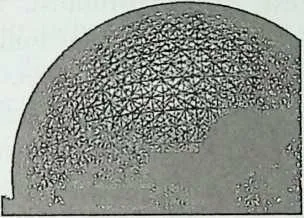 VIEW
VIEW