10 Sections
2If the lines of the 31-zone star followed no pattern, it would be possible to form  = 465
planes—each with a different orientation.
= 465
planes—each with a different orientation.
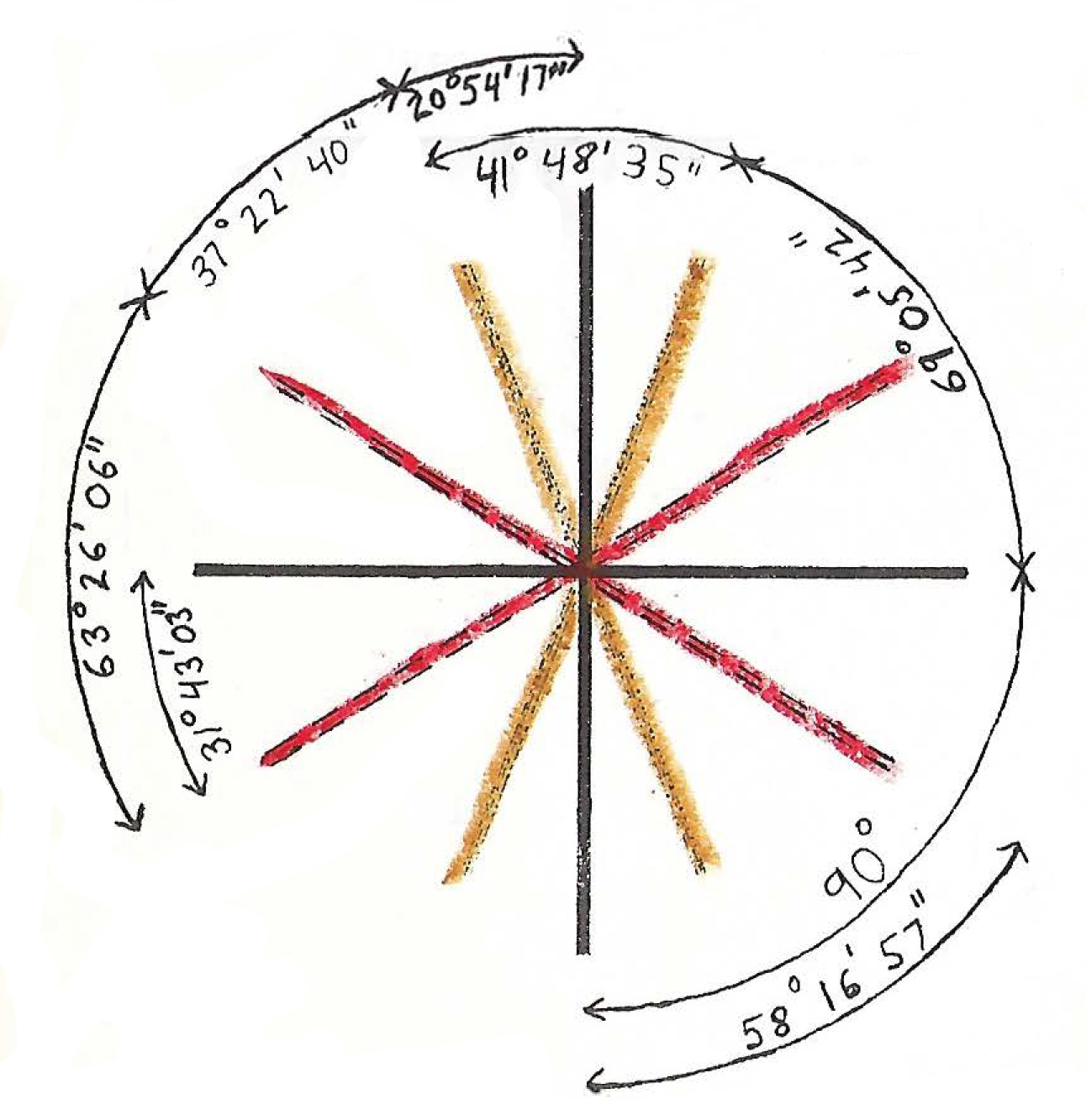
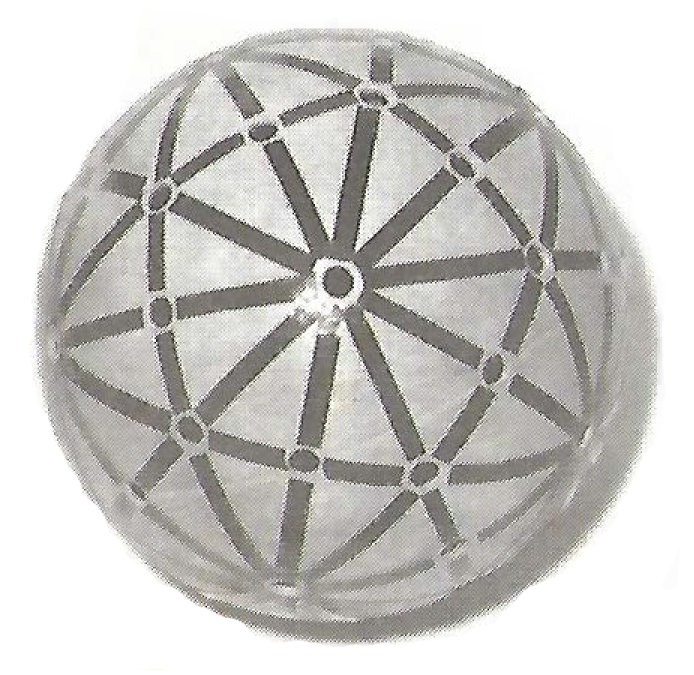
3 In our 31-zone system, the pairs of lines form only 121 different planes—this is because some of the pairs of lines lie on the same plane. Thus, our 31-zone star is singular.1 In any one 31-zone star there are:
| 15 | R | sections |
| 30 | S | sections |
| 6 | T | sections |
| 10 | V | sections |
| 30 | X | sections |
| 30 | Y | sections |
10.1 R Section
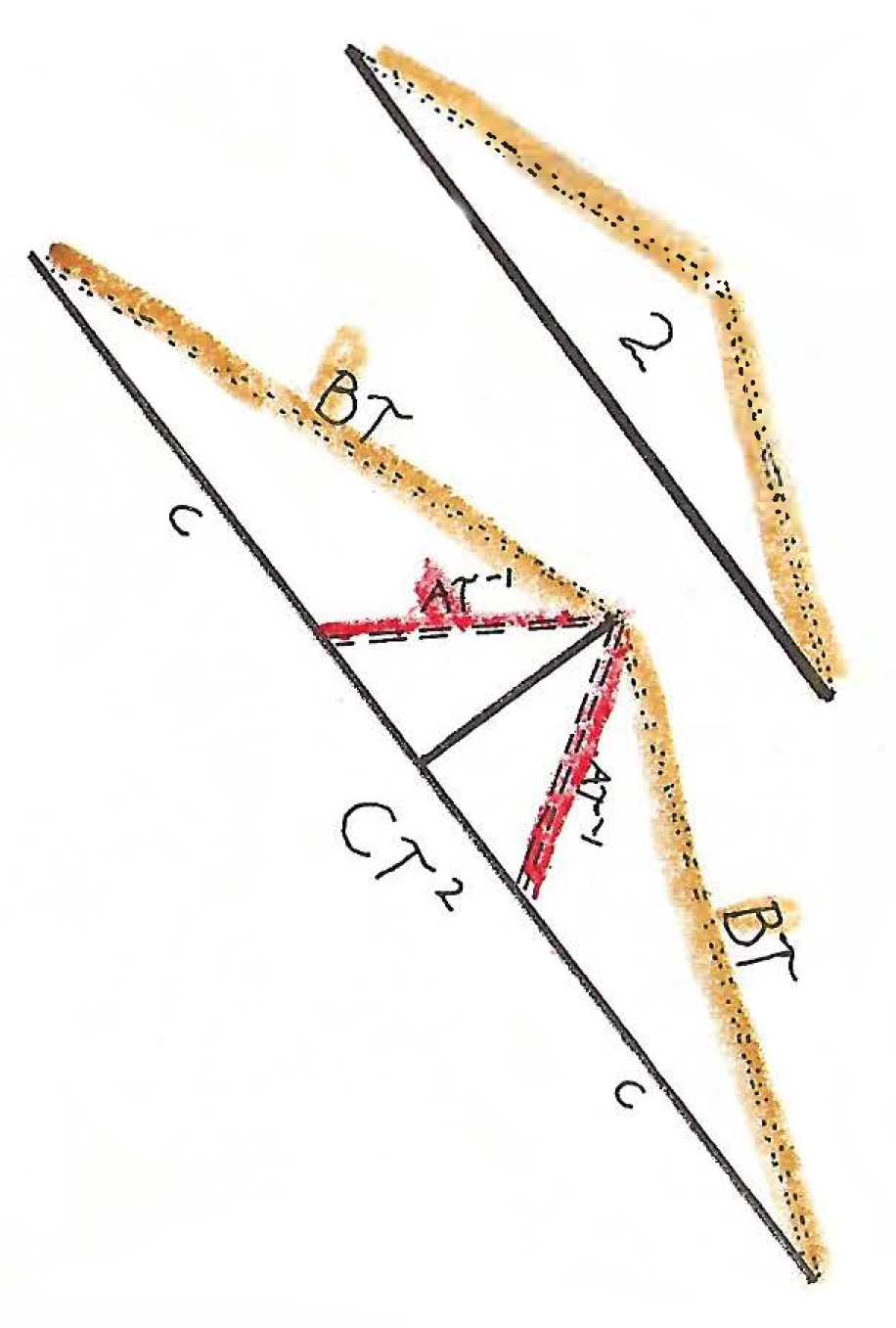
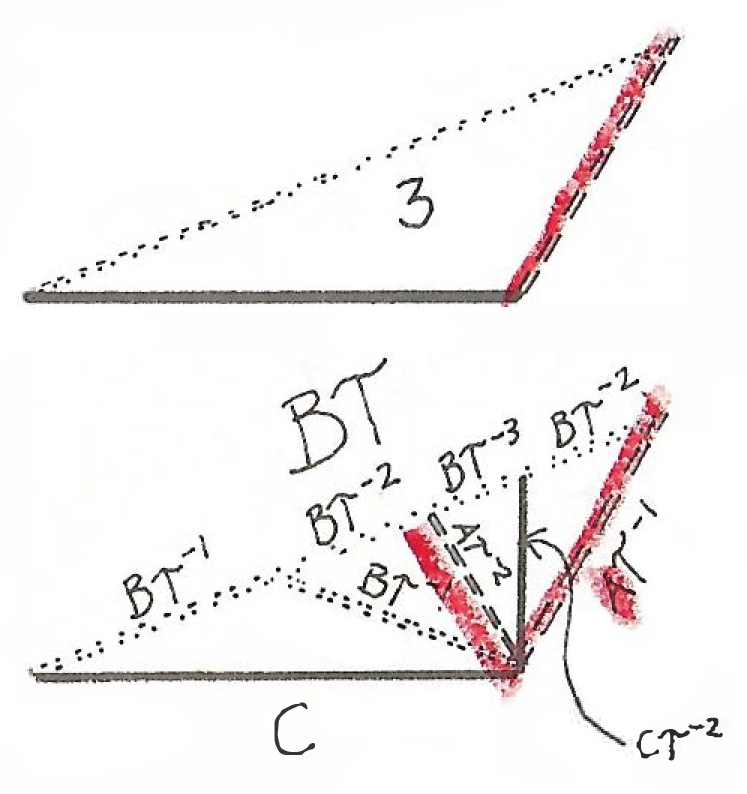
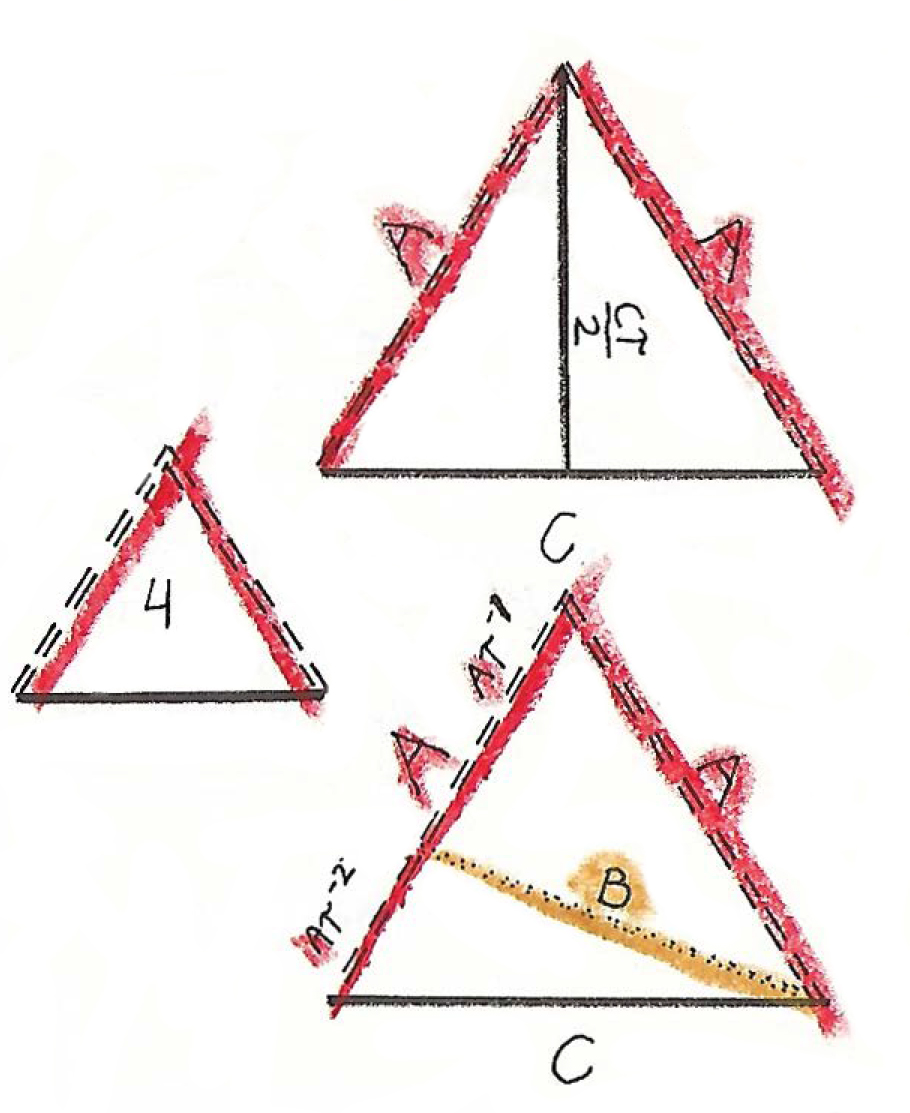
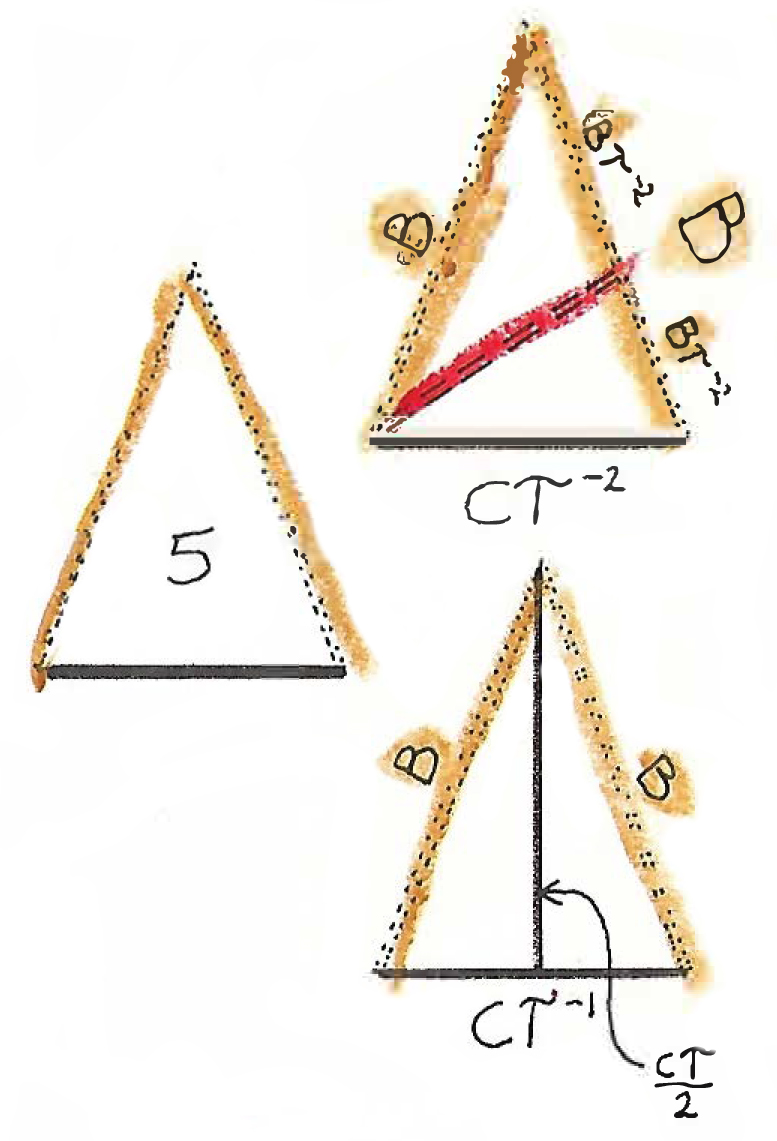
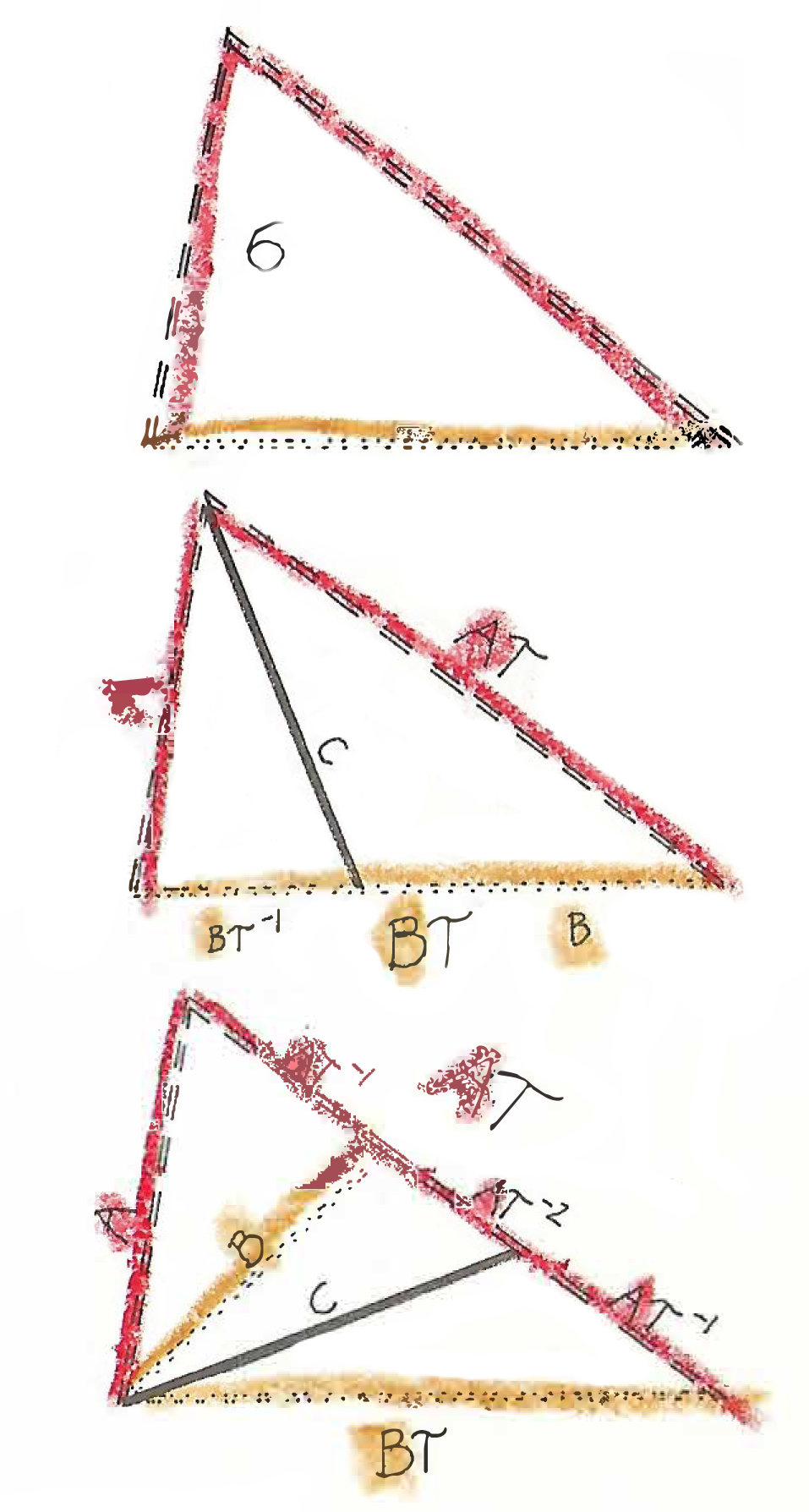
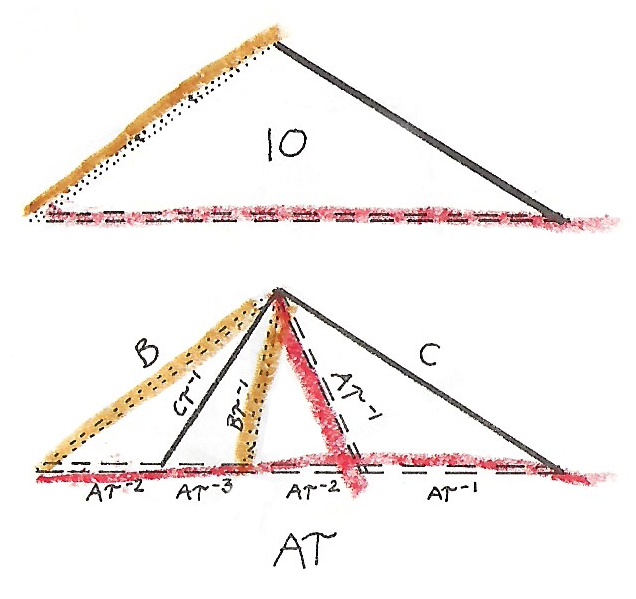
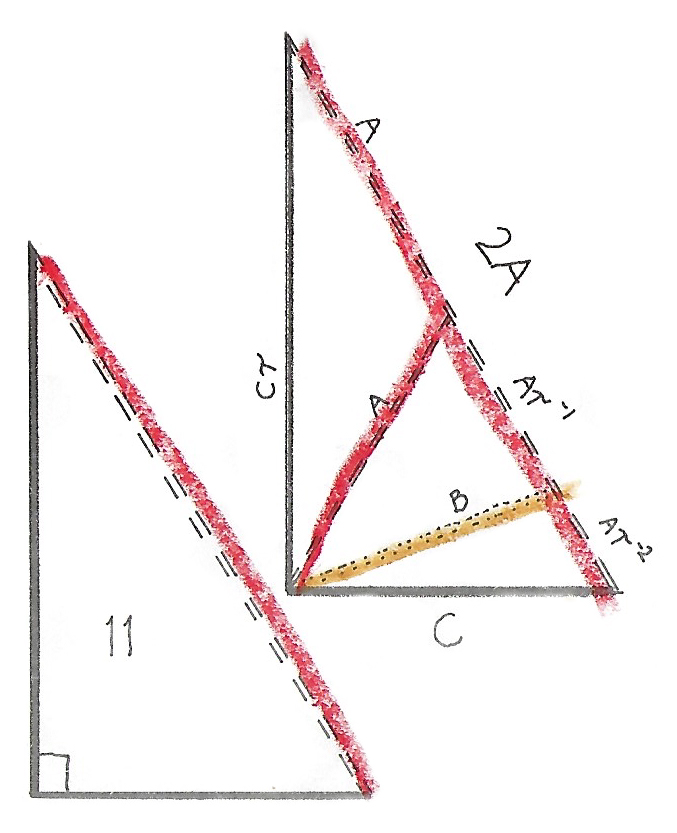
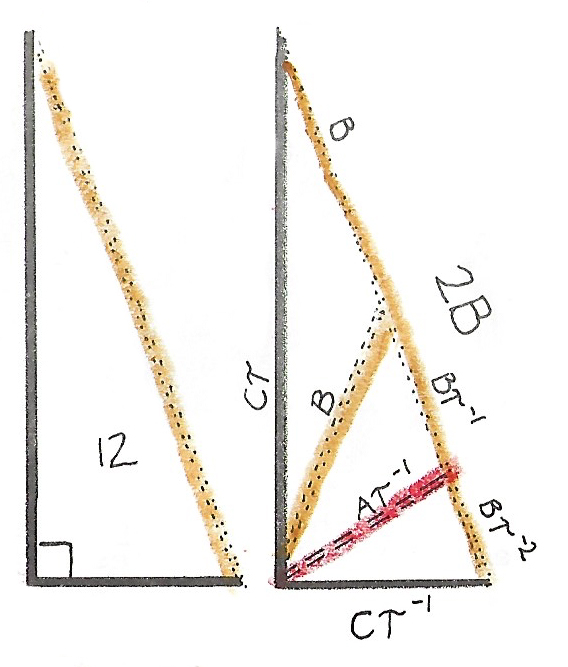
10.2 S Section
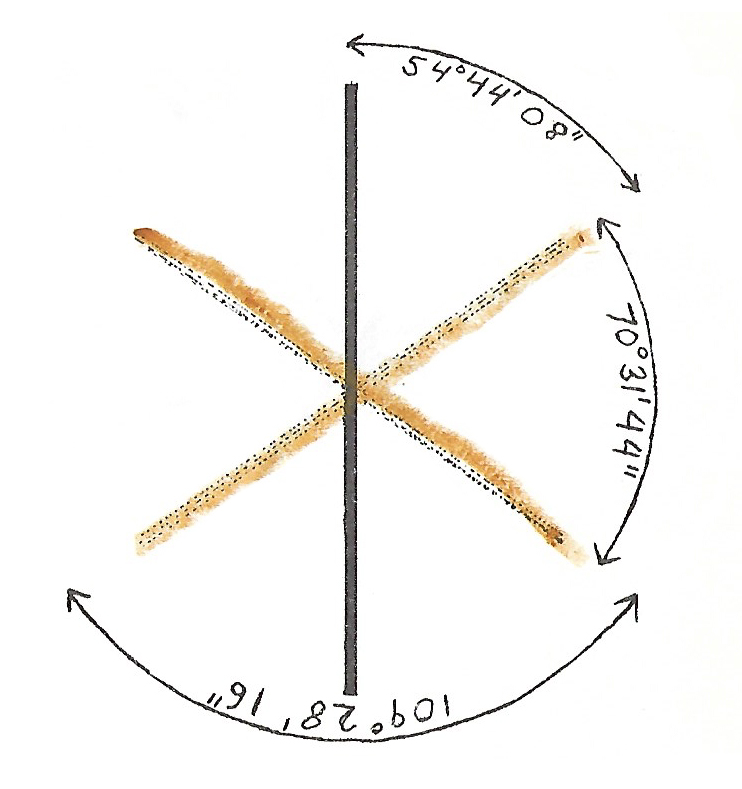
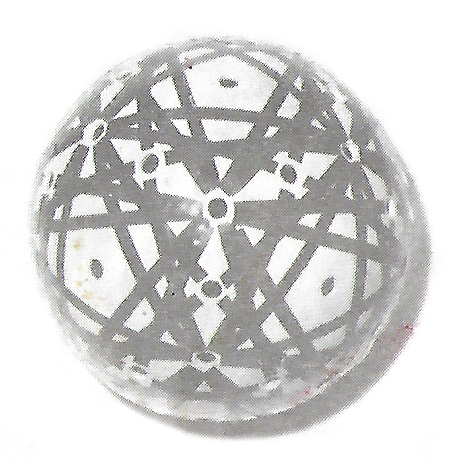
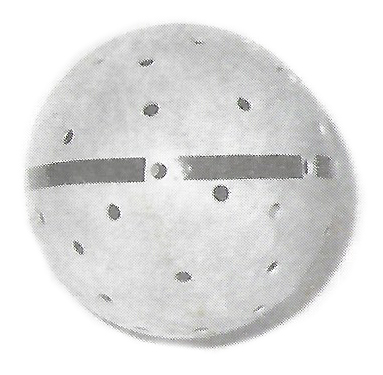
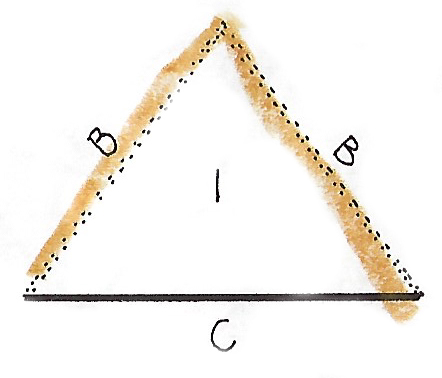
36 In the S section there is only one triangle possible:
10.3 T Section
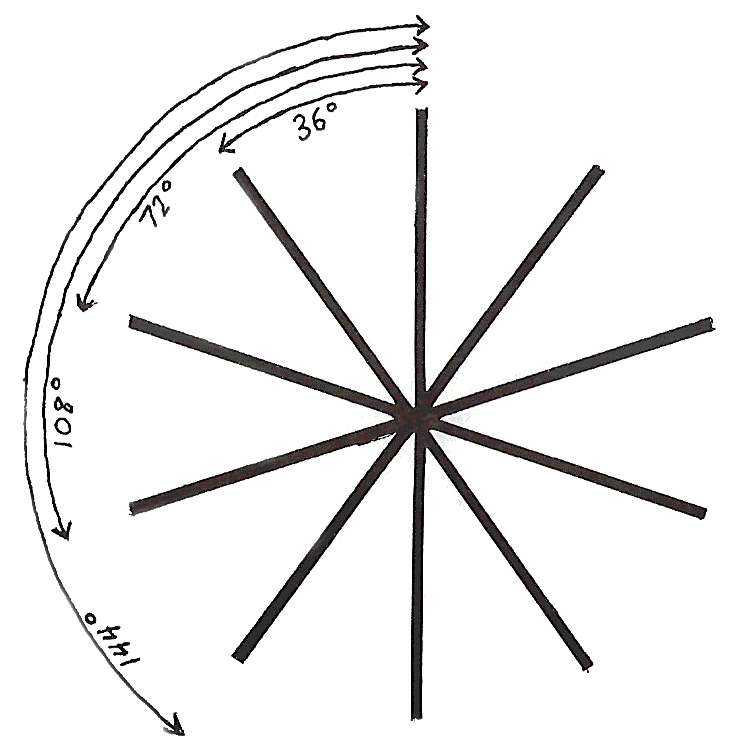
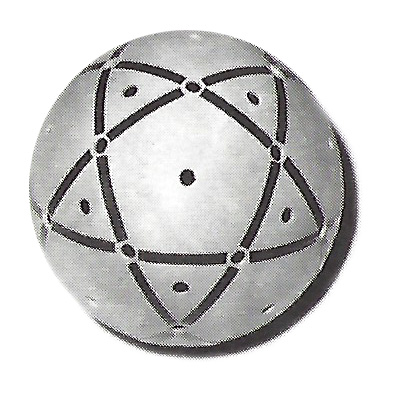
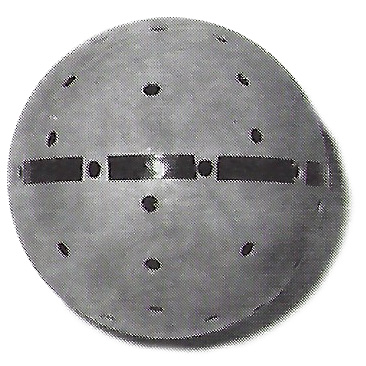
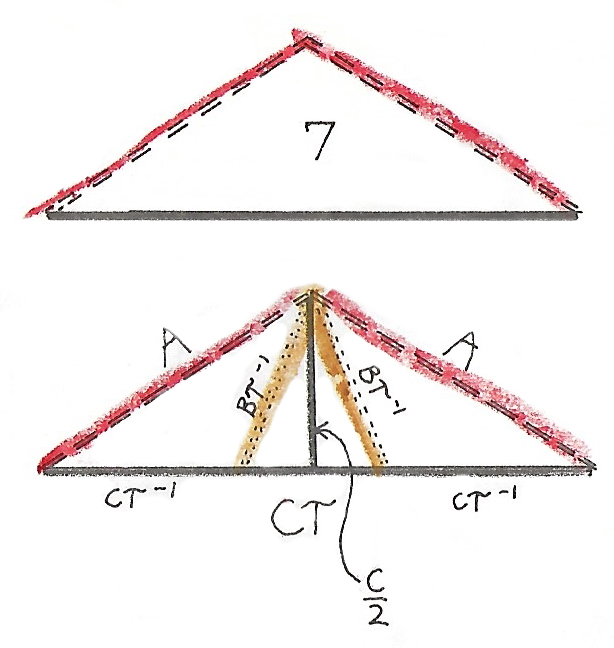
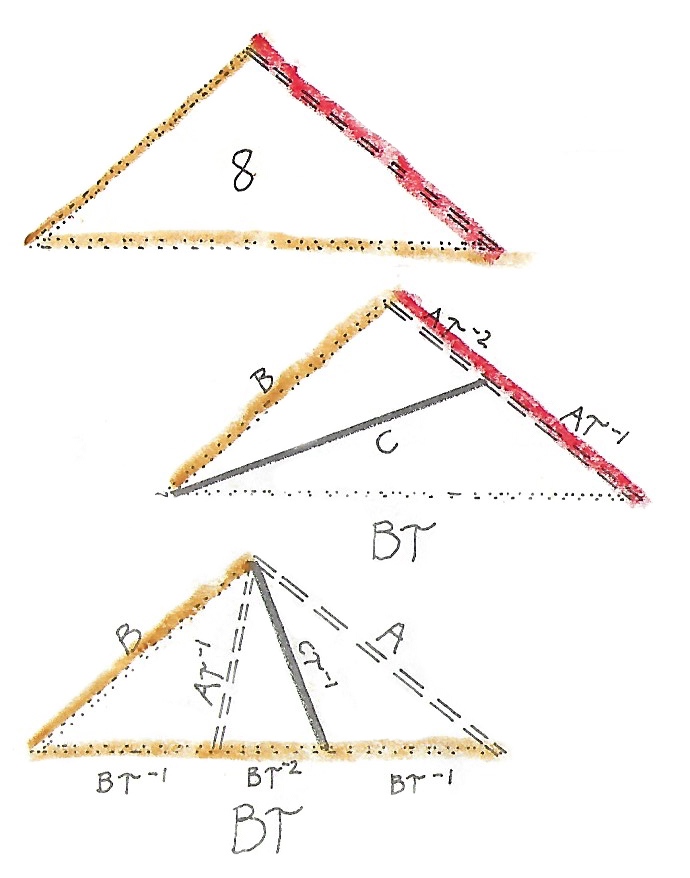
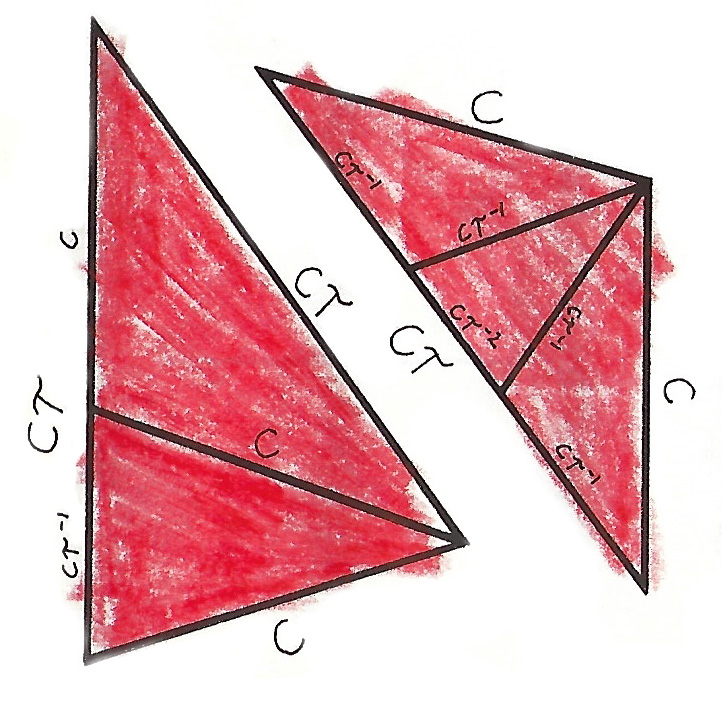
41 In the T section there are two kinds of triangles possible:
10.4 V Section
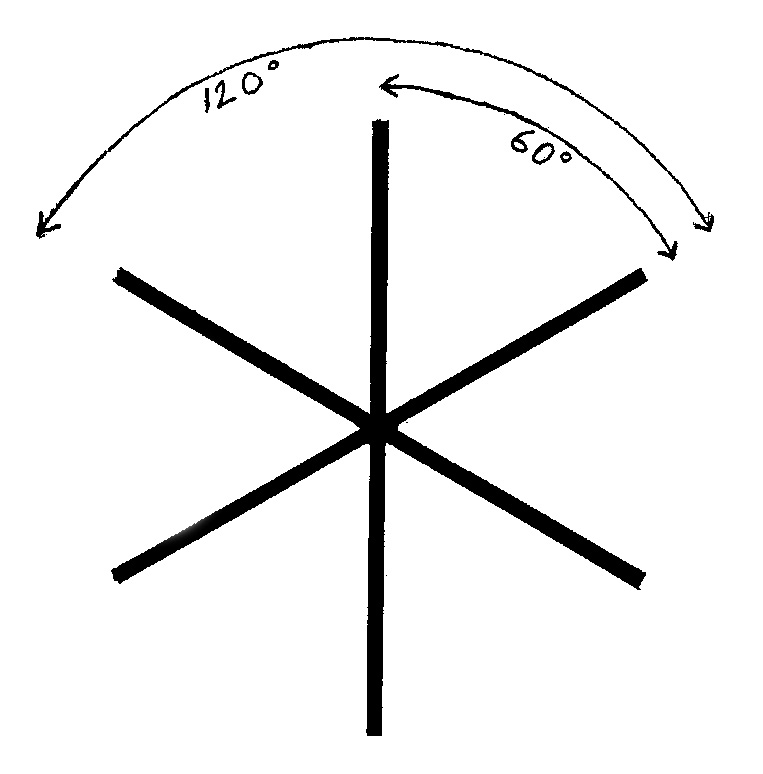
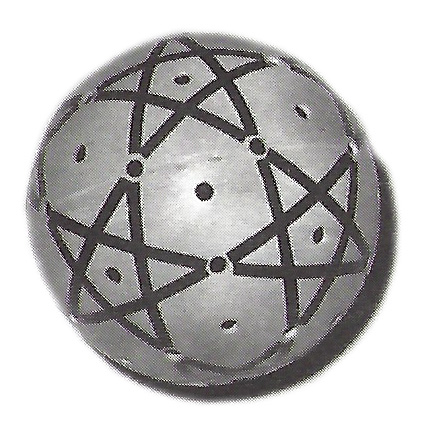
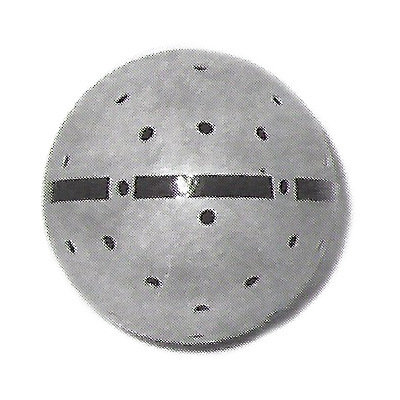
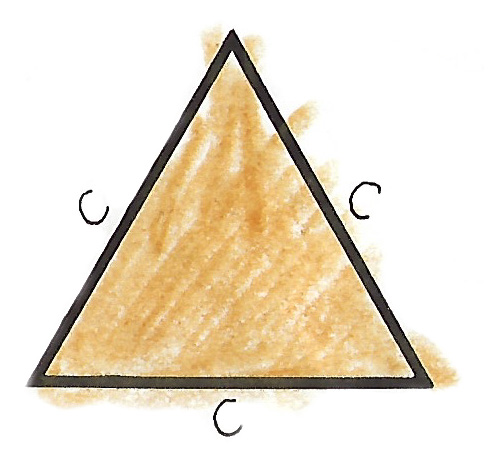
46 In the V section there are equilateral triangles:
10.5 X Section
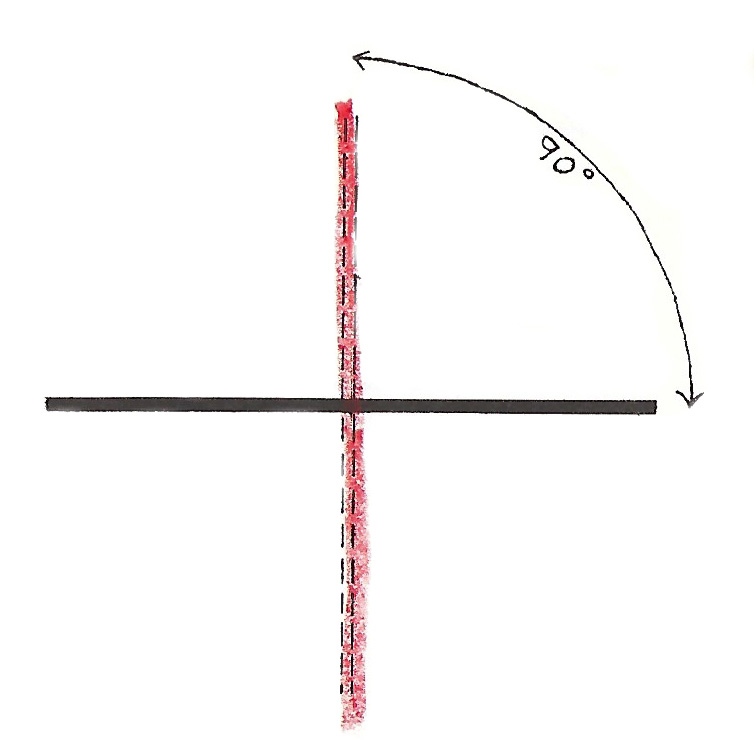
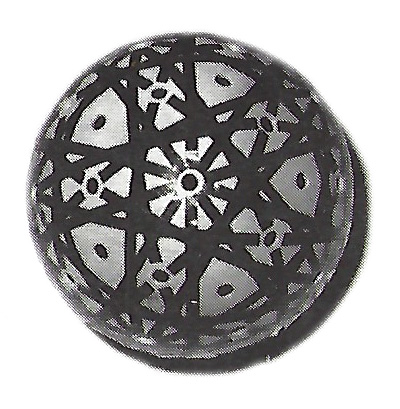
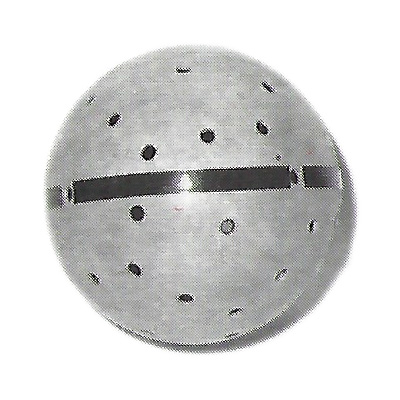
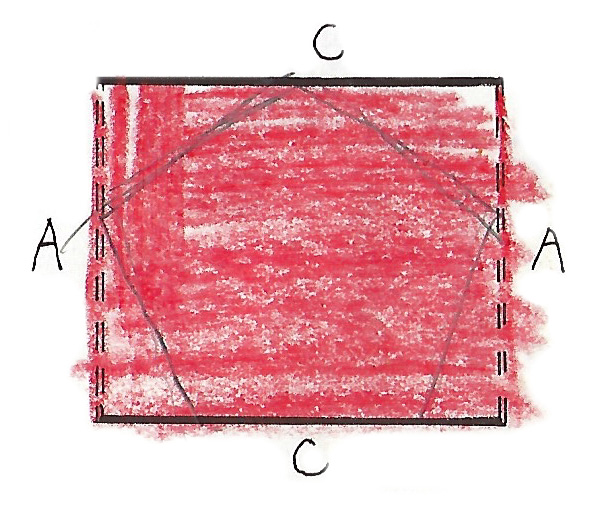
51 In the X section there is a rectangle:
10.6 Y Section
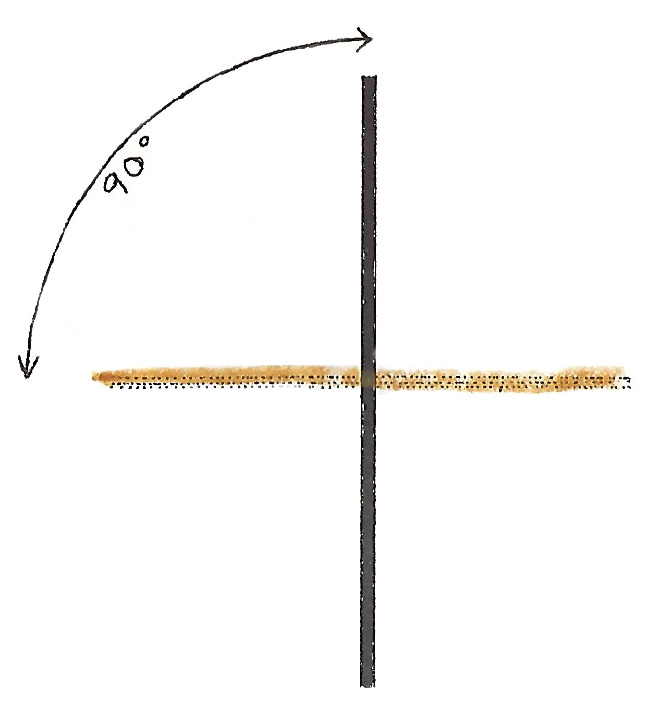
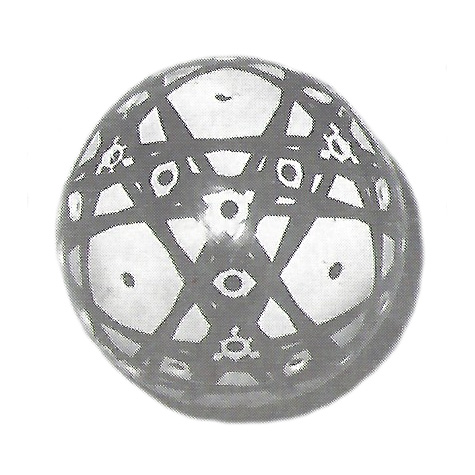
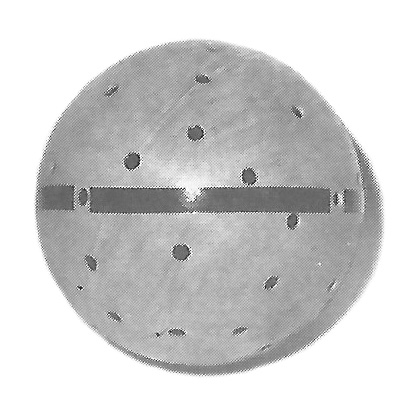
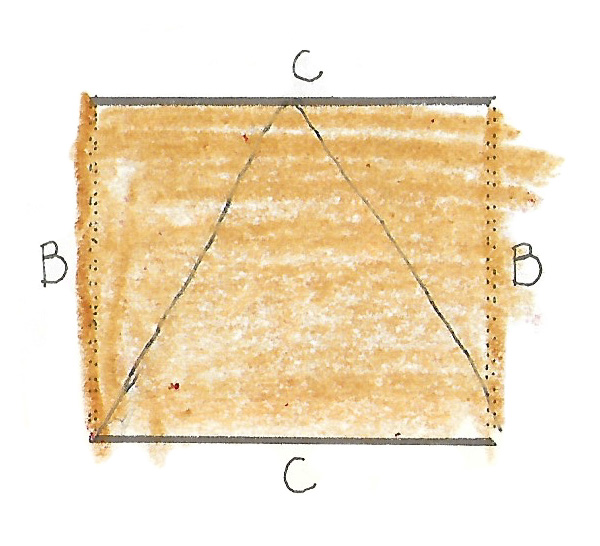
56 In the Y section there is a rectangle:
10.7 The Formation of Triangles
58The R, S, T, and V sections contain triangles; the X and Y don’t. They couldn’t because they don’t have enough lines. Every triangle has sides running in three different directions, but the X and Y have only two directions.
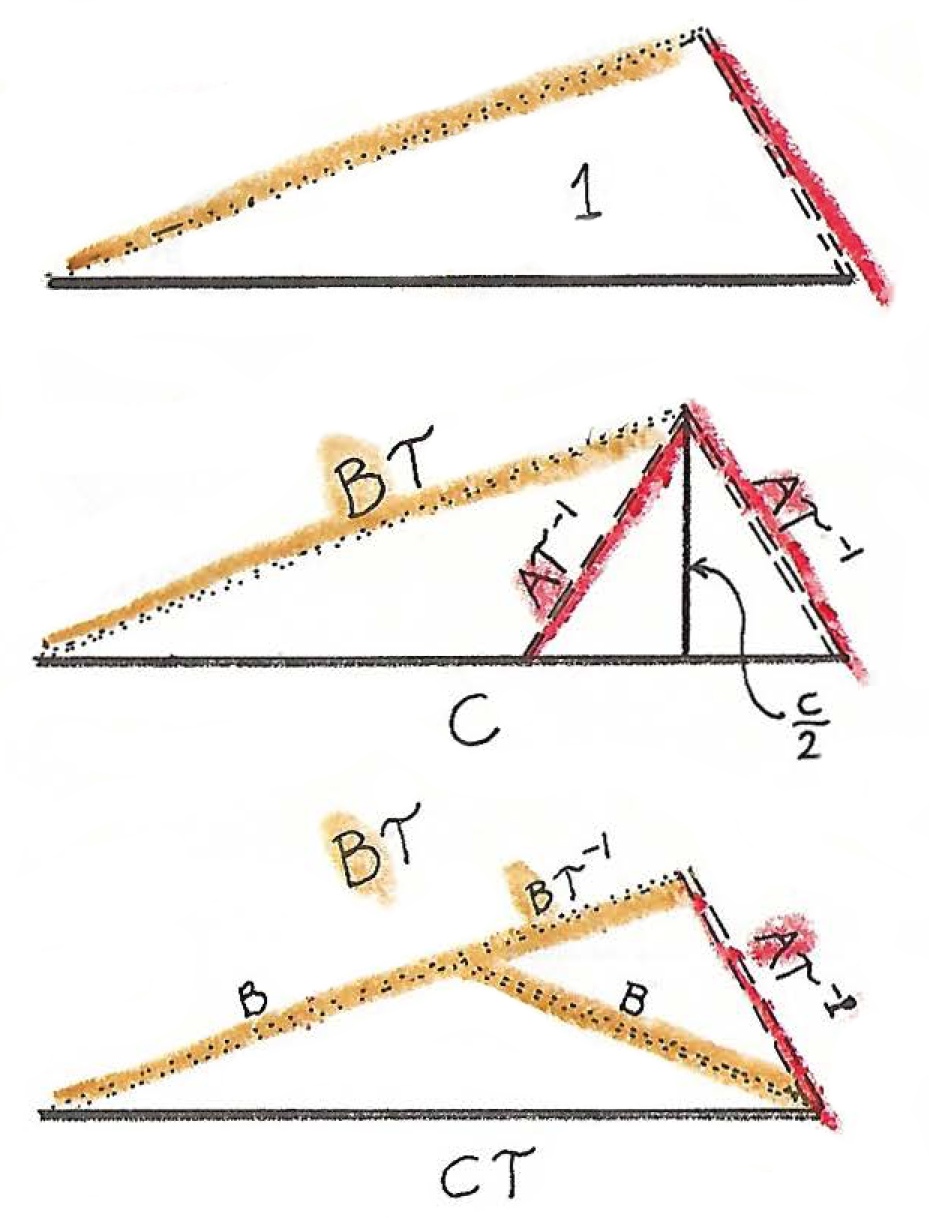
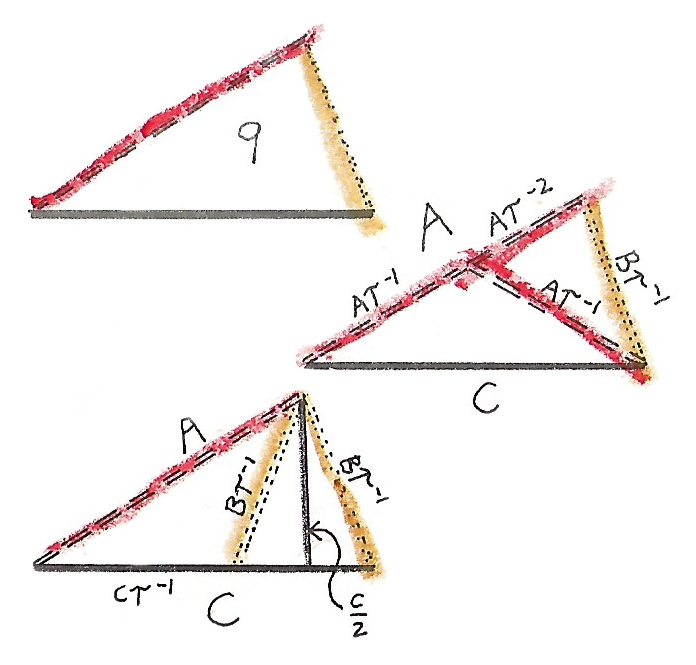
59 If we have three zones in one plane, then we can form a triangle. If it is a structure with only certain lengths of structural members, then we must have them proportioned correctly so that they begin and end at the vertices of these particular kinds of triangles. This is a more difficult problem. The A and B lines are unique in that stars formed of only A lines or B lines are non-singular. They define maximum numbers of planes—most uniformly distributed through space—with minimum numbers of lines. But they cannot triangulate themselves—mixed A and B lines do form triangles as can be seen in the triangles within the R sections. But it is the 15 C lines that serve as the triangulators in our star. In the T and V sections they form triangles with themselves while in the R and S sections the very relationship between the lengths of the A and B lines was determined by choosing the same C lines as a base for two different triangles—one with A lines and one with B lines.
10.8 A Star Problem
61An interesting problem for the designer would be to construct a star in which every plane defined in the system by two lines could be triangulated by other lines in the system. Or, to arrange lines in space, so there were never only two lines in one plane. This is impossible—as you add more lines to triangulate a plane, the new lines define new planes with old lines, and the star needs even more new lines to form triangles. That the X and Y sections in the thirty-one zone star are unable to triangulate themselves cannot be avoided. A proof of this assertion can be derived from the necessity of all convex polyhedra to have some faces with fewer than six sides.
62 We have shown all the triangles that can be formed with our system. We have not illustrated all the convex polygons—those with an even number of sides are straight forward. The existence of irregular pentagons, septagons, nonagons and eleven sided figures has not been investigated.
63 There are a finite number of classes of such an angle similar convex polygons. If one does not insist that the polygons be convex, then there are infinite numbers of such polygons.
64 In three dimensions, the smallest convex polyhedron is the tetrahedron. A tetrahedron has 4 triangular sides. The stock of possible triangles to form tetrahedra is those we have shown in the R, S, T and V sections. These triangles must fit together along the proper planes to form tetrahedra within our system. For instance, in the V sections there are equilateral triangles, but the dihedral angles between V sections do not allow us to form a regular tetrahedron in our system.