9 Five-Fold Symmetry
2The icosahedron and the dodecahedron have five-fold symmetry. They cannot occur as crystals. Crystals are built up of molecules that are located in systems of regular points. It is impossible for a system of regular points to have five-fold symmetry. The inability of objects with five-fold symmetry to fit together is obvious if one tries to it regular pentagonal tiles together to cover a plane. Three, four and six sided tiles will fit, but not regular five sided tiles.
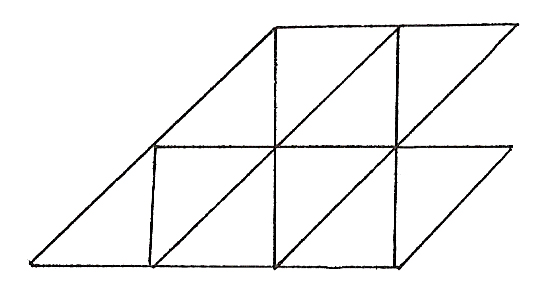
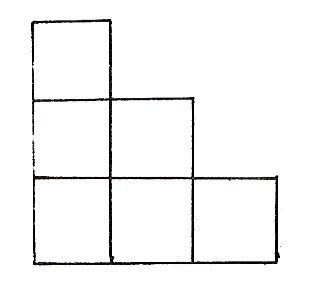
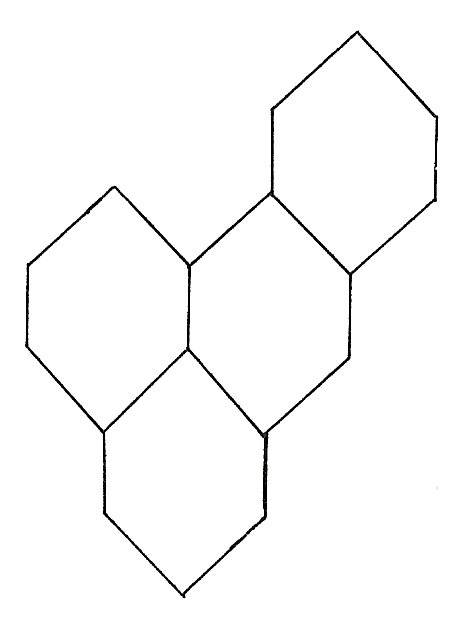
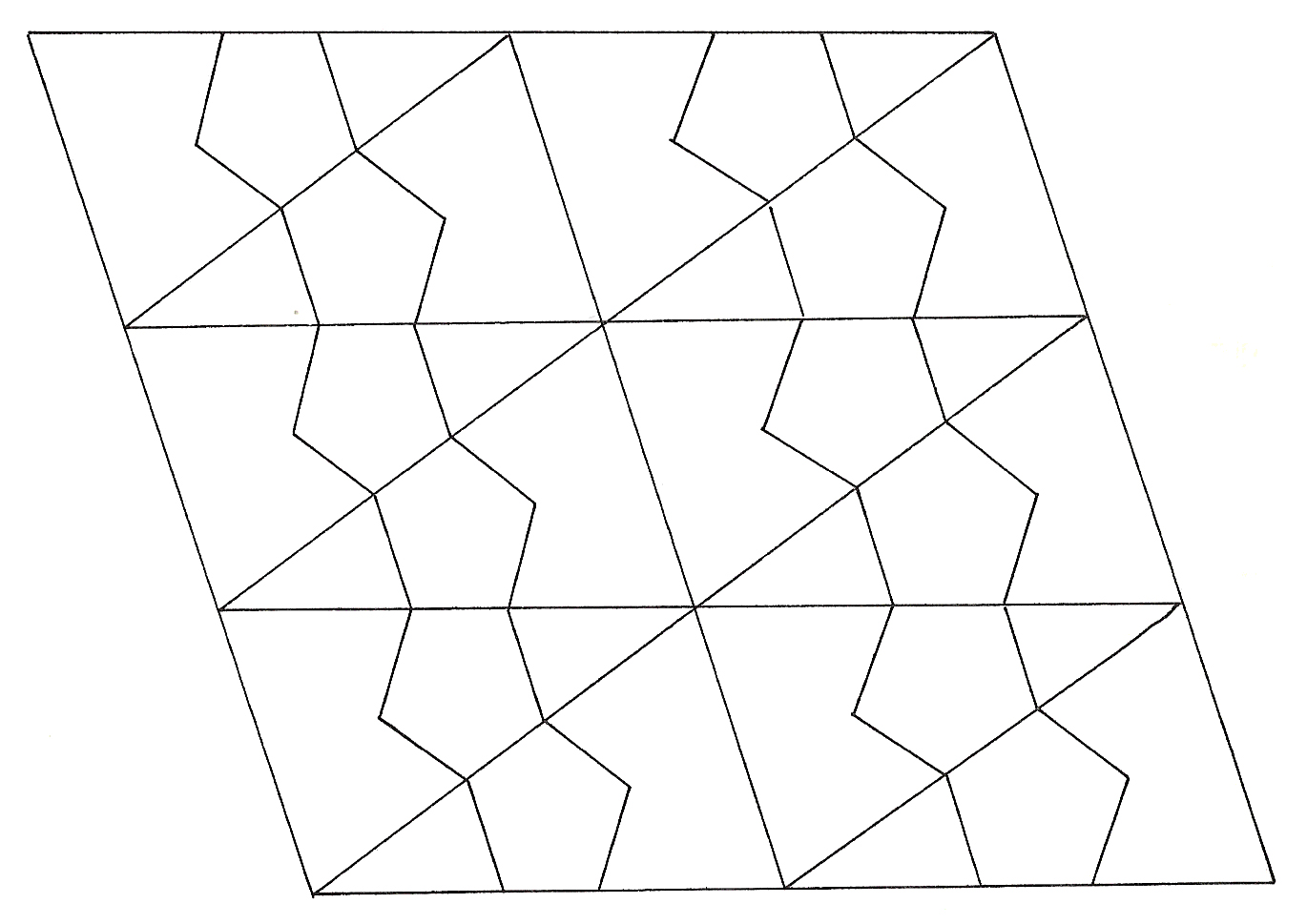
6 There do exist crystals, for example MoAl12, that contain icosahedral elements within their component cells. But only a subgroup of the icosahedron’s many symmetries is employed in the structure, and the icosahedron merely goes along for the ride. It is impossible for it to use its five-fold symmetry. The case of the icosahedral element within the MoAl12 crystal can be compared to a set of triangular tiles, each with a pentagon pattern within. But the pentagon, although it might touch a side, would leave the pattern up to the simpler shape that it lived within.
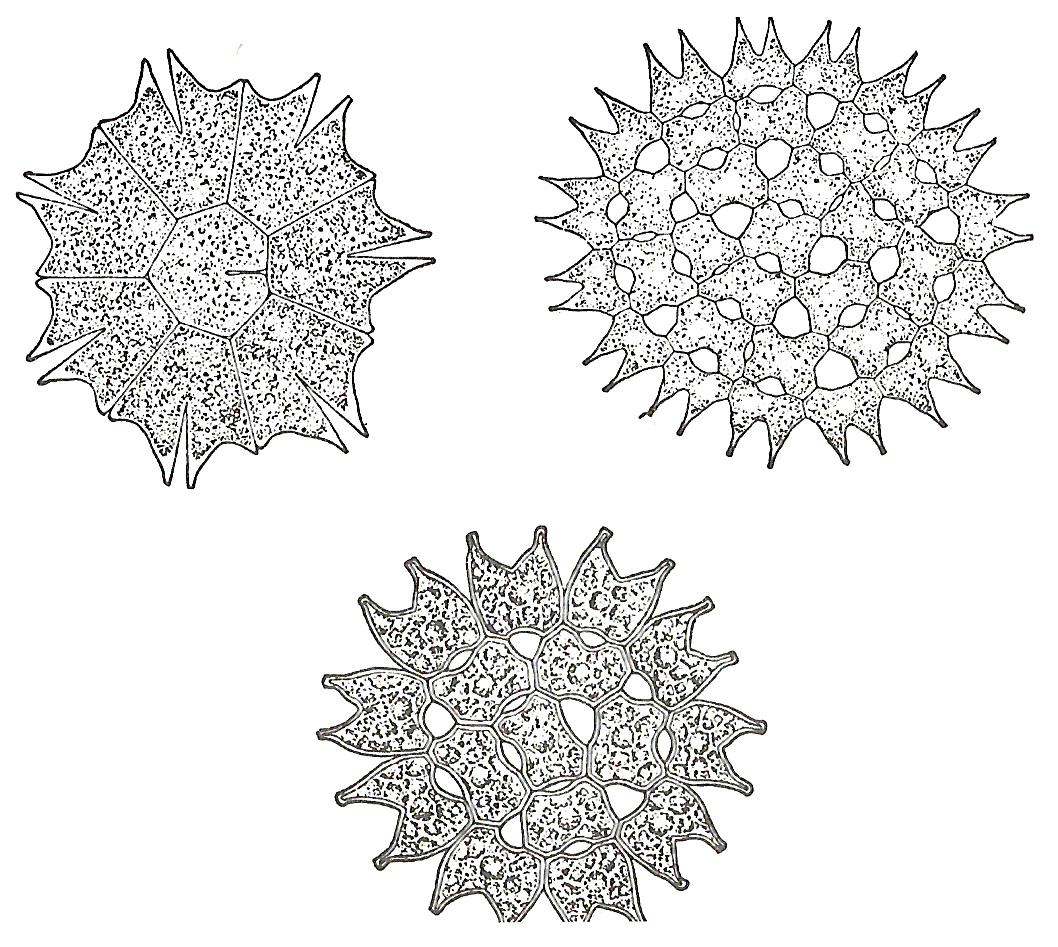
11 Three different species of Pediastrum. (From Brown, The Plant Kingdom, Ginn, 1935 [Bro35]) Note that the two on the right have five-fold symmetry.
12 Five-fold symmetry does appear scattered among other symmetries in nature.
9.1 Growth and Generations of Stars
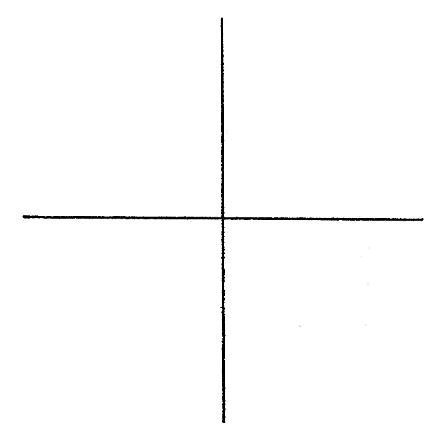
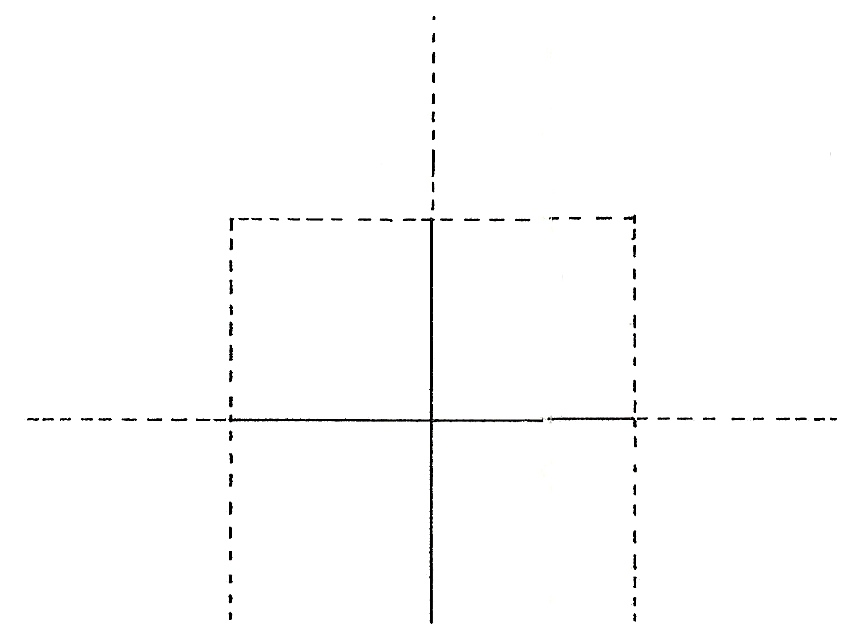
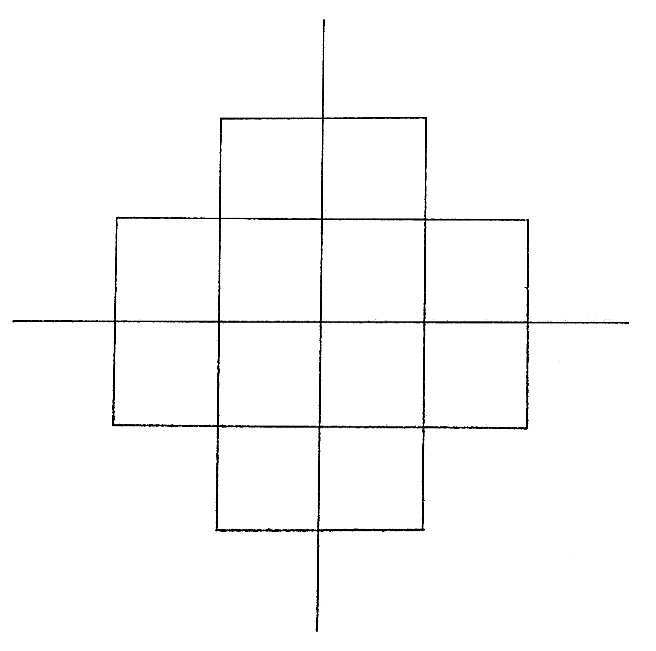
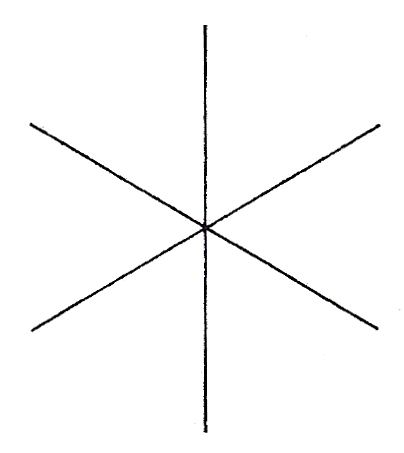
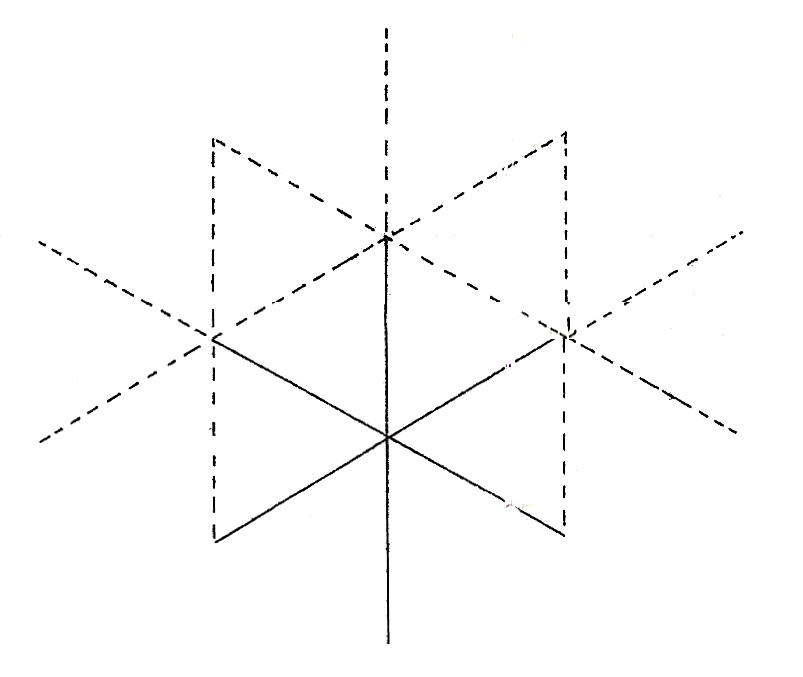
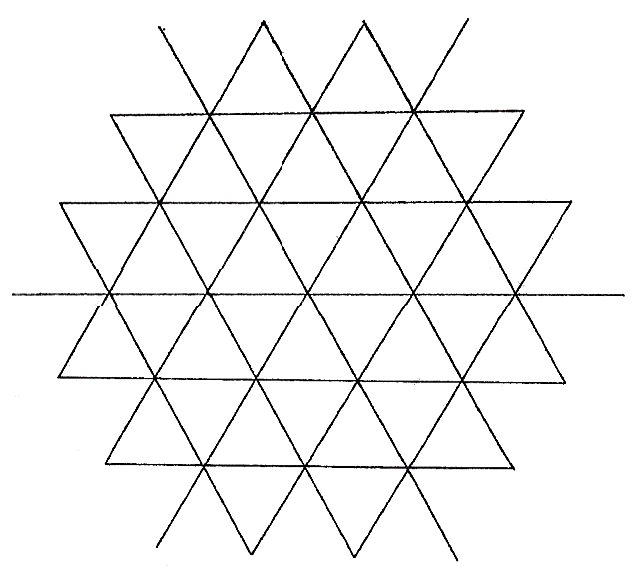
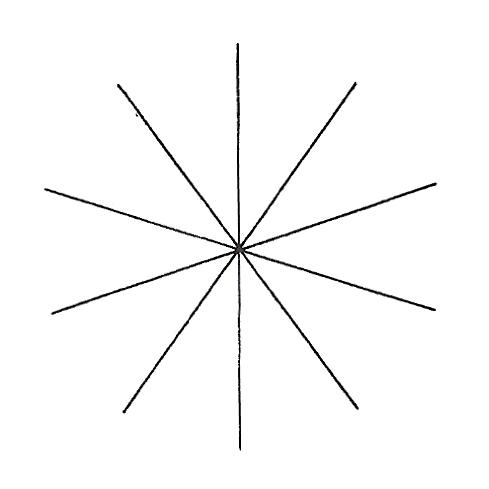
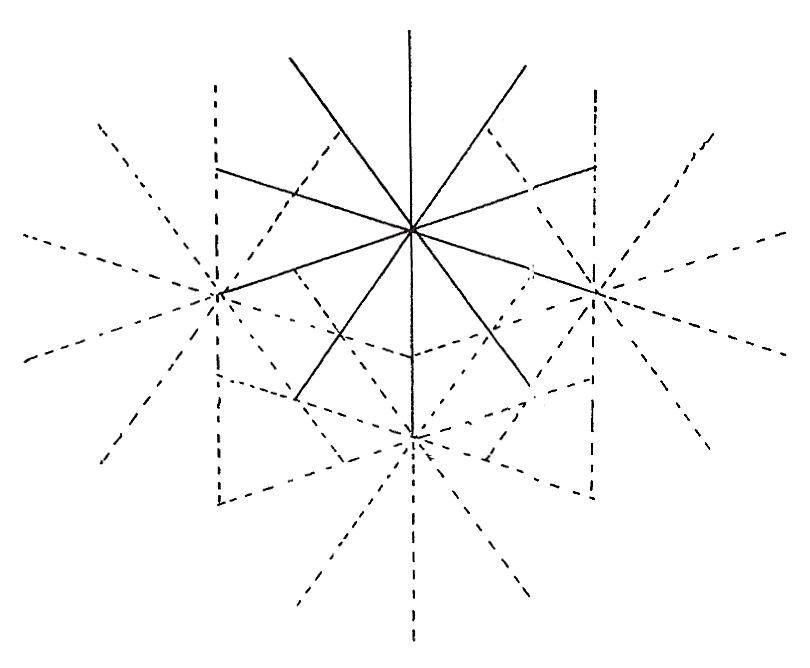
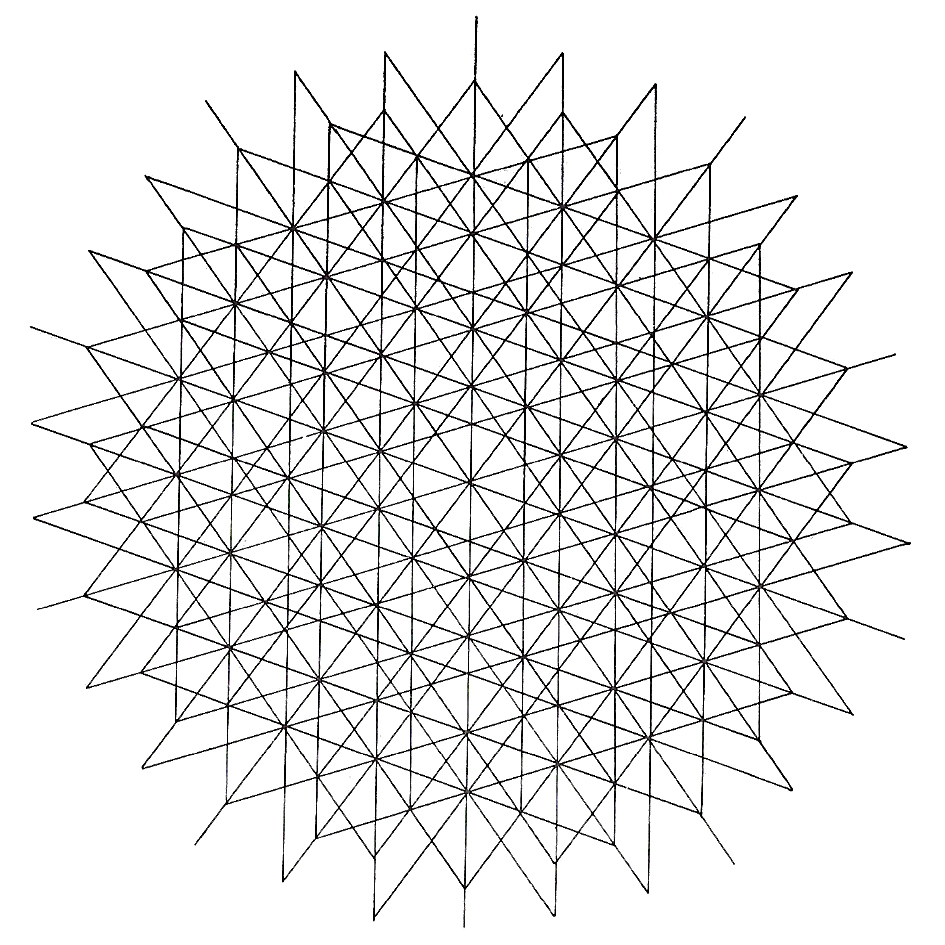
13Below, we have three different patterns. Each has been produced by a different star following the same rule of growth. In one case, the pattern is that of squares, in other triangles and in the largest a strange pattern of over-lapping pentagons and five pointed stars.
14 The rule followed is that the star sprouts other stars similar to itself at each of its end points. Each old end point must sprout before new ones sprout.
15 This is called recursive growth. In the first two cases, it produces a simple and uniform pattern which, as it grows, duplicates itself across the page.
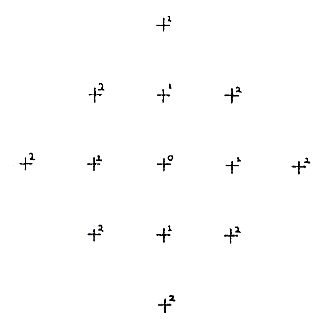
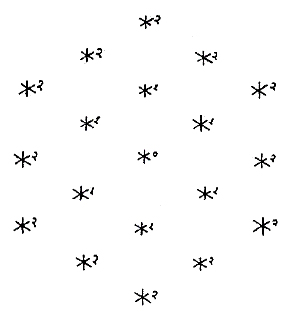
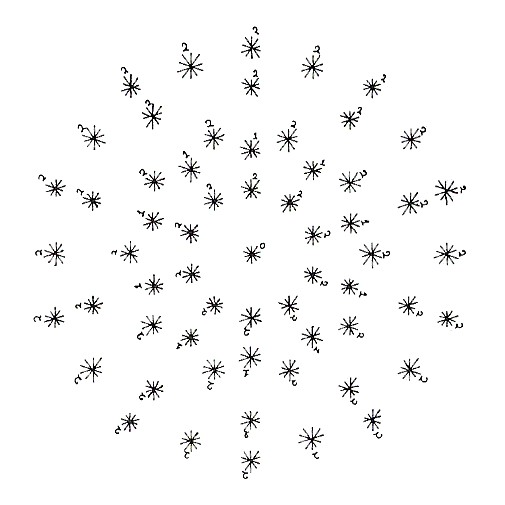
16 The patterns to the right of the line patterns indicate at which generation the point was produced.
17 The regularity and homogeneity of the patterns of squares and triangles indicate the simplicity of growths that follow these symmetries. These are patterns of crystal growth—billions of identical molecules can be incorporated identically in these patterns.
18 In the case of the pattern with five-fold symmetry, there isn’t uniformity. Different points have different patterns in their immediate neighborhoods. Instead of the pattern simply reproducing itself across the page, it becomes steadily more intricate.