2 Zonohedra
2.1 What are Zonohedra?
2A zonohedron is a convex solid, all of whose faces are polygons with edges in equal and parallel pairs.
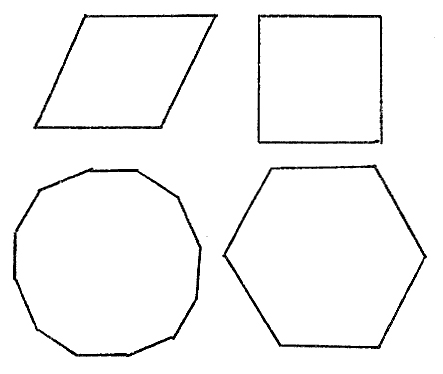
3 These are possible faces for zonohedra:
5 These are zonohedra:
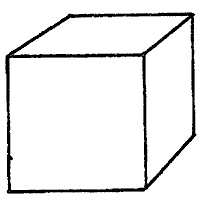
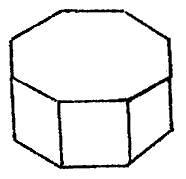
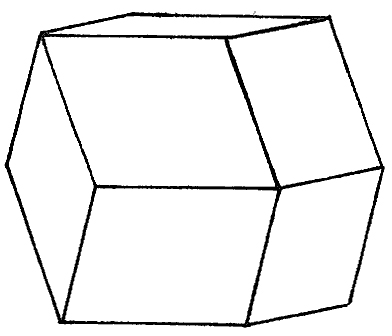
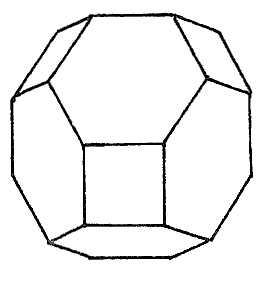
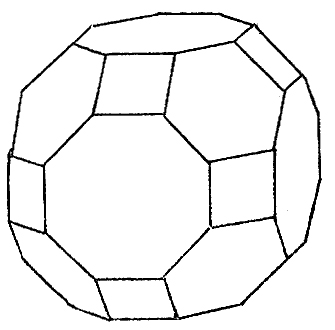
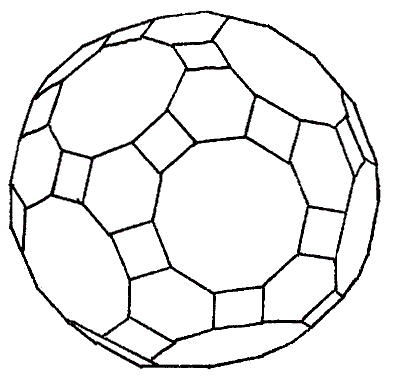
12 A zone of edges is a band of parallel edges which circles the solid. Every edge belongs to a zone.
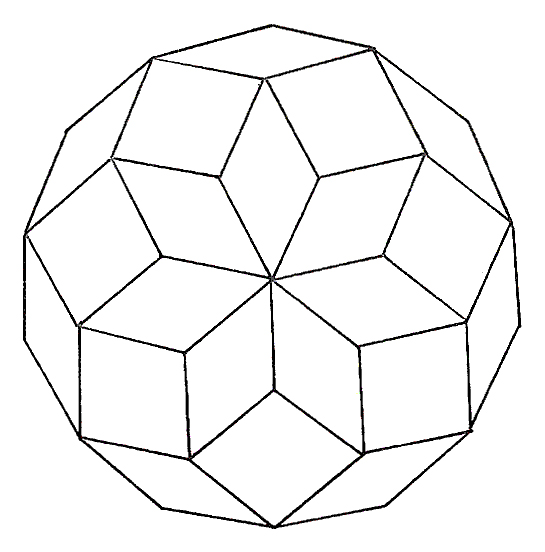
2.2 Face Planes of Zonohedra
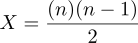
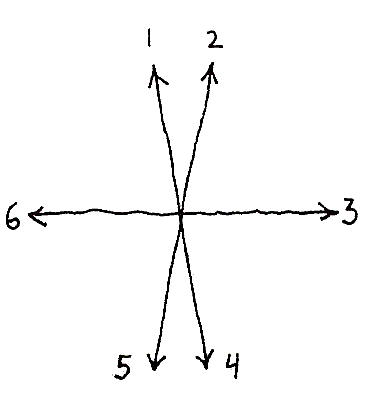
15A plane is defined by two lines. A six-zone figure has six different lines; 1, 2, 3, 4, 5, 6. How many pairs can we form with six objects?
| 1,2 | 2,3 | 3,4 | 4,5 | 5,6 | |
| 1,3 | 2,4 | 3,5 | 4,6 | ||
| 1,4 | 2,5 | 3,6 | = 15 | ||
| 1,5 | 2,6 | ||||
| 1,6 |
17 Algebraic expression:
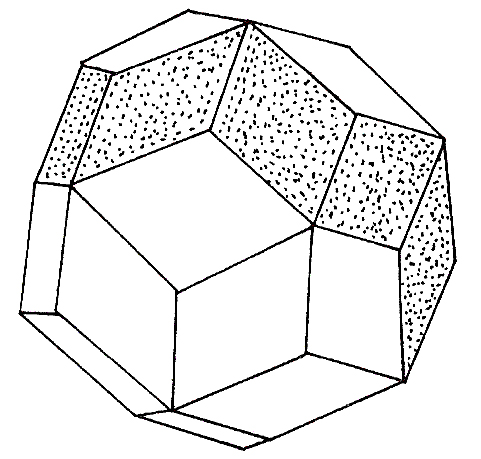
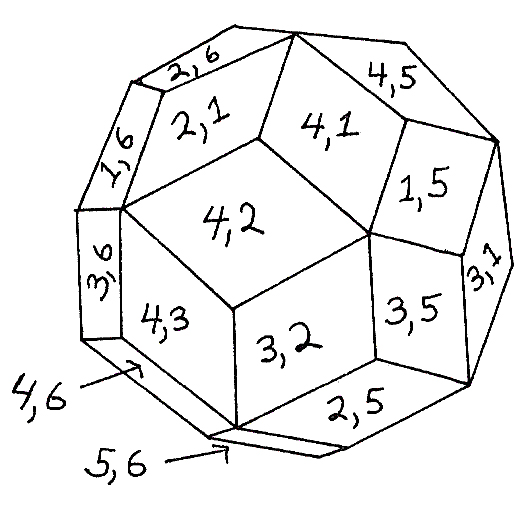
21 Rhombic Triacontahedron with face planes labeled with numbers of the zones which form the plane.
22 There are then 15 more faces on the other side which add up to the 30 faces of the Triacontahedron.
23 The ten-zone system can form  = 45 different planes.
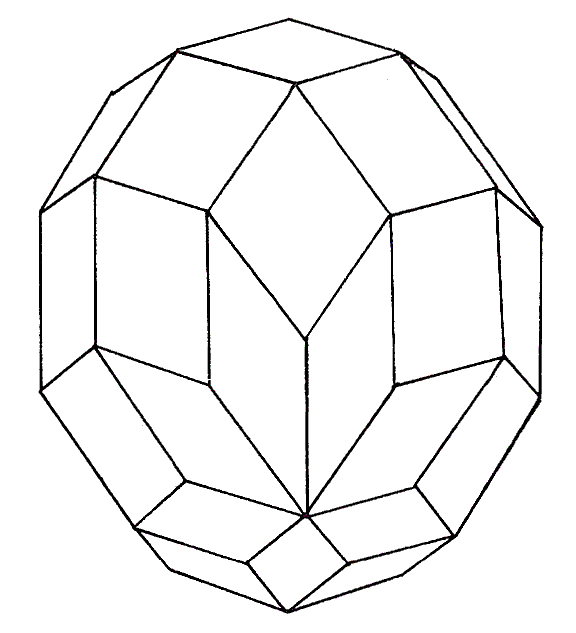
24 This figure is the enneacontahedron with its faces marked:
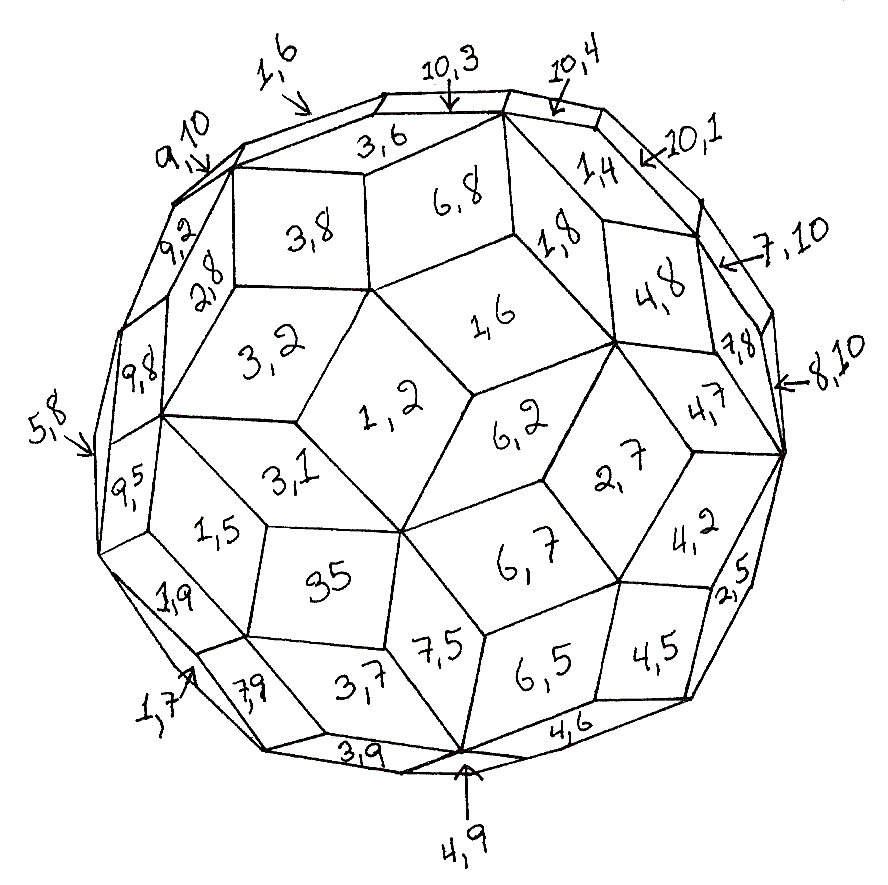
26 The equation is for the number of planes, and if we wish to find the total number of faces for the polyhedron, including the back side, multiply the number of different planes by 2, and this equals (n)(n − 1).
27 The formula  is true for the number of planes that can be formed with the different
zones provided that no more than two lines lie in one plane. These collections of lines associated
with zonohedra are called the stars of the zonohedra. A star is called non-singular if no three of
the lines are coplanar.
is true for the number of planes that can be formed with the different
zones provided that no more than two lines lie in one plane. These collections of lines associated
with zonohedra are called the stars of the zonohedra. A star is called non-singular if no three of
the lines are coplanar.
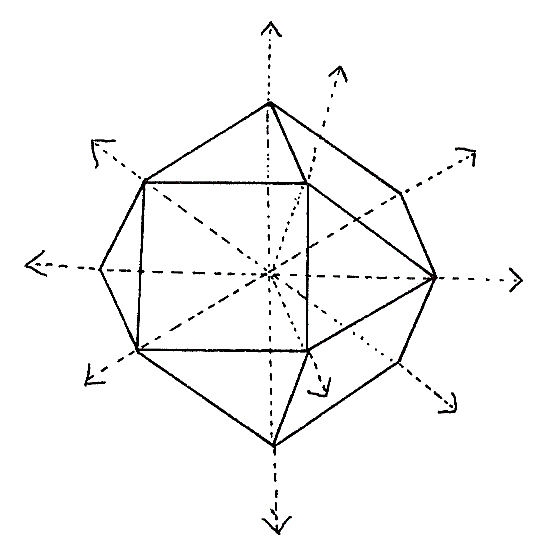
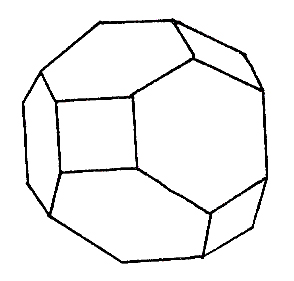
28 If three lines of the star lie in one plane, then the zonohedron associated with the star has a pair of hexagons. If more than three lines lie in one plane, then there are facets to the zonohedron with corresponding more edges—octagon, decagon, etc.
2.3 Section Stars and Face Planes
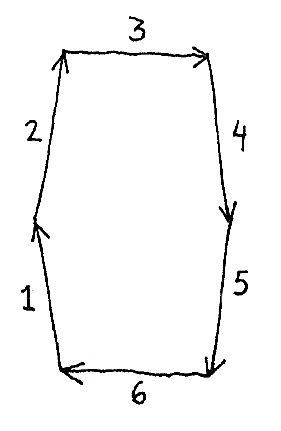
31The zonohedron that has its edges parallel with the lines of the 31-zone star is a huge figure with faces—two faces for each of the 121 sections—one face on each side of the figure. The face corresponding to a particular section is formed by the lines of the star following each other head to toe around in a complete polygon. Consequently, the 242 sided zonohedron associated with the 31 zone star has:
| 12 | regular decagons | T sections |
| 30 | irregular dodecagons | R sections |
| 60 | irregular hexagons | S sections |
| 20 | regular hexagons | V sections |
| 60 | rectangles | X sections |
| 60 | rectangles | Y sections |
| 242 |
2.4 Division of Zonohedra into Parallepiped Cells
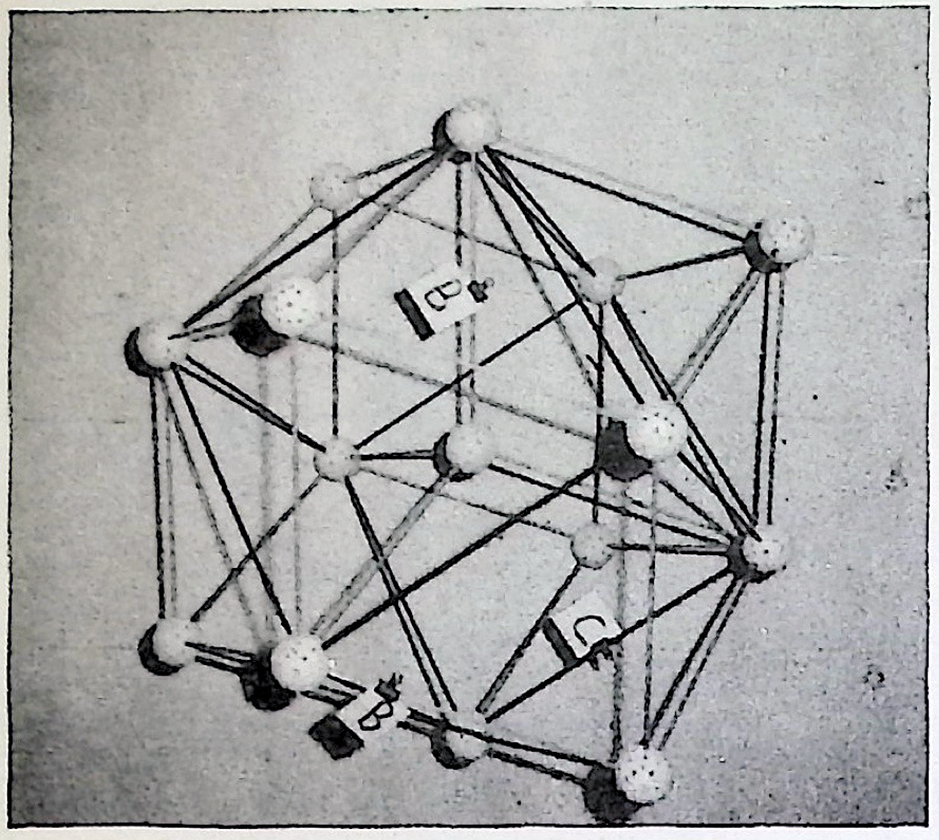
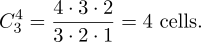
36 Every zonohedron can be divided into component parallelepiped cells. Every set of three different lines form one cell. In the case of the four-zone rhombic dodecahedron 2.25, there are then:
| (2.1) |
38 The sides of the component parallelepiped cells are necessarily the same as the sides of the complete figure.
40 The triacontahedron subdivides into:
| (2.2) |

42 The rhombic triacontahedron divides into 10 acute and 10 obtuse parallelepipeds.
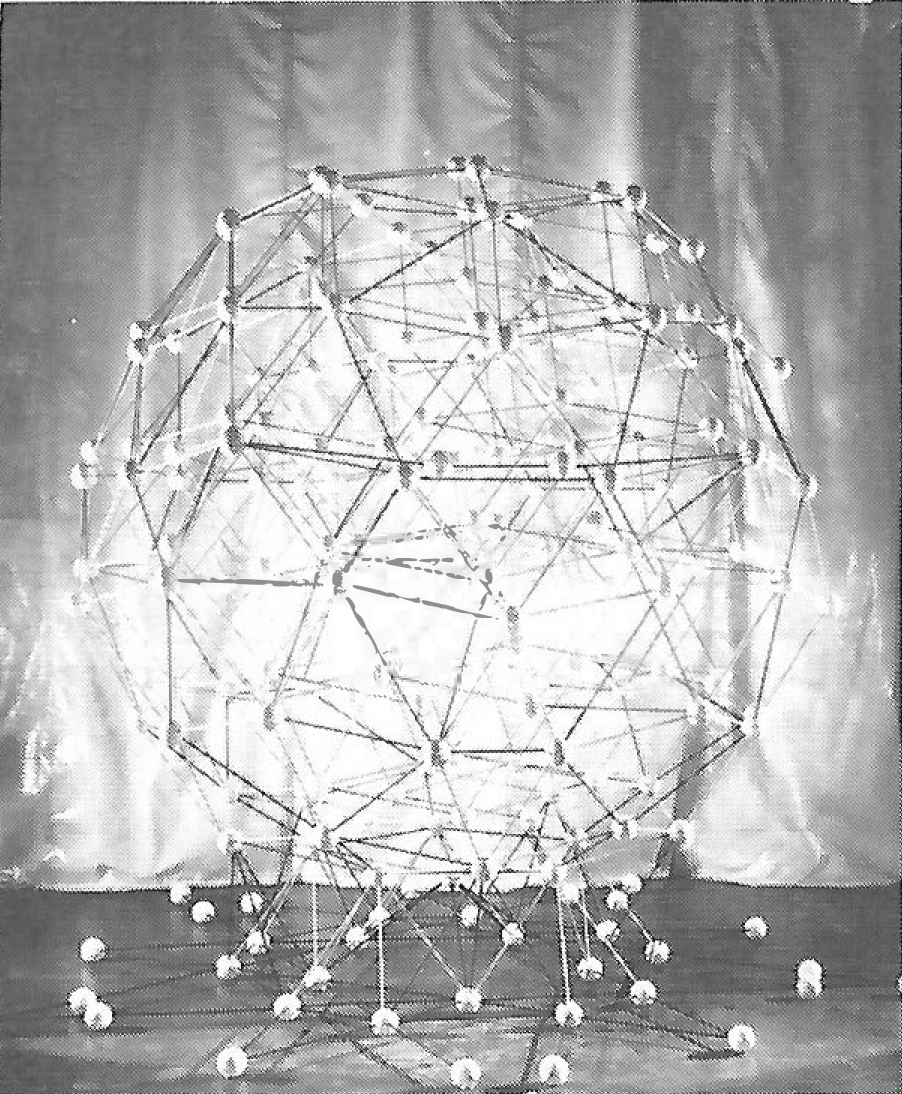
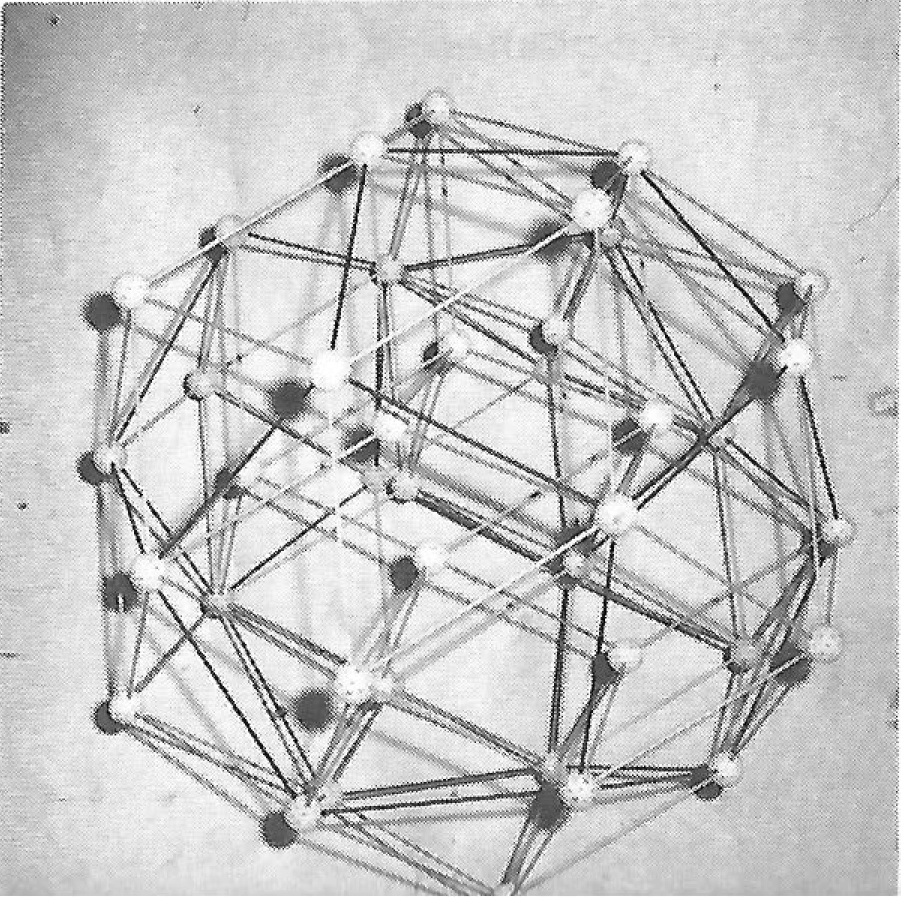
44 The enneacontahedron subdivides into
| (2.3) |

46 There are five different kinds of cells. With one kind of diamond, there are only two kinds of cells possible, but the enneacontahedron has two kinds of diamond faces allowing for more types of cells.
47 There are:
| 10 | A cells | 6 fat diamonds | acute | |
| 20 | B cells | 6 fat diamonds | obtuse | |
| 30 | C cells | 4 fat diamonds | 2 skinny diamonds | acute |
| 30 | D cells | 4 skinny diamonds | 2 fat diamonds | acute |
| 30 | E cells | 2 skinny diamonds | 4 fat diamonds | obtuse |
| 120 | cells |