
1 THE SHAPING OF THINGS TO COME
1.1 Out of Focus
34I am not a thing—a noun. I seem to be a verb—an evolutionary process—an integral function of the universe, and so are you.
5—R.B.F.
6From the time he was born on July 12, 1895, in the Boston suburb of Milton, Massachusetts, Richard Buckminster Fuller saw the world differently from others. At first it was simply a matter of his eyes not working normally. During the first four years of his life, Fuller was slightly cross-eyed and so terribly far-sighted that nothing around him ever came into focus.
7 While other children explored the clear, sharp boundaries of a table, puzzled over the strange letters of type under the pictures in their books, or marveled at the thousands of distinct leaves that made up a tree, Fuller was seeing something else. Life for him was a mass of blurred images. He could tell the larger ones apart by their general shape and color; smaller images just melted into the background. When he looked at his mother’s or father’s face, he couldn’t see any spark of anger in their eyes or see the corners of their mouths spreading into smiles. A face was just two shadowy shapes on top of a lighter background. Neither he nor his family knew there was anything wrong with him at the time. As far as he knew, everyone saw things the way he did. The world consisted of shapes and patterns, and the trick was to know those patterns well enough to tell one from another.
8 Fuller’s eyesight problems were not even discovered until he reached the age of four. When he was then fitted with corrective glasses, it was as though he had entered an entirely new world. Just as a man dying of thirst sees more in a glass of water than the average person, Bucky marveled at the sights around him. Others his age were already growing numb to ‘‘everyday’’ sights, while Fuller thrilled to the beauty and intricate detail that had suddenly come into focus.
11 So it was that by the time he reached school age, Bucky had seen the world from not one but two angles that are hidden from most of us. He had seen it first as a mysterious swirl of shapes and patterns, and then as a wonderful collection of objects, each as distinct and intriguing as the most elaborate spider web. No one can say how much effect this had on his future ideas? You could put another far-sighted child in the same situation, fit him or her with glasses at age four, and come up with someone who didn’t care a bit about shapes.
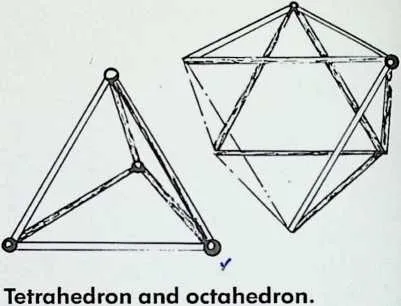
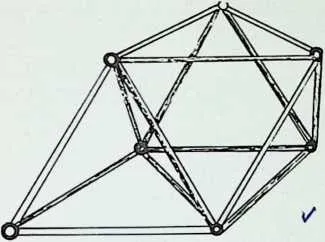
12 Tetrahedron linked to octahedron in the basic unit of the octet truss.
13 But Bucky did, and he thought about shapes in a way that no one else had. As early as kindergarten, Fuller showed that he could fashion some breath-taking designs. His teacher passed out dried peas and toothpicks to the class and asked them to create some-thing. No doubt most of the children constructed some kind of house, tower, ball, pole, or just a random mass of toothpicks and peas. Fuller fashioned an odd sculpture, made of alternating octahedrons (eight-sided figures) and tetrahedrons (four-sided figures). This
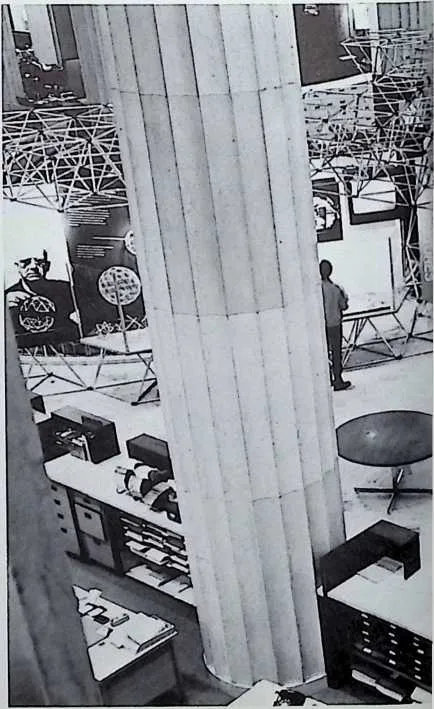
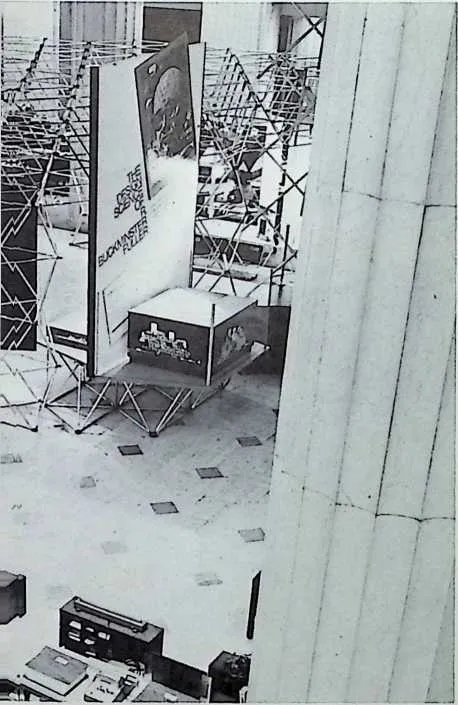
14 The spidery lines of the octet truss contrast with the surrounding mar-ble pillars. This exhibit of Fuller's work was set up in the lobby of a bank building in Minneapolis in 1973.
15 structure later became known as the octet truss. His teacher was awed by the master-piece, and for good reason. What the five-year-old had designed was so original that, sixty years later, it earned a patent for him. No one could have taught Bucky how to build that shape because, to the best of our knowledge, no one had ever been able to build it before. ~
1.2 Surviving the Schools
17Obviously, Buckminster Fuller had a natural talent for new and exciting ideas. One might expect that a good education would be the perfect thing to draw out and direct the best of those thoughts and help Fuller realize his gifts. Unfortunately, despite attending some highly regarded schools, Bucky and his teachers considered themselves lucky just to survive their experiences with each other. It wasn’t that the student was not eager to learn. He loved the precision of mathematics and liked to probe into the elements that made up the natural world. The problem came from Fuller’s unusual ways of looking at things.
18 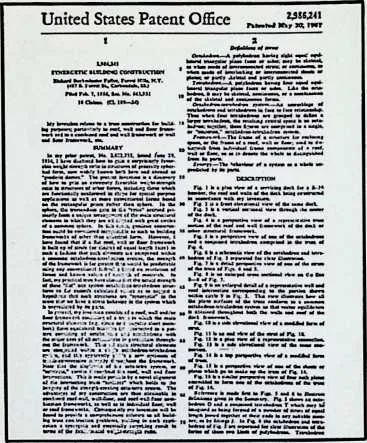
 Bucky always bubbled over with questions and he often asked questions that didn’t
make sense to the average teacher. Rather than accept some of the ‘‘given’’ truths of geometry,
for example, Bucky challenged everything^}
Bucky always bubbled over with questions and he often asked questions that didn’t
make sense to the average teacher. Rather than accept some of the ‘‘given’’ truths of geometry,
for example, Bucky challenged everything^}
19 A page from the patent granted to Bucky on May 30, 1961 for the octet truss.
20 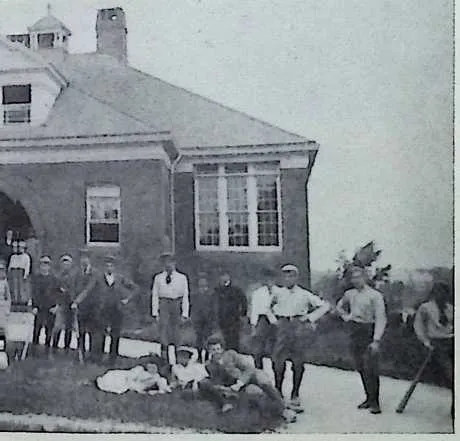 He pointed out that since ‘‘points’’ were just imaginary places in space and ‘‘lines’’ were
just imaginary connections between imaginary points, there really wasn’t any such
thing as a ‘‘plane.’’ After all, how could a plane be real if it was made up of imaginary
things?
He pointed out that since ‘‘points’’ were just imaginary places in space and ‘‘lines’’ were
just imaginary connections between imaginary points, there really wasn’t any such
thing as a ‘‘plane.’’ After all, how could a plane be real if it was made up of imaginary
things?
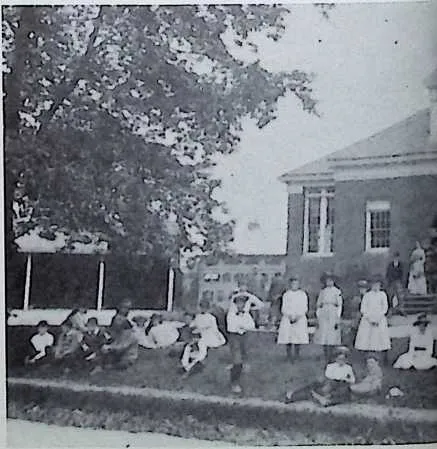
21 Milton Academy, the private prep school Fuller attended. Most of the students boarded at the school, but Bucky was a day student and lived at home.
22 Questions such as that mattered to Fuller, but they only served to irritate his teachers. It seemed that Bucky insisted on wasting everyone’s time on pure foolishness and got side-tracked onto questions that had nothing to do with the lesson at hand. It was particularly frustrating to have this kid constantly challenging statements that generations of students had graciously accepted. How could you go about the teaching process of transferring known facts to someone if that person refused to accept them? Fuller, on the other hand, could not understand what use a school was if you weren’t given the freedom to find out the answers you needed to know.
23 Bucky finally learned that, in school, the best way to get along was to go along. To keep out of trouble he learned to go along with what the class was doing, even if it didn’t always make sense to him. His questions and experiments would have to wait until he could find time to work on them on his own. As a result, Fuller did well in his studies at Milton Academy and was accepted into one of the nation’s most respected colleges, Harvard University. Again, however, the combination of a top school with a brilliant mind only caused misery. This time social problems were piled onto the classroom clashes. Bucky was a sensitive young man who wanted very much to fit in with the group. Yet everything about him guaranteed that he would be an outsider among the students at Harvard. His father had died when Bucky was thirteen, leaving the family much poorer than the families of the other boys at Harvard. His unusual ideas and his overly enthusiastic personality also caused classmates to avoid him?; Lonely and depressed, Bucky neglected his studies. He then wasted what money he had on a wild party trip to New York, and he was expelled before completing one year. After being sent by his angry family to work in a Canadian textile mill, Bucky seemed to have straightened himself out, and he was welcomed back to Harvard. But he again found it so uninteresting that he was asked to leave a second time.
25 -4t seemed that Fuller had blown his chance to develop his brilliant talents. How far could a person go in the world of ideas when he couldn’t even handle a college course? The disturbing answer Fuller gave was that his lack of formal classroom education was a blessing. Fuller criticized schools as being too restricting. They tried to harness and ‘‘discipline’’ the mind rather than giving it room to grow. To him, courses were too specialized and were taught as if they had nothing to do with each other. The barrage of facts tended to clutter the mind instead of clearing it for new ideas. During one stage of his life, Fuller
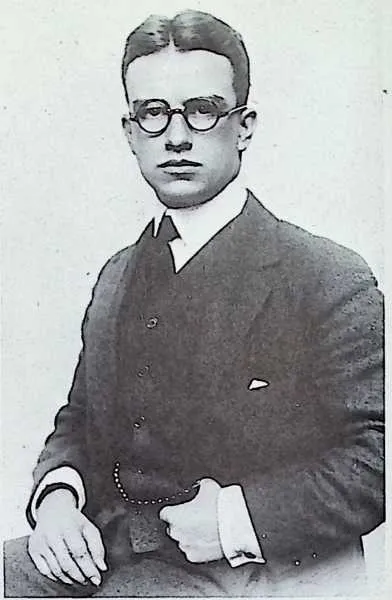
26 Buckminster Fuller, Harvard man.
27 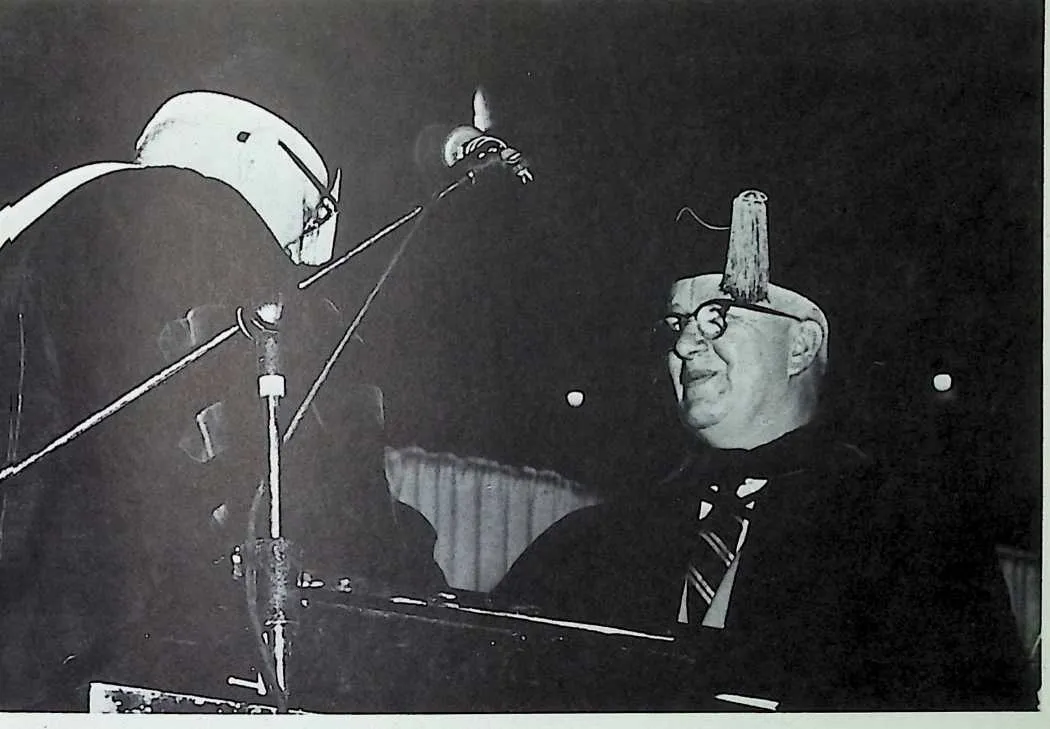 decided that he actually needed to unlearn much of what he had been taught in
school. He went nearly two years without speaking to anyone —except, on occasion,
to his wife and daughter—in hopes that he could break himself of all the bad habits
of thought and speech that he had picked up in his years of schooling. To his dying
day, Buckminster Fuller looked forward to the day when the ‘‘schoolhouse’’ would
disappear.
decided that he actually needed to unlearn much of what he had been taught in
school. He went nearly two years without speaking to anyone —except, on occasion,
to his wife and daughter—in hopes that he could break himself of all the bad habits
of thought and speech that he had picked up in his years of schooling. To his dying
day, Buckminster Fuller looked forward to the day when the ‘‘schoolhouse’’ would
disappear.
28 Above: Fuller received his first honorary college degree, the degree of Doctor of Design, from North Carolina State College of Agriculture and Engineering on June 6, 1954. Although he never did graduate from college, he received over 40 honorary degrees, including one from Oxford University in England.
1.3 Looking for a Better Way
30T' Fuller never did complete a college education. His attitude toward the educational system left him more than ever an outsider, free to work out his own strange ideas with-out any peer pressure. Being an outsider can sometimes be an advantage, especially when it comes to inventing. Instead of trying to master known ways of doing things, Bucky liked to tinker with new and better ways of doing those same things.
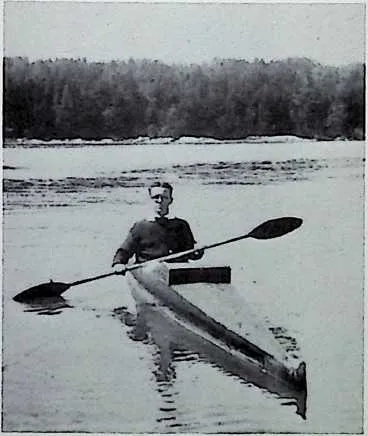
31 An early example of this happened at his family’s Bear Island vacation spot in Maine. The island was quite remote and it was Bucky’s job to row the two miles to Eagle Island to pick up the family mail. Being stocky, strong, and a willing worker, Fuller didn’t mind putting his muscles to work. What bothered him was that he had to face back-wards when he rowed. That meant that he had to keep looking over his shoulder to check if he was staying on course. During a thick fog, a person could be driven dizzy twisting his or her neck every couple of strokes to look ahead.
32 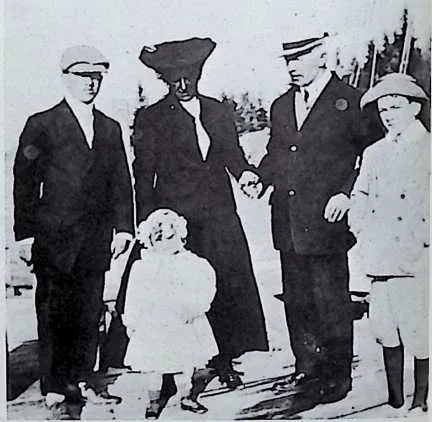 Most of us would accept that as a fact of rowing and satisfy ourselves by grumbling about
it. Bucky, though, was not good at accepting ‘‘facts.’’ There had to be a way to make the job
easier. He couldn’t do much about the foggy conditions, so he looked for a way to change the
rowing process. An experienced observer of the world, Fuller remembered how a jellyfish propels
itself through the water, sort of like an umbrella opening and collapsing. Maybe that would work
with a row boat. Fuller rigged what looked like an inverse umbrella to the front of his boat.
When he pushed his lever, the umbrella would open, forcing water toward the boat
and moving the craft forward. When he pulled on it, the umbrella would collapse,
ready to start another stroke. Not only did Bucky’s invention work, saving wear and
tear on his neck, it got him across the water in half the time it had taken him to
row.
Most of us would accept that as a fact of rowing and satisfy ourselves by grumbling about
it. Bucky, though, was not good at accepting ‘‘facts.’’ There had to be a way to make the job
easier. He couldn’t do much about the foggy conditions, so he looked for a way to change the
rowing process. An experienced observer of the world, Fuller remembered how a jellyfish propels
itself through the water, sort of like an umbrella opening and collapsing. Maybe that would work
with a row boat. Fuller rigged what looked like an inverse umbrella to the front of his boat.
When he pushed his lever, the umbrella would open, forcing water toward the boat
and moving the craft forward. When he pulled on it, the umbrella would collapse,
ready to start another stroke. Not only did Bucky’s invention work, saving wear and
tear on his neck, it got him across the water in half the time it had taken him to
row.
33 The Fuller family at their Bear Island vacation home. Left to right, Bucky, his sister Rosie, his mother, his father, and his brother Woolcott.
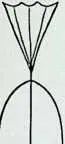
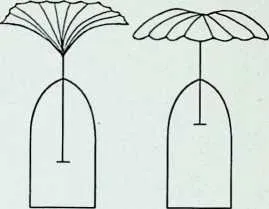
35 The improved rowboat. Left, the umbrella is closed and at rest. Center, it is partly opened, and is beginning to pull water toward the boat. Right, the umbrella has been pushed open.
36 Bucky loved the water all his life.
37 Years later, Fuller was back on the seas, patrolling the Atlantic Coast during World War I. One of his duties was to be alert to the Navy planes which practiced their landings on the water in his area. During these training sessions, pilots occasionally approached the sea at too steep an angle. The front of the pontoons would catch in the water, causing the plane to flip over. Although the boats raced to the rescue, the planes quickly filled with water, sometimes trapping and drowning the stunned pilot.
38 Fuller could not bear the thought of a man drowning while the rescuers fumbled frantically to get him out. He designed a crane-like instrument that could be attached to his boat and could quickly flip the plane back to its right position. During its first try, the device saved enough time that they were able to save the pilot’s life.
39 Bucky’s work for the Navy did not go unnoticed. He received a promotion and a chance to study in the Navy’s engineering school. This was a different and more enjoy-able educational experience for Fuller. He was fascinated by propellers and turbines and the principles that made them work. The Navy also impressed him with its efficiency: wasted space and weight were trimmed from a warship to give it the most equipment at the least sacrifice of speed and maneuver-ability. Bucky studied the most modern equipment and inventions such as the wireless radio. He looked at the way ships were designed to slide through the water with the least resistance, and sought out the most efficient design for cutting the wind resistance of land vehicles. All of his studies seemed to point toward a single goal of invention: getting more with less.
40 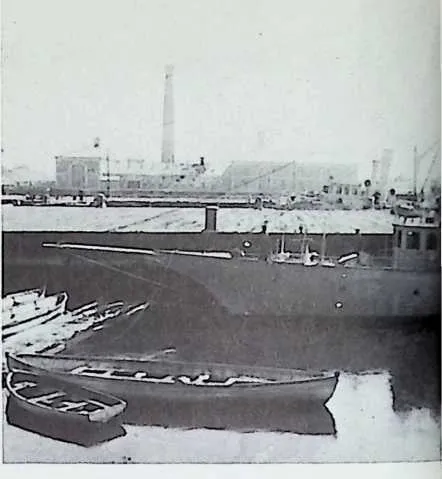
 For the rest of his life, Buckminster Fuller insisted that this was the key
principle in improving the world. Ways had to be found to increase production or benefits
using less work and material. He would carry his argument to its extreme, saying that
unemployment was not a bad thing. In fact, he thought the goal of a society should be
100% unemployment. In other words, a society should be able to find ways to give its
people what they needed without requiring that they put in time at jobs: more with
less.
For the rest of his life, Buckminster Fuller insisted that this was the key
principle in improving the world. Ways had to be found to increase production or benefits
using less work and material. He would carry his argument to its extreme, saying that
unemployment was not a bad thing. In fact, he thought the goal of a society should be
100% unemployment. In other words, a society should be able to find ways to give its
people what they needed without requiring that they put in time at jobs: more with
less.
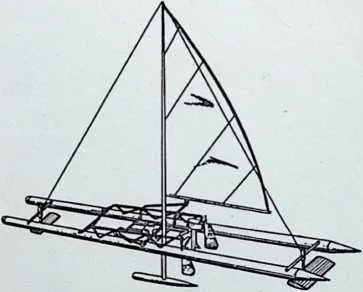
41 Bucky designed this strange-looking boat on needle-shaped pontoons or floats. An example of his ‘‘more with less’’ philosophy, it is more stable and efficient and uses less material than standard boats.
42 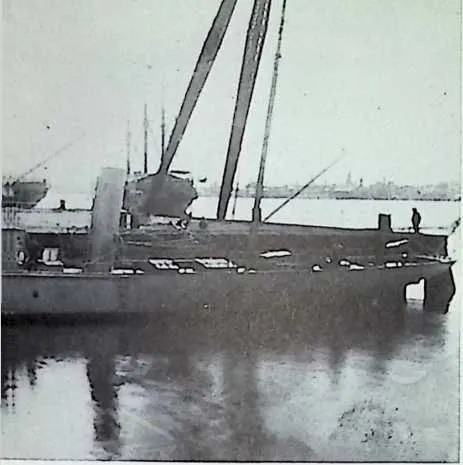 Bubbles and the Secrets of the Universe
43 The Inca, the boat which Fuller commanded when rescuing crashed Navy pilots.
44 While in the Navy, Bucky had formulated his goal: making more with less. But unless he wanted to spend his life blindly tinkering with whatever suited his fancy, he needed to come up with a plan. How could he best go about reaching his goal?
45 Once again Bucky discovered an important answer on the deck of a ship. While staring at the swirling froth kicked up by the ship, Fuller began to focus on the millions of tiny bubbles that made up the froth. Most of us have watched the bubbles in foam many times with a certain fascination, but have probably not thought much about them. But Bucky’s long-standing curiosity about shapes drew him to look more closely at those tiny bubbles. Each of them appeared to be a perfectly shaped sphere. Thinking of spheres, Fuller recalled the familiar mathematical number called pi (n), that everyone uses when working with the dimensions of a sphere. Who but an outsider like Buckminster Fuller would dare challenge the reality of pi?
46 But there was something about pi that didn’t fit in with what he was seeing. Pi is an irrational number. You can compute it to however many places you have time for and never get it to the end, never find out exactly what pi is. You can call it 3.14 or 3.14159 or any number of places beyond. The pi that you use in figuring can never be anything more than a rounded-off number or, in Bucky’s words, a guess. But the bubbles he was seeing appeared to be perfect spheres. Mankind had created this artificial number, pi, to help describe and think about bubbles and spheres. Using pi, they thought they knew what a sphere was, what its dimensions were and how to describe it. But nature ignores mankind’s geometry and makes perfect spheres. Nature does not use a rounded-off estimate of number to make a sphere: every bubble is perfect, not an approximate sphere. Bucky thought that maybe pi doesn’t really describe what a bubble is or how it’s made. Maybe we should throw out that sloppy, artificial tool for looking at spheres, and look at them again.
47 That wasn’t all that the young Navy man saw in those bubbles. He also saw that it was tension and compression that caused the bubble to take and hold its shape. The air inside pushed against the water around it, and the water stuck together and compressed the air inside it. Fuller saw this as an example of a balance of two forces, one pushing in and one pushing out. It struck him that this kind of balance would be the most efficient way to lend strength to a structure.
48 Excitedly, Bucky concluded that the secrets of making more with less were hidden in nature. If he could begin to figure out how the universe was set up, he could make huge strides in making more with less. One of the basic questions he explored had to do with his special interest in shapes. What were the
49 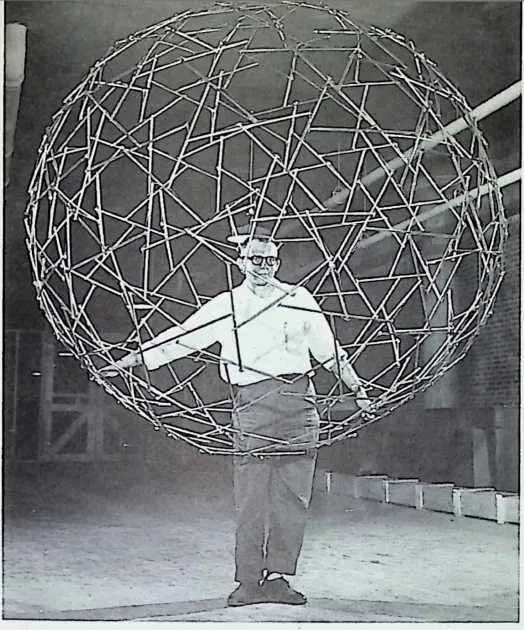
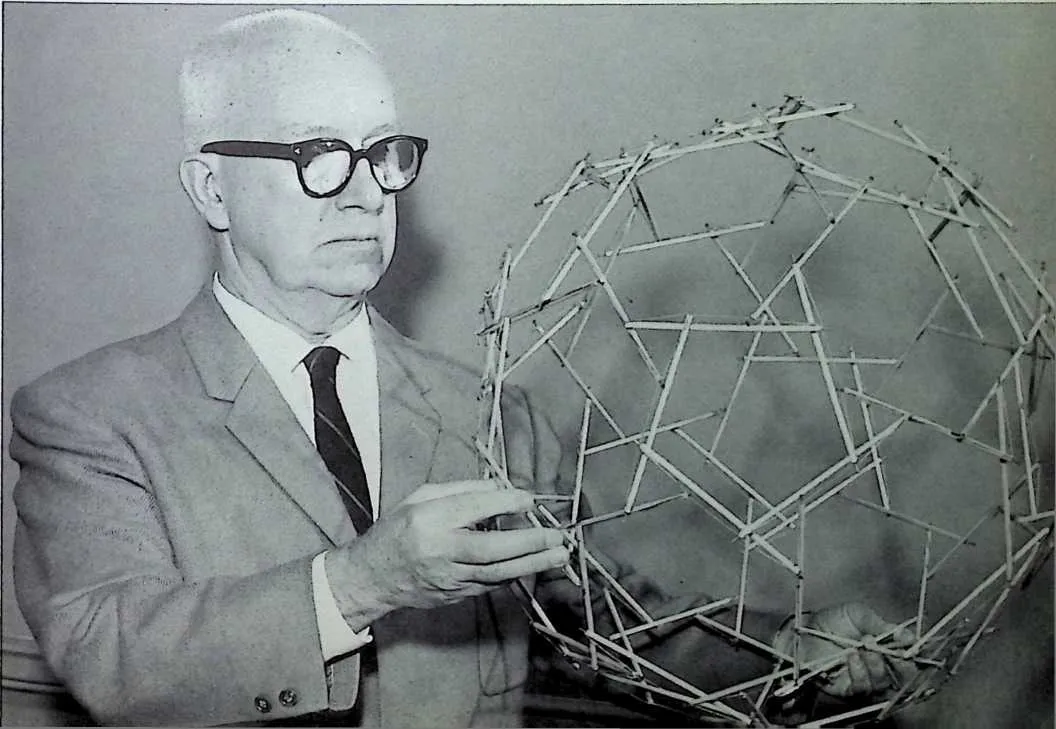 Bucky's interest in the forces of tension and compression led to the development of
‘‘tensegrity’’ figures. Left: One of his students at Southern Illinois University in the late 1950s
holds a tensegrity sphere. Below: Fuller holds a smaller model of the tensegrity sphere. Straight
sticks and tight wires form a model of the forces in a bubble. The sticks push out but
the wires pull in, and although the sticks don't touch each other the sphere holds its
shape.
Bucky's interest in the forces of tension and compression led to the development of
‘‘tensegrity’’ figures. Left: One of his students at Southern Illinois University in the late 1950s
holds a tensegrity sphere. Below: Fuller holds a smaller model of the tensegrity sphere. Straight
sticks and tight wires form a model of the forces in a bubble. The sticks push out but
the wires pull in, and although the sticks don't touch each other the sphere holds its
shape.
50 
 simplest shapes and forms that nature used in making more complex figures? Was
there in fact one basic form that was more stable than all other forms? In his efforts to find out,
Fuller went back to that old kindergarten activity of building with blocks and balls. He would
play games such as seeing how many spheres could be packed closely around a central sphere,
and then ponder whether or not that number had some special meaning in nature. Were these
somehow the numbers that the universe is based on? Were these shapes the basic building blocks
of nature?
simplest shapes and forms that nature used in making more complex figures? Was
there in fact one basic form that was more stable than all other forms? In his efforts to find out,
Fuller went back to that old kindergarten activity of building with blocks and balls. He would
play games such as seeing how many spheres could be packed closely around a central sphere,
and then ponder whether or not that number had some special meaning in nature. Were these
somehow the numbers that the universe is based on? Were these shapes the basic building blocks
of nature?
51 Tragedy, or, Design Science
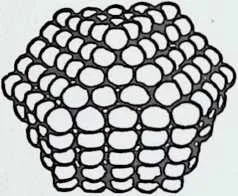
52 Drawings of close-packing of spheres. Top: Twelve spheres sur-round one sphere. All touch their neighbors. Bottom: The same basic shape with more layers of spheres added. Fuller's interest in the basic shapes and numbers of nature led him to develop a new geometry, Synergetics, based not on imaginary lines but on real, buildable models such as these.
53 This kind of off-in-the-stars thinking might have been just a brain-teasing exercise except that Bucky was jolted by a very real human event.(Bucky had married Anne Hewlett in 1917 and a year and a half later the Fullers had a baby girl, whom they named Alexandra. Far from being a cold, distant intellectual, Fuller was an affectionate man who was even prouder than most fathers of his little girl. Bucky was still ‘‘in love with the world’’ and having a daughter around made it twice as much fun. He could experience again the newness of that world that he had discovered with his first pair of glasses. It tickled him to watch a little person learn through discovery,
54 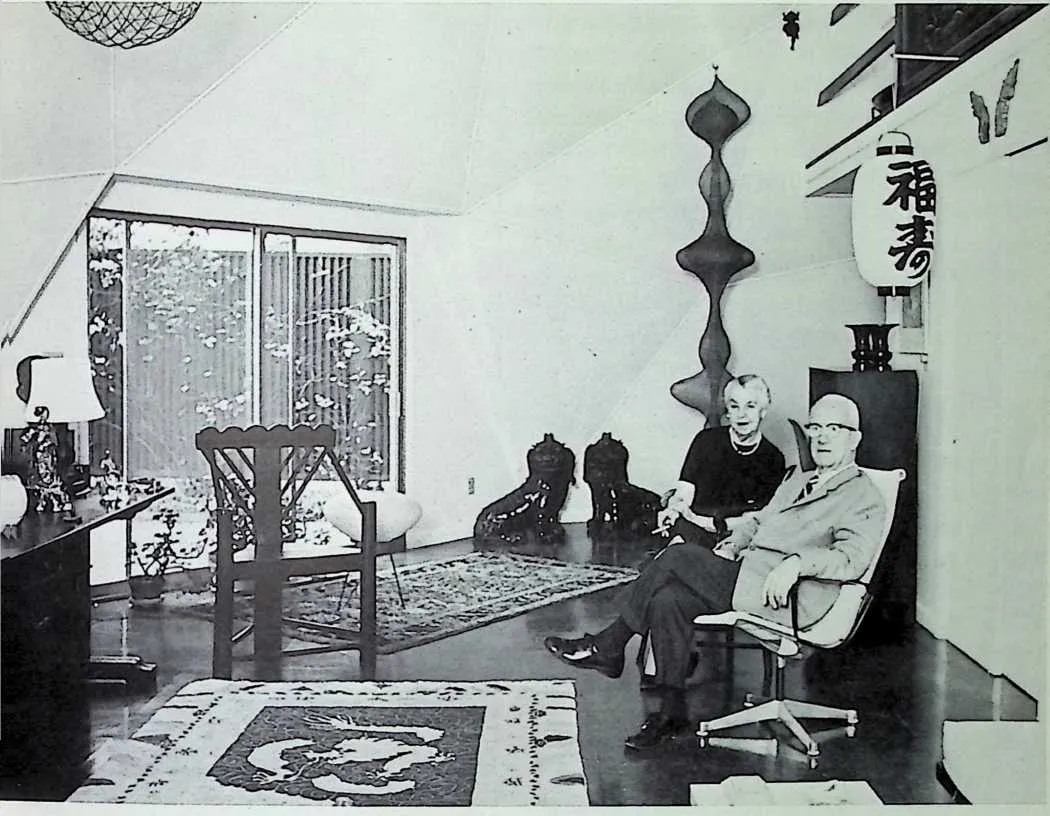 through feeling, tasting, and seeing things she had never met before.
55 Anne Hewlett Fuller and Buck-minster Fuller in their dome home at Carbondale, Illinois around 1967.
56 The happy moments, though, were often crowded out by anxious ones. Alexandra could not stay healthy and she contracted one serious illness after another. When the Fullers finally nursed her through a critical case of flu, she came down with spinal meningitis. Sparing no expense, they desperately sought out the best care they could give her. But despite everything they did, they could not prevent pneumonia from setting in. Bucky’s world was shattered when he had to bury his first-born child; she was just about the age he had been when the beauty of the world had first opened up to him.
57 In all his years, Fuller could never push the tragedy very far from his thoughts. Fifty years later he still spoke of the helplessness he felt as they lost their girl. What grated on him the worst was that it could so easily have been prevented. As years went by, more and more diseases were eliminated from everyday life: cures were discovered, ways of prevention developed. With more effort and planning, these scientific discoveries could have been made sooner.
58 Advancing the cause of science became an urgent project for Fuller. If future discoveries had come sooner in medical research, his Alexandra might have lived. So it was that Buckminster Fuller zeroed in on the future. Along with making more with less, Fuller saw the need to plan for the future in order to take advantage of the least bit of scientific progress. As a result, he developed his theory of design science. The key to this theory was control. Mankind must be able to master its environment in order to solve its problems. He believed that you can’t change people for the better without changing their environment for the better. That would take careful planning. As far as Bucky could tell, society never planned for the future. Most solutions to problems were like aspirin: they made the problem go away for a while but didn’t cure it. Fuller insisted we should not fight and then grudgingly accept change, but should be a step ahead and ready for change before it came.
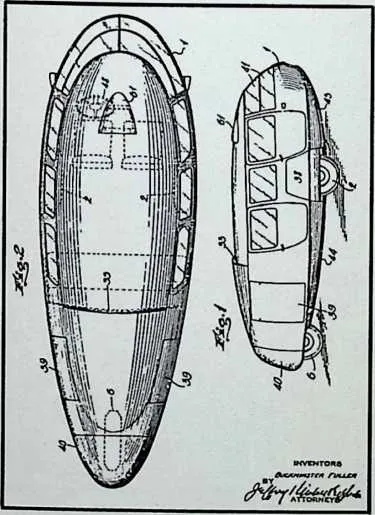
60 Fuller's sketch of the Dymaxion car from the patent issued in 1937. This is the top and side view.
61 With the help of a public relations person, Fuller coined a name for his efforts to produce more with less: Dymaxion. The name was a combination of two words that Fuller liked to use: ‘‘dynamic’’ and ‘‘maximum,’’ with another scientific-sounding word, ‘‘ion,’’ thrown in at the end.
62 'Among his early ideas were a Dymaxion house and a Dymaxion car. The Dymaxion house was to have no wasted space and was to have its own built-in systems so it wouldn’t be tied to sewer and water pipelines. Bucky designed one that was portable and actually used the sun’s energy to create a flow of air that cooled it. The bathroom could provide all the usual services, including shower (still a new idea to most people at that time), with just a few gallons of water—which could be recycled. Fuller worked throughout the 1930s to design a reasonably-priced Dymaxion
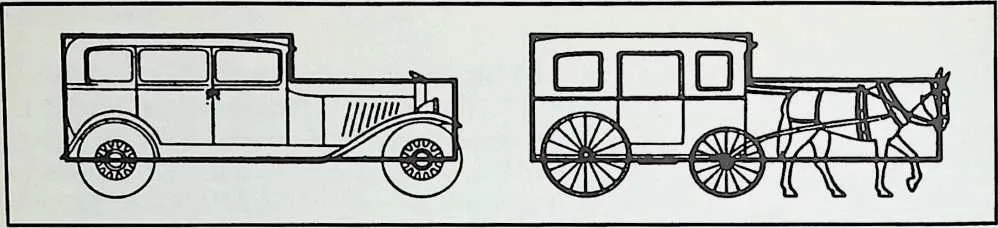
64 Above: The standard automobile in 1932 was about as ‘‘aerodynamic’’ as the horse-drawn wagon it had replaced. Its box shape pushed through the air inefficiently. Below: Fuller's Dymaxion car. Bucky studied the flow of air around moving objects to find the most efficient shape for the car.
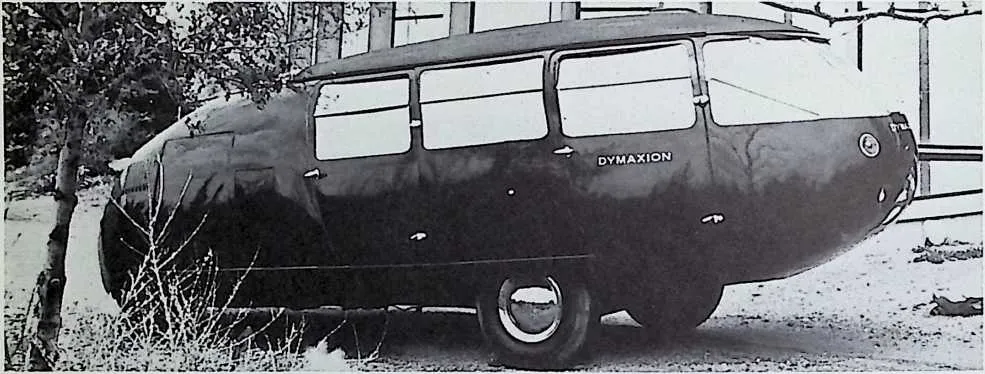
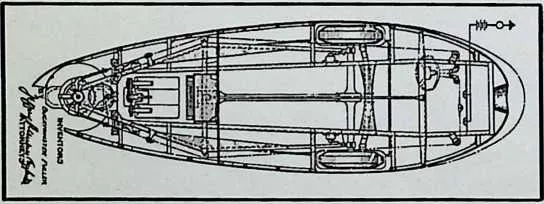
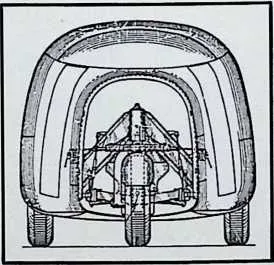
66 Left: A drawing from the Dymaxion car patent shows the arrangement of the three wheels. The two in front provided power, the one in back was for steering. Right: The car viewed from the back. The skin of the car was a smooth, continuous curve, much like the hull of a boat.
67 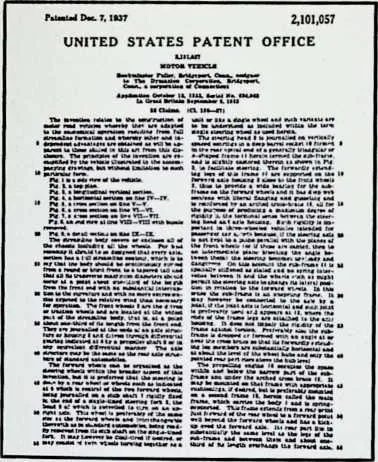 Dwelling Machine in an effort to make it a permanent part of America’s housing scene,
and finally produced two prototypes in 1944--45. Being an outsider to the establishment
presented serious problems to Fuller, though. Architects were furious that a man who had no
training at all in architecture would try to tell them how houses ought to be built. Their ridicule,
as well as the public’s built-in suspicion of anything too new, doomed his first efforts at
Dymaxion structures.:
Dwelling Machine in an effort to make it a permanent part of America’s housing scene,
and finally produced two prototypes in 1944--45. Being an outsider to the establishment
presented serious problems to Fuller, though. Architects were furious that a man who had no
training at all in architecture would try to tell them how houses ought to be built. Their ridicule,
as well as the public’s built-in suspicion of anything too new, doomed his first efforts at
Dymaxion structures.:
68 Patent number 2,101,057, for the Dymaxion car. Fuller never pa-tented the Dymaxion house. It was the first invention he tried to patent by himself, and the Patent Office rejected his application. He later found out that a first rejection from the Patent Office was really a request to rewrite the application, but he never reapplied for the Dymaxion house patent.
69 The same thing happened to his Dymaxion car, which came out in 1933. Leaving behind all fashionable ideas of what a car should be, Fuller came up with a streamlined design modeled after an airplane body. Bucky’s car could hold eleven passengers comfortably and offered excellent visibility for driver and passengers. Perhaps the car’s oddest feature was its wheel placement. The car had two wheels in front but only one in back. This made it so easy to handle that Fuller once circled a policeman in it, with the front of the car never more than inches away from the officer during his circle. Parallel parking headaches were eliminated with the car. All a person had to do was head straight into the parking space and then swing the tail around to the curb. Unfortunately, any chance that Bucky’s design had of catching on was destroyed when one of his three Dymaxion cars was involved in a fatal collision. Although the other driver, operating a standard car, was at fault, news reports of the crash made it sound as if Fuller’s invention was a death trap. The bad publicity guaranteed that no one would spend a cent to help him produce his revolutionary design.
1.4 The Brink of Suicide
71By 1927 all the ingredients were there for Buckminster Fuller to stun the world with his genius. The energy, the ideas, and the theories for some bold new plans were all in place. Yet at the same time, Fuller was drawing dangerously close to suicide. Ironically, the man with *the bright vision of the future could see no future for himself. Fuller had been a failure by almost any definition of the business world. He had failed in college. He had moved from the East Coast to a strange city, Chicago, only to be fired from an important job as head of a growing company. His ideas were scoffed at, he had no way to support his family, and no money for any of his projects. The harder he tried, it seemed, the worse he failed.
72 For a sensitive man like Bucky, it was too much to take. One night he wandered over to Lake Michigan with thoughts of drowning himself. Before taking the final step toward suicide, though, he had one last talk with himself on the shores. He could comfort him-self with arguments such as that his wife and
73 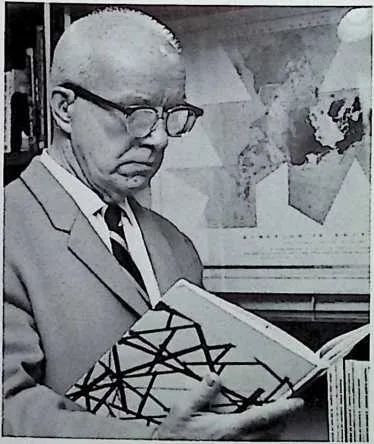 his new daughter Allegra would be taken care of by his family much better than by him,
the failure. But fortunately, Fuller’s mind could wander off to probe the universe even in a
life-or-death situation. As he thought of the world and how he fit into it, he decided that he had
no right to take his own life. He had unique experiences, ideas, and knowledge to offer to others.
He was a part of the universe; in fact, he went so far as to say that he belonged to the
universe.
his new daughter Allegra would be taken care of by his family much better than by him,
the failure. But fortunately, Fuller’s mind could wander off to probe the universe even in a
life-or-death situation. As he thought of the world and how he fit into it, he decided that he had
no right to take his own life. He had unique experiences, ideas, and knowledge to offer to others.
He was a part of the universe; in fact, he went so far as to say that he belonged to the
universe.
74 Fuller in his office at Southern Illinois University in the 1960s—still thinking.
75 That thought was so powerful it not only roused him from depression, it had him bub-bling over with enough energy to see him through two more decades of frustration and ridiculed Bucky had finally found a mission to match his inventiveness. He wasn’t working for a company or a boss, or even for himself; he was working for the universe. Buckminster Fuller was determined to hunt for ways to plan for the future, to make more with less, to work for the well-being of people everywhere.
76 Rather than rush right out and get started, as one might expect from someone as strong-willed as he, Bucky stopped dead in his tracks. He decided his mission was so important that he needed to clear his mind and start fresh. For two years the Fuller family scraped by, living in Chicago in a slum while Bucky did nothing but think. Those were the two years he refused to speak, for fear that the speech patterns he had learned over the years would get in the way of his thought. Accountable to no one,(Fuller freed his mind so that it could explore and wrestle with all the questions he could think of. At long last, we finally meet a Buckminster Fuller who is capable of stunning the architectural world with his spectacular geodesic domes.'
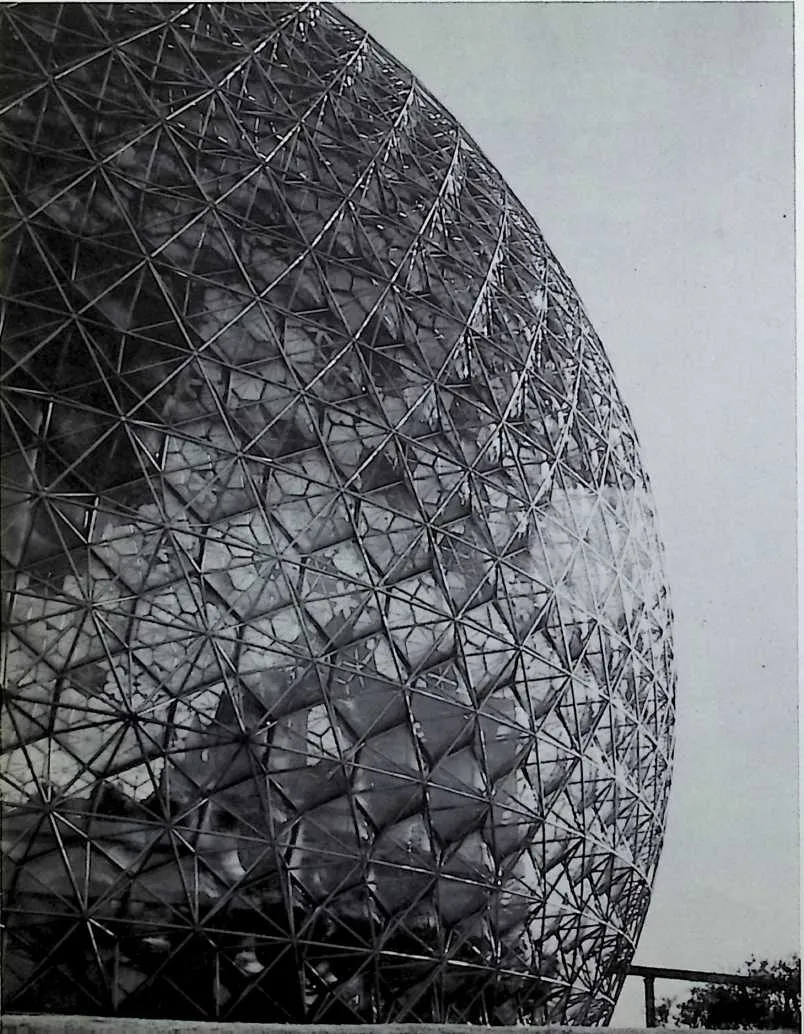
78 A spectacular example of the geodesic dome.
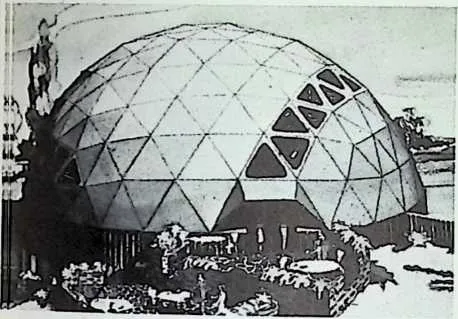
80 Above: Architect's drawing of a geodesic dome home.
81 Fuller, for a long time, was con-sidered a kind of H. G. Wells of housing. You either read him for amusement or just didn’t pay attention.
82 —William Marlin, editor,
Architectural Forum