
4 THE MAN BEHIND THE IDEAS
2Buckminster Fuller, World Citizen, Pied Piper of the Universe, died July 1, 1983, just short of his 88th birthday. Of all the mysteries about this unusual man, perhaps the greatest is, how did he last so long at the pace he kept? From the accounts of his friends, watching Fuller at work was some-thing like watching a gymnast in action. Only this gymnast keeps spinning and leaping for hours without a break until the spectators are breathless, wondering when he will quit.
34My ideas have undergone a process of emergence by emergency. When they are needed badly enough, they’re accepted. So I just invent, then wait until man comes around to needing what I’ve invented.
5—R.B.F.
6 Fuller’s lectures were as unpredictable as the man himself. Without planning what he would say, he would go out to meet the audience and start talking. Much of the time he was just thinking out loud and the thrill of new ideas popping into his brain got him so excited he couldn’t stand still. After he took the advice of his second daughter Allegra that he stop being so stiff behind the lecture podium, Bucky would spin and flail his arms as he warmed to the topics that came to mind. Some of the time he wandered off into a technical language that few but he could understand, yet still managed to get his audience caught up in his enthusiasm. Even in his 80s, Fuller could go on for as long as four or five hours before giving up the stage. Then he would jet around to another part of the world to start the process all over again. He refused to slow down his pace, insisting that he needed to accomplish as much as he could in the short time that he had left.
7 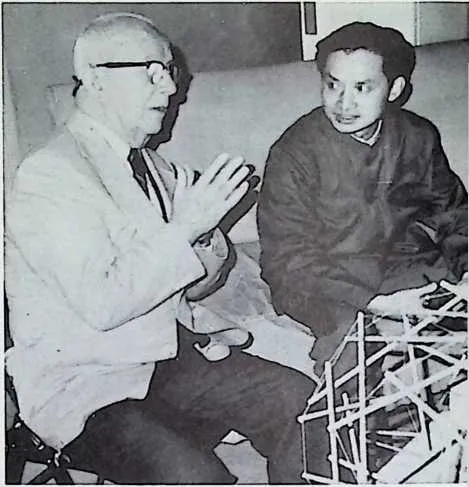 The trait that was most obvious, even to those who did not know him personally, was his
stubborn commitment. With his short, stocky build and strong shoulders, he even looked like
that symbol of determination, the bulldog. As much as Buckminster believed that you change
people by changing the environment, his own uncompromising life was evidence that at least a
few hereditary traits are unchanged by time or surroundings. Fuller’s stubborn independence
seemed to have been passed on intact from his great-great-grandfather, who, as a delegate
to the Federal Constitutional Assembly at the birth of this country, refused to vote
for passage of the Constitution because it said nothing about excluding slavery from
the country. That trait popped up again in Bucky’s grandfather, who, although a
non-combatant chaplain in the Civil War, took matters into his own hands when Union troops
balked at crossing a bridge. Grandpa Fuller’s suicidal charge across the bridge under
murderous fire sounds very much like many of Bucky’s later forays into the business world.
After Buckminster Fuller decided that a person ought to drink plenty of fluids to
keep healthy, there was no wavering from his routine of 40 to 50 cups of weak tea per
day. If common terms in our language were not scientifically precise, Fuller refused
to use them. You would never catch Bucky saying ‘‘up’’ or ‘‘down’’ because in the
universe there is no such thing, only ‘‘in’’ and ‘‘out.’’ If you mentioned that the wind was
blowing from the north, Fuller would correct you by saying it was ‘‘sucking from the
south.’’
The trait that was most obvious, even to those who did not know him personally, was his
stubborn commitment. With his short, stocky build and strong shoulders, he even looked like
that symbol of determination, the bulldog. As much as Buckminster believed that you change
people by changing the environment, his own uncompromising life was evidence that at least a
few hereditary traits are unchanged by time or surroundings. Fuller’s stubborn independence
seemed to have been passed on intact from his great-great-grandfather, who, as a delegate
to the Federal Constitutional Assembly at the birth of this country, refused to vote
for passage of the Constitution because it said nothing about excluding slavery from
the country. That trait popped up again in Bucky’s grandfather, who, although a
non-combatant chaplain in the Civil War, took matters into his own hands when Union troops
balked at crossing a bridge. Grandpa Fuller’s suicidal charge across the bridge under
murderous fire sounds very much like many of Bucky’s later forays into the business world.
After Buckminster Fuller decided that a person ought to drink plenty of fluids to
keep healthy, there was no wavering from his routine of 40 to 50 cups of weak tea per
day. If common terms in our language were not scientifically precise, Fuller refused
to use them. You would never catch Bucky saying ‘‘up’’ or ‘‘down’’ because in the
universe there is no such thing, only ‘‘in’’ and ‘‘out.’’ If you mentioned that the wind was
blowing from the north, Fuller would correct you by saying it was ‘‘sucking from the
south.’’
8 Fuller speaking with Chinese engineer in Peking in 1977.
9 Scientists, inventors, and philosophers often come across to the public as serious, unemotional creatures who are fairly dull to be around. Even the most careful reading of his life and all his ideas will give only a glimpse of the wild, witty character that was Buckminster Fuller. He was as comfortable making up silly songs or dressing up in ridiculous costumes as he was probing the secrets of the universe. Obviously, anyone who would choose a middle name of Buckminster over his first name of Richard didn’t mind being the center of attention. Most who met him insisted that he was like many an amusing story or anecdote: you had to be there to really understand what he was about.
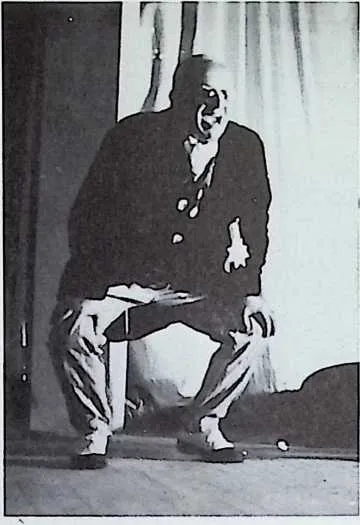
11 Bucky Fuller, free spirit.
12 Was Buckminster Fuller a genius, the Leo-nardo da Vinci of the 20th century? Did he succeed in his self-appointed mission to save the world?
13 ~ The world is still here, but the problems of poverty, injustice, and the threat of nuclear destruction remain as strong as ever. It is not necessary that Bucky was successful, or even correct in all of his ideas. The fact remains that he has left his mark upon the world. Ideas take time in order to work their changes and it may be that we haven’t yet begun to see the results of Fuller’s life. Even now we can say that the world is a little different and, arguably, a little better because Richard Buckminster Fuller saw the world differently from others. If not for Bucky, how long would it have been before someone asked a question like, ‘‘how much does a house weigh?’’