12 Living Space for World Man
2In 1927 two scientists working in the Bell Telephone Research Laboratories had found that electrons behaved like light waves. This was a most interesting kind of contrary behavior, for up until that time, electrons seemed to be particles (you could picture them, perhaps, like little electrified marbles), and there was no reason for them to behave like waves. But the two experimenters, Davisson and Germer, had evidence that could not be denied.
3 About ten years later, their discovery became the basis for an invention called the electron microscope. This instrument used magnets to focus beams of electrons, just as glass lenses focused light rays in optical microscopes. The magnifying power was tremendous; the electron microscope made it possible to see things that had never been seen before. By the end of the 1950’s, electron microscopy had improved to the point where scientists were taking highly magnified photographs of viruses, the tiniest forms of life known to exist.
4 What did the electron microscope have to do with Buckminster Fuller?
56Simply this: the biophysicists and molecular biologists, using their electron microscopes, found that all viruses were essentially built like geodesic domes!
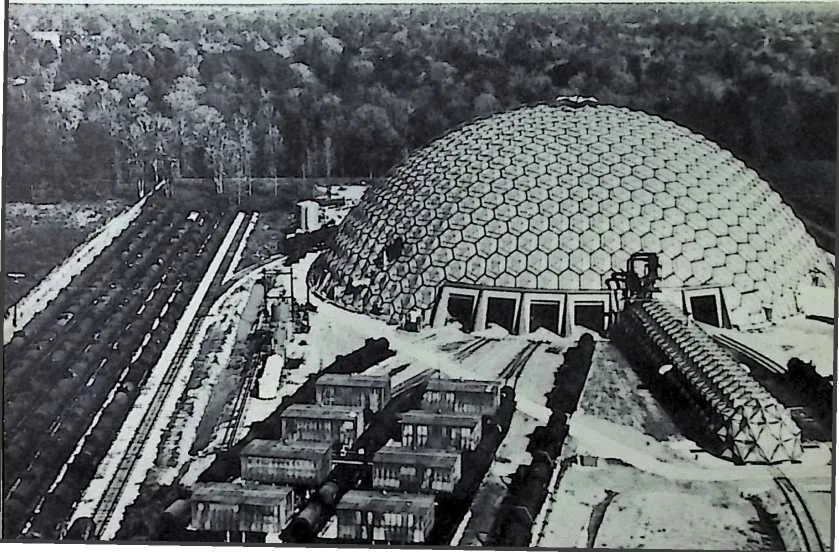
7Every known virus has a kind of outside shell made of protein molecules. Bucky’s geodesic dome formulas predicted exactly the geometric structure of every known virus. Pieces of animal tissue, magnified more than fifty thousand times, showed their cell structures to be constructed of tetrahedral patterns. The cornea of the human eye looked just like a geodesic tensegrity structure. An electron microscope photo of a diatom, one of those tiny sea plants, looked exactly like the top of the Union Tank Car Company Dome!
8Nuclear physicists, probing deeply into the structure of the atomic nucleus, began to come up with evidence that Bucky’s natural geometry seemed to apply to that most fundamental of all structures. Using tetrahedrons, Bucky could give a reasonable explanation for the action of DNA, the molecular structure that seemed to be responsible for passing on biological characteristics through the genes.
9One result of such new findings was that academic specialists began to listen to Bucky with a new respect. Slowly, he began to be drawn into the scientific establishment that had excluded him for so many years. One token of ‘‘belonging’’ was his appointment as Distinguished Scientist at the United States Institute of Behavioral Research. Another was his being engaged as special consultant to NASA, the government agency responsible for all space flights.
10 In 1964, the State of New York commissioned Bucky to fashion a colorful dome for their State Pavilion at the World’s Fair that was to be held later that year on the site of the famous 1939 World’s Fair in Flushing. And two years later he received an order that was to result in one of the most magnificent domes ever designed.
11 The United States government asked him to design a dome that would be the American Pavilion at the Canadian World’s Fair in 1967. This Fair was to be held in Montreal, to celebrate the one hundredth anniversary of Canada’s becoming a dominion. At the same time, the city of Montreal would be celebrating its 325th birthday. For this great Fair, named ‘‘Expo 67,’’ an entirely new, artificial island was created in the St. Lawrence River to hold the pavilions and exhibits of seventy nations.
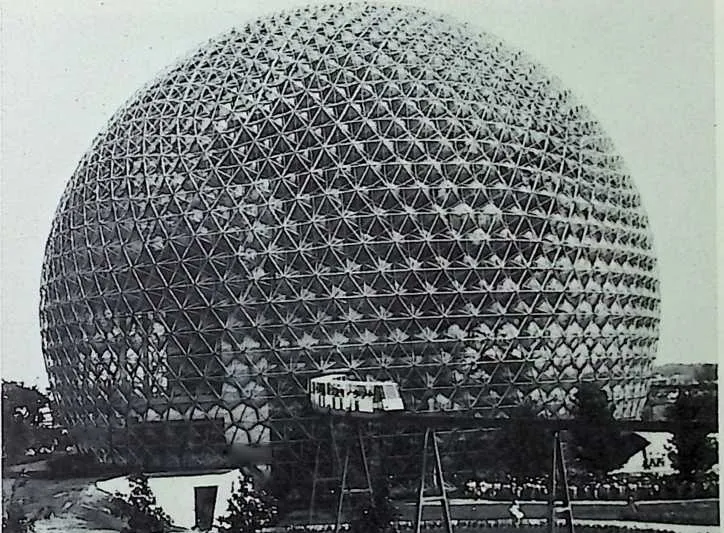
12 Bucky took the problem of designing the dome to his group of young architects and designers from Harvard University and the Massachusetts Institute of Technology known as the ‘‘Cambridge Seven.’’ They came up with a brilliant design. The dome would be a huge plastic bubble, two hundred and fifty feet across. It would dramatize the exhibits inside, a panorama called Creative America. Bucky rolled up his sleeves and joined them in the planning of the dome.
13 From the complicated blueprints there first emerged a large scale model. It was a kind of ‘‘three-quarters’’ bubble, whose light steel framework was made of hexagons. Instead of a whole plastic skin, Bucky’s team designed a covering made of thousands of separate, plastic hexagons. These were arranged on pivots, so that they could turn individually. A network of motors, over two hundred and fifty of them, was set up to open and close the plastic hexagons. This motor network, in turn, was regulated by a computer that was programmed to trigger the motor in response to outside weather conditions. Thus, some of the hexagons might close to keep the sun out, while others might open to let it in. Some of the hexagons had light sensors, and these sensors opened or closed shades, depending upon the amount of light that hit them. Other hexagons had intake and exhaust valves to regulate the amount of fresh air inside the dome.
14 The result was an American Pavilion unlike any ever constructed before. Bucky’s dome appeared to the visitors of Expo 67 as a kind of living creature. Different parts of the skin of the dome kept changing colors during the day, sometimes silver, sometimes transparent, sometimes like a rainbow. From inside the dome, people could see the clouds in the sky. But the light that came into the dome was soft, shaded light.
15 Inside the dome, which was two hundred feet high, there was a series of platforms, staggered at different heights and linked by escalators. Visitors rode up and down from platform to platform viewing the exhibits inside and marveling at the dome structure. Everyone who went through the dome agreed that the dome itself was far more exciting an adventure than the exhibits inside. At night, interior lighting turned the dome into a beautiful, glowing sphere, a modern Taj Mahal that was the most magnificent spot in the entire fairgrounds.
16 When Expo 67 closed its gates, the city of Montreal purchased the American Pavilion, which became a permanent fixture of a complex display called ‘‘Man and the World.’’ Bucky’s dome is now an aviary filled with beautiful birds.
17 You would think that a man at the age of seventy-two would have had enough of striving and failure. You would think that a man who had finally achieved an annual income of several hundred thousand dollars and international fame would want to stop working. You would think that such a man would be glad to quit, to rest, to place the baton in younger hands and leave the race.
18 Not Buckminster Fuller.
19 There was still too much to be done. There was the work of the international teams who were cooperating in the World Design Inventory. There were the students to be taught at Southern Illinois University. There were the hours to be spent in jet planes flying from lecture to lecture, from visiting professorship to visiting professorship. And above all, there was the need to keep the cause of livingry going.
20 Most of all, Bucky worried about the problems of city life in America. American cities had ceased to develop progressively. During the early years of the 1960’s, it had become apparent to all who lived in or visited them that most large American cities were in terrible shape.
21 Attempts to eliminate city slums had failed. Even though new housing projects had been erected for slum dwellers, these people remained poor. The housing projects simply became new slums. Crime in the cities increased. In most large cities it was unsafe to walk the streets at night. City parks that had once teemed with people on hot nights had become deserted, empty areas that were only shadowy invitations to violence and robbery.
2223Those city dwellers who could afford to move did so. They fled to the suburbs in droves. The inner parts of the cities became a combination of slums and business sections. The latter were usually canyons of massive stone and glass office buildings. City streets, never planned for automobiles, were choked with traffic day and night.
24Bucky saw this lack of city planning as the fault of the political and industrial ‘‘masters’’ and the architects. Any new buildings built in cities like New York or Chicago were planned only on the basis of how much money each would earn for its owner. In an article written for the Saturday Review, Bucky pointed out that the first question house-builders asked was: how many people will live in this building, and how much will the rent total?
25Next, the necessary number of elevator shafts to accommodate the maximum number of dwellers were planned. These shafts became the major space around which the building was raised. Engineers were hired to design the steel skeleton and all the power systems. Interior and exterior decorators made decisions about windows, lighting fixtures, paint colors, and so on. What did the architect do?
26Actually, wrote Bucky, very little. He acted as a kind of purchasing agent for the building owners. He ‘‘sort-of organized’’ the building space. The most important functions were really carried out by the engineers. The architect had lost his most important job —being a planner. Now, he was only a salesman for his firm.
27This failure to use the architect as a designer and planner was part and parcel of Bucky’s complaint that the resources of the world were being used for the benefit of less than fifty per cent of humanity. The existence of national barriers plus the fears aroused by nationalism was preventing the use of all man’s capabilities for the good of all men. Perhaps the coming of the computer might afford a solution. Perhaps the politicians and the ‘‘masters,’’ who would not listen to the design scientists —or to one another, for that matter —would listen to the computer. Because the computer, after digesting all the facts that were fed into it, would only tell them the truth. And the truth was that man had to stop competing with machines. Man had to begin using the machines to do more with less.
28 One of the most interesting persons Bucky had met during his travels was a wealthy Japanese businessman named Masutaro Shoriki. His wealth had come originally from the rapid expansion of a newspaper he had purchased when it had a small circulation. Mr. Shoriki apparently had a feeling for what kind of news the public enjoyed. Also, he was aware that modern technology had come to stay. He purchased one of the largest offset presses in the world, so that he could run off large numbers of newspapers very quickly. It did not take Mr. Shoriki very long to become an important man in Japanese social life and politics.
29 After World War II, Mr. Shoriki helped the new Japanese government get back on its feet. He used many clever ideas to help restore the economy that had been ruined by warfare and defeat. One thing he did was to help the government reopen a large racetrack that began to show a profit at once. Mr. Shoriki helped bring both television and baseball to Japan.
30 But as the Japanese millionaire grew older, he felt that he should try to accomplish something more meaningful than his past local successes. He wanted to help Japan make an important contribution to the world. And what interested Masutaro Shoriki most was the unsolved problem of housing the people of the world. How could every person on earth be housed adequately? How could every person on earth enjoy a high and meaningful standard of living?
31 In order to accomplish this task, Mr. Shoriki commissioned Bucky Fuller to design and develop a city for a million people.
32 How do you go about planning such a city? What are the first questions to be asked? What do you have to know? What are the dangers to be avoided?
33 Bucky handed the problem over to the architects and scientists who had designed the Expo 67 dome. After mulling things over for a while, they decided that all the available information about cities and city life ought to be put into statistical form and analyzed by computer. This was begun. It was a formidable task, taking weeks and months of hard work and much of Mr. Shoriki’s money; but eventually it was finished.
34 After comparing the various kinds of data, the computer printed out a series of mathematical results that could be interpreted as composing a ‘‘converging complex.’’ What did that mean? Simply, it was what had to be put together to make an entire city.
35 The next part of the operation was more difficult.
36 Where was the best location for such a complex —land, sea, or air? How large ought the complex to be for the most efficient operation? What kind of social planning and economic structure should this operation have? These questions and many more had to be answered before the actual designing began.
37 It was going to take a long time to complete this part. But Bucky had already begun to think ahead about the design he favored. What was that design?
38 Naturally, a tetrahedron.
39 Bucky thought that a floating city, like a great, anchored iceberg, would be best. He visualized a great pyramid, a tetrahedron, floating in the waters of Tokyo Bay. It could all work very efficiently. The power for the city would come from atomic engines. City wastes could be used as fuel to generate energy for a desalinization plant designed to remove the salt and impurities from bay water and to feed a continuous supply of fresh water into the city. A side product of that plant would be enough energy to furnish cheap electric power.
40 One of the wonderful effects of using a tetrahedral shape was that the city could actually imitate nature. Crystals in nature grow larger by adding on little tetrahedral cells. In this way, the crystals acquired the largest possible surface for the smallest possible volume. And so, a tetrahedral city could begin with any size, and, like a crystal, add on little tetrahedrons to increase the overall size of the original tetrahedron. The only limit was convenience.
41 Imagine a huge floating pyramid made of great shelves. House units, or apartments, could be mass-
4243produced and placed on these shelves. The whole pyramid could be easily assembled, or disassembled, in parts, like a child’s toy. For example, if one household wanted to leave Tokyo Bay for a few weeks of vacation, their dwelling could be lifted out, placed on the water and hitched to a motorboat.
44There were so many possibilities in this kind of design. A tetrahedral city might begin small, about ten or fifteen stories high, housing only a hundred thousand people. But the city could easily grow, tetrahedron by tetrahedron, until it reached a mile or more in height and could house a million people.
45It was Bucky’s feeling that Japan was an ideal place to carry out this anticipatory design of a city of the future. The United States had not yet seemed to see the handwriting on the wall that said its cities, in their present states, were doomed. Americans talked about the problems of the cities; but the attacks on these problems up until now had been small and futile. It was like fighting cancer with aspirin and Band-aids. Perhaps Japan would show the United States the way by supporting this great effort to anticipate the future. Mr. Shoriki’s dream of bringing humanity together in a vast effort to improve the life of every person on earth might yet come true.
46Bucky Fuller was looking ahead to the time when this would happen, when no man on earth would look upon any other man as his mortal enemy. He was anticipating the coming of a man who would be at home anywhere on earth —a world man.
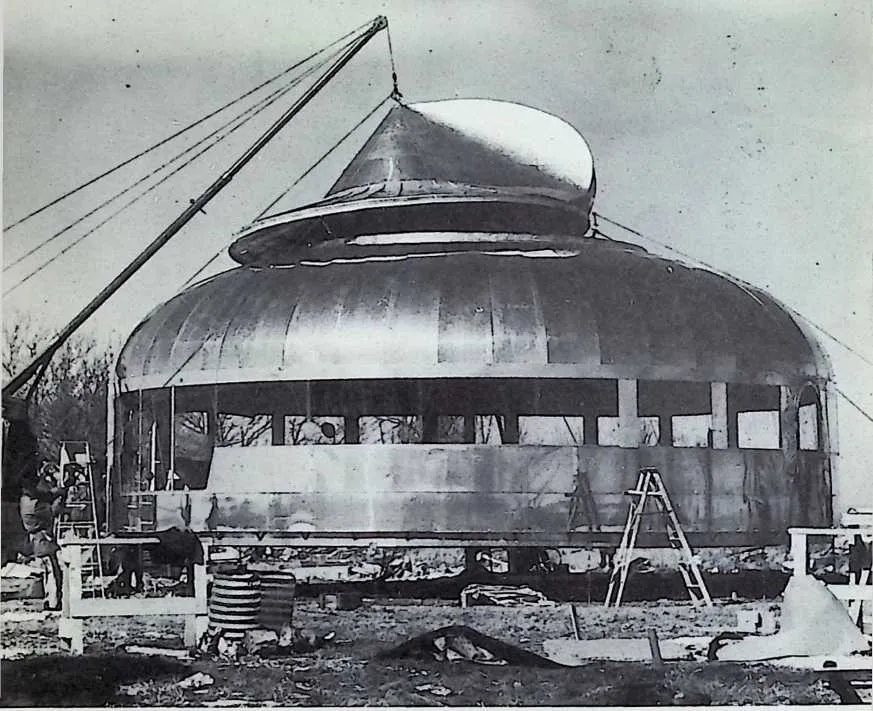
4849Wichita house, or Dymaxion dwelling machine
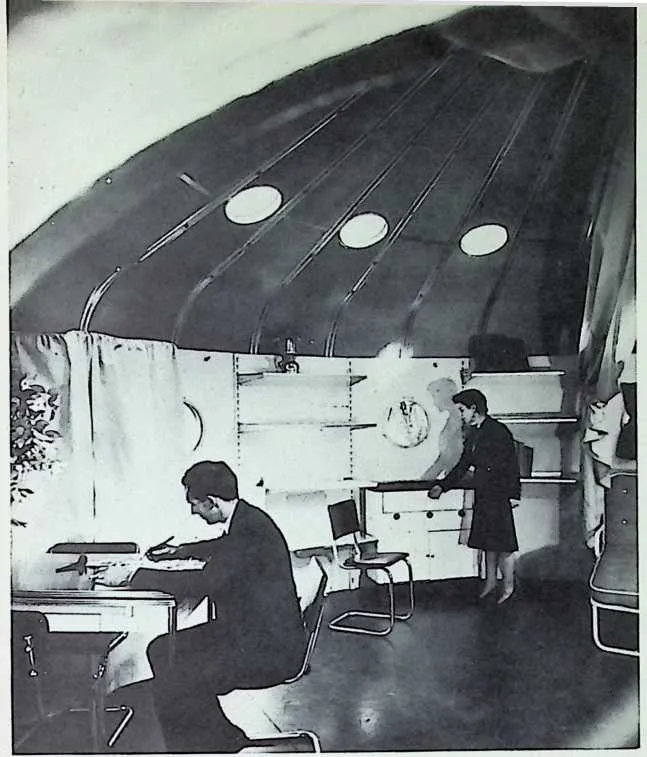
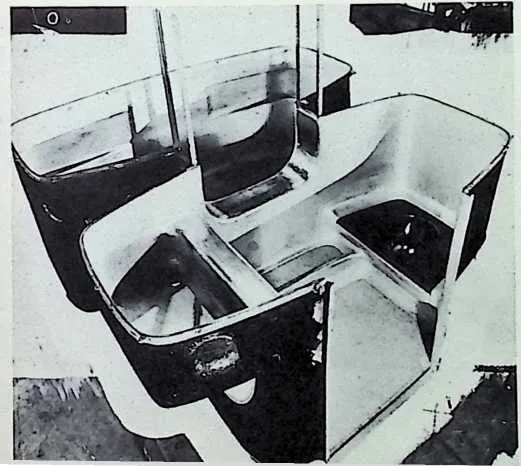
52 Above, kitchen of the Dy- maxion dwelling. Left, the bathroom, top half removed
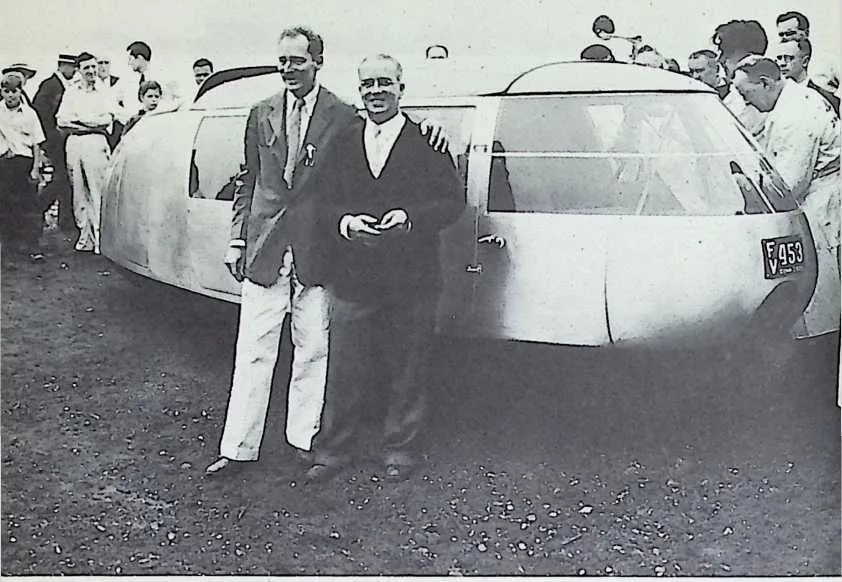
5455Launching the first Dymaxion Car
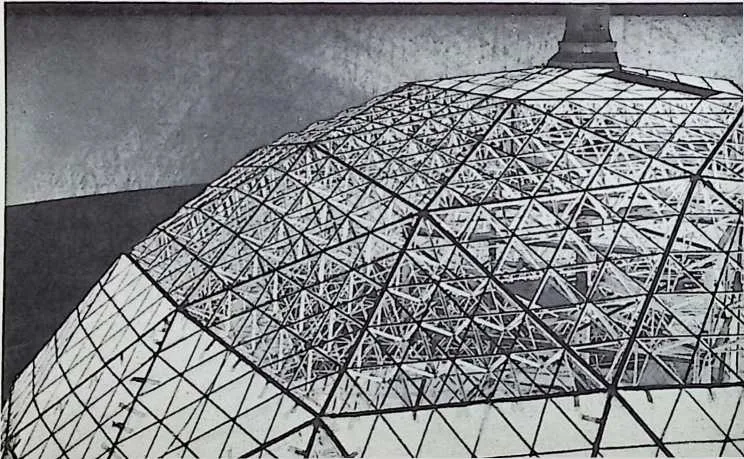
56 The Ford Rotunda Dome
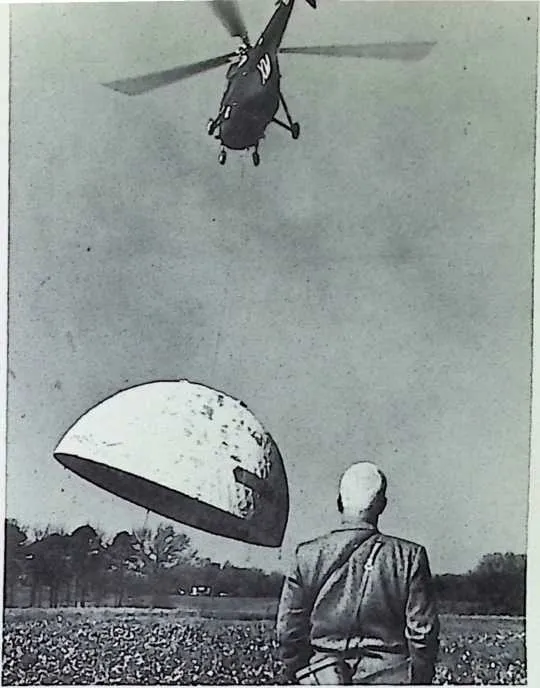
5960The first airlift of a shelter
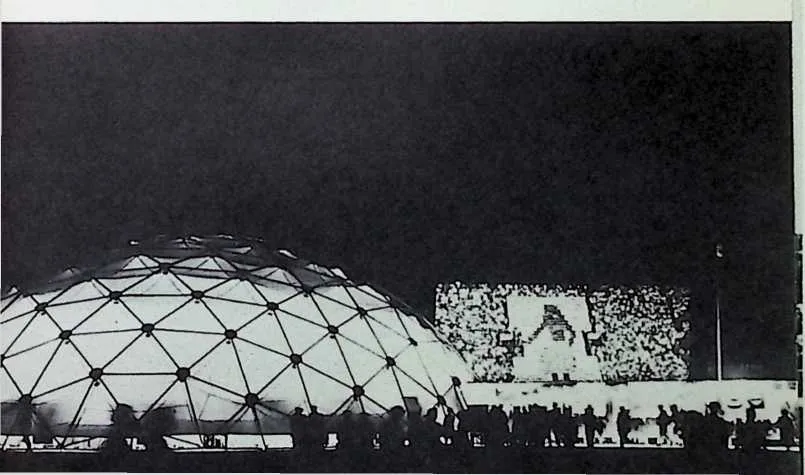
61Dome of the U.S. Pavilion at the Kabul, Afghanistan, Trade Fair
63 1
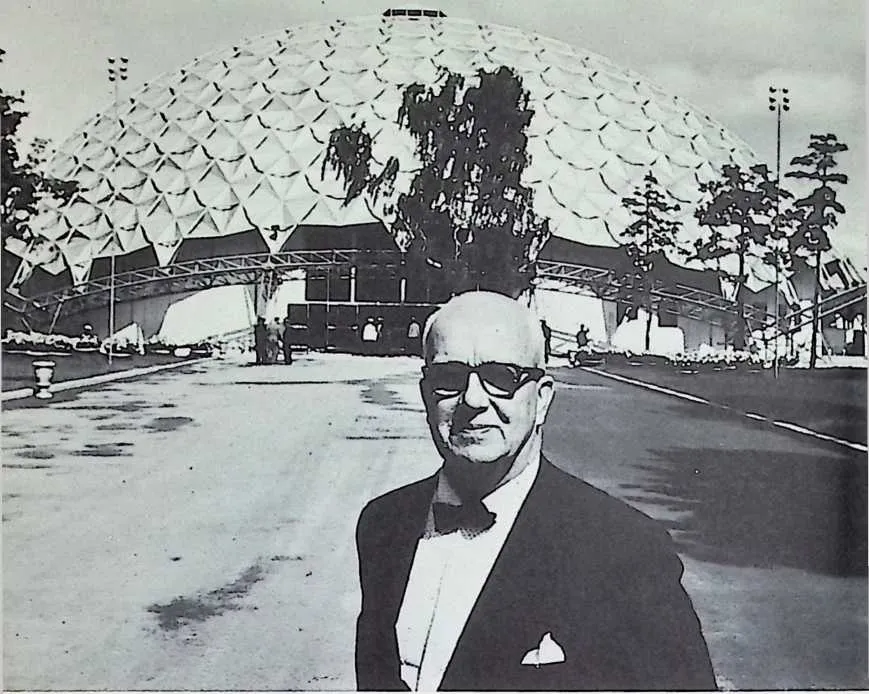
64 Buckminster Fuller before the Kaiser Dome, Solkoniki Park, Moscow, U.S.S.R.
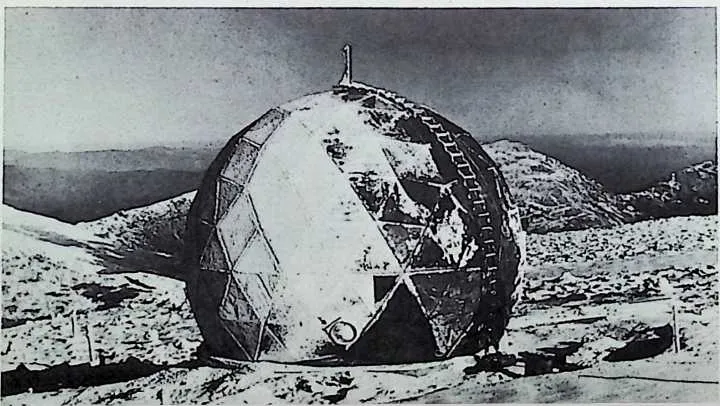
65 Dome on top of Mount Washington
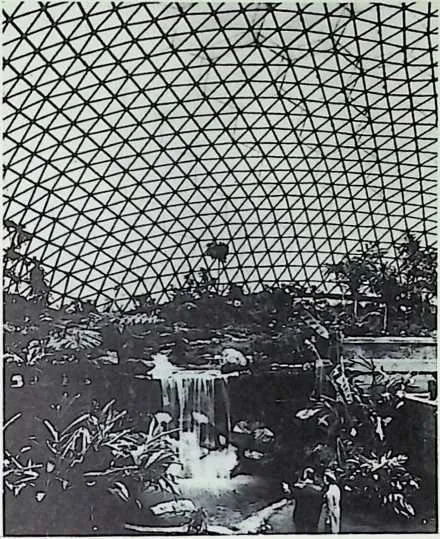
68 Left, inside Shaw Garden’s Climatron, St. Louis. Below, minirail train coming out of U.S. Pavilion bubble at Expo ’67, Montreal
69 \\\> S (•
70 . t. ’W
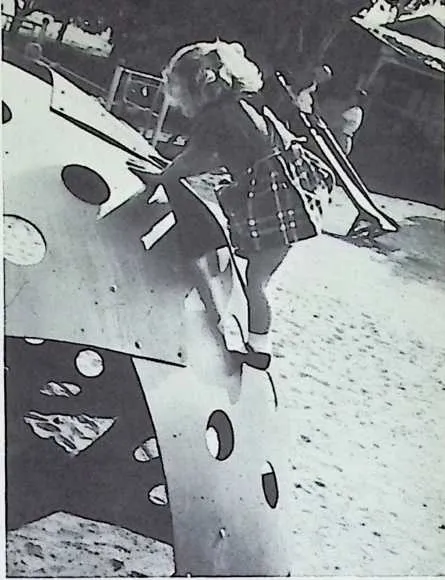
73 Right, child climbing Playdome. Below, vacation house
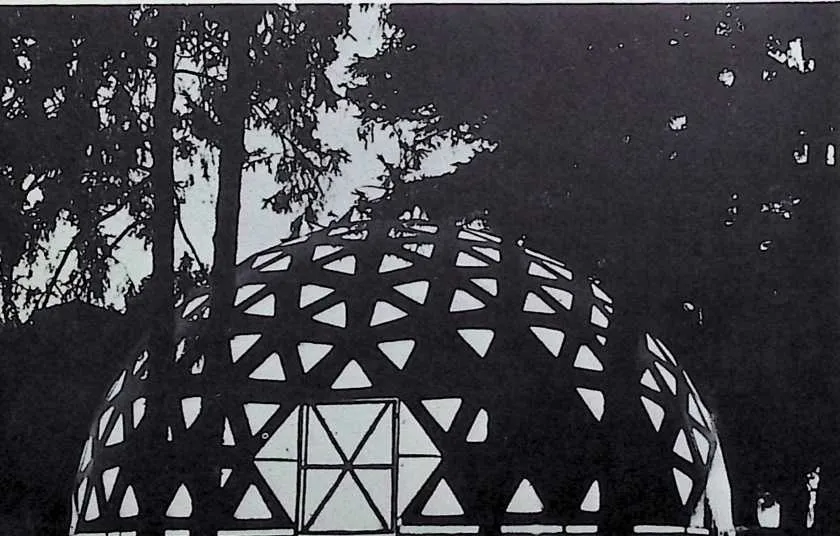
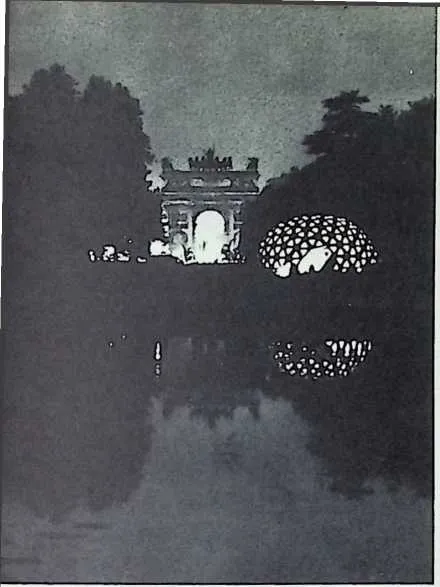
76 Left, Triennale Dome, Italy. Below, Union Tank Car shop, Baton Rouge, Louisiana
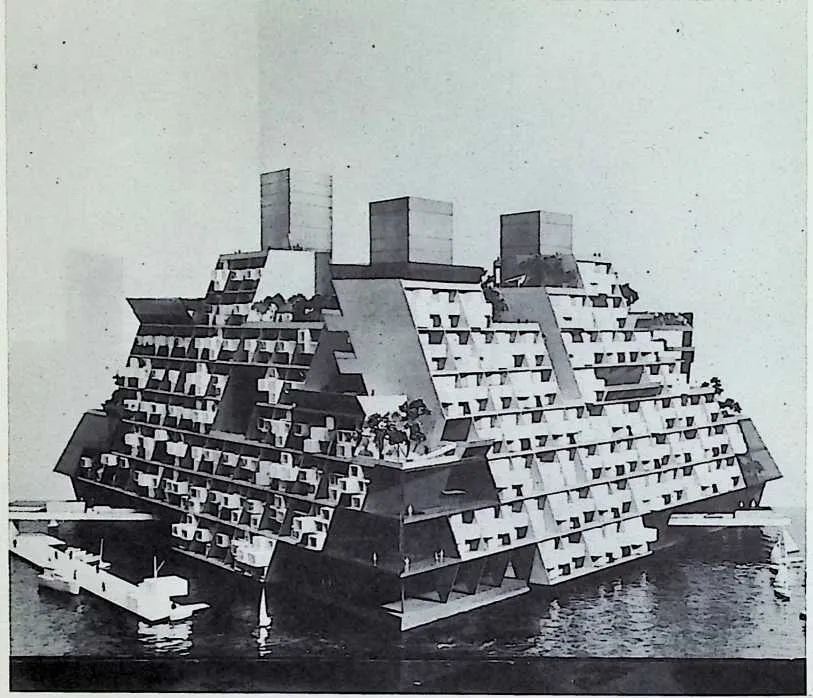
7980Tetrahedronal city model, Triton City
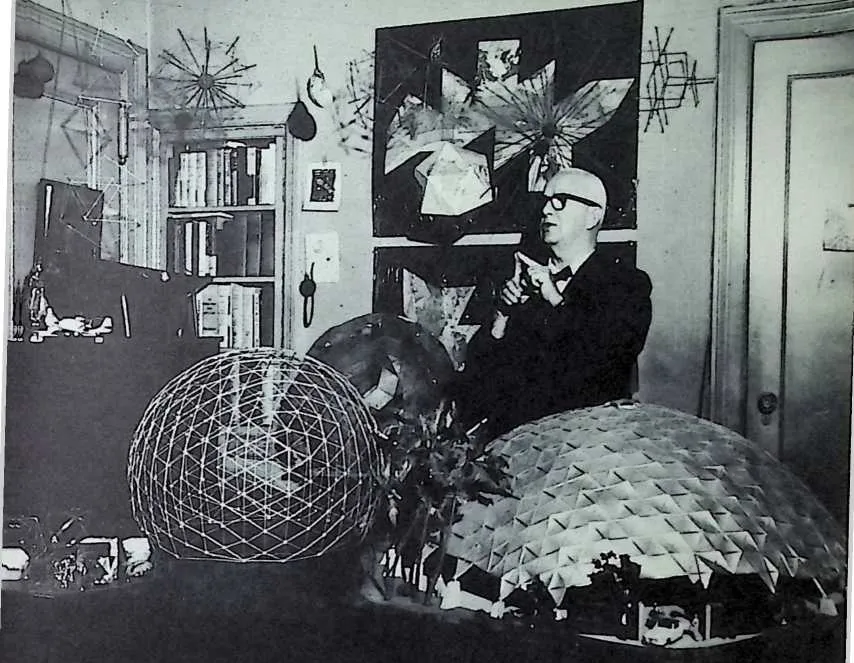
81 Buckminster Fuller, at home with models