
2 First Failures, First Successes
2When Bucky was thirteen years old, his father, Richard Fuller, died.
3 Richard had been the first Fuller to choose a business career, instead of the ministry or law. In those days Boston was a teeming seaport, where tall-masted schooners sailed in from all over the world with cargoes of exotic goods. Fishing boats in great numbers, gliding in beside the quays to deposit catches of haddock, mackerel, and cod, filled the harbor, while the sea gulls coasted overhead, screaming and fighting for tidbits.
4 Bucky’s father had an importing company whose offices were near India Wharf on the Boston waterfront. Bucky loved to visit the warehouse, where there were great teak chests lined with lead and filled with many different kinds of rich-smelling teas from Ceylon, India and China.
5 Suddenly Bucky found himself the man of the house. There were new chores that became his responsibility. After all her husband’s business affairs were settled, Bucky’s mother discovered that she would have to get along on far less money than before. She was a resource
6 ful and energetic woman, and she worried about Bucky very much. He was always in some kind of trouble in school and he never seemed to be able to keep from spending money foolishly. Nights she would read him long lectures on changing his ways; and she often asked the men of the Fuller clan, Bucky’s ‘‘uncles,’’ to lecture him also. Her greatest worry was that Bucky would be a failure in life.
7 In the month of June, 1913, Bucky graduated from Milton Academy. All the Fuller men had attended Harvard University and Bucky was to be no exception. His marks at Milton had been mostly A’s, good enough for him to be accepted at Harvard. A family conference was held, and it was decided that enough money could be pooled to pay for Bucky’s tuition and living expenses at college.
8 That September, Bucky entered his Cambridge dormitory for the first time. When he walked over to Harvard Yard, the brick wall that enclosed this central part of the university seemed to isolate him from the rest of the town of Cambridge. The Yard was like an island in the waters of Penobscot Bay. Squirrels unafraid of man ran down the trunks of tall elm trees and scampered across the grass. Other freshmen, like Bucky, were arriving, bags in hand, to live in that new world. Were they frightened, he wondered. How different would college be from Milton Academy? Suddenly his family seemed too far away for comfort.
9 Then he shook his head angrily. What kind of nonsense was this for a man! Here at Harvard was the challenge, and he, Bucky Fuller, was not afraid. Back in his room, he opened his suitcase with steady hands and began to lay out his possessions.
10 But from the beginning, things went badly for Bucky at Harvard. First, he did not go on in mathematics, the area where he had excelled at Milton Academy, simply because that subject seemed to be a game almost too easy to bother with. Later, he realized that the courses he had chosen did not interest him as much as mathematics.
11 What was most crushing for Bucky at Harvard was to discover that his classmates separated themselves into different levels of friendship —and that these levels seemed to be determined mainly by how rich one’s parents were. Compared to the boys from Milton Academy who had entered Harvard at the same time, Bucky was really a poor boy. The ones who had been so friendly before now deserted him. Even the boy who had been his best friend at Milton chose to room with someone else.
12 Bucky could cope with difficulties in the classroom; but he did not know what to do about the snobs who would not share their lives with him in the Harvard Yard. There were a few social clubs which, like fraternities, invited freshmen of the ‘‘correct’’ families to join. These clubs became the only basis for friendships among the students who joined them.
13 ‘‘Sorry, Bucky, old boy,’’ said one of his friends of the Milton Academy days, ‘‘but it looks as though you’re not going to make any of the clubs here.’’
14 And so Bucky found himself out of the social swim at Harvard. Though he lived in one of the Yard dormitories, his snobbish dormitory mates treated him like a despised commuter, a student who lived at home, rode the streetcars to and from Harvard Square daily, and who ate his lunch out of a paper bag while sitting in some corner of one of the college buildings.
15 It did not take very long for college to become a harrowing nightmare for Bucky. One day he decided he had had enough. Without thinking of the consequences, he ran to the bank and withdrew all the money that had been deposited by the family for his semester expenses. Back in his room, he threw some clothes into a suitcase and called a taxi. An hour later, he was on a train, moving out of the Back Bay Station of Boston, bound south for New York City. As he watched the houses flying past his window, Bucky meditated on the folly of his flight; it was the week of midyear examinations. Then he shrugged and pushed all thoughts of Harvard out of his mind.
16 Bucky checked into one of the better hotels in midtown Manhattan and prepared to enjoy his escape to the fullest. In New York City it was easy to indulge in his bad habit of spending money easily. The first evening he went to the theater and saw the famous dancer of the Ziegfeld Follies, Marilyn Miller. Somehow he contrived to meet her and invited her to dinner. With flashy self-confidence, he also invited all of the girls who danced in the chorus line to join them.
17 It was fun! How Bucky enjoyed being surrounded by those beautiful girls. The waiters bowed and poured champagne. Everyone treated him like a grown-up and not a boy. The bright lights of Broadway held Bucky captive. He entertained show people every night, until he ran out of cash. Then he continued to live his heady night life and simply charged everything to the Fuller family in Boston.
18 Eventually Bucky realized he would have to return and face the realities of Harvard Square. He managed to borrow enough money for the fare back to Cambridge. In his mailbox at the dormitory he found a note asking him to call at the Dean’s office.
19 There his reception was far from cordial. Harvard students, said the Dean, were not in the habit of deserting their posts during the week of examinations. No, the Dean did not care to hear excuses or explanations. A Harvard student was expected to be mature enough to have self-discipline and responsibility for his actions. Mr. Fuller did not seem to possess either of these two qualities. The Dean suggested that Mr. Fuller might be happier elsewhere.
20 Again there was a family conference. Something had to be done with Buckminster, something that would teach him a lesson and change his ways. One of Bucky’s rich cousins had a solution: he owned a cotton mill in the province of Quebec, Canada. It might be good for Bucky to have a taste of hard labor for a while; then he might appreciate the benefits of going to college. The uncles and aunts nodded in agreement. Yes, that was the very thing. Pack him off to Canada at once.
21 At the cotton mill, Bucky was assigned to the job of apprentice to a group of machine fitters. He felt horribly guilty about his New York escapade and resolved to make it up to his mother and the family by working as hard as he could. What he did not expect to happen was the wave of excitement that came over him when he saw the long banks of great factory machines that clashed and roared, fashioning cotton threads into rolls of cloth.
22 Instead of a chore, this work became a fascinating pleasure. Bucky began to ask questions of the master mechanics, under whose supervision he tended the machines. Slowly, the complex world of moving mechanical parts began to make sense to him. Little by little, he grew to understand the ideas upon which these machines were based and built. It seemed a miracle to him that the complicated arrangement of levers and wheels designed by human beings could outwork human hands and fingers with ease. In Canada, Bucky fell in love with technology.
23 The reports from the cotton mill back to the family were excellent. The Fuller ‘‘uncles’’ met again and decided that Bucky would be given another chance at Harvard. When the call to return came, Bucky was somewhat reluctant to leave the machines he had come to love. But again, suitcase in hand, he passed through the black iron gates set in the red brick walls of the Harvard Yard.
24 This time, life at Harvard was even worse. The new freshmen were all strangers. Bucky found he had no patience with professors talking on and on in the lecture halls. College seemed to be made up of memorizing words and giving them back in examination books. He had few friends. The divisions based on snobbery still existed. Soon he fell back into his old careless ways. He spent money recklessly and let his studies slide.
25 This time when the summons came from the Dean, the tone was more ominous. Bucky was told that he had wrecked his last chance to stay at the University. It was obvious that Harvard and Buckminster Fuller were not suited to each other. This dismissal would be final.
26 To his astonishment, Bucky found that he felt more relieved than guilty. He was aware of the intense disappointment of his mother and the ‘‘uncles.’’ But when he indicated that he would be glad to return to the factory in Canada, the tension was eased. He worked at his old job for some months, and then decided to find work in the United States. The city he chose was New York.
27 His first job was a simple and physical one. He became a meat-lugger for Armour and Company, the large meat-packing corporation. Meat-lugging consisted of carrying great sides of beef from one place to another in the factory. Though he was shorter than most of the other meat-luggers, Bucky’s stocky frame enabled him to match strength with them. At first he worked on the night shift. During the day he slept, ate and read books. His keen mind and spirit of enterprise was soon spotted by his superiors, and he was promoted to the position of assistant cashier, with an increase in responsibility and pay.
28 While Bucky Fuller was in the process of changing his life, events on the continent of Europe were causing profound changes in world history. In the Bosnian capital city of Sarajevo (now in the country called Yugoslavia), the visiting Austrian Archduke Francis Ferdinand was shot and killed by a Serbian patriot named Gavrilo Princip. This assassination sparked the explosion that historians were to call the First World War. By 1916 the Allied and German armies were deadlocked on either side of a line of trenches that ran from the English Channel to Switzerland in western Europe, and from the Baltic Sea near Riga to the eastern edge of what is now Czechoslovakia in the east.
29 The new technology of the twentieth century began to change the ways of warfare. The automobile and the airplane were introduced as war machines, first as aids to transportation and observation, and then as machines of death in the form of tanks and fighter planes.
30 The United States tried to remain a neutral country at first. However, the apparently ruthless sinking of American ships by German submarines, plus a natural feeling of alliance with England, Germany’s enemy, changed the attitude of most Americans. In April, 1917, the United States entered the war on the side of the Allies.
31 The young men of America rushed to enlist in the armed forces, and Bucky Fuller was no exception. In New York, he tried to enlist in the Navy, but he was unable to pass the eye examination. When he tried to fake his way through the required eye tests, his clumsy efforts were easily detected by the examining physicians.
32 One evening at a party Bucky met a beautiful, dark haired girl who seemed to be willing to listen patiently to all his ideas about the world. She was Anne Hewlett, the oldest of ten children. Her father was a well-known architect and painter, James Monroe Hewlett. Bucky found himself unable to forget Anne; he called and arranged to see her again. After a few such meetings, Bucky decided that this was the girl he was going to marry.
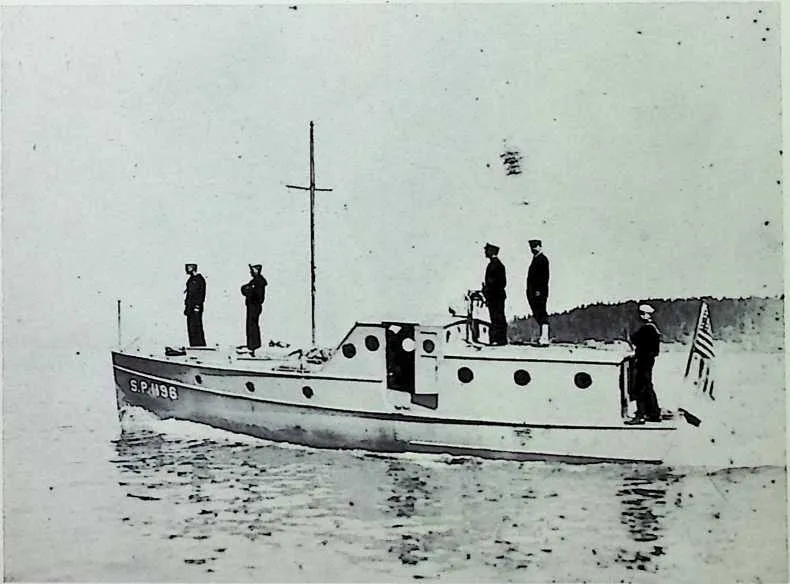
33 In the matter of getting into the Navy, Bucky was persistent. And he found a way. The Navy had a great need for small boats to patrol and scout the coastal waters of the Atlantic. Bucky asked for and received his mother’s permission to offer her boat, the JFego, to the Navy as a patrol boat at Bar Harbor in Maine. He and a close friend, Lincoln Pierce, ran the IF ego up to the Maine Naval Station. To their great delight, the Navy not only accepted the boat, but took them also. Bucky was put in command of the IF ego, with Lincoln as first mate. Later Bucky’s younger brother, Wolcott, was assigned to the IF ego as a crew member. Though she was the smallest ship in the Bar Harbor fleet, the JFego, under Bucky’s command, performed valiantly.
34 That same summer, Bucky and Anne Hewlett were married. A few months later, Bucky was transferred to the Naval Air Station at Hampton Roads, Virginia. There he was put in command of a fleet of crash boats. His own flagship was a trim craft named the Inca.
35 Hampton Roads was a training base for seaplane pilots. One of the most dangerous moments of a flight occurred when landing on water. If the pontoons of a plane struck the water at the wrong angle, the plane would flip forward with a motion called ‘‘porpoising’’ (like the nosedown movement of porpoises rolling in and out of the water). When this happened, it was the job of the boats in Bucky’s fleet to dash out and rescue the pilot as soon as possible. Unfortunately, porpoising resulted too often in the plane’s landing upside down in the water, with the pilot strapped in the cockpit upside down and underwater. Many pilots were stunned by the crash and were unable to unbelt themselves at once. By the time a crash boat reached the plane and swimmers had dived in to free him, the pilot had drowned.
36 Helplessly standing by while such a tragedy occurred was a terrible experience for Bucky, and he began to brood about the problem. Out of many sleepless nights, hundreds of doodles on scratch pads, and conversations with pilots came an idea which he converted into precise engineering drawings. Bucky invented an instrument that could be attached easily to a crash boat, and that could lift a flipped seaplane from the water in time to prevent the pilot’s death.
37 The machine was a kind of grappling hook attached to a boom that projected from an auxiliary mast set in the desk of the crash boat. Within seconds after reaching the scene of a crash, the grappling hook could be attached to hoist the plane quickly from the water. Bucky asked for a hearing and explained his invention to his superior officers. They were impressed enough to order a test set of grappling equipment to be built from his plans.
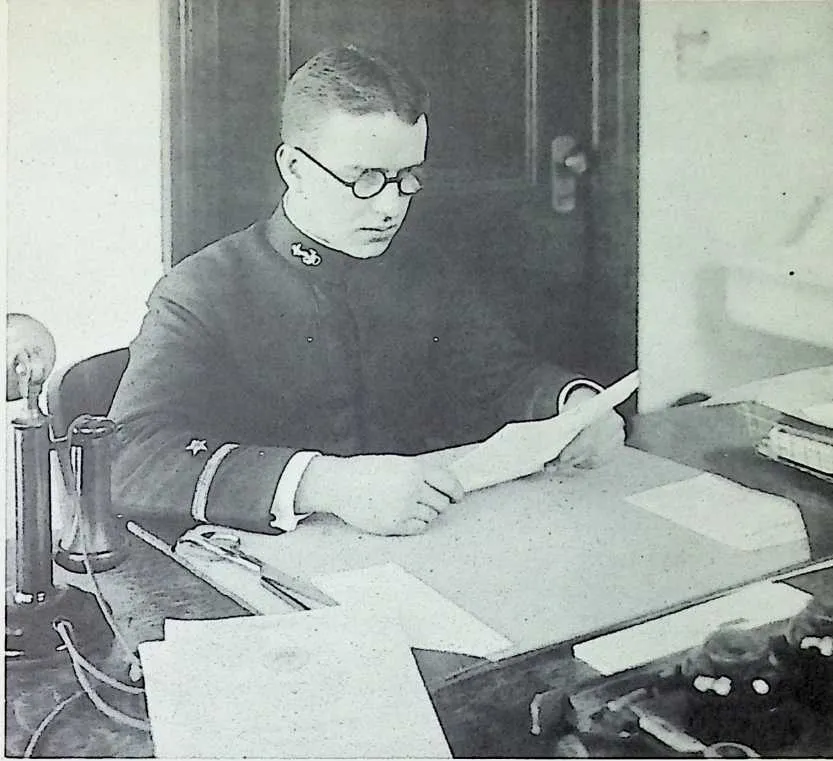
38 Bucky’s lifesaving hook worked perfectly, from the simulated crash test to the first real crash, where the pilot was hauled dripping, but alive, from the cockpit. The officers of Bucky’s command were delighted; in spite of his poor eyesight, this Buckminster Fuller was quite a fellow! As a reward, Bucky was commissioned an ensign and ordered to report to the Naval Academy at Annapolis. There he was to take special courses in mathematics and engineering.
39 Though it meant that they would be separated for a while, Anne was delighted by the news of Bucky’s recognition. She knew how disappointed the Fuller family had been by the two failures at Harvard University. Now the Navy was giving Bucky another chance.
40 Meanwhile, something important was happening inside Bucky’s brain. He had begun to think again about geometry, the subject in which he had excelled at Milton Academy. But now his thoughts were forming in a new way. From the aft deck of his moving ship, he could see the wake —a long line of white bubbles, forming at the propeller and foaming to the surface. These bubbles were all spheres, and Bucky remembered that in geometry, in order to make a sphere the number pi had to be used. And at Milton, he had learned that pi was a number that ran on and on and on to hundreds of places after the decimal —an irrational number.
41 Why, he thought to himself, would nature use a number that had no ending? That meant that every form in nature that was part of a sphere or a circle, or was rounded in some way, depended for its existence on a never-ending number. It didn’t make sense. Bucky felt that nature would never use this kind of geometry. He decided then and there that the pi geometry might be all right for textbooks, but that nature had no use for numbers like pi; she built her forms in a different way, using only whole numbers.
42 What was that different way? Bucky knew that in chemistry, nature seemed to use whole numbers in building up molecules of matter. Why couldn’t there be an entire geometry of nature, much simpler than the geometry worked out by man? Bucky decided that he would like to spend the rest of his life finding out the system of nature’s own geometry.
43 His studies at Annapolis taught him more. He began to see a pattern in the way man was steadily increasing his chances of surviving in the midst of natural forces that opposed this survival. Progress in science and technology was the record of how man had learned to use to his advantage certain principles and laws of behavior he had discovered in nature. Bucky had become familiar with modern machine tools. He realized that the entire history of toolmaking reflected two things: first, all of man’s past experiences in making things; secondly, and more important, how man was being stimulated into looking ahead to the needs of the future.
44 Buckminster Fuller was beginning to see the large- pattern clues to the universe about him.
45 During the following year, 1918, Bucky was promoted to lieutenant. And, to his great delight, he became a father. He and Anne called their new daughter Alexandra. However, the war was coming to an end, and Bucky was kept busy at many tasks. He had little time to spend with his family. One job, which gave him some experience in writing, was to be editor of the newspaper, Transport. This paper was published at sea for the men of the Transport Force of the Atlantic Fleet. Then, right after the Armistice was signed on November 11, Bucky was given a fascinating and historic assignment.
46 He was ordered to report to the battleship U.S.S. George Washington, which was to carry President Woodrow Wilson to France to attend the Paris Peace Conference. This was the first time an American president would cross the Atlantic Ocean while in office. But there was to be another first connected with this voyage —the first long-distance radio telephone was to be installed on the Washington.
47 Since the invention of the triode (or three-element) type of radio tube by Lee De Forest in 1907, ships at sea had been able to use radio for ship-to-ship conversation. But there was a serious limitation; beyond a distance of seventy miles the radio signals became too weak to be picked up. Bucky was given the task of helping with the installation of a revolutionary new radiotelephone system that would allow President Wilson’s voice to be carried across the entire ocean. While the battleship was at anchor in the harbor of Breste, France, the President was speaking to government officials in Arlington, Virginia.
48 His years in the Navy were a time of intense learning for Bucky. He spent much of his spare time reading books on architecture, engineering, mathematics, aviation, industrial design, and philosophy. His brain sucked ideas up out of these books like a vacuum cleaner. And in his mind, he began to sort out those ideas which seemed especially important for man’s struggle against the forces of nature. He tried to figure out the directions in which civilizations were moving. At the moment, he was unable to work out anything that made sense. Later in his life, the pattern would become clearer.
49 ‘‘I can see,’’ he wrote, ‘‘how we went from the wire to the wireless, from the track to the trackless, from the visible to the invisible, where more and more could be done with less and less!’’
50 No matter what he thought about, battleships, houses, radios, or airplanes, Bucky’s mind seemed to be able to leap ahead, to think in terms of something new, something as yet undeveloped. All the seaplanes he watched taking off used propellers to move them quickly across the surface of the water. Why propellers? Was there a simpler, a more efficient way of doing the same thing?
51 Once Bucky had set himself a problem, it held his complete attention until he had found some kind of solution. Day and night, he thought about propellers. The principle behind their use seemed simple enough; it was a practical application of Newton’s Third Law of Dynamics, which said that for every action there was an equal and opposite reaction. The propeller pushed the air one way, and the propeller itself moved in the opposite direction. When the push was strong enough, since the propeller was attached to the plane she went forward along with it.
52 But the pushing power of a propeller was limited. If you wanted to lift a heavier plane off the ground, one propeller would not be enough. What was needed was a simpler method of generating greater pushing power to overcome the inertia of the airplane. But how to do it?
53 The thought came in a flash. Turbines, that was it! Turbines, the wheels with blades that were spun by the waters of Niagara Falls to produce electricity. Why not design a small turbine, small enough to be part of an airplane, with blades that were turned by air? Bucky’s pencil began to draw designs on paper.
54 First, there had to be a way of compressing the air that entered the front of the turbine engine. Then that compressed air had to be heated, so that it would rush through the turbine at a high speed. Then the blades would push the heated air out through the back of the engine with tremendous force. Why, a turbine engine ought to provide more than a hundred times the push of a propeller. With two such engines, one mounted on each wing, there was no telling how fast an airplane would go-
55 But a new thought crossed his mind. Once more, his pencil flashed over the paper, moving scarcely a moment ahead of his thought to put lines together into diagrams. With such engines you could do away with wheels and the long, rolling takeoff. The turbine engines could be mounted on swinging gimbals —the kind used to mount a ship’s compass. Then, with the engines swung into a face-up position, the air would be sucked in, compressed, heated, pushed out by the turbine —and the plane would simply rise straight up in the air. Who needed wheels? Stilts would be enough. Then, once the plane was airborne and high enough, the turbines could be made to swing quickly through a ninety-degree angle, and the plane would move forward.
56 Bucky began to muse about the turbine airplane itself. With increased power and greater speeds, the entire airplane would have to undergo change. He took time out to read what few books and articles about aerodynamic properties were available. In one of the articles he found the answer. Raindrops!
57 When a drop of rain fell through the atmosphere, its normally spherical shape changed. The rubbing of the air against the drop created a teardrop design. Bucky copied the shape carefully into his notebook:
58 This was the shape of his airplane of the future —streamlined. With a streamlined plane, where the resistance of the air became as small as possible, smooth flying at great speeds would be possible.
59 Not satisfied with his work, Bucky added some refinements to his plane design. He placed little rocket engines on each side of the plane. By shooting out jets of gas, the turbine plane could be made even more maneuverable. After that came another flash of genius. Why not add a three-wheel system that could be hooked on by a simple clutch to turn the plane into a ground taxi? Or add a paddle-wheel system, so that you could land on water and become a water taxi? The turbine engine opened vast realms of opportunity for invention.
60 When Bucky tried to interest people in his idea, they were polite but vague. Wouldn’t that kind of engine be rather impractical? What would be the effect of the hot gas on the metal parts of the engine —wouldn’t they melt? How could a tiny turbine like that be efficient? It soon became apparent that American industry was not ready to begin even thinking about such new ideas. American industry was not ready for R. Buckminster Fuller.
61 Bucky didn’t care. He had already made up his mind. He would always be ten jumps ahead of the world.
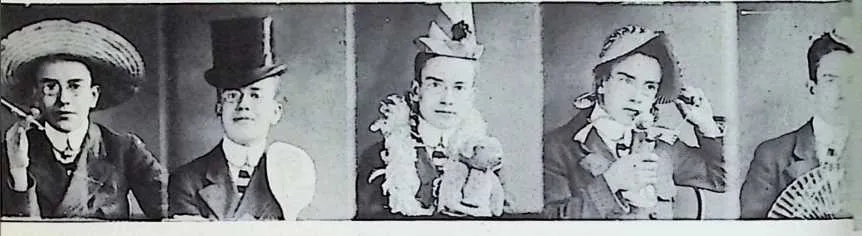
62 EARLY PHOTOS
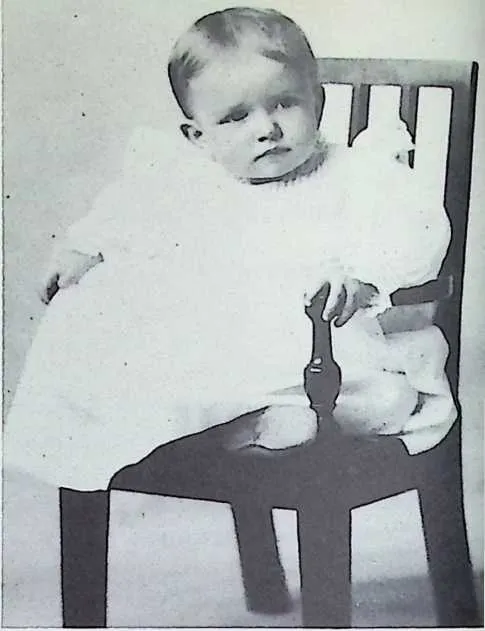
64 Bucky Fuller, age one- and-a-half years
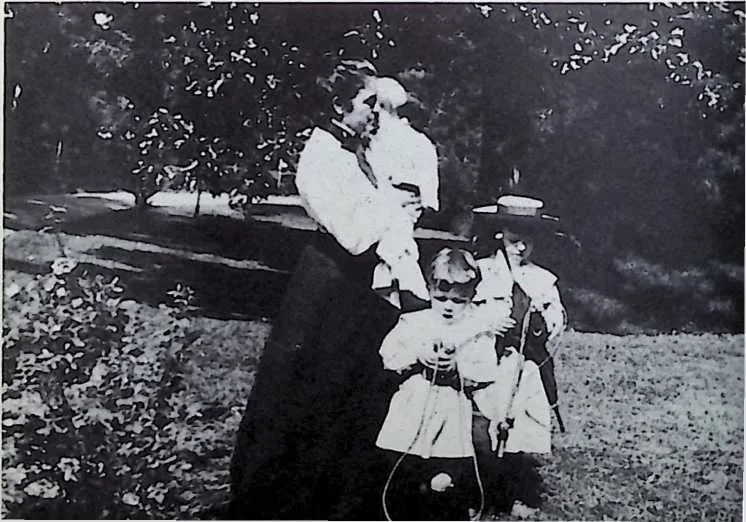
65 Bucky at four (front center) with his mother, brother and sister
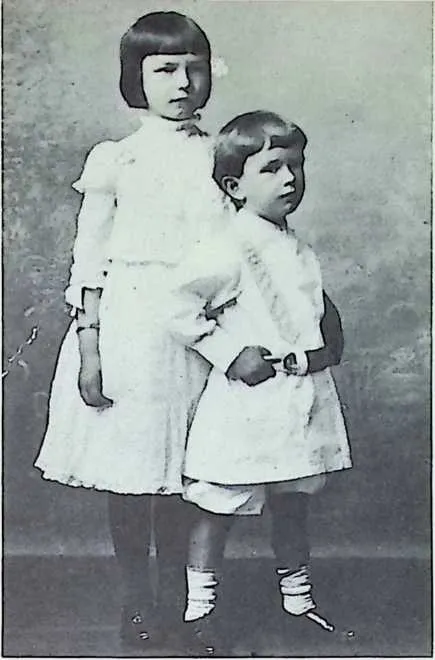
68 Four-year-old Bucky with his sister Lesley
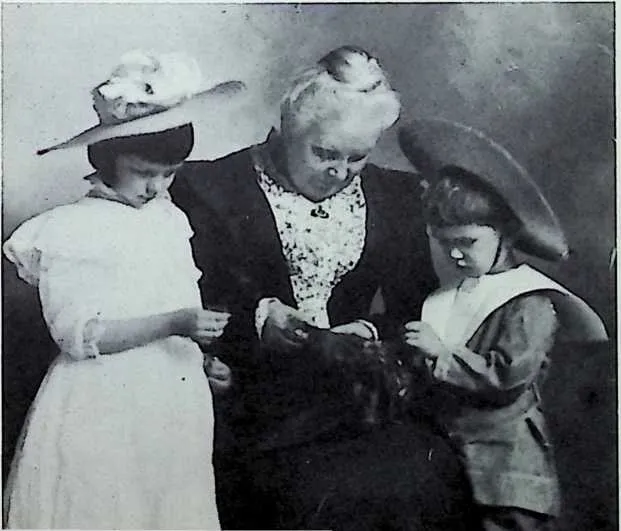
6970Lesley, Grandmother Fuller and Bucky
72 Character sketches by an inventive eleven-year-old
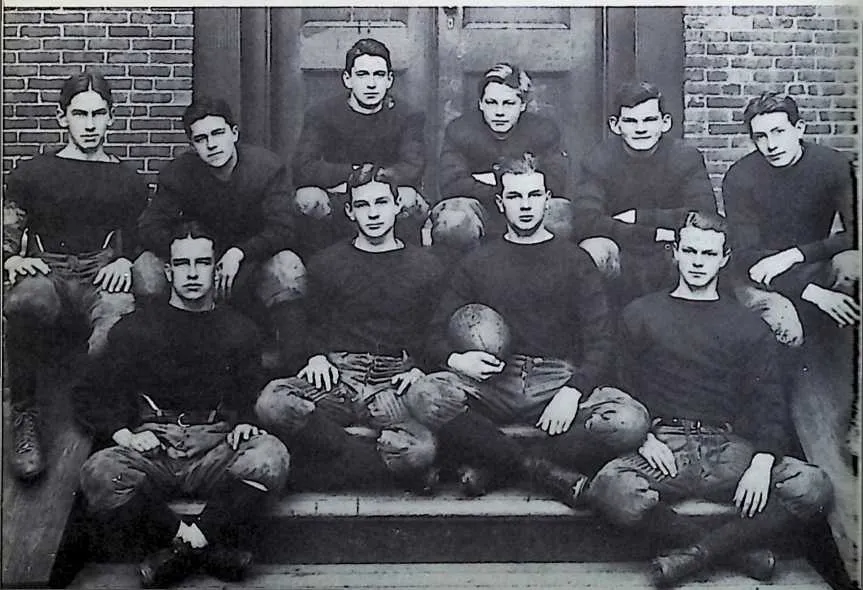
73 The Milton Academy football team, quarter-
back Buckminister Fuller lower left

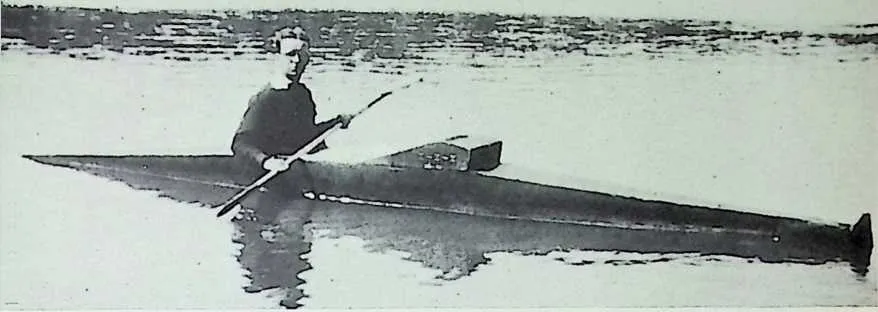
7778Bucky at Bear Island
79Skipper Fuller at wheel of U.S.S. Wego
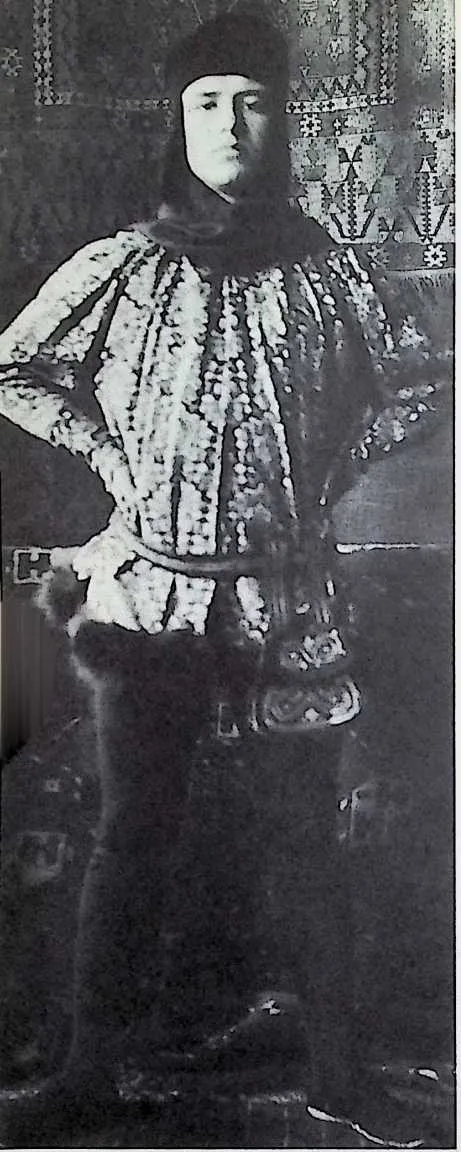
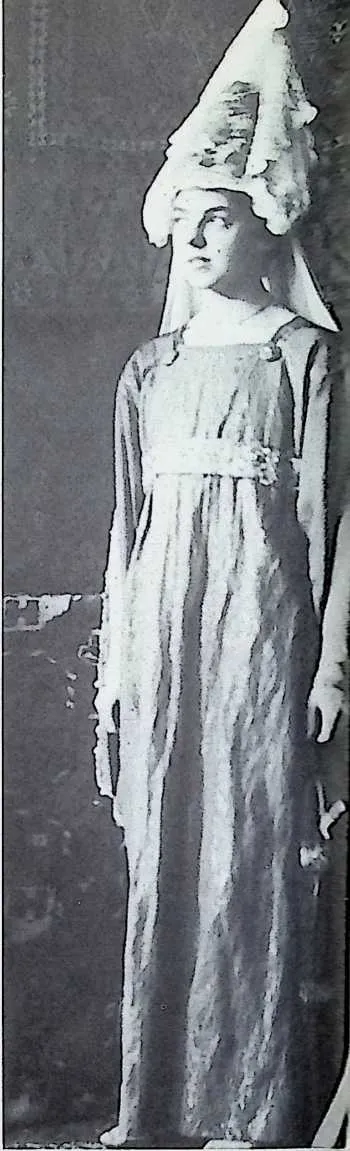
82 Bucky and Anne Hewlett ready for the Beaux Arts Ball
8485
Above, Ensign Fuller one month before the end of World War I. At left, in whites for his wedding