
6 dymaxion cars
2'Since I was intent on developing a high-technology dwelling machine that could be air delivered to any remote, beautiful country site where there might be no roadways or landing fields for airplanes, I decided to try to develop an omni-medium transport vehicle to function in the sky, on negotiable terrain, or on water • to be securely landable anywhere, like an eagle’.
3 Buckminster Fuller 1983
4 Buckminster Fuller and Starling Burgess built three Dymaxion cars during 1933 and 1934. And unlike the Dymaxion house and the Dymaxion towers, which were destined to remain paper and model projects, there is no doubt about their appearance, existence or date of birth. Although they never intentionally left the ground, the principles underlying their design derived from Fuller’s ‘4-D Auto-Airplane’ sketches of 1928, and the subsequent plaster Noguchi models that were lovingly painted by Fuller himself for exhibition in the parking areas beneath the model Dymaxion houses.
5 The aeroplane ancestry of the Dymaxion cars was plain from the beginning. In his 1928 ‘4-D
AutoAirplane’ sketches Fuller had showed little more than a ‘teardrop’ aircraft fuselage with an
inverted vee- bottom, recessed front wheels and a combined rear steering wheel and aerodynamic
rudder. This vehicle was intended to use the roads under the power of two of three ‘liquid
air turbines’, each driving one of the front wheels. A third ‘turbine’ would drive the
nose
mounted propeller for flight. The transport would take to the air by using its forward motion to
inflate pneumatic wings, with the pressure topped up by an air pump.
6 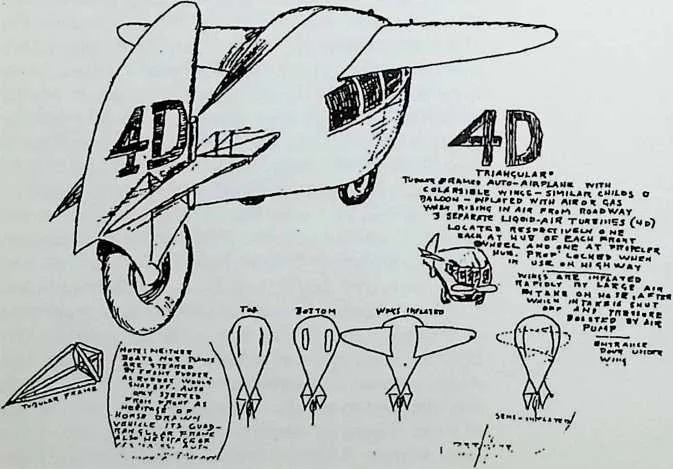 By 1932 the ‘4-D Auto-Airplane’ had developed into the ‘4-D transport’ with twin four
cylinder petrol engines, no propeller and no wings. This vehicle still resembled an aeroplane but
was intended only to taxi, or ‘plane’ with its tail lifted off the ground so as to develop ‘infinite
wheelbase’ for comfort and smoothness. We know a lot about the thinking behind this vehicle
because it is described–‘weight unloaded approx. 400 lbs, exquisite acceleration and deceleration
(as with outboard motorboat racers)’—in some detail in a long and fascinatingly illustrated
article entitled ‘Streamlining’ that Fuller wrote, but did not sign, for the November
1932 issue of Shelter. Here the inventor explained that his conception of the car of the
future hinged upon weight reduction and streamlining. He was still advocating the
unique ‘4-D’ hull form of an inverted vee to achieve aerodynamic stability, but leaned
more towards contemporary examples like the Granville brothers’ ‘Gee Bee’ racing
monoplanes with their short, stubby fuselages and wire-braced wings. Fuller had clearly
learned a lot about aircraft construction techniques. His last ‘4-D Transport’ drawing
before the construction of the real thing showed a twin engined tricycle frame with rear
wheel steering and a retractable aerofoil steering rudder. The dogged adherence to
steering from the rear was explained by the exemplary manoeuvrability of yachts,
fish, birds and aeroplanes—as well as being a step towards the eventual possibility of
flight.
By 1932 the ‘4-D Auto-Airplane’ had developed into the ‘4-D transport’ with twin four
cylinder petrol engines, no propeller and no wings. This vehicle still resembled an aeroplane but
was intended only to taxi, or ‘plane’ with its tail lifted off the ground so as to develop ‘infinite
wheelbase’ for comfort and smoothness. We know a lot about the thinking behind this vehicle
because it is described–‘weight unloaded approx. 400 lbs, exquisite acceleration and deceleration
(as with outboard motorboat racers)’—in some detail in a long and fascinatingly illustrated
article entitled ‘Streamlining’ that Fuller wrote, but did not sign, for the November
1932 issue of Shelter. Here the inventor explained that his conception of the car of the
future hinged upon weight reduction and streamlining. He was still advocating the
unique ‘4-D’ hull form of an inverted vee to achieve aerodynamic stability, but leaned
more towards contemporary examples like the Granville brothers’ ‘Gee Bee’ racing
monoplanes with their short, stubby fuselages and wire-braced wings. Fuller had clearly
learned a lot about aircraft construction techniques. His last ‘4-D Transport’ drawing
before the construction of the real thing showed a twin engined tricycle frame with rear
wheel steering and a retractable aerofoil steering rudder. The dogged adherence to
steering from the rear was explained by the exemplary manoeuvrability of yachts,
fish, birds and aeroplanes—as well as being a step towards the eventual possibility of
flight.
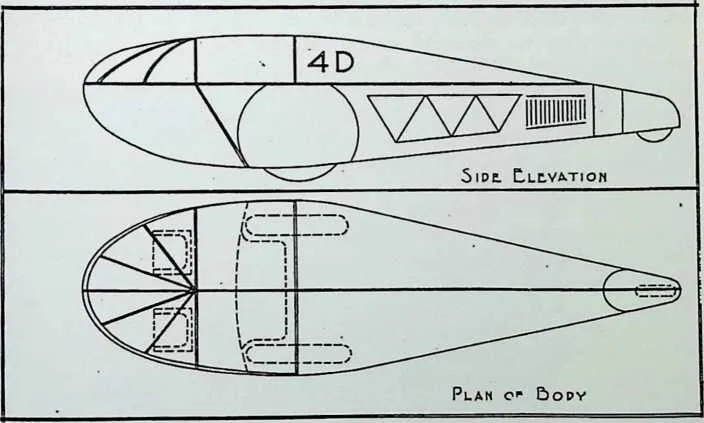
7 The genesis of the design of the Dymaxion cars. First crude sketches dating from '4 0 manuscript of 1928 show the 'Auto-Airplane', a high-wing road-going convertiplane with combined steering rudder and tailwheel, plus elevators, propeller and 'inflatable wings' for flight (34). This version has three power units described as 'liquid-air turbines'.
8 Clearly money was needed to convert the Shelter drawings into a real road-going vehicle, and here Fuller had struck lucky. His Dymaxion house model had aroused the interest of a Philadelphia stock broker named Philip Pearson who had miraculously avoided the consequences of the 1929 Wall Street Crash by liquidating his holdings immediately beforehand. Like many financiers of the time, all of whom had been impressed by Henry Ford’s creation of a new industry with his Model-T car only ten years before, Pearson believed that the motor industry was capable of drawing America out of the Depression if only it could make another major design breakthrough.
9 Impressed by one of Fuller’s Dymaxion house models exhibited in an engineering bookshop in New York, Pearson had been advised by an associate William Stout, the designer of the Ford Trimotor airliner and a man who was later to produce his own short-lived dream car, the ‘Scarab’, that Fuller’s ideas about cars too were far ahead of their time. What Stout told Pearson that Fuller could do can be inferred from a report that Fuller published in Shelter of an address given by Stout in 1932 to the Society of Automotive Engineers of America entitled ‘What Aviation can do for Motor Cars’. According to Stout, the sort of cars America ought to build to recreate prosperity needed to have more interior space within the same track and wheelbase; should be more luxurious, comfortable and silent; should have between 50 and 100 brake horse power; should have ‘effortless’ steering and automatic
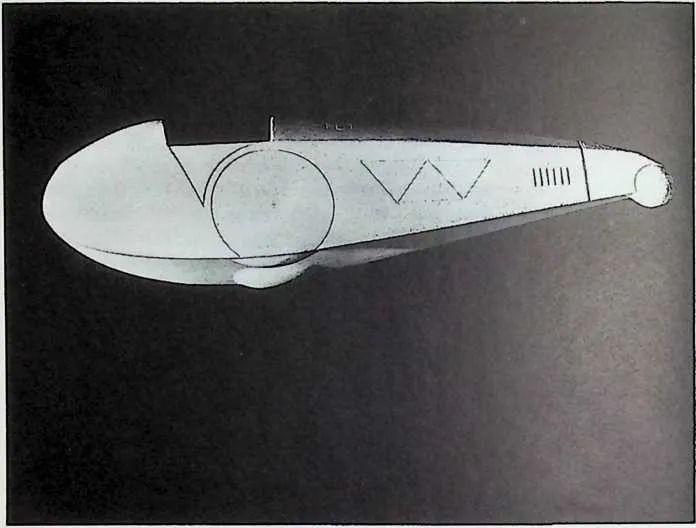
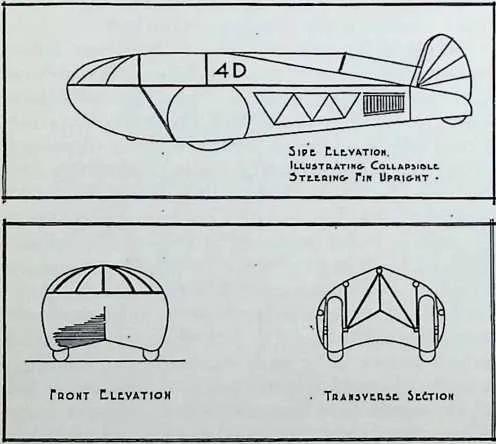
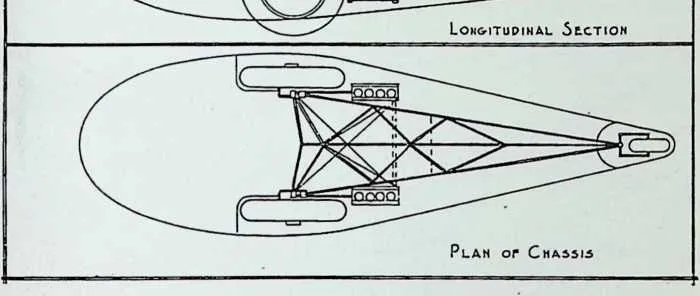
12 Later Isamu Noguchi model (above) and general arrangement drawings from 1932 Shelter magazine (right), show wingless twin petrol engined '4-D transport’ driven through front wheels. Triangulated space frame chassis and disappearance of rear control surfaces are noteworthy. Important additional design (tell) from Shelter shows retractable aerodynamic 'steering fin' lor high speed running.
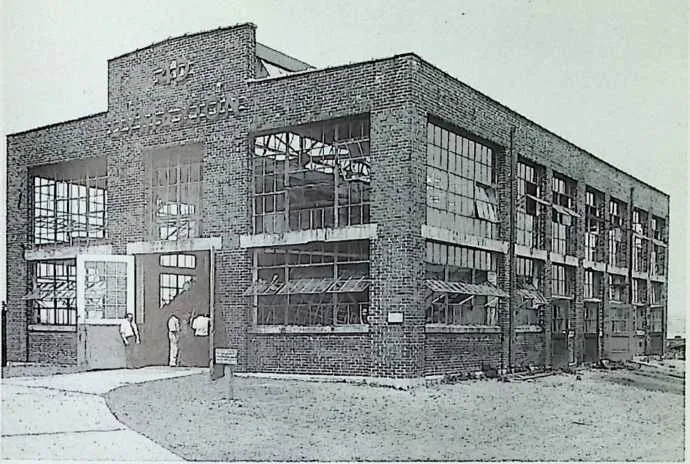
14 The '4-D Dymaxion' car factory at Bridgeport. Connecticut, opened by Buckminster Fuller and Starling Burgess on March 4th 1933. A former dynamometer building abandoned by the defunct Locomobile car company it was destined to close down again in little more than a year.
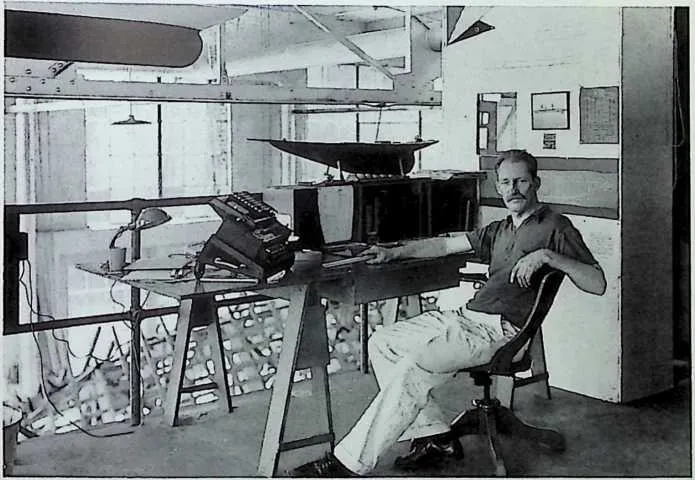
15 (Below) Starling Burgess, key designer of the Dymaxion car project and also engineer of the ten-deck streamlined Dymaxion lower, photographed in the '4-D Dymaxion' factory on 18th July 1933. Burgess's trestle table supports mechanical calculator and hull model of Enterprise, his victorious 1930 J-Class Americas Cup defender. Part of the agreement between Fuller and Burgess was that yachts would be built by the same 28-strong labour force.
1617transmission; should accelerate from 0–60 in 3 seconds (a performance still impossible in any conventional passenger car}-, should be air conditioned and achieve a fuel consumption of 30 miles per gallon, and should sell for around $2,000 ‘on a small production run’.
18This, we must presume, is roughly what Pearson had in mind for the Dymaxion car when he financed Fuller with an unspecified quantity of cash in the early spring of 1933, the time of highest incidence of bank and savings failures of the American Depression. Fuller of course still nursed greater long term ambitions for the car including, eventually, vertical take off and high speed flight, but he took the money. Between them, Fuller and Burgess leased a disused auto plant in Bridgeport, Connecticut, and the ‘4-D Dymaxion’ factory opened up for business -not only to build cars but to build Starling Burgess’s racing yachts—on March 4th 1933, the day Franklin Delano Roosevelt was inaugurated President of the United States. In a further indication of the state of the United States economy at that time, more than one thousand men applied for the twenty-eight skilled jobs Fuller and Burgess had to offer. Two of the first coachbuilders hired were ex-Rolls Royce employees, survivors of the ill-timed scheme to manufacture Rolls Royce cars in nearby Hartford that had folded with the onset of the Depression. The *4-D Dymaxion’ team worked intensively on the prototype and the first revolutionary Dymaxion car was unveiled after only four months, on July 12th 1933. This machine was quickly sold to Gulf Oil with Connecticut licence plate FV 453 and managed, as a promotional vehicle, by a former Navy test pilot named Al Williams. Unfortunately within two months it was involved in a fatal accident that took place at the main gate of the 1933 Chicago World Exposition. It was later repaired with a redesigned, faceted windscreen and again used by Gulf for an unspecified period until it was destroyed in an accidental garage fire at the National Bureau of Standards in Washington DC. This car formed the basis of the Dymaxion car patents in Great Britain and the United States that Fuller applied for in October 1933. They were not granted until 1937.
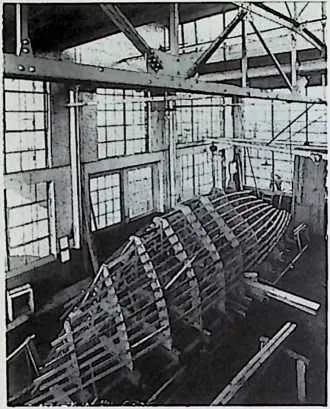
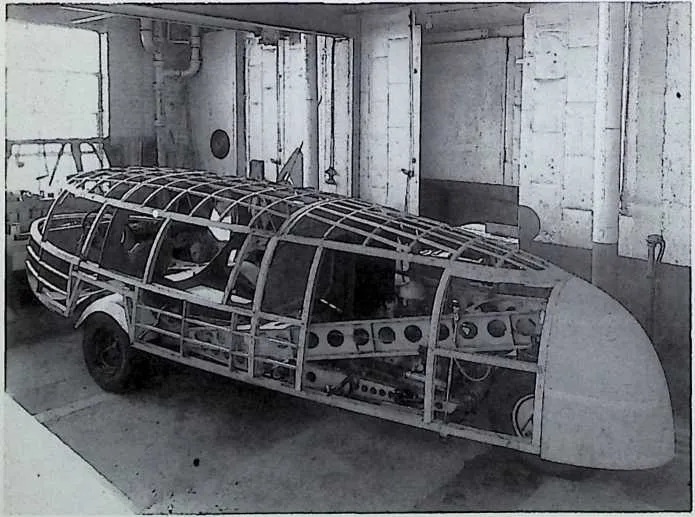
22 Under construction at the same time, the 40 foot Burgess sloop (left) and the wooden framework for the first Dymaxion car (below) show the same unmechanized, craft construction technique Immense rear suspension A-frame and all wood tail fairing of car are noteworthy sides were clad in aluminium and roof 'decked in' with taut 'yacht' canvas tonneau for tightness.
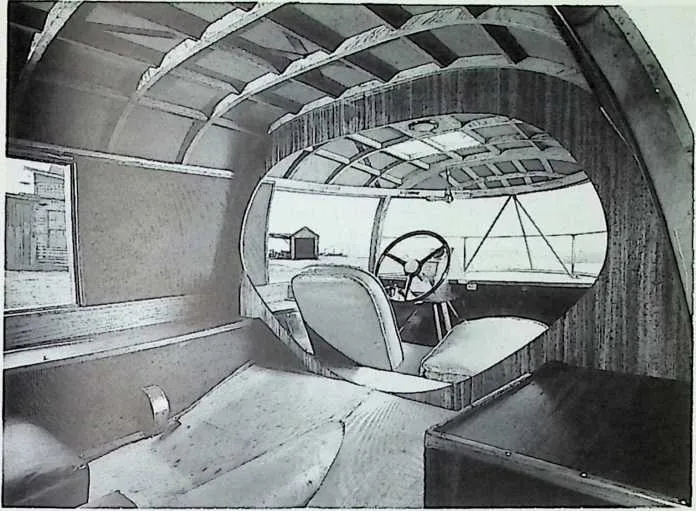
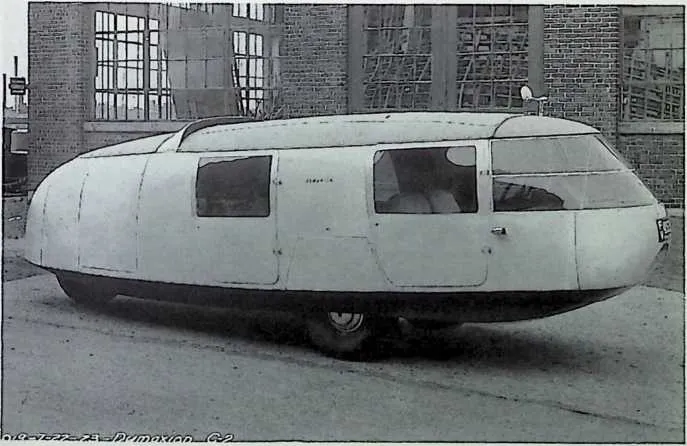
23 Interior of car (right) was finished like a racing yacht, and featured only-four seats Later cars sealed up Io eleven passengers. Handle above steering wheel controls roofmounted rear view mirror viewed through perspex panel. The first finished Dymaxion car (below right) displayed outside the factory on July 12th 1933, shows superb Burgess streamlining, doors only on left side, perspex windscreen and non opening windows. Button-down canvas tonneau to cabin and rear engine compartment can be clearly seen, as can roof-mounted engine air intake, side-mounted marker light and recess for single headlight.
25 Fitz Memorial Library 65
26 Endicott College Weverly, Massachusetts 01915
2829The second Dymaxion car (original licence plate SI 187) was begun upon completion of the first, and completed shortly after the World’s Fair crash. It had a similar canvas roof, but a metal cover over the engine compartment. It differed from FV 453 in having more glass and opening lights, as well as doors in both sides, but the European investors who had wanted to buy it—both of whom were passengers in the first car at the time of the accident—had by then changed their minds. There had also been a difference of opinion with Pearson about a return on his investment and the upshot was that Fuller was obliged to finance the building of the second and third cars himself with money left him by his mother. Car number two was later made over to the Dymaxion labour force in lieu of wages prior to the liquidation sale that ended Dymaxion car production in 1934. This car disappeared for many years and was discovered in an abandoned condition in California in the 1960s. It was later purchased for the Harrah Collection in Reno, Nevada, where it was externally refurbished and still survives.
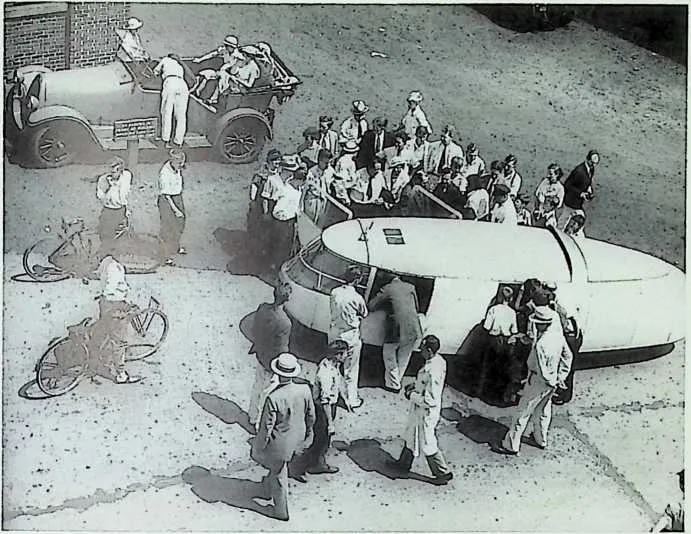
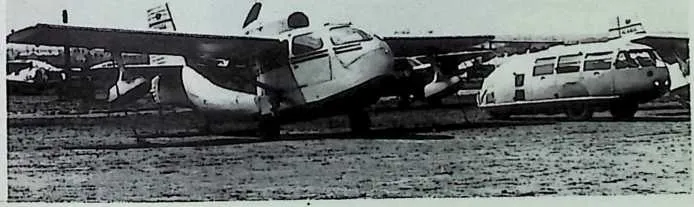
30The third Dymaxion car (original licence plate HF 349) was completed in 1934 just before the company was wound up. Generously provided with engine compartment ventilation in the body sides it was the only Dymaxion with an all-metal roof, flush door handles and no roof-mounted engine cooling air-intake, but was otherwise a virtual copy of car number two. This third car is the one that was photographed carrying passengers at the 1934 Chicago World Exposition where it was a popular item, executing a peculiar rotating ‘dance’ made possible by its rear-wheel steering. It was later sold to the conductor Leopold Stokowski who only kept it for a few months. After passing through many ownerships the car was rediscovered in Brooklyn in 1944 and repurchased for Fuller by a friend. It was restored at the Beech Aircraft plant in Wichita, Kansas in 1945 where it was photographed alongside Fuller’s private plane. It was then sold again and disappeared. The last reliable report of its existence dates from 1950, by which time it had covered more than 300,000 miles.
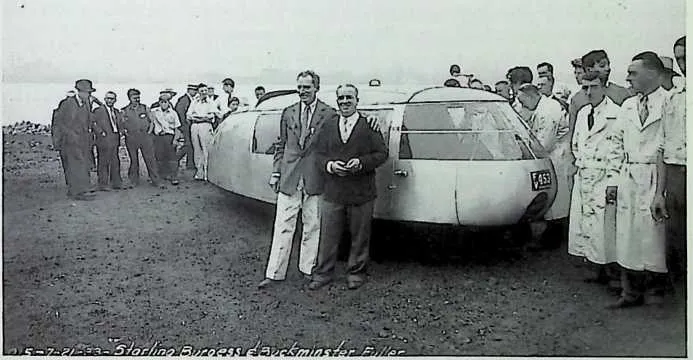
31 The aircraft-style streamlining shows clearly in lhe lines of the first Dymaxion (licence number FV 453) outside the Bridgeport factory in lhe summer ol 1933 with a contemporary Franklin tourer alongside Starling Burgess and Buckminster Fuller (below) standing beside FV 453 at the Roosevelt Airfield, Long Island on July 21st 1933.
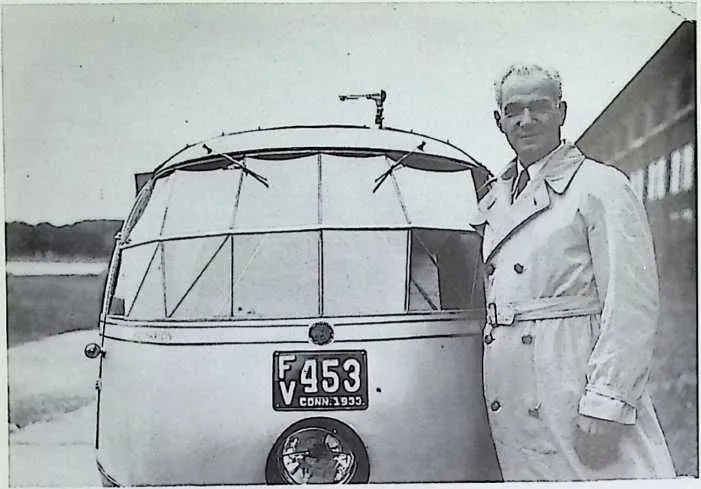
35 Famous American racing driver Ralph de Palma standing next to FV 453. This is the only known photograph of the vehicle after the fatal World's Fair accident. In the course of repairs the windscreen was rebuilt according to the less aerodynamic style of the later cars. Problem with wiper coverage can be seen.
36 Despite their failure to hover or fly, the appearance of the Dymaxion cars was revolutionary, and must remain a subject of fascination for anyone who has ever seen a photograph of one, let alone the sole physical survivor. With the first vehicle in particular, whose single headlamp and non-opening perspex windows made for cleaner lines, Fuller and Burgess had contrived to create one of the most startlingly beautiful and original motor vehicles ever built. A dramatic contrast with all its contemporaries, it was not until the advent of the Porsche 356 fifteen years later that a drastic adherence to the principles of streamlining would again be accompanied by such breathtaking aesthetic success.
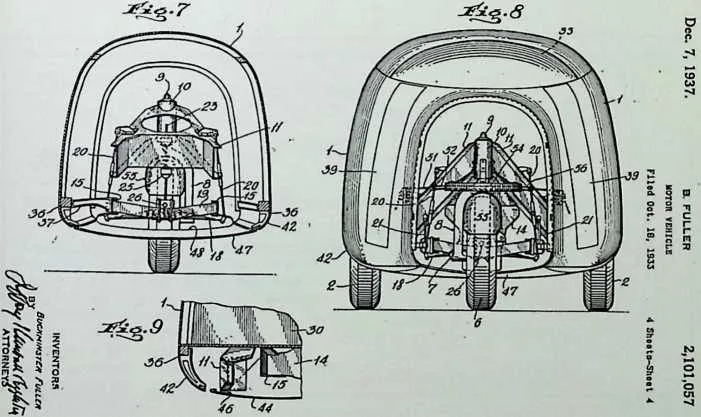
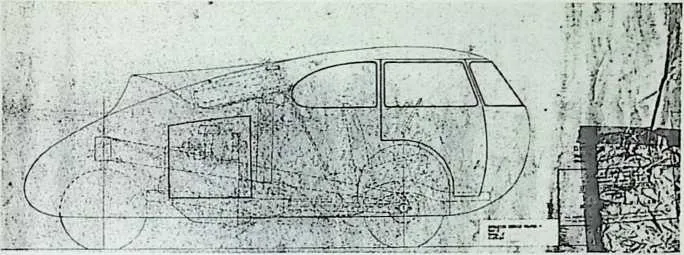
37 FV 453 looked like the wingless, tailless fuselage of the 1928 drawings only better. Although it was hand-built using orthodox coachbuilding techniques it looked like a streamlined monocoque aircraft, its nearperfect teardrop shape broken only by a broad roofmounted air intake for the engine behind the passenger cabin. Finished in natural aluminium on an ash frame, its 5.7 metre eleven-seat body had a perspex-glazed ‘cockpit cover’ and doors only on the left hand side. Until the redesign following the crash, sections of the glazing and the canvas roof had to be removed to provide ventilation. At rest, the car stood nose-high, like a tailwheel aircraft of the period. Inside it boasted aircraft seats, with seat belts, and aircraft-style controls and equipment, including an airspeed indicator and a radio. The body was carried on a chrome-molybdenum aircraft steel ladder chassis articulated into two scissors-like sections hinged at the front axle. The forward ladder frame carried the weight of the passengers and the 80 hp V8 rear-mounted engine driving the front pair of wheels. Above and behind it a long, thin A-frame of perforated steel passed either side of the engine carrying the 160 degree-turning rear steering wheel. The engine, gearbox, transmission and running gear were all taken from the contemporary Ford V8, the parts allegedly supplied by Ford at a discount of 70 per cent. One of the most serious limitations of the Ford legacy was the archaic formerly rear, now front, beam axle and transverse leaf spring suspension with its friction dampers. At the rear Fuller duplicated this with a smaller tension-damped transverse leaf springs above which the long A-frame was suspended.
38 The radically unorthodox layout of the Dymaxion car—Fuller simply turned the Ford differential upside down to make it drive the right way—possessed some advantages over the front engine-rear drive arrangement then almost universal in the motor industry but, as it emerged, many disadvantages too. Its principal gain was low-speed manoeuvrability, with a parking distance only 75 mm longer than the length of the car, and a turning circle only 300 mm greater. Fuller frequently boasted that at 15 mph the car could make a 180 degree turn in a matter of seconds.
39 The negative side of these achievements emerged at higher speeds. All three Dymaxion cars suffered from control problems above 50 miles per hour. In part this resulted from precisely those design analogies with birds and fish that had spurred their inventor on. Unlike these rear-steering creatures who operate in a single
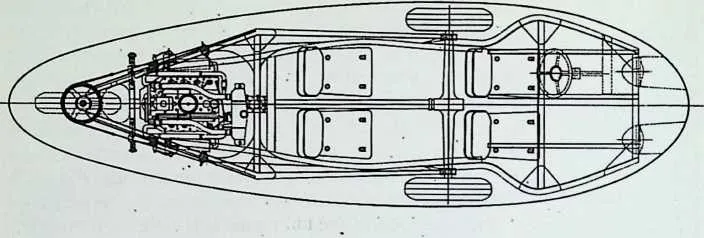
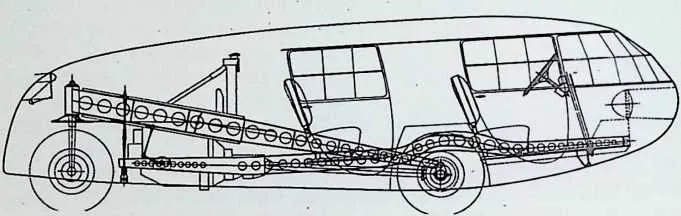
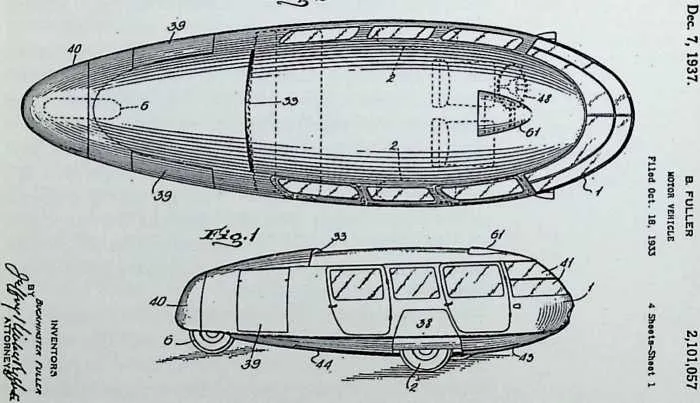
41 Composite simplified plan and section of the Dymaxion car showing smooth roofline and immense rear A-frame of FV 453 with double headlight arrangement of later cars (left). Patent application drawings (below) of October 1933 are also composites, showing increased window area, metal lop and roof periscope blister of later cars, coupled with underslung leaf-spring lor rear A-frame and single headlight of prototype FV 453.
42 medium, all cars are interface vehicles, partly moving through the air and partly moving on the ground. The implications of this were clearly appreciated by Fuller—his 1928 drawings of the ‘4-D Auto-airplane’ showed aerodynamic rudder and elevator controls—but he did not foresee its consequences as he might have done. In retrospect this is difficult to understand, because in 1933, as today, all flight training manuals explained to pilots that when taxiing tailwheel aircraft into the wind they should hold the elevators in the ‘up’ position in order to prevent the tail rising. It is clear from the 1932 Shelter drawings that Fuller believed he had dealt with this problem by deleting the tailplane and elevators altogether and providing only a ‘retractable air rudder’ to take over the steering when the tail rose. But not only was none of the Dymaxion cars ever fitted with such a rudder, the inventor greatly underestimated the tail-lifting effect as well. Even without his unique inverted-vee ‘air-keel’, as the Dymaxion cars accelerated their tails still tended to rise, just like those of aircraft. The absence of elevator downforce meant there was no
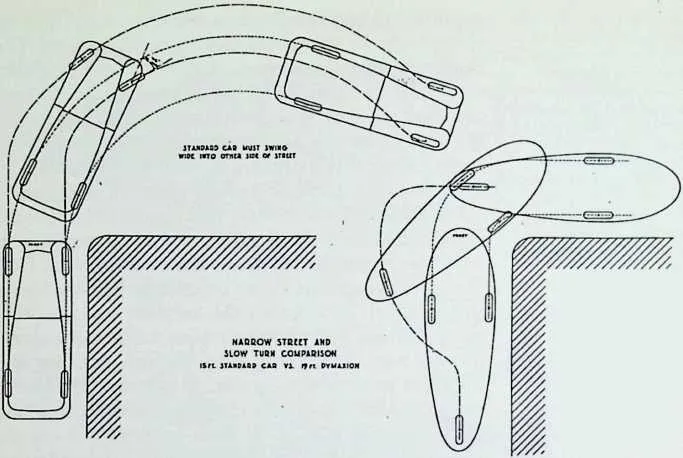
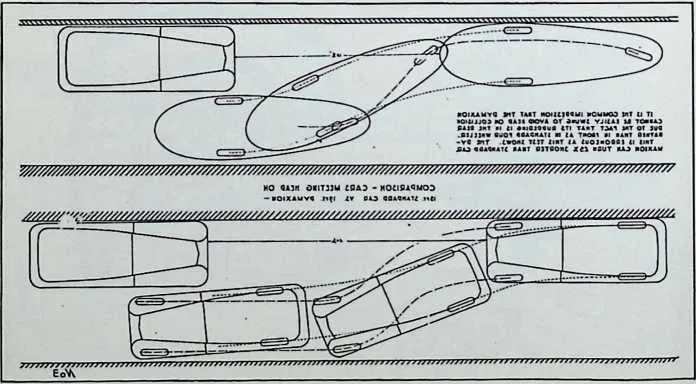
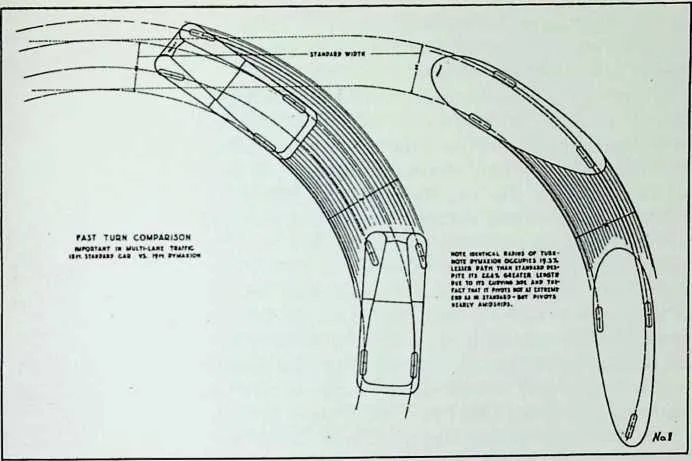
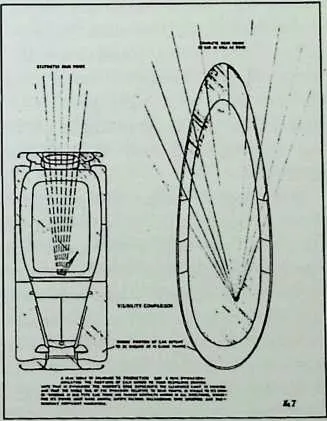
48 Rationalisations (or the superiority of the Dymaxion’s tricycle wheel arrangement and rear-wheel steering. Phenomenal turning circle of Dymaxion enables it Io make right-angle street turn in less space than a conventional car. Avoiding head-on collisions (below left). The Dymaxion averts disaster by turning in 25 per cent less distance than the conventional car, and consumes less road make a fast, sweeping turn (above). Rear view from Dymaxion's periscope is compared favourably with conventional mirror view through rear window (right). way of controlling this tendency except by reducing speed, for whenever the ‘tailwheel’ left the ground there was an immediate loss of steering control.
49 The more this phenomenon is examined, the more surprising Fuller’s thinking can be seen to be. Initially, as we know, he had anticipated the tail of the car rising and planned to continue steering by means of an aerodynamic rudder. The implication of this is that he expected the Dymaxion to run at a high speed, perhaps over 100 miles an hour. But here Fuller had far outstripped automobile industry knowledge in 1933. Steering was not the only problem for a road-going vehicle at such speeds. Given a long clear road the loss of ground-contact steering might have been offset by the use of an air rudder, but normal road conditions clearly required the ability to slow down rapidly, as well as run straight and negotiate broad radius turns at high speed. Sooner, rather than later in the trials of the first Dymaxion car, Fuller must have discovered that braking through the narrow footprint of two wheels led to a skid. Even when stationary the weight distribution of the car was 75 per cent front axle: 25 per cent rear wheel. This meant that rear-wheel braking would have been ineffective, and in fact rear-wheel brakes were not fitted to any of the cars. Burgess and Fuller had placed the mass of the engine as far aft and as low down as they could to counteract weight-transfer at speed, but this alone was not sufficient. To make the car work as a high speed ‘4-D transport’, Fuller would have had to fit an entire aircraft tail unit, including elevators, as well as a steering tailwheel and airbrakes.
50 Even had he taken the opposite tack and devised some means of totally preventing weight-transfer away from the tailwheel, Fuller’s stability problems would not have been over. FV 453 demonstrated another and more subtle danger when cornering. The concentration of weight at the rear of the car, coupled with an inevitable flexing of the long and ungainly lever arms that carried the rear suspension from their pivot point at the front axle, created a twisting effect that applied unwanted camber changes to the tailwheel—thus chang-
5152ing its effective steering angle. This, plus the vehicle’s aerodynamic tendency always to turn into the wind, not only made steering hazardous but contributed to phenomenal tyre wear. IS 187 and HF 349 were both fitted with a revised and lighter A-frame to counteract this effect but to no avail. On HF 349 the angle of incidence of the ‘rudder post’ of the rear wheel was changed five times in an unsuccessful attempt to design-out the involuntary cornering camber changes. Other minor faults relating to the basic design included poor backward visibility. All the Dymaxion cars had perspex widows in their roofs through which the driver was supposed to see behind him by way of an external driving mirror called by Fuller a ‘periscope’. The extensive fitment of what would nowadays be called ‘Nerf Bars’ to HF 349 suggests that this arrangement was inadequate for manoeuvring in confined spaces. Furthermore FV 453 in its pre-accident form had no windscreen wipers, while HF 349 and SI 187 were fitted with up to four wipers in an attempt to sweep different parts of their large faceted windscreens.
53Burgess and Fuller made great efforts to deal with these chronic design faults, but never to the extent of abandoning the chassis/body in favour of a genuine aircraft monocoque, or changing the rear-wheel steering arrangement. In retrospect it is clear that the development of the basic vehicle into a kind of highspeed motorway cruiser, steered aerodynamically like a taxiing aeroplane and braked by some as yet undevised anti-dive system, was beyond their powers. Instead minor palliatives were initiated. The designers decided to replace the long steering cables, which ran through turning blocks as on a yacht, with heavier ones to prevent them stretching, but this was never done. They also intended to raise the steering ratio, a laborious 20:1, to a remarkable 30:1 if further examples were built—yet another example of the incompatibility of high and low speed steering characteristics that was endemic in the design without its air-rudder. On SI 187 and HF 349 a lock was inserted that had to be lifted manually before turns requiring the rear of the vehicle to move outside the track of the front wheels could be executed.
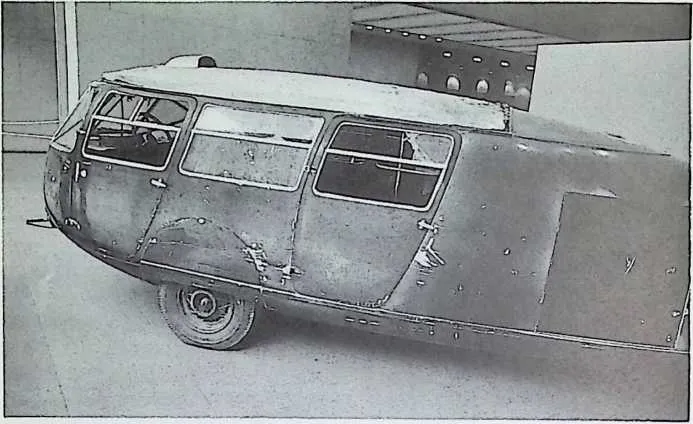
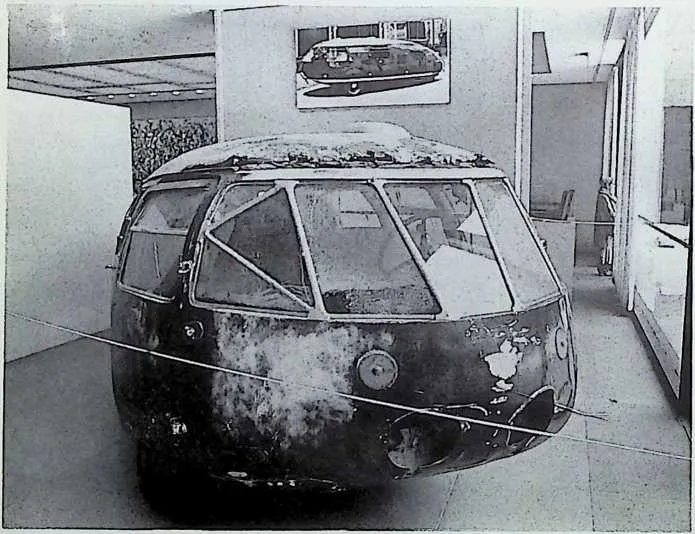
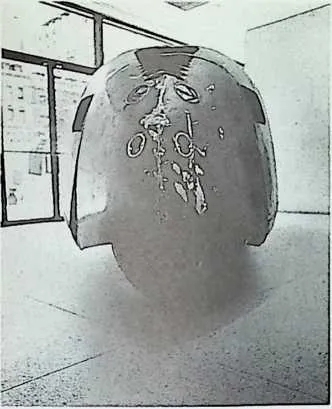
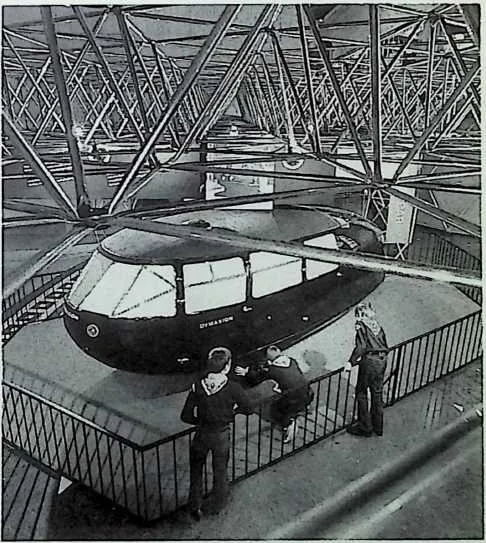
57 The only surviving Dymaxion car is vehicle number two (originally licence number SL 187). seen here in the condition in which it was discovered (left) and after removal to the Harrah Collection in Reno. Nevada. Externally restored, the car is frequently exhibited, here (belav) al the opening ol the Museum of Science and Industry in Chicago in 1973.
59 This replaced FV 453’s ‘audible warning device’ that had proved insufficient.
60 Over the years a legend has grown up about the performance of the Dymaxion cars. Fuller himself claimed to have broken the lap record ‘by more than 50 per cent’ at an unspecified ‘midget car stadium in the Bronx’ in a Dymaxion. In an appearance at the Roosevelt Raceway, Long Island on the 11th of August 1933, FV 453 was announced as being capable of 120 mile an hour, but no timings were released. As late as July 1988 Automobile Magazine in the United States claimed that the car could reach 120 miles an hour with fuel consumption in the 25–30 miles per gallon range.
61 In fact, despite Fuller’s understanding of the importance of power to weight ratios, the kerb weight of the Dymaxions was never revealed or, possibly, never even calculated. It must however have been well in excess of 2,000 kilograms and, at such a weight, with a slow-revving side-valve 85 bhp V8 driving through a three-speed gearbox and standard 3.57:1 Ford rear axle, it can safely be said that the claimed figures are impossible.
62 By the autumn of 1934, with Pearson’s money and Fuller’s inheritance consumed, there were no more customers for Dymaxion cars. The ‘4-D Dymaxion’ factory was closed down and all its assets were sold in a sheriff’s liquidation sale—a common fate for industrial enterprises during the Great Depression. Fuller parted company with Burgess and removed his family to New York where he started work on his first real book, a volume that was to be printed three years later under the enigmatic title Nine Chains to the Moon.
63 There were however two sequels to the Dymaxion car episode. Throughout the 1930s Fuller remained in an uncertain relationship with the major American automobile companies, notably with Chrysler, Packard and Studebaker, then independent manufacturers, all of whom had expressed guarded interest in developing the Dymaxion car further. There was still the conviction, mentioned earlier, that the motor industry could be used to lever the American economy out of the Depression provided a new breakthrough in car design could be made. Susceptible to this thinking was an investment group named Hayden Stone that had inherited the barely solvent Curtiss Wright aeronautical corporation and the defunct Pierce Arrow car company. Hayden Stone proposed to finance the production of a new ‘Curtiss Wright Dymaxion’ at the Pierce Arrow Plant in Buffalo, using the proceeds from the sale of airfields belonging to Curtiss Wright to finance the operation. Although these negotiations foundered at a late stage, some detailed models of proposed Dymaxion derivatives, ranging from tiny 300 mm styling exercises to a 4.2 metre full-size buck, were built by Joseph Kuthmeyer in New York for exhibition at the 1939 World’s Fair. These models were destroyed during World War Two. All that survives of this stillborn project are Fuller’s general arrangement drawings for a four-seat ‘Tudor Sportster’ and a single seater traffic car.
64 The last revival of the Dymaxion car was a project called the D-45, which surfaced in 1943. It began when the industrialist Henry J. Kaiser invited Fuller to make proposals for a revolutionary new car for post-war production. As a result of his work as Director of Mechanical Engineering for the United States Board of Economic Warfare at the time, Fuller had little leisure for the task, but he was loath to let the possibility pass by so he persuaded an engineer named Walter Sanders and an unnamed architect to help him.
65 The vehicle that emerged from their wartime design effort was even more radical than its predecessors. Short and wide, its length 3 metres and its width over 2 metres, the proposed D-45 was still of a pleasant aerodynamic form even though its great width permitted four-abreast seating. The vehicle still adhered stubbornly to the three-wheel Dymaxion layout, but Fuller proposed to correct all the problems of rear-wheel steering by the dramatic method of providing two separate steering systems. A normal steering wheel would control the front wheels at speed on the open road, while a separate crank handle could turn the rear wheel for close-quarters manoeuvrability. The handling problems posed by the excessive weight and primitive beam axle and leaf spring suspension of the earlier vehicles were to be solved by the adoption of all-metal monocoque construction and a hydro-pneumatic independent suspension system similar in performance to that introduced on the revolutionary French Citroen DS19 in 1955. The inherent three-wheel car problems of ‘pitching’ and tyre-wear were to be solved by an even more radical departure. Instead of a long wheel base as on the earlier Dymaxion cars, the D-45 achieved great economies in weight and streamlining by mounting its rear steering wheel on the end of an extendible boom. In the D-45 the mythical ‘infinite wheelbase’ of the original ‘4-D Auto-Airplane’, which was to have been steered by an air rudder, would be achieved without loss of ground contact by extending the tail boom rearward as speed increased. At low speeds with the boom retracted, as Fuller already knew, the car would be safe and phenomenally manoeuvrable using rear-wheel steering.
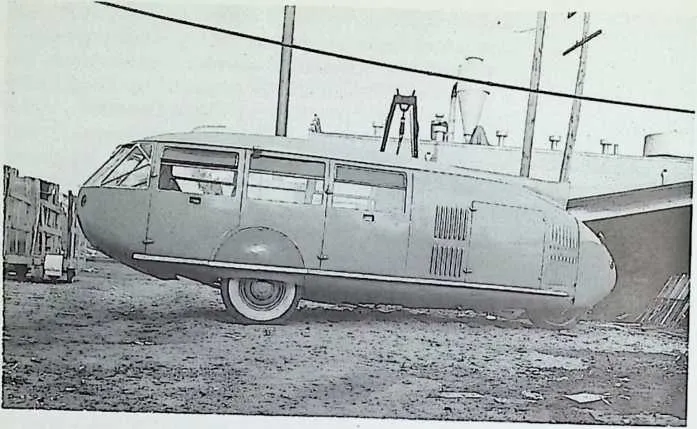
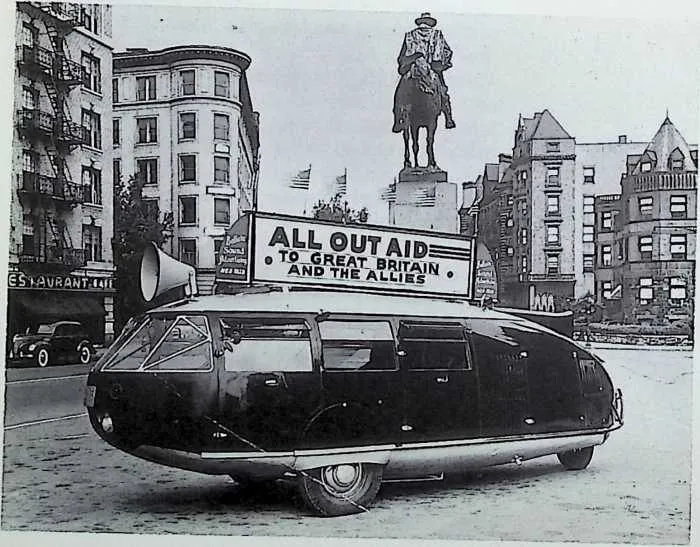
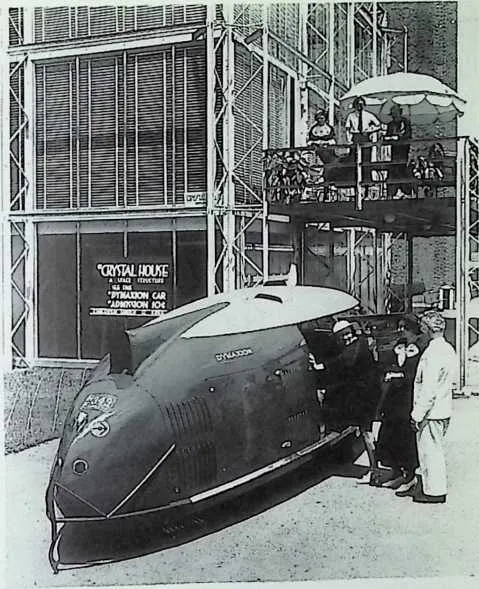
69 Dymaxion car number three (licence plate HF 349) soon after completion (left), and performing at the 1934 Chicago World's Fair (right). where Buckminster Fuller (in white suit) is shown helping passengers through the rear door. The car differed from its predecessor in having an all-metal root with a fin shaped engine exhaust tunnel, more opening glass area, vertical door shut-lines and recessed door catches. Car number three was sold to the conductor Leopold Stokowski and was still in use in New York in 1942 for advertising purposes Discovered abandoned in Brooklyn in 1945 it was shipped Io Wichita, Kansas and restored for Fuller's own use Here (below) it is shown alongside Fuller's own Republic Seabee amphibian. After the collapse of Fuller Houses Inc. the car was sold and disappeared.
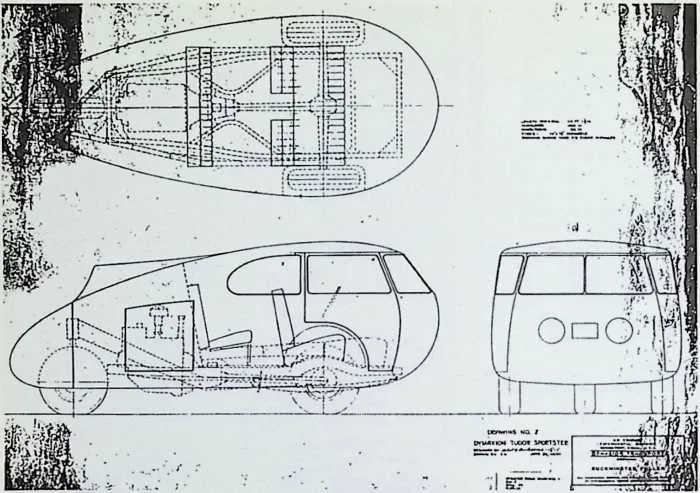
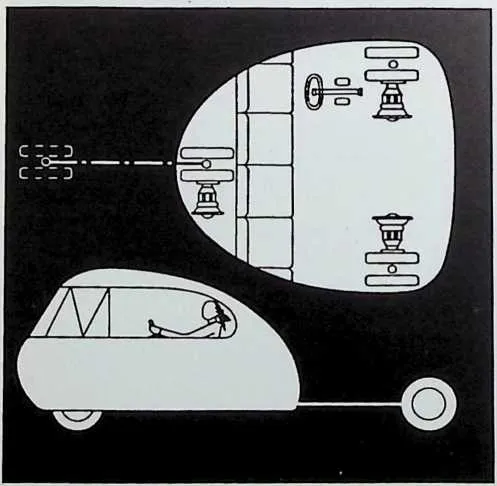
74 Putative successors to the Dymaxion that never went into production were the 42 metre V-8 powered 'Tudor Sportster’ (left) and the even smaller single sealer (below). The Kaiser sponsored D 45 represented the most advanced version of the car (above) version of the car was to have been powered by three gas turbines driving through hydraulic pumps, with three-wheel steering and an extendable tail boom for highspeed comfort.
75 The twin steering systems and extending wheelbase were not the sole innovations of the proposed Kaiser D-45. Partially reverting to his multi-engine 1932 design, Fuller proposed to replace the old Dymaxion rear-mounted single water cooled engine with no less than three tiny air-cooled radial five-cylinder 25 brake horse power petrol engines, one to drive each of the wheels. According to the only drawings and descriptions that remain in the Fuller archive, these small engines were intended to run at a constant speed and each drive a hydraulic pump powering the adjacent wheel. Conventional throttle control would be replaced by a method of varying the volume of hydraulic fluid supplied to each pump. In order to limit the noise level of three engines running at optimum power, Fuller intended to use varying numbers of them at any one time For acceleration or hill climbing all engines would be used: for high speed cruising the power supply could be cut back until only the boomed out tail motor was driving. In this way Fuller also hoped to achieve a very low overall fuel consumption.
76 In a final version of the D-45 project published after the war, Fuller proposed the installation of three gas turbines driving all-steering twin road wheels in place of the three petrol engines and the two separate steering systems. Fuller’s own description of this last of all Dymaxion car designs is characteristic:-
77 ‘With the one-half-pound-per-horse-power gas turbine coming of age, the trend is to re-explore promptly the possibilities of earth-bound vehicles. The latest Dymaxion features coupled-steering of all three ‘duo-tired‘ wheel assemblies. Each wheel assembly contains its own gas turbine. The fuselage is suspended by three aircraft type vertical aerol struts, and has a retractable rear wheel tail boom for lengthening the wheelbase at speed. It is seven feet wide and ten feet long (contracted) with cross-wind ‘fairing.1 It has a seven foot driving divan, convertible into a large bed. It may ‘revolve into' half the parking length of present cars. The top is a convertible aluminium water melon type. It has a faired belly with high ground clearance for field work, will ‘gun‘ high speed turns without skid. Weight 960 lbs (440 kg).’
78 Years later it became clear that Kaiser had in fact proceeded with the 1943 project in his own way. After a preliminary agreement with the inventor was not taken up, he placed the development of the D-45 in the hands of a former Chevrolet engineer named Alexander Taub. A much modified vehicle which had reverted to a single engine and abandoned the extendable rear boom, was tested and abandoned in 1946. But by this time Buckminster Fuller was hard at work in Wichita, Kansas, on the most advanced house of the 20th century.