4 Getting Around
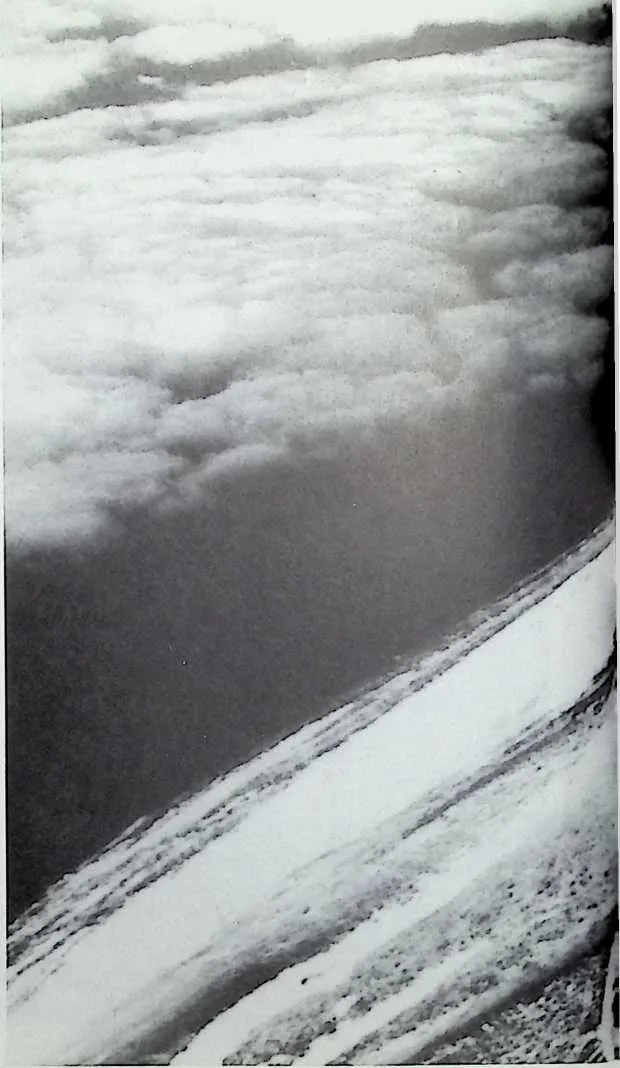
2Ultimately, it had to fly. An early version of Bucky’s graph (Fig. 10-1), based on information in the Chronofile, showed that people were travelling faster and further every year—a trend that was accelerating as we become a ‘‘one-town world’’. If autonomous Dymaxion houses and 10-deckers could be zeppelined to almost anywhere on earth, their occupants and service crews
3 Bucky’s Dymaxion Transport projects had the frustrations, defeats, and victories typical of any bold move into unknown territory. The Chronofile reveals how the ideas evolved. You can sense Bucky’s mind at work as he struggles to bring a metaphysical concept into physical reality. You can see why so many less daring designers play safe and cling to the past.
45would surely come and go by air.
6Land travelers must pay for the construction, maintenance, and use of roads and tracks—the other half of all wheeled vehicles. But the sea is free, and you needn’t buy sky to fly.
7Trackless travel maximizes the choice of destinations. Much livable land is not accessible by road or even by misnamed ‘‘off-road vehicles.’’ (A waist-high obstacle will stop any of them.) Ships can range at will over the sea, but navigable waters, canals (boat roads) and ports are limited, and the open sea isn’t usually considered a destination. Only aircraft can go from anywhere to
910Fig. 4-1
11The Dymaxion Map
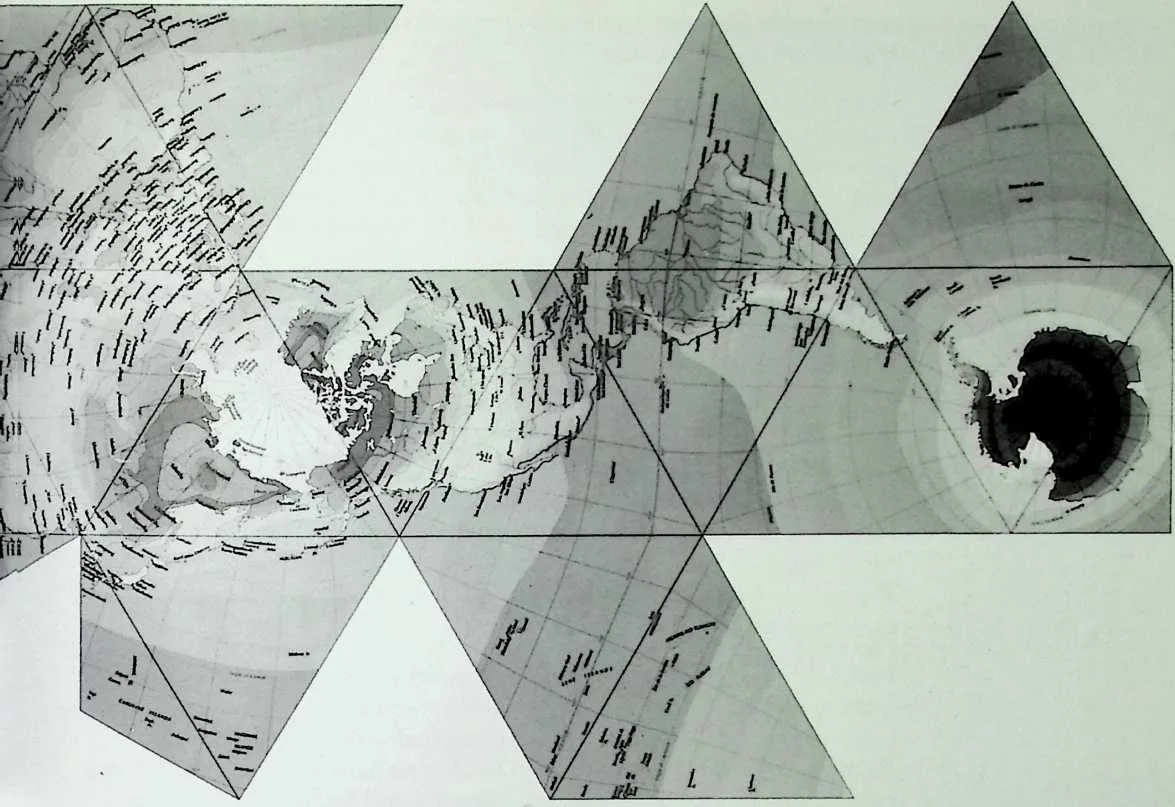
12The Dymaxion Projection map is the only flat map that shows Earth’s land masses in their true contour and proportion. Distortion is minimal, and occurs in the oceans. Unlike a globe, it allows you to see the entire Earth at a glance. (Your eye can only take in one-fourth of a globe at one time.Try it.) The pattern is an unhinged icosahedron, and can be folded into that solid figure. The panels can be arranged as desired.The arrangement shown shows that there is actually one large land mass. Air travel routes over the pole are obviously the shortest great circle way to connect cities in the northern hemisphere where most humans live.
13Details of the projection method are shown in The Dymaxion World of Buckminster Fuller, by Robert Marks (1960, Reinhold). Maps are available from the Buckminster Fuller Institute (see Appendix B).
14 •
15 everywhere by the shortest route, encouraging decentralization and all manner of global synergetic advantage.
16 Flying is also more efficient than automobiling as a system. Bucky estimated i that at any given moment, millions of vehicles were getting zero miles per gallon while waiting at traffic signals. ‘‘Think of two-hundred million horses jumping up and down going nowhere,’’ he’d say, shaking his head at the sheer stupidity of it. A Dymaxion Transport could fly straight to its goal without pause. (Bucky had not yet thought about the urban sprawl his transports would make possible. In fact, he considered easy access to suburbia to be a desirable attribute of his machines. Dymaxion Transport would make cities—‘‘warehouses for people and goods’’—obsolete.)
17 Always alert to the principles at work in nature’s designs, Bucky had noticed that ducks are held aloft and continuously fall forward on the bursts of air emitted by the rapid strokes of their stubby wings. About 1930, he proposed what we would now call a ‘‘jump-jet’’ or VERTOL ( for Vertical Takeoff and Landing). The wingless ‘‘omnimedium plummeting device’’ was to be lofted by two swiveled ‘‘jet stilts,’’ one on each side, angled slightly outward for stability. They’d pivot back a bit for forward motion, and forward for braking—like a duck’s wings.
18 Bucky specified jets because they are smaller, lighter, simpler, and about four times more efficient than piston engines. No practical jets had yet been built, but Bucky’s graph showed that they’d come in a decade or so—which they did. Bucky could afford to wait. He knew that all ideas have their natural gestation rate. Meantime, the landing gear could be developed for ‘‘prolonged taxiing’’ (his hopeful term for driving) and safe crosswind behavior on roads and rough ground.
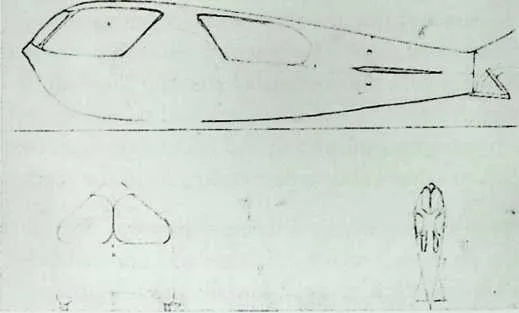
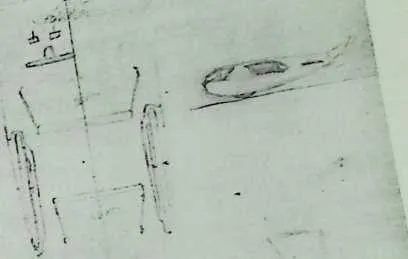
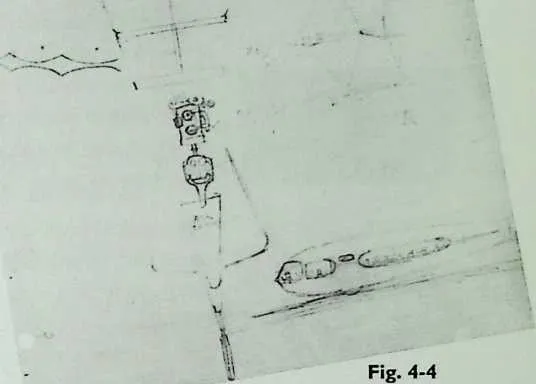
19 Bucky certainly did not start out to design an automobile. Three wheels made the most sense as a landing gear—a fourth is not needed for support, adds weight and drag, and tends to make a vehicle rock like a four-legged chair on an uneven floor. She’d steer from the back ‘‘like a bird or a fish,’’ and be outrageously maneuverable. The single rear wheel would permit an aerodynamically efficient shape in both plan and profile (Fig. 4-4).
20 Bucky finally settled for a grounded rear wheel, and 75% of the weight on the driven front axle to ensure traction and stability—and good balance as an aircraft. The center of gravity was a dramatically low 23 inches (58.4 cm), about the same as today’s cars (Fig. 4-2).
22 ~ FJeAMES fJt-T*
23 C ^I^VZCBLSZ. UJlM^i -£/?•->! |_Ats C.HILDJ Gai-oom - Him-Eo Ml [-> Aik OK <=A5 WftEr< Klil/l'j #K A<K Ta AO
24 3 se^AKATi LI<B'U>5 Aj„ TURIJpiI.
25 OC1r<£ t-TlojlS .^r. To £«<_*» os Afo/r ,•,] Miueeua A»D ^Ta AKoW.uLSO
26 Fig. 4-2
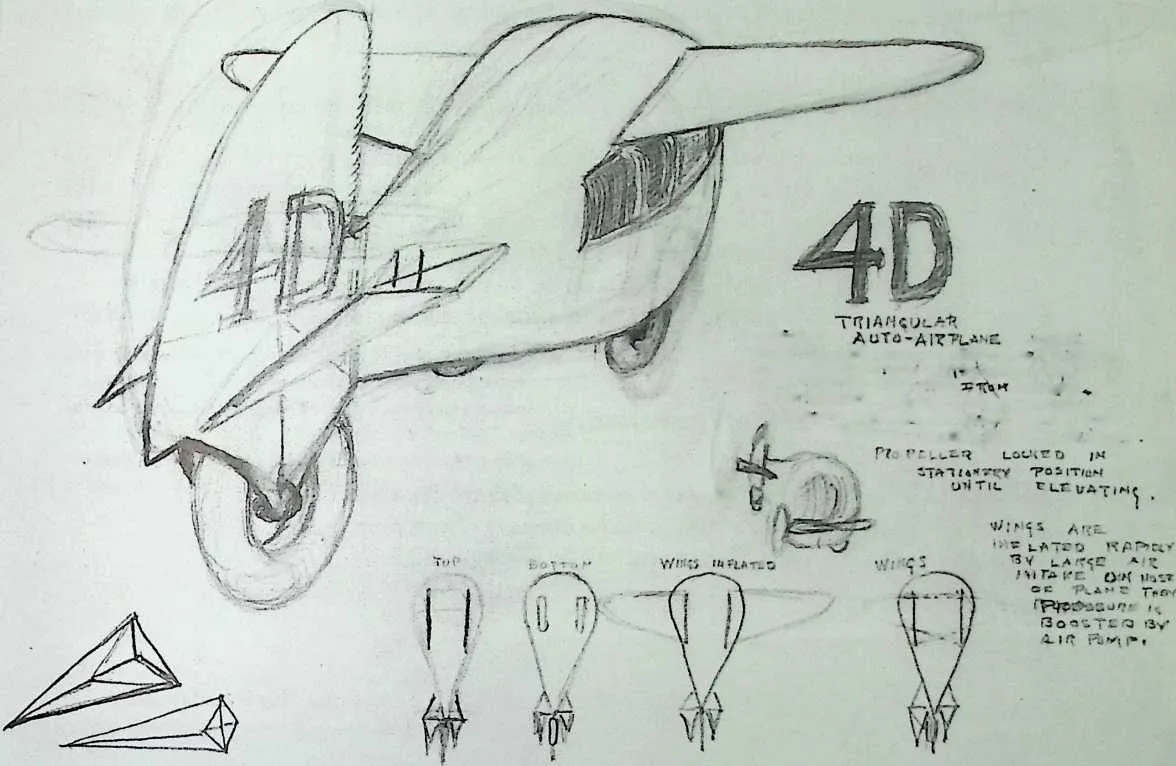
2728The first 1927 4D Transport sketch is this personal airplane that could be used as an awkward automobile when the inflatable wings were stowed. It would need minimal space for takeoffs and landings, but even that seemed too restrictive to Bucky.That, and the goose-like clumsiness on the ground caused him to seek other solutions.
29Conventional cars were heavy then—everyone ‘‘knew’’ that weight was needed to hold the road and to provide a comfortable ride. (Neither claim is true.) But the Dymaxion Transport had to be light—after all, she’d be flying someday. Aerodynamics took precedence over styling. Think how absurd aircraft would be if they flaunted the ostentation of a royal carriage—as luxury cars did then—and attempted to gain prestige by stuffing a chromed replica of the Parthenon through the air—as Rolls-Royce did, and still does.
30Bucky didn’t respect auto stylists; their contemptible mission was to make things look new without being new. He was not the only one interested in aerodynamics. The American designer Norman bel-Geddes and a number of Europeans were working on low-drag designs. Aircraft designer William Stout had his appropriately-named Scarab car on the road. Competition didn’t bother Bucky: ‘‘Evolution makes many starts’’ he said. Besides, only his was intended to fly someday.
31Dymaxion Plummeting
32The reason I built an advanced design car rather than an advanced design house was simply because I knew I could draw on the already available inventory of parts from the automotive world. There was nothing like that available for housing.—RBF
33 Dymaxion Cars
34  In 1933, with a logical design in hand (and no computers for simulations), Bucky decided
to build a full-scale proof-of-concept machine. An astute financial move had preserved his
cash from failing banks, and his enthusiasm for building a better future had attracted
several investors, including a stockbroker and an aviatrix contemporary of Amelia
Earhart.
In 1933, with a logical design in hand (and no computers for simulations), Bucky decided
to build a full-scale proof-of-concept machine. An astute financial move had preserved his
cash from failing banks, and his enthusiasm for building a better future had attracted
several investors, including a stockbroker and an aviatrix contemporary of Amelia
Earhart.
35 He hired six world-class craftsmen out of a thousand hungry applicants. For chief engineer, he appointed Starling Burgess, famous for his high-performance seaplanes and America’s Cup racing yachts. Bucky had high regard for Burgess, who had done the calculations for the 4D tower’s streamlined fairing (Fig. 2-5), and the central mast of the proposed Dymaxion House.
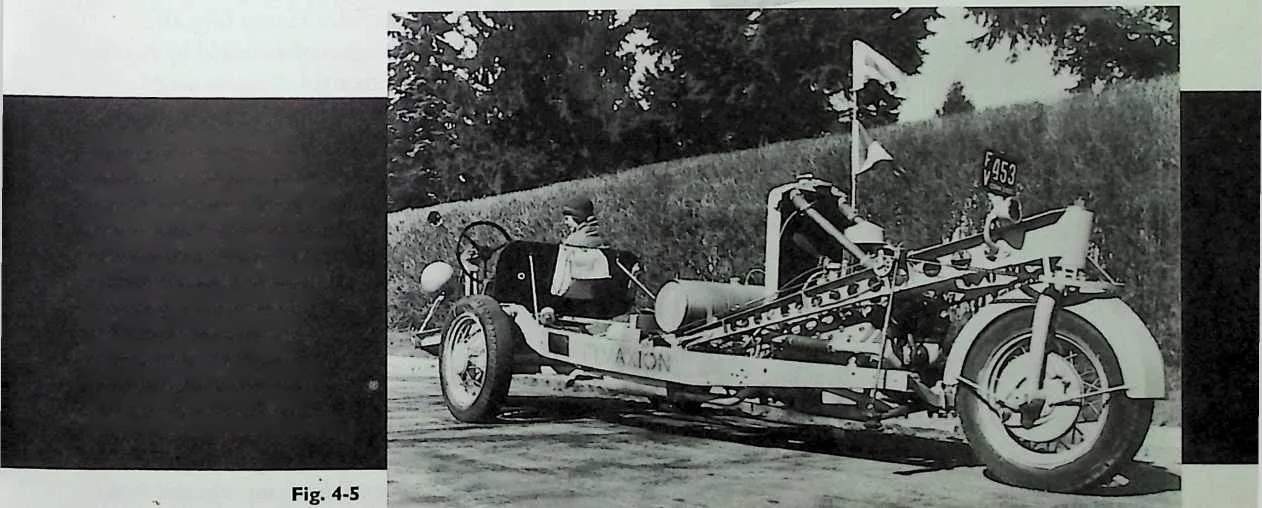
3637Work commenced in 1933, on the very day that President Franklin D. Roosevelt announced the infamous bank moratorium—perhaps the worst moment of the Great Depression. It took the inspired crew just six weeks to produce a chassis ready for road testing (Fig.4-5).

40 Fig. 4-3
41 Early drawings show the tail wheel planing completely off the ground, giving a ride-smoothing infinite wheelbase at high speeds. In planing mode, steering duties were assigned to an air rudder, and stability to the inverted-V ‘‘air keel’’ contour of the belly fairing. Impractical, but there is much to be learned by considering all options, including extremes.
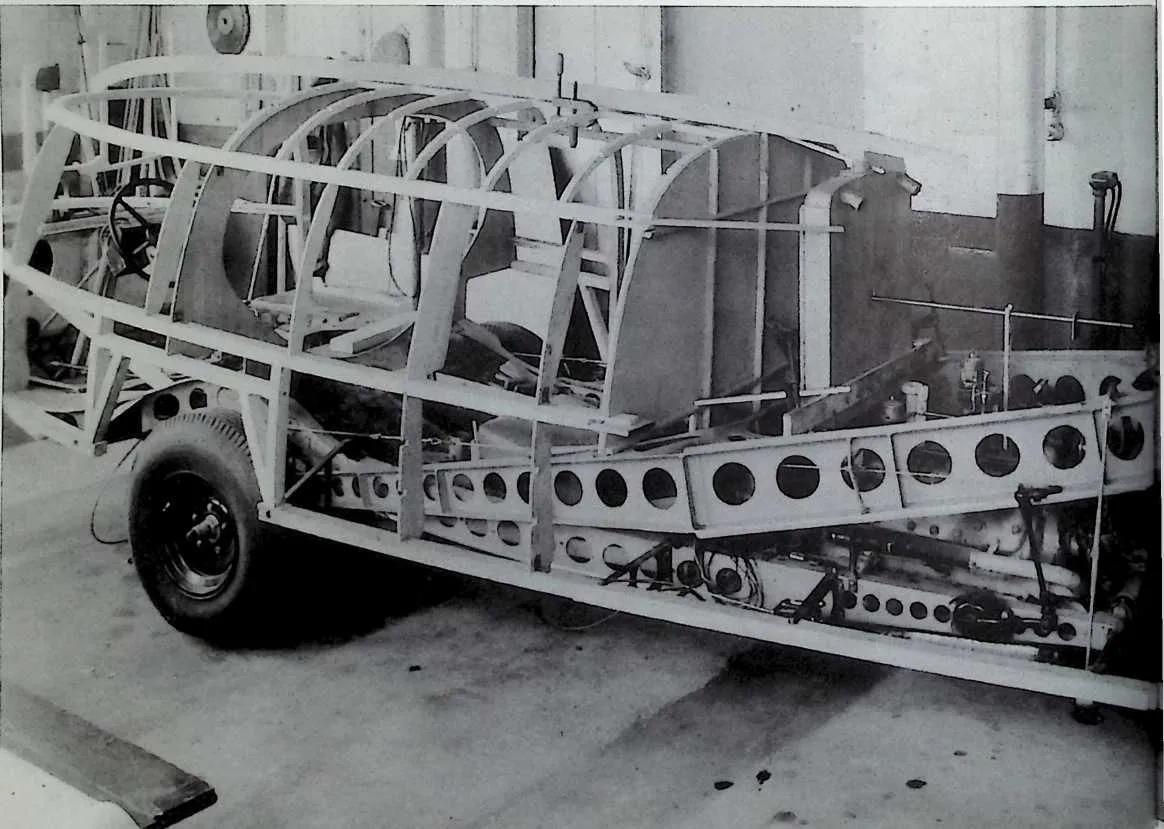
42 Eight men built this test chassis in just six weeks! It generally worked well, but the simple layout let the rear wheel lean with the body in a turn while the front wheels remained perpendicular to the road. Correcting the resulting evil gyroscopic effects required the entirely new, more complex design used in the first complete car.
44 Burgess showed considerable courage driving the naked chassis fast for the first time. Little was known about vehicle dynamics in general—certainly not enough to predict the handling characteristics of a three-wheeler with rear-engine, rear-wheel steering and front-wheel drive. The machine showed promise, but Burgess had some scary moments with uncontrollable steering oscillations similar to the ‘‘death wobble’’ rightly feared by motorcyclists and the drivers of trailer-towing autos. The remedy was time-consuming and expensive: Start over with a new chassis that kept all three wheels always perpendicular to the road.
45 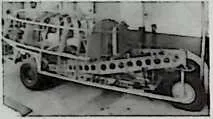 Bucky did not view the need for a new chassis as a setback. There was no body of
knowledge for reference, no experts to ask. Mistakes and dead-ends are common in
research-and-development work, especially when an entire concept is new and not just a
refinement of a portion of an established design. Learning always involves trial and error. Also,
Bucky knew that it usually takes three tries to develop a convincing prototype. The first try
shows whether the idea has promise; the bare chassis had confirmed that the idea was basically
good.
Bucky did not view the need for a new chassis as a setback. There was no body of
knowledge for reference, no experts to ask. Mistakes and dead-ends are common in
research-and-development work, especially when an entire concept is new and not just a
refinement of a portion of an established design. Learning always involves trial and error. Also,
Bucky knew that it usually takes three tries to develop a convincing prototype. The first try
shows whether the idea has promise; the bare chassis had confirmed that the idea was basically
good.
46 The next try would be the first complete car (Fig. 4-7).
47 The second prototype of a design is a version of the first, with the major flaws corrected. Work started on a wood-framed, aluminum-clad body utilizing the latest yacht and aircraft technology. There was a deadline: The first complete car had to be ready for the 1933 Chicago Worlds Fair in three months. The crew immediately grew to twenty-eight, including two sheet metal men from Rolls-Royce. They had a lot to do; except for the stock Ford V8 power train (chosen for its relative lightness and a 70% discount from Henry himself), nearly every part had to be custom-designed, and precisely fabricated by hand. Bucky wanted the car to be well finished. He knew that good workmanship would impress onlookers and the media, adding to a convincing demonstration of his ideas.
48 There was only one major problem left to solve. The car was extraordinarily stable in still air, but even Bucky described driving the Dymaxion in gusty conditions as an endless, nerve-wracking crosswind landing in a small airplane. The aircraft cable-and-pulley steering was thought to be at fault. An airplanes course needn’t be correct to the fraction of an inch, but a car’s does. The loose feel made the unfamiliar rear steering even trickier to master. Thicker cables and five different rear wheel swivel geometries were tried, but the car remained unacceptably twitchy.
49 The amazing maneuverability also caused some problems: a vigorous twist of the steering wheel could swing the tail way out beyond the front wheels’ tracks,
51 Fig. 4-6
52 The original drawing of the Dymaxion logo.
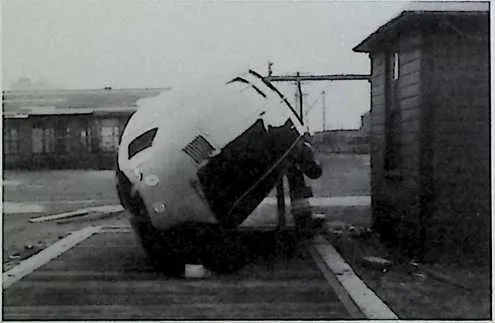
53 threatening to swat anything in its path. A violent swerve might tear the rear tire from the rim. Test drivers could not get used to it; they rumpled the tail against guard rails more than once. Bucky himself overturned in an encounter with an embankment, injuring his wife and daughter.
54 As he so often recommended, Bucky ‘‘reformed the environment instead of the man’’ by installing steering restrictors that kept the tails path safely inside that of the front wheels at road speeds. Centering springs made the straight-ahead position easier to feel. All that helped, but adroit moves still required practice and caution.
55 Today, an ergonomics expert would be retained to solve such problems, but ergonomics—which studies the operator-machine interface—was not a discipline in 1933. There were no guiding principles to follow. Intuition doesn’t always provide marketable answers especially when time is short. The design of proper steering would need more time.
56 Other problems were social. Creditors pounded on the door. Bucky s family repeatedly wrote to ask when they’d see him again. And there was a mystery: as the deadline approached, work slowed. It took Bucky a while to realize why: His employees knew that they’d be unemployed when the car was finished. To keep them working on the first car, he started work on a second that he hoped potential investors would buy.
57 The crew met the deadline, and the first car rolled out the Bridgeport, CT, factory door to astound a crowd of local citizens and a well-chosen group of prominent people. (Bucky was very much aware of the power of publicity.)
5859Coming from a heritage of aircraft and boat building, a plywood and bentwood framing supported the aluminum body of the first complete car. The brochure claimed a road-ready weight of 1850 pounds (839.2 kg)—not much heavier than a VW Beetle, yet 6 feet (1.8 meters) longer.The huge, perforated rear suspension ‘‘A-frame’’ hinged on the front axle, ensuring that all wheels stayed perpendicular to the road at all times. Road grip and ride were exceptional. The car could be driven fast across a plowed field without disturbing the passengers, and it bettered a local stock car track record—with a full load of race promoters aboard!
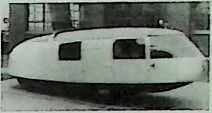
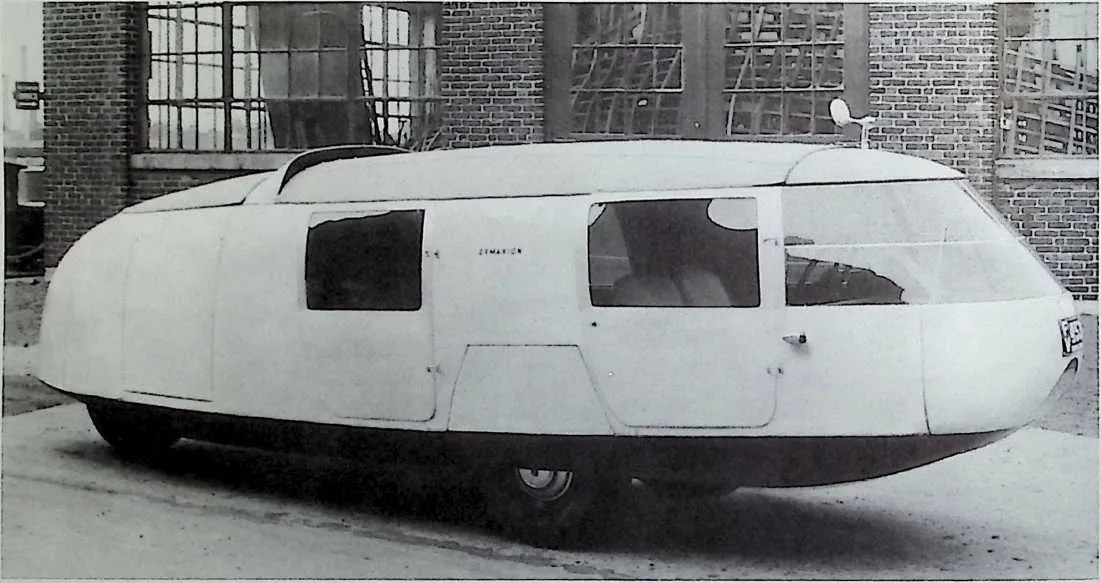
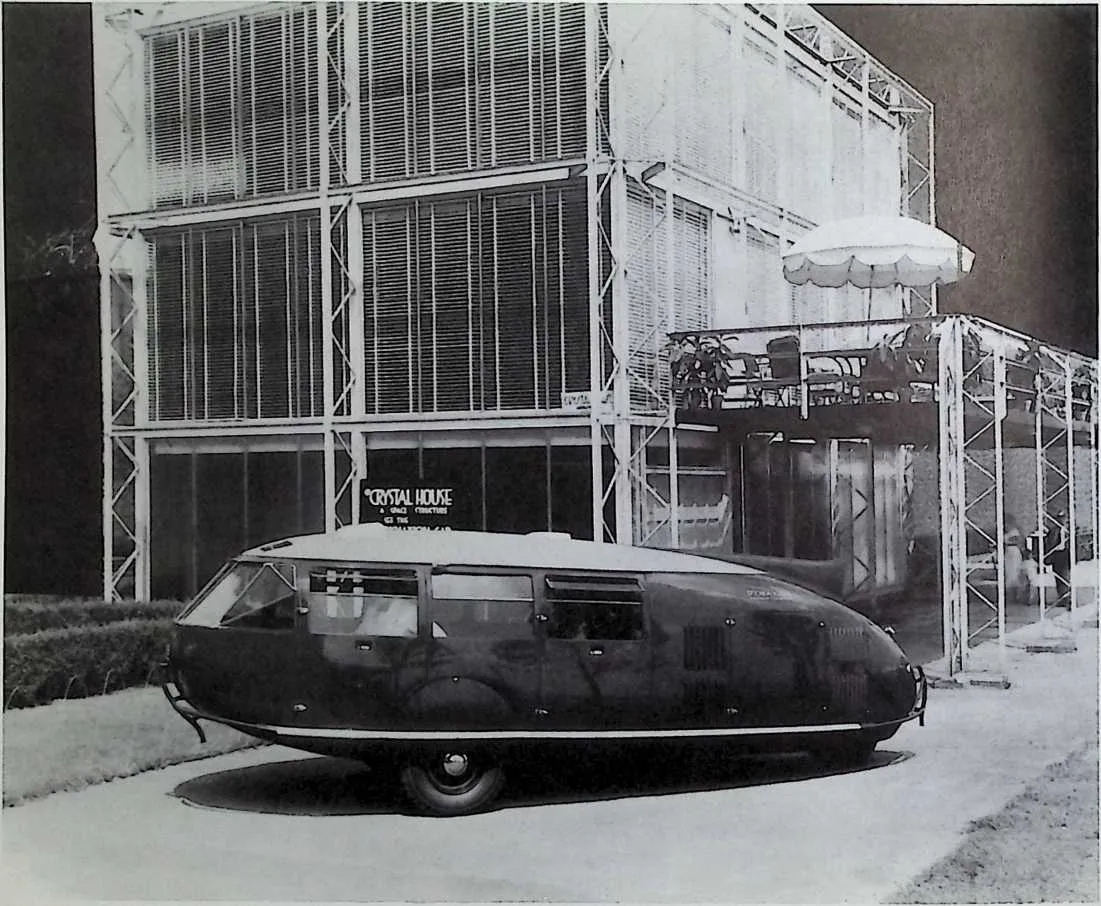
61 The silver Dymaxion (Figs. 4-9 through 4-11) caused a sensation that no automobile could engender today. A drive up New York’s Park Avenue gridlocked a significant portion of midtown Manhattan. Excluded from the annual auto show at Madison Square Garden, Bucky parked his car near the street entrance, effectively upstaging Detroit’s finest anyway, and causing a notorious daily traffic snarl. The car was mobbed everywhere it went. The press hailed the car as a major force that would help end the Depression.
62 Media accolades quickly turned to sneers when a politician’s car rammed and overturned the Dymaxion near the entrance to the Chicago Fair, killing its famous race driver (the canvas top caved in on him), and seriously injuring two influential passengers—would-be investors about to depart on the Graf
6364
Raising the ‘‘bustle’’ of the second car exposes the steering arrangement. The single wheel could be turned to 90 degrees, giving extraordinary maneuverability. Limiters prevented excessive steering angles at speeds above 15 mph (25 kph).The partially restored car (it’s car #2) is on display at the National Automobile Museum in Reno, NV. Among the classic cars its own age, it looks like a cross between a spaceship and a pollywog come to the wrong party.
65 Fig. 4-8
66 Zeppelin. Bucky was not allowed to examine the wreck for a month. The politician’s involvement was not acknowledged until the coroner’s inquest, which exonerated the Dymaxion’s design. Of course, newspapers didn’t report that.
67 After the moderately damaged car was repaired (and the roof strengthened), Gulf Oil used it in a campaign to publicize aviation gasoline. Bucky’s friends encouraged him to finish the second complete car for the 1934 Chicago Fair in order to regain the Dymaxion’s reputation as the design of the future. While it was being built, the flamboyant symphony orchestra conductor, Leopold Stokowski ordered a fancier, heavier Dymaxion for his wife. There wasn’t the time or money to develop either car as the definitive pre-production prototype.
69 Fig. 4-9
7071The slippery 1933 Dymaxion could go 120 mph (193 kmh), got 30 miles per gallon (7.8 U100 km), and could carry 11 passengers.The belly was sleek too; even the suspension was enclosed.The shape was aerodynamically correct for the ‘‘jet-stilt’’ levitator Bucky intended it to be someday, but not ideal for an automobile: wind-wander at high speeds was a serious problem.
72 Carefully chosen nose contours maintained a partial vacuum in front of the first car, greatly improving performance. Cabin ventilation entering around the headlight could be ‘‘air conditioned’’ with a block of dry ice in the duct. When the curved plastic windshield refused to shed water and snow as predicted from aircraft experience, it was replaced by small safety-glass facets (with unsatisfactory wipers). Crushable balsa wood blocks inside the nose gave a measure of protection to front seat passengers in the event of a head-on collision. A small skylight let the driver check the rooftop rearview mirror.
73 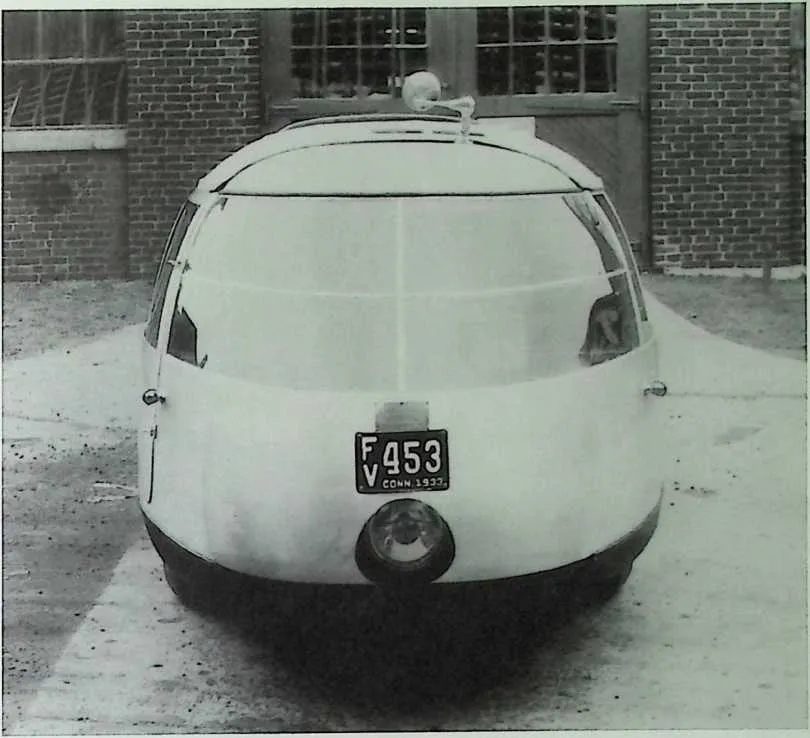
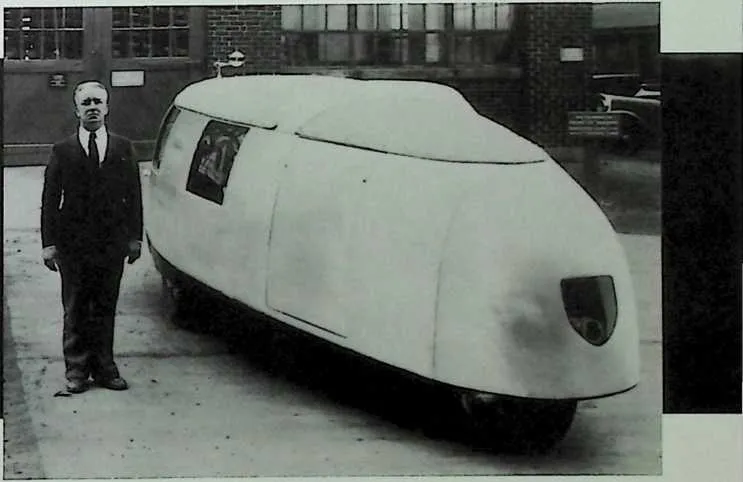 Bucky with the first complete car. Rear-wheel steering made one-pass parallel parking
easy—just nose into the space and whip in the tail. (Bucky didn’t mention that leaving the
parking space required awkward backing out into traffic.) The car could pivot around a
front wheel. U-turning in its own length at speeds up to 15 mph! A faster U-turn
would tear the tire off the rim. Note the huge backup lamp that steered with the
wheel.
Bucky with the first complete car. Rear-wheel steering made one-pass parallel parking
easy—just nose into the space and whip in the tail. (Bucky didn’t mention that leaving the
parking space required awkward backing out into traffic.) The car could pivot around a
front wheel. U-turning in its own length at speeds up to 15 mph! A faster U-turn
would tear the tire off the rim. Note the huge backup lamp that steered with the
wheel.
74 Fig. 4-10
76 Fig. 4-13
77 Fig. 4-12
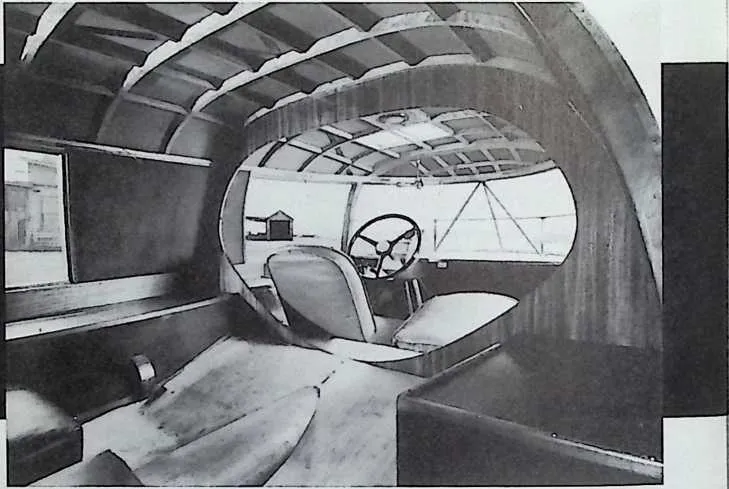
78 The yachty interior of the first car could be equipped to seat 11 passengers, truck 3/4-ton of cargo, or fold into a queen-size bed—all without affecting weight distribution. Oversize door-sills covered the arms of the enormous rear suspension A-frame seen in Fig 4-7. Modifications made the second and third cars roomier, but they still had an annoyingly high floor, necessary to clear the articulated chassis.
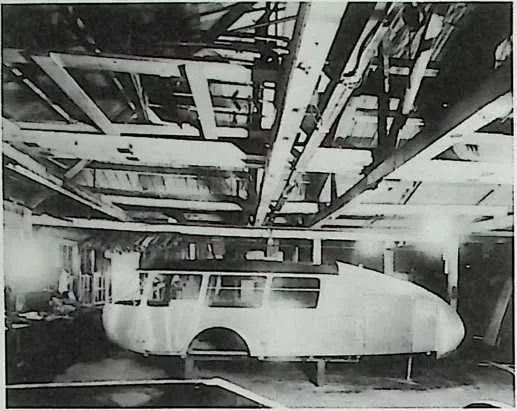
79 The handmade body panels of the second car take shape. According to automaker Walter Chrysler, developing the Dymaxions would have cost his company three times more time and four times more money than Fuller expended. Bucky insisted that individuals and small teams can always work more efficiently than any large company.
80 This crude rig of jacks and scales measured the second Dymaxion’s wheel loadings, and verified its excellent resistance to overturning (except when skidding sideways). Louvers directed expanded hot radiator and engine air into the low-pressure wake, reducing drag.
81 Fig. 4-IS
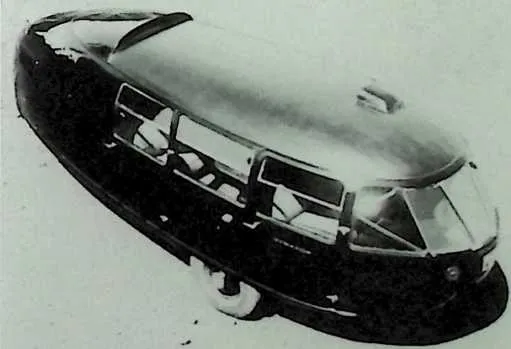
84 Fig. 4-16 Top view of car 2.
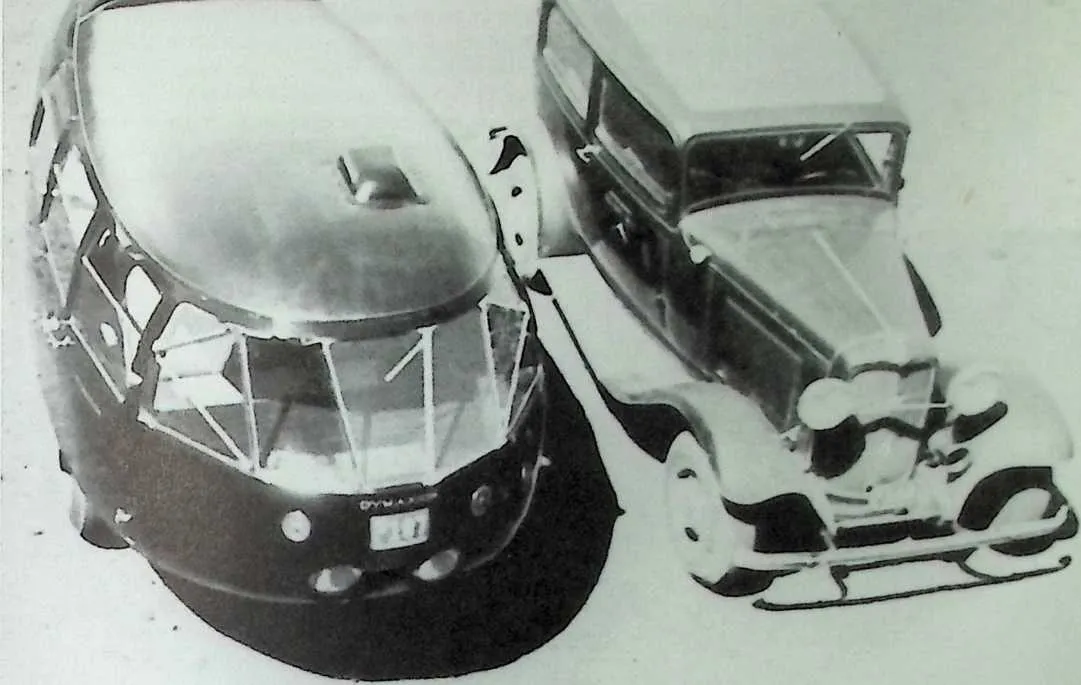
85 Separated at birth.The 1933 Dymaxion used the same engine and drive train as the Ford of the same year next to it, but was much faster and more fuel-efficient. Bucky acidly pointed out that the Ford would actually have less air resistance if it drove tail first! The Dymaxion’s shockingly different design caused massive traffic tie-ups. It represented a new definition of the word ‘‘car.’’ Roof bump is rearview periscope.
86 Built for symphony orchestra conductor Leopold Stokowski, the third car impressed the crowds at the 1934 Chicago World’s Fair. Bodywork by Waterhouse (the firm that made bodies for heavy Packard luxury cars) and a Formica® interior brought the weight to an unflyable 3000 pounds (1360 kg). The new tailfin failed to quell wind-wander.This car was reportedly scrapped after 300,000 miles (482,790 km), but stories of its existence continue. Perhaps Elvis has it.
88 With the last of his investor’s money, and his own inheritance, Bucky finished the second and third cars. By then, Bucky knew that it would be best to steer the front wheels, with the rear wheel swivelling only for tight situations. Unfortunately, no stock front-wheel-drive car with suitable parts existed, and Bucky couldn’t raise the money to develop his own. Tight finances also prevented the use of the automatic transmission and disc brakes he had been considering. The new cars did get yet another all-new chassis to improve the ride and handling.
89 Stokowski’s emerald-green machine was a big hit at the Chicago Fair, but Bucky couldn’t afford to produce one for Amelia Earhart, or the three ordered by the Russian embassy. The fatal crash had frightened away all the investors, including those interested in selling a Dymaxion car with a Curtis-Wright aircraft engine as the top-line Studebaker.
90 To pay his debts, Bucky gave the second car to the men who had made it, sold the factory and its tools, and laid off his talented team. The experience convinced him that renting a shop and machine tools was the best strategy.
91 It was the last time he tied up exploration money in his own prototyping facilities. He didn’t stop thinking about Dymaxion Transport, though.
92 He still had to make the perfected third prototype.
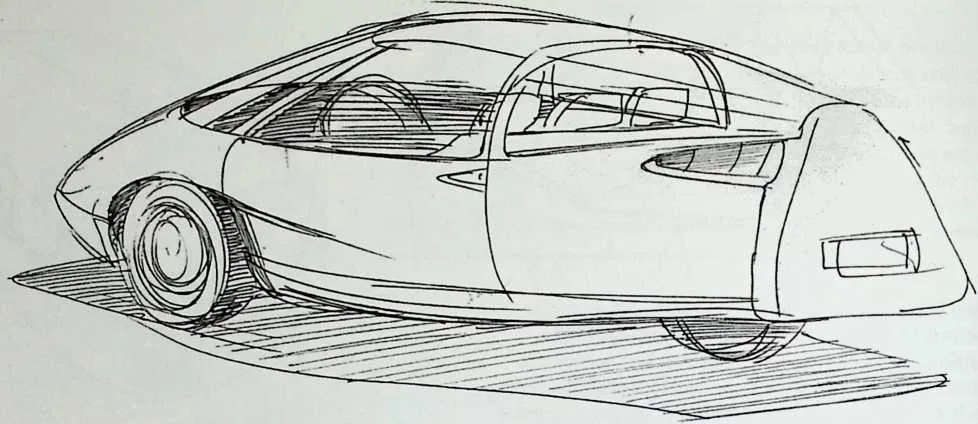
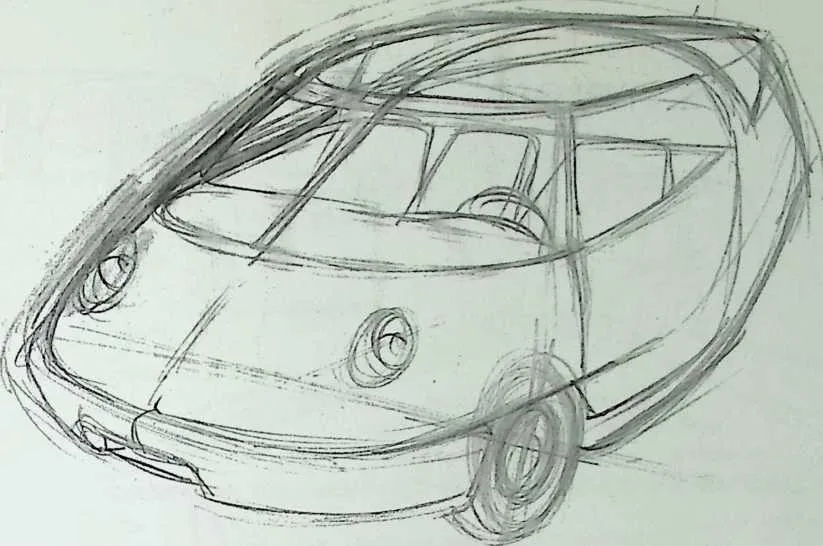
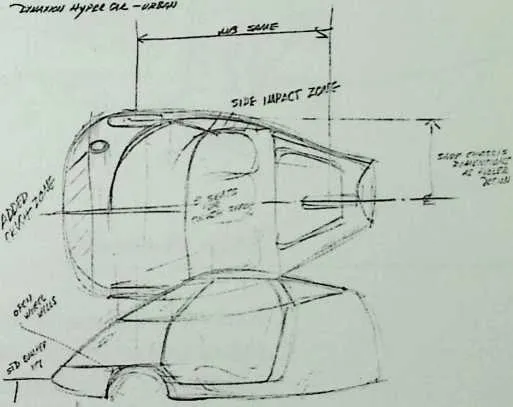
93 The Little Car That Wasn’t
94 In 1943, Bucky proposed a radical car for industrialist Henry Kaiser, who, like Preston Tucker, thought that the end of World War II would be a good time to challenge Detroit’s stagnated, inefficient designs. Bucky’s new four-passenger Dymaxion design was light, roomy, aerodynamic, fuel-efficient, and well-matched to the needs of most people. Much smaller than his first cars, it was in effect the third prototype—the one that utilizes the lessons of the first two to arrive at a refined version, with all major problems solved.
95 Light weight is a major means of doing more with less. Bucky understood that lightness brings more lightness as well as better fuel economy. A lightweight body doesn’t need a heavy, powerful engine in order to perform well. A lighter engine makes the car lighter still. Brakes, wheels, tires, and suspension can all be lighter. There’s no need for power brakes or steering—another weight saving. Add a truly aerodynamic body, and gasoline mileage soars with no penalty in utility or driving satisfaction.
96 Unfortunately, the proposed car was so advanced that an affordable, road-testable prototype could not be constructed from existing mechanical parts as had
97 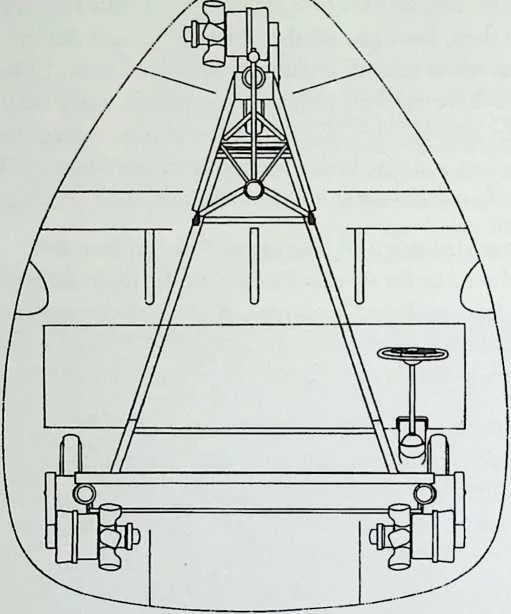 The 1943 Kaiser proposal shows four-abreast seating with luggage space behind, and a
15-horsepower, 5-cylinder radial two-stroke engine at each wheel. Only the rear engine was used
for level highway cruising. Experience has shown that this car would be too wide for today’s city
traffic.The width would also add unnecessary frontal area which would reduce fuel
economy.
The 1943 Kaiser proposal shows four-abreast seating with luggage space behind, and a
15-horsepower, 5-cylinder radial two-stroke engine at each wheel. Only the rear engine was used
for level highway cruising. Experience has shown that this car would be too wide for today’s city
traffic.The width would also add unnecessary frontal area which would reduce fuel
economy.
98 been done with the earlier Dymaxion cars. Also, like all three-wheelers, it was not adaptable to the hatchback and tailgated ‘‘ranch wagon’’ body styles that were gaining popularity with returned World War II veterans starting new families. Kaiser rejected it as too radical, and too expensive to develop.
99 Fig. 4-18
100 Instead of retreating, Bucky tried again in 1950 with a car that was even more radical (Fig. 4-21). Cars would have to be efficient someday, why not make one that was state-of-the-art? But he’d gone too far. Obsoleting every other car on the road was much more than competitive attack. Bucky didn’t realize until years later that banks subtly, but inexorably, deter any truly new auto design that would lower the market value of cars for which they hold the lien. Dealers and banks would be stuck with lots full of unsold old-mode cars. Trade-ins would be worth less, making new cars harder to buy. Tucker encountered the same obstacle at about the same time, with similar results: He lost. So did Bucky.
101 As with the earlier Kaiser proposal, Bucky’s little Dymaxion never progressed beyond drawings. Kaiser eventually produced the Henry J., a cheap, nondescript little car of little merit. Sales were nondescript, too. What would cars be like today if Kaiser had accepted that Dymaxion design?
102 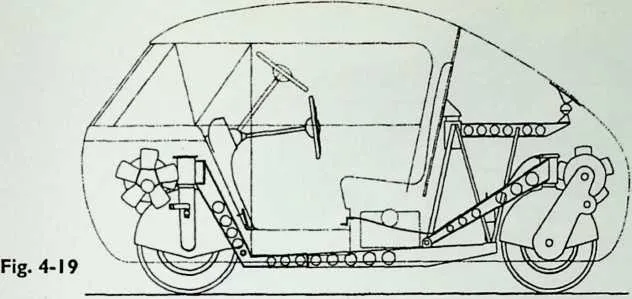
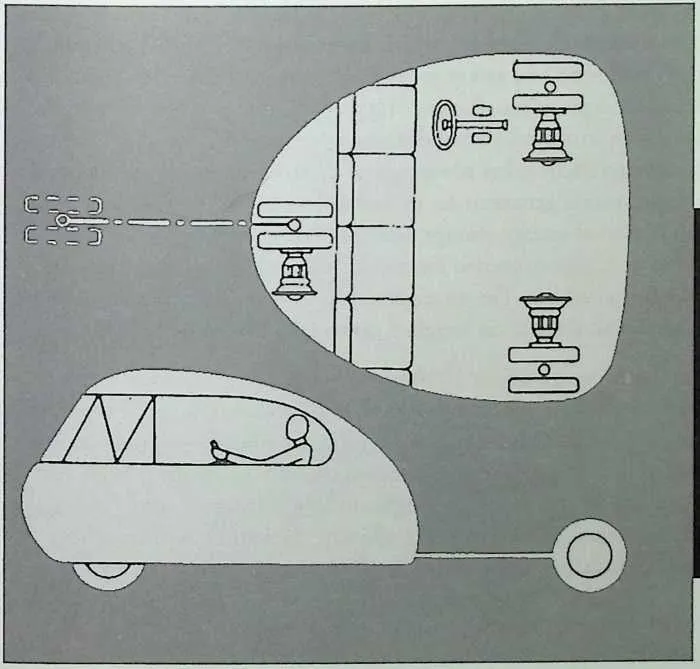
 without crosswind jitters. Only the front wheels steer at road speeds. All three
steer for urban agility, permitting sideways crabbing in and out of parking spaces. It could have
U-turned inside a standard garage!
without crosswind jitters. Only the front wheels steer at road speeds. All three
steer for urban agility, permitting sideways crabbing in and out of parking spaces. It could have
U-turned inside a standard garage!
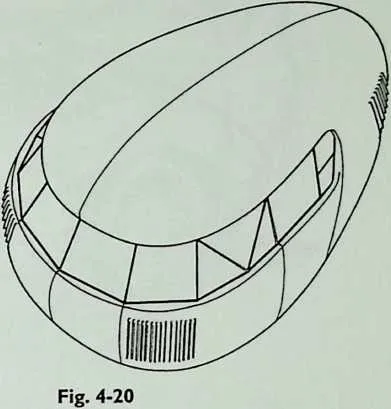
103 Only 9 feet (2.74 meters) long, the roomy Kaiser takes up little urban road space.The complex chassis of the early Dymaxions has been replaced by a hydropneumatic suspension similar to that used by French Citroen automobiles. It offers a low floor, ultra-smooth ride, and adjustable ground clearance that can be doubled for superior off-road performance as an ultra-stable ‘‘3 x 3’’.
104 Inspired by studying the cross-current-resistant shape of horseshoe crabs, the aerodynamic form gives minimum drag
105 Bucky’s 1950 design for the Kaiser ‘‘Henry J.’’ replaced the earlier piston engines with tiny gas turbines driving paired, skinny tires with low rolling resistance and puddle-slicing resistance to aquaplaning. (Modern tire technology would make duals unnecessary.) A telescopic boom for the rear wheel extends the wheelbase for high speed stability. Henry Kaiser rejected the design as too radical.
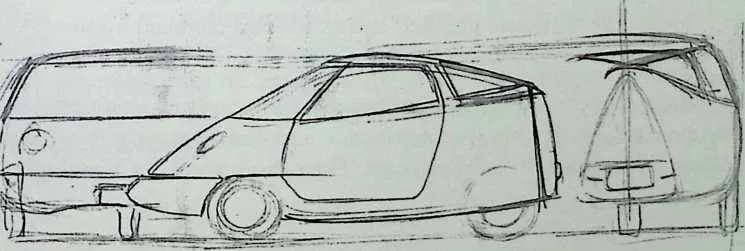
107 A Dymaxion Hypercar
108 Bucky’s Kaiser car might be more acceptable now. Though it didn’t directly address modern pollution and safety requirements, it had many of the basic characteristics of the light, ultra-efficient ‘‘Hypercars’’ first proposed in 1994 by the Rocky Mountain Institutes co-founder and energy expert, Amory Lovins. The Hypercar synergetically takes advantage of a hybrid drive—a system that uses a small, fuel-burning generator set or fuel cell to power an electric motor in each wheel. A modest energy-storage unit (battery, capacitor, or flywheel) furnishes the bursts of power needed for acceleration and hill-climbing, and recovers energy from braking. The arrangement is much lighter, more efficient, and cleaner than an all-electric car weighed down by a ton of batteries.
109 The Hypercar would weigh about 1000 pounds (453.6 kg), within a few pounds of Bucky’s calculation for the proposed 1950 Kaiser. Like the Hypercar, Bucky’s could have been made from fiber-reinforced plastic—a ‘‘net-shape’’ material molded into a few large components, exactly to contour with no waste. With one less wheel’s worth of weight, rolling resistance, and air drag, a Dymaxion Hypercar might be even more efficient than the Lovins machine. After all (as Bucky insisted), three wheels is all you need.
112 Auto designer Robert Cumberford sketched this proposal of a Dymaxion Hypercar to meet today’s conditions and regulations. With only three wheels, it would be lighter and have less air and rolling resistance than the astonishingly logical Hypercars being proposed by Amory Lovins and his colleagues at the Rocky Mountain Institute.Vulnerability to opportunistic lawsuits may be the major deterrent to Hypercars; accident or injury from any cause whatever would be blamed on the design, its manufacturer, and the designer, whether or not the car was at fault.
114 the travel
115 ^eaoAi. tvcjwkct
116 ZHz/te&s ssa
117 WJfMsaavi
118 P&e ^Lssfv/A?
119 O&US£P /A/7^AC/7y Oa/ &&4P&5& A^y=t/Z^/OV
120 Ship Yourself
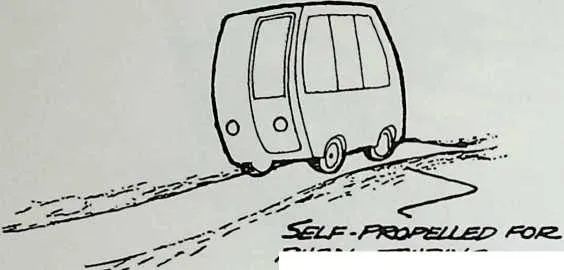
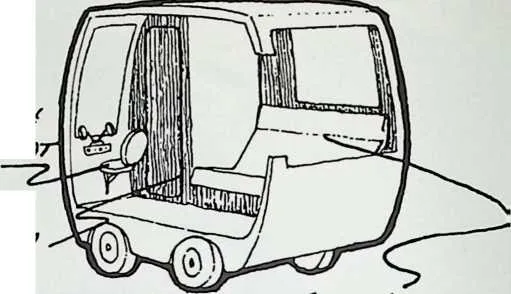

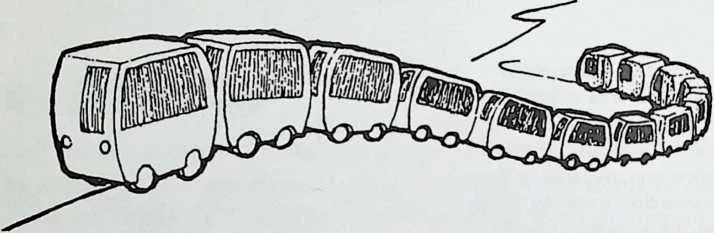
122 Bucky didn’t give up on aerial Dymaxion Transport, but he came to realize that individual jet-stilt machines would be too noisy, fuel-hungry, polluting, and anarchic. (Think of 50,000 beery Rose Bowl fans simultaneously rising from the parking lots in roaring Dymaxion Transports!) But Bucky also regarded grandiose air terminals and their chaotic ground connections as silly obstructions to efficient travel.
123 True to form, he thought world-scale, and proposed a completely computerized global transport system. Type in your destination and desired stopovers on the nearest computer terminal. Insert credit card. Then climb aboard a ‘‘cartridge’’
124 Oa/
125 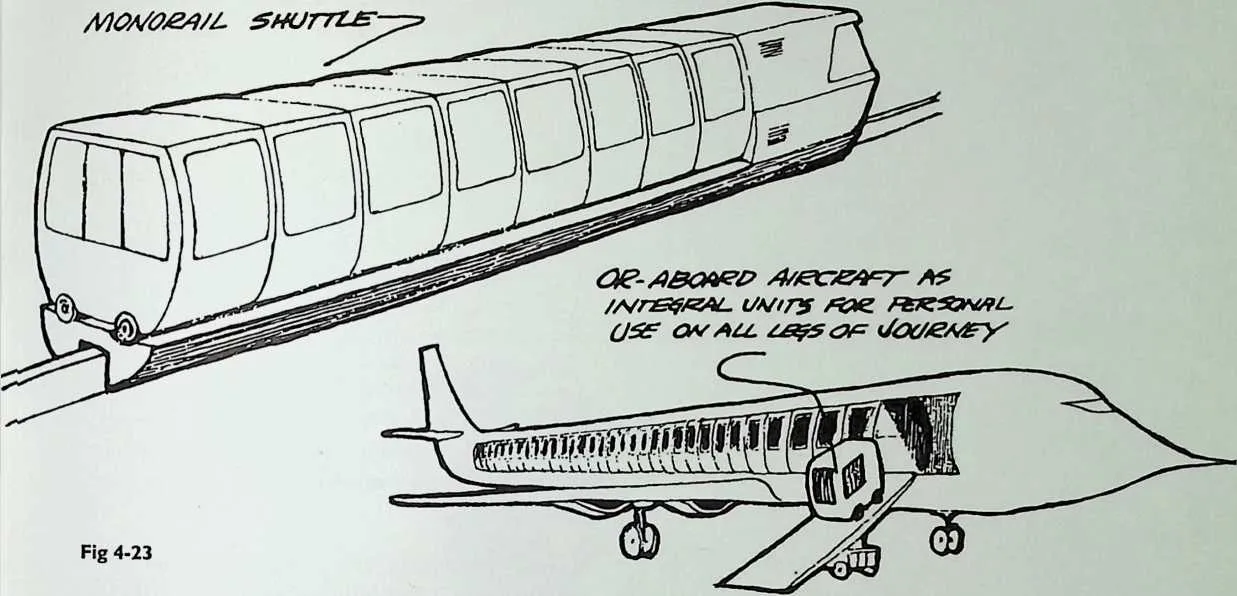 at the local station. The system would automatically deliver you anywhere
you needed to go by the most expeditious route, complete with all connections and
accommodations.
at the local station. The system would automatically deliver you anywhere
you needed to go by the most expeditious route, complete with all connections and
accommodations.
126 Bucky made futuristic proposals of this sort to get people thinking about existing chaotic, often irrational, arrangements in a more systemic way. The idea might not be feasible at the time, but his images would affect and inspire later thought. How would you design an efficient worldwide transportation system?
127128Rowing Needles
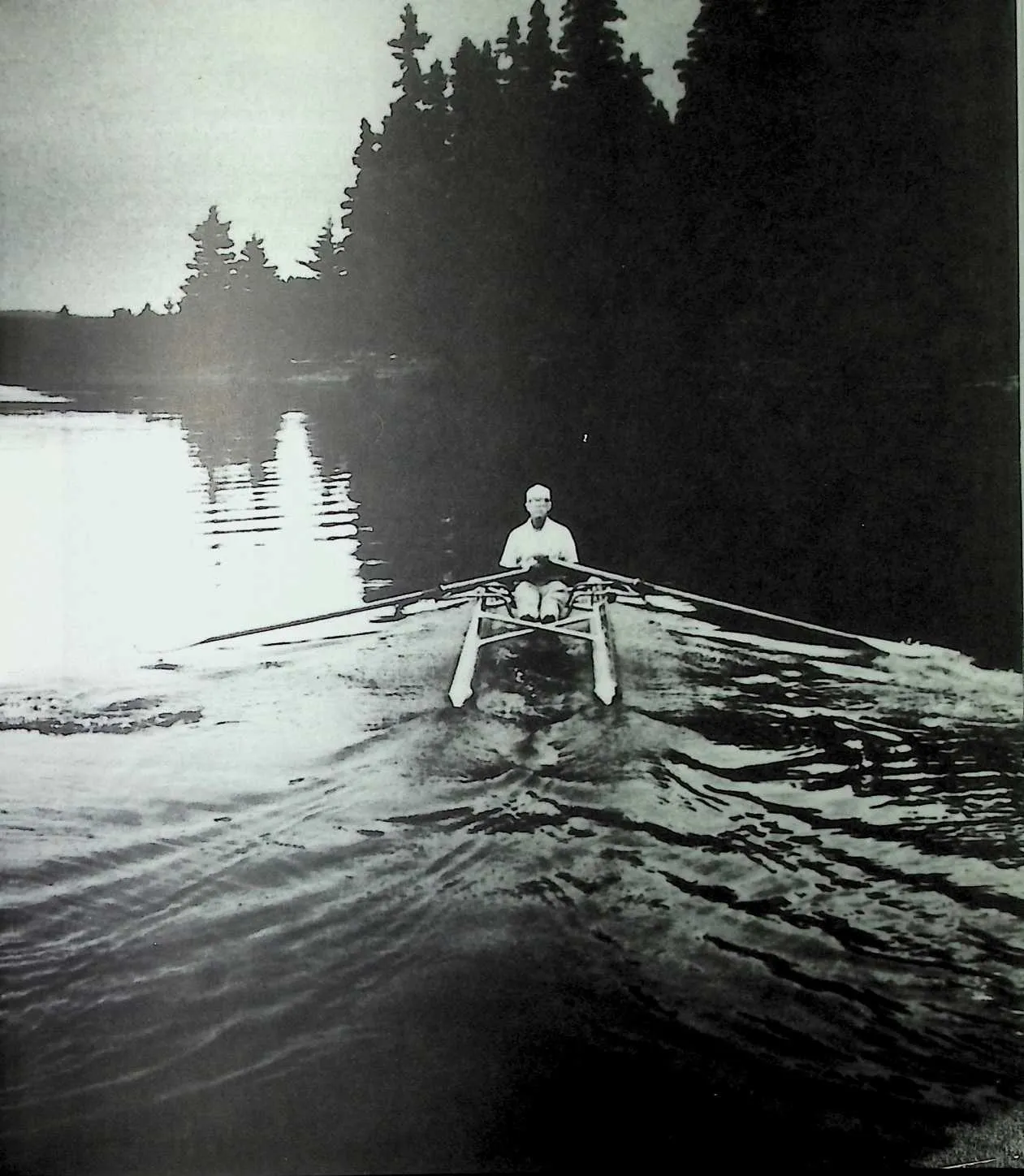
129Few activities can match the exhilarating workout offered by rowing a long, narrow shell known as a ‘‘single’’. Bucky appreciated the intimacy between himself, a simple, human-powered device, and raw nature. It is a satisfying feeling shared by kayakers, bicyclists, and the furiously pedaling pilot of Paul MacCready’s extraordinary gossamer aircraft.
130Unfortunately, singles are not particularly safe. Twenty-two feet long, but only eighteen inches wide, they are notoriously tippy, and are easily swamped by a minor wave or an inexpert move. Their fragile construction can be fractured merely by positioning a hand or foot in the wrong spot. If a single capsizes or fills in deep water it is virtually impossible to empty and reboard without assistance or going ashore. The situation can be life-threatening in cold water, especially to a solitary rower.
131After several close calls, Bucky conceived the Rowing Needles. The catamaran configuration is stable even to a novice. Its sealed hulls ‘‘needle’’ right through waves, while the rower sits above most spray. Climbing aboard does not require skilled balancing, and can be done at sea. Durable materials resist damage, and require little maintenance.
132A later prototype of the Rowing Needles had hulls with a better hydrodynamic shape, but they cost far more than the tubular aluminum needles of this first model. It was hard to improve on the original elegant, spare design without adding cost or complexity.
133The 1970 patent includes needle sections joined to make a multi-oared racing craft. There’s also a needle-hulled sailboat. Bucky attempted to license the patent to a manufacturer, but the deal fell through and he didn’t pursue it further. He was doubdess too busy with the major projects of his heyday in the 1970s.
134Most observers list the Rowing Needles as ‘‘minor innovations,’’ but Bucky once told me that he considered them to be his most refined invention—an exceptionally pure demonstration of his design philosophy.
135‘‘Beautiful,’’ he exclaimed, watching a guest rower skim across the peaceful harbor. ‘‘Just beautiful.’’
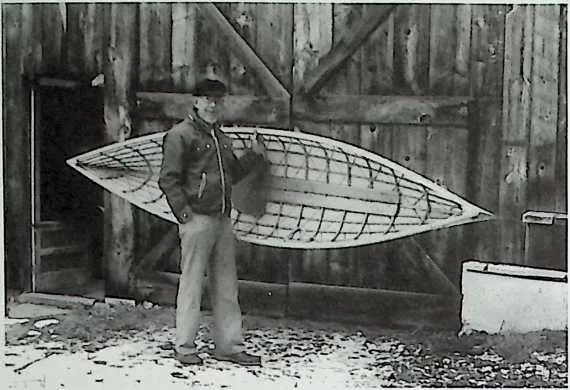
138 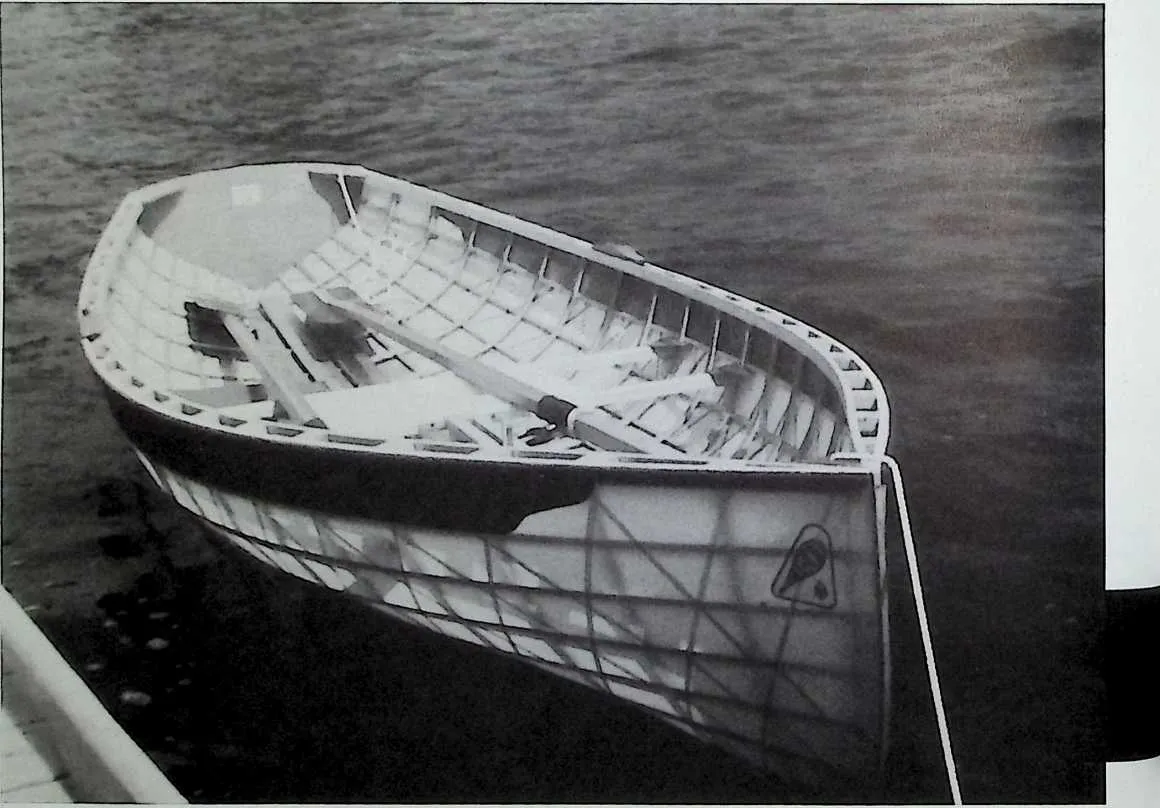 Though not mathematically geodesic according to Bucky’s Synergetic Geometry, Platt
Monfort’s Geodesic Airolite® boats are close enough. His shockingly light Snowshoe 12® canoe
weighs just 13 pounds (5.9 kg), yet can carry a 190-pound (86-kg) paddler.
Though not mathematically geodesic according to Bucky’s Synergetic Geometry, Platt
Monfort’s Geodesic Airolite® boats are close enough. His shockingly light Snowshoe 12® canoe
weighs just 13 pounds (5.9 kg), yet can carry a 190-pound (86-kg) paddler.
139 Fig. 4-25
140 Beam Me a Pizza
141 Will a future Sears be able to transmit the goods you ordered? Bucky’s graph of increasing travel speeds (Fig. 10-1) implies just that. At a 1966 midnight meeting of friends and colleagues in San Francisco, Bucky said it was important that designers gently introduce the public to the idea of teleportation and the major changes it will bring. If taken by surprise, people might block the technology of ephemeralized transport when it became available.
142 When asked how teleporting might be done, Bucky replied that energy and information were interchangable, just as energy and matter are interchangable as shown in E = me2. All systems and structures, right down to molecules and atoms, can be described by frequency and angle. Someday, computers will be able to scan and transmit the full spectrum of such information.
143 Bucky wasn’t sure if life forms could be teleported because the ‘‘you’’ of you is not physical, and thus not scannable. But he assured us that we would live to see objects and materials distributed by some sort of transmission technology.
144 Bucky was right about the coming capability, and he was right that it would bring big changes. Commercial examples of teleported products are already in use as this is written: Some ‘‘record stores’’ (to use the current anachronism) have a robot computer that can provide a few seconds of music from any available CD. If you choose to buy, your selection is fabricated as you watch, by downloading the digitized music transmitted from the corporate headquarters. Such stores carry no stock, need no employees, and can never run out of items in high demand. The same capability is being applied to videos and books.
145 It is easy to imagine a store with no stock and no employees becoming an obsolete way of selling. A kiosk would do as well. A home terminal seems inevitable. Does this mean that malls will someday become obsolete as selling devices? Bucky said yes.
146 The Classic 12® will haul three 200-pound (90.7-kg) people under oars or sail. High-strength materials and innovative construction techniques greatly improve the performance of well-proved hull shapes. Geodesic geometry adds weightless strength. Mr. Monfort’s design combines it all to great synergetic advantage.