3 3
2‘‘What a jolly thing life is!’’ said the handsome college man in the McClure’s Magazine ad. And that is exactly how Bucky felt as he entered Harvard. Over the years, he had built in his mind a romantic picture of life at Harvard. Now he felt a shiver of delight at being a part of this imagined world of super-athletes and godlike heroes.
3 A red brick wall skirted the edges of the Harvard Yard. Within the wall, there were tall elm trees, green grass, and stillness. He seemed to be miles away from the bustle, noise, and dirt of the city of Boston. Crossing the Yard, he could hear chapel bells ringing, young voices calling. The Yard was a dream come true, and Bucky moved into his single room with a sense of adventure and high hopes.
4 One of these hopes was to win a place on the Harvard football team. After all, Milton quarterbacks before him had made the Harvard team. During the tryouts, he threw himself against the line of defense with explosive energy. Cr-rack! He came out of the tryouts with one broken kneecap and one less hope.
5 Now cold winds whipped the leaves from the trees in the Yard. As he went to classes, Bucky hardly felt these hints of winter. It was the classes themselves that he began to dread. Musical composition, German literature, art appreciation working on those subjects was sheer drudgery. Why hadn’t he chosen the math and science that he loved so much? Those subjects had been more like games than serious studies. Perhaps he had thought college should be a place to explore more ‘‘difficult’’ subjects. What a mistake. The courses became like those miserable chores around the house. They were a necessary evil by which he ‘‘earned the right to live in the Harvard community.’’
6 Worse yet was the discovery that he made about life outside the classroom. In those days, the social clubs at Harvard ran everything. Although he had heard about the clubs all his life, he had never dreamed of the effect they had. All people were not equal in this undemocratic system. The clubs measured a
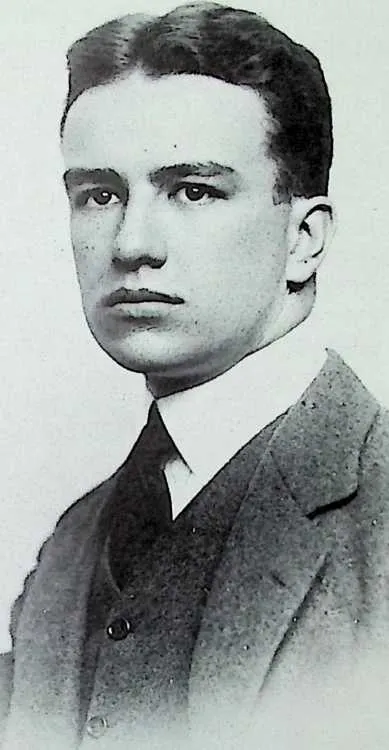
8 Bucky at about the time he went to Harvard
9 man by who his father was and how much money he had. Only a select few were invited to join. Some (but not all) of the captains and heroes of the athletic field were chosen as well. Everyone else was locked out of the fun and many of the pleasures of social life.
10 One by one, old Milton friends were asked into that special closed system. But Bucky had no father, no money, and none of the smooth charm and glamour of a football hero. He was very simply an odd-looking, poor boy, shorter than almost anyone, with thick owl lenses and a stubbornly independent way of thinking. By January, Bucky faced the unhappy truth. No club would choose him. He felt doubly disgraced. His high hopes of making the team and of exciting new friendships had been crushed. Even the pleasure and excitement of learning were missing. He spent dreary days studying for exams in subjects that he disliked. It was a lonely and depressed Bucky who walked across the Harvard Yard. By the gray light of winter’s days, the bare Yard with its wall looked more like a prison to him now.
11 So what if he passed his midyear exams? Nothing would change. Why should he sit there looking forward to three more years of the same loneliness and hurt? For Bucky, to think was to do. Moving fast, he packed his bags and went out the door. There was more than one way to have fun and more than one place to have it in. After a visit to the bank, he raced for the train.
12 ‘‘Runaway, runaway, runaway.’’ The words fit the rhythm of the clacking train wheels. Every cent of the money that was supposed to pay his bills for the year at Harvard was in his pocket. Grand and glorious New York Gty was ahead of him and he meant to make the most of it.
13 First he signed in at one of the best hotels in New York, then he bought a ticket to the most popular show on Broadway, the Follies. One beautiful girl after another appeared in gorgeous costume. How he would love to meet these glamorous creatures! And why couldn’t he do that, too? At this moment nothing seemed impossible. With a grand flourish, he ordered dozens of red roses and bottles of champagne sent with his card to the dancers. By the next night, he felt bold enough to present himself at the backstage door. Marilyn Miller, the stunning blonde star, welcomed this young fan. Still playing the role of a sophisticated rich man, Bucky invited all the girls to dinner at one of New York’s most elegant restaurants.
14 At the table there was warmth, gaiety, and laughter. What a pity those snobby classmates weren’t there to see him. He, the rejected Bucky Fuller, had captured the attention and company of Broadway’s most beautiful girls. He refused for now to think about the end of his spree. It was enough to be with people who appreciated his generosity, laughed at his jokes, and clapped their hands at the funny verses he made up on the spot.
15 When his money came to an end, Bucky boarded the train back to Harvard. For over a week he had skipped his classes and completely missed taking his exams. While Harvard couldn’t ‘‘fire’’ him for spending his own money, they could and did dismiss him for ‘‘irresponsible conduct.’’ Squaring his shoulders, Bucky returned to Milton to face his family. He carried the double disgrace of having squandered his money and of being the first one in five generations of Fullers to flunk out of Harvard.
16 ‘‘Bucky, Bucky, you have no respect for money. You must mend your ways or they’ll lead you straight to the penitentiary!’’ Seriously worried, Mrs. Fuller called a conference of family members to decide what to do with her black sheep. One of the uncles voiced his blunt opinion. Bucky needed to learn how much hard work went into earning a dollar. Then he would appreciate the values of a college education. Ship him up to Canada to their cousin’s cotton mill, the uncle suggested. All agreed. The ideal solution. To be sent far away from family and friends, to work hard with his hands seemed a just punishment. He could come back when he showed he had learned his lesson.
17 Once again, Richard Buckminster Fuller found himself riding on a train. What a difference, though, between New York City and the end of this trip. He got off the train at Sherbrooke, a small manufacturing town in the Province of Quebec. Reporting for work, he saw a bare new mill building in a bare, bleak countryside. Huge crates, little crates, masses of parts and tools were waiting to be put together. It was a strange new world of shop foremen and machinists, of hammering and banging. Despite the noise and confusion, Bucky felt his spirits start to rise. He liked men and he liked machines. Here there were no special patterns of social power. Each man was appreciated for the work that he did. Bucky threw himself into the work with his own special passion and eagerness.
18 All of the machinery and parts came from England and France. Some of these arrived damaged and broken. Soon, Bucky’s special task became that of finding new parts or repairing the broken ones. He studied the metals, their weights, and how they performed under different conditions. By necessity, he had to retrace the original steps leading to the invention of these parts. Making many different lands of small things, he was forced into thinking about how to bring together whole sets of different parts.
19 ‘‘Bucky, I believe this part is actually better than the original one sent to us,’’ said the chief engineer. ‘‘You’re a good designer. For your own sake and knowledge, you should keep a sketchbook of your work.’’
20 Flushed with happiness, Bucky followed his advice. The sketchbook, the experiments with tools and metals, made a kind of mental bank account from which he drew all his life.
21 Mrs. Fuller read his letters carefully, and read too the letters from the bosses. All the reports said that he was ‘‘a good and able boy,’’ from which she concluded hopefully that Bucky had changed his ways. Harvard University agreed. He could become a member of the class entering in 1914.
22 After a summer on beloved Bear Island, Bucky settled once again into a single room at Harvard. The other freshmen were all younger than he. Neither the classes nor the social system had changed. After working in the real world, both seemed even more unreal and ridiculous than before. How could his good intentions hold against this setup? This semester was, in fact, worse than the first one. In flat despair, Bucky behaved exactly the same way he did the first time. He stayed away from classes and spent all his money on foolish ‘‘larks.’’ Once again,
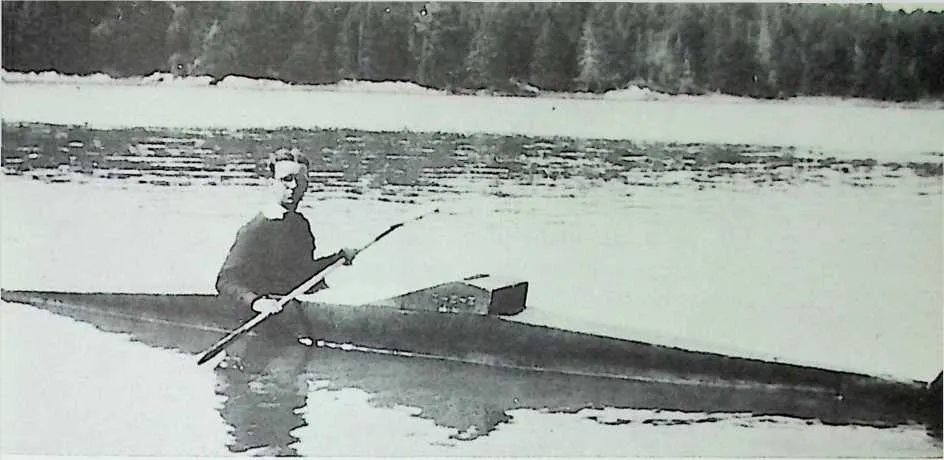
2425Bucky at Bear Island
26 Harvard University expelled him for ‘‘lack of interest.’’ Grownups in the family and friends shook their heads. ‘‘Bucky has a genius,’’ they said. ‘‘A genius for getting into trouble!’’
27 His independence and energy seemed to lead him only to bad endings. Perhaps his mother was right, perhaps he would end up in the penitentiary. Bucky recognized that he had caused his family pain and shame. But, at the same time, he felt an enormous sense of relief. He was free at last from the dreadful social system at Harvard. He was free, in fact, to go about the business of real learning.
28 Hunting for a job in New York City, he found one with Armour and Company, a meat-packing house. It was a revelation to see all the work that went into getting meat to the dinner table. Pork shot down chutes to the cellar for curing; beef was cut into quarters and moved into the chilly cooler room. Finally, the quarters of beef were carried on men’s backs to the trucks. ‘‘Heave,’’ the foremen shouted in icy puffs of breath. Bucky gave silent thanks for the summers on Bear Island. They had given him a tough, strong frame and the good balance he needed to lug the heavy sides of beef. Work for Bucky started at three o’clock in the morning. He moved about the still sleeping city, loading and unloading trucks in the lighted islands of the markets, filling the huge holds of waiting ships at the docks. With
29 luck, he finished work at five in the afternoon. Fourteen hours of hard, dirty work every day. Bucky did the work well and even enjoyed it.
30 In his report, the branch manager noted that this was a bright, hard-working young man and the company should be thinking of moving him up the ladder. The decision was made that he should be given experience in all parts of the business. So Bucky moved from branch to branch around New York Gty and New Jersey. That first job in Canada had taught him about the malting of goods. This one showed him the pattern and systems for moving the goods to men. Solving the knotty problems of getting more meat to greater numbers of people gave him satisfaction. ‘‘Turnover and turnabout’’ were the key words to this business, he realized as he mapped out loading and unloading schedules.
31 In that summer of 1915, his sister Leslie and her husband, Edward P. Larned, had rented a house on Long Island. When they invited him out for a weekend, Bucky accepted quickly. Besides the chance to escape the city’s summer heat, it gave him time to spend at the ocean that he loved so much. He met old friends and made new ones during his visit.
32 One of these old friends invited him to a dance.
33 ‘‘Come along, Bucky. There are some pretty girls here you ought to meet.’’
34 The young girls in their ankle-length thin summer dresses looked like bright butterflies. Bucky grinned. Already his foot was keeping time to the music. When it came to meeting pretty girls and dancing, he was more than ready.
35 Anne Hewlett. That name belonged to a slim girl. She had laughing dark eyes and a cloud of soft dark hair. And then there was her sister Anglesea, better known as Anx. The younger girl had the same smooth complexion but blonde curling hair and blue eyes. Bucky was impressed by these pretty sisters. The next day he went happily and eagerly with his friend to call at the Hewlett house.
36 Much as Bucky enjoyed his work, his thoughts strayed elsewhere now—to the sloops waiting to be sailed on the weekend, the beach picnics with driftwood fires and young people strumming banjos and singing, and especially to those pretty Hewlett girls.
37 As the summer drew to a close, the summer cottages were closed up one by one. Families packed their bags and moved back to the city. Glumly, Bucky set off on that last weekend to say good-by to the Hewletts. When Anne invited him to dinner in their Brooklyn home, his spirits skyrocketed. Contrary to that old proverb, all good things did not have to come to an end.
38 Anne was the oldest of ten children and Bucky was the first young man she had invited into the family circle. Looking around the Hewletts’ dining room table, Bucky was not so sure that he was a lucky fellow after all. To have twelve pairs of eyes turned with interest on his every movement was unnerving. Fortunately, Mr. Hewlett was a gentle man who kept the lively young Hewletts from making too many comments about the newcomer.
39 Soon Bucky became a regular caller at the house in Brooklyn. ‘‘Anne has a boyfriend …Anne has a boyfriend …,’’ the younger Hewletts chanted loudly and made sure that the young couple never had a moment of privacy. Sometimes they escaped for a quiet moment by joining Mrs. Hewlett, a semi-invalid, in her upstairs bed-sitting room. Only a truly determined young man would have continued this courtship. Bucky was quite certain now in his own mind and heart that Anne was the girl with whom he wanted to share his life. His jokes, comic verses, and love of fun soon won over the noisy, teasing young ones in her family. They declared him an honorary Hewlett. More important, Anne showed encouraging signs of returning his feelings.
40 Not everyone in her family felt so kindly toward him as a suitor. One of her grandfathers in particular objected. After all, Bucky was a poor boy with bad eyesight who had been thrown out of college twice. He had no profession and earned only a tiny salary. What could he offer a wife? Bucky worried about that, too. But, being Bucky, he went right on spending large amounts of that tiny salary on huge bouquets of red roses for Anne.
41 During a trip across the country, Anne finally made up her mind. When she returned, she accepted Bucky’s proposal. Following the custom of the times, Bucky promptly applied to Mr. Hewlett for his daughter’s hand in marriage. The Hewletts, who had grown fond of Bucky, consented and the engagement was announced in the summer of 1916. Bucky worked harder than ever and for the first time in his life tried to save money for the future.
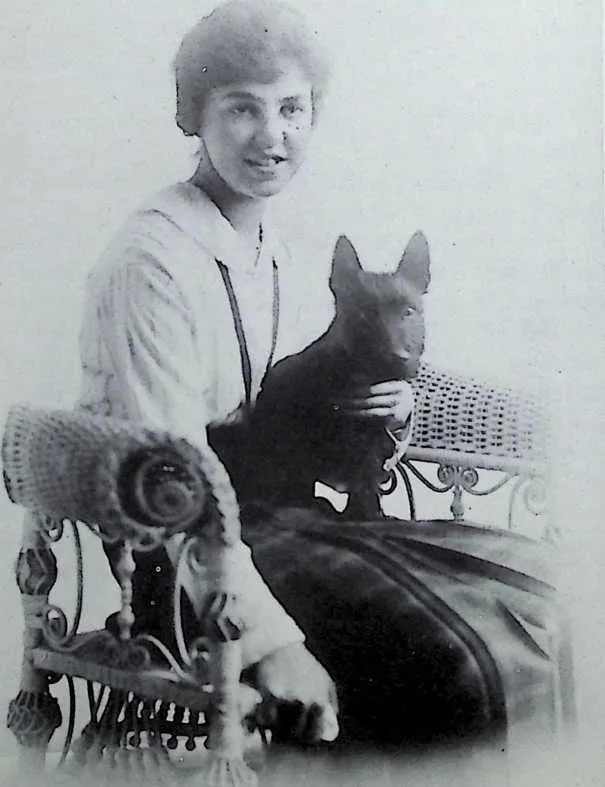
42 Anne Hewlett, at about the time she became engaged to Bucky